4.9/5




Leonardo da Vinci and the Mystique of the Grotto
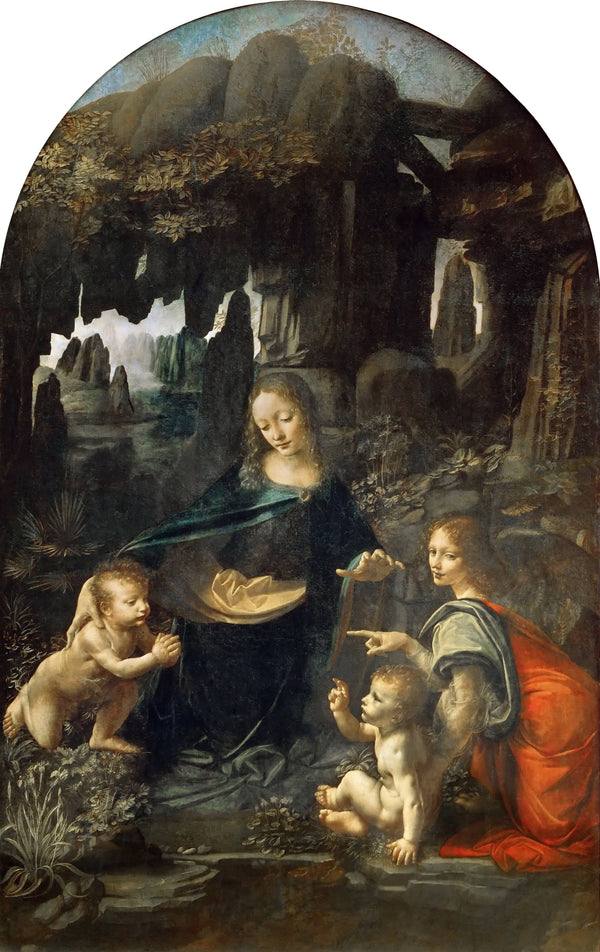
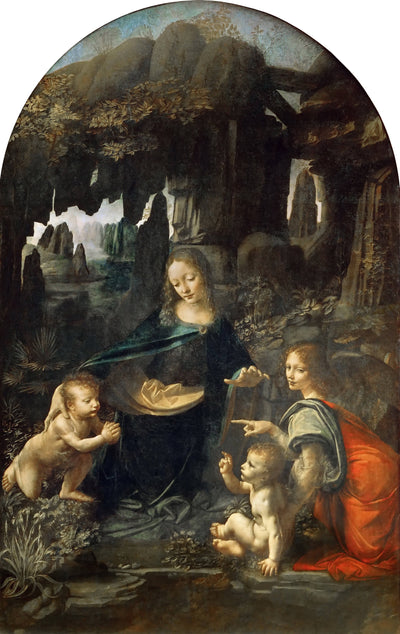
A young woman, an angel, and two small infants gather inside a dark, rocky cave. This is the sacred scene in The Virgin of the Rocks by Leonardo da Vinci. Through the jagged stone openings, a misty grey-blue landscape emerges in the background. Leonardo da Vinci places these holy figures together in a peaceful, sheltered grotto.
The cave itself is a powerful presence in the painting. Steep, jagged rock formations form a dark grotto that arches over the figures. This cold stone sanctuary acts as a frame, contrasting sharply with the soft faces below. Through narrow openings in the cave walls, a distant landscape of calm water and sharp, blue-grey peaks is visible.
The figures sit in a stable pyramidal composition, which means they form a solid triangle. The woman's head forms the top point of this shape. Her arms reach out to frame the infants and the angel at the base. Cool grey-blue, dark brown, and soft gold tones fill the canvas. Pale flesh tones glow against the deep shadows.
Leonardo da Vinci paid incredible attention to nature in this scene. A variety of detailed botanical specimens, flowers, and leafy plants are scattered across the foreground rocks. Each species of plant is painted so clearly that a botanist could identify them. These soft green leaves bring a touch of life to the cold stone environment.
A careful viewer will notice the tiny, exquisite details that Leonardo da Vinci worked into the figures. The delicate curls of the hair of all four figures catch the light beautifully. Over the woman's forehead, a sheer, transparent veil rests almost invisibly. A single gold brooch fastens her dark cloak, glinting against the deep blue-black fabric.
The light source comes from the upper left, casting a soft, directional illumination. It highlights the gentle faces, smooth limbs, and hands of the figures. Meanwhile, the surrounding cave remains in deep shadow. This contrast between light and dark creates a powerful sense of mystery. The angel's dark wings blend softly into the shadows on the right.
The paint is applied with extremely smooth transitions and soft, blurred edges. There are no visible brushstrokes on the surface. Leonardo da Vinci mastered this delicate style to make his figures look real and breathing. The soft, hazy quality makes the stone cave feel damp and cool, as if we are standing inside it with them.
The Louvre, the National Gallery, and the Two Masters
Two versions of The Virgin of the Rocks exist today. [1] One version hangs in the Louvre in Paris, while the other resides in the National Gallery in London. [1] The main differences between the two paintings are the angel's gaze and the position of the angel's right hand. [1] Both showcase Leonardo da Vinci's mastery.
In both versions, Leonardo da Vinci utilizes sfumato, which is a technique of using soft, smoky transitions between light and dark. [2] This effect softens the figures as they emerge from the dark cave. [2] Four separate drawing studies in the Metropolitan Museum of New York show how he planned this composition. [2]
Scientists used infrared reflectogram imaging to study the London version. [1] This special light scan revealed a hidden underdrawing of a kneeling woman. [1] The London painting has a more synthetic, planned approach to nature. [3] By contrast, the earlier Louvre version shows a fresher, more natural style. [3]
Joos van Cleve and the Silent Cave of London
The Flemish painter Joos van Cleve introduced Leonardo da Vinci's masterpieces, including copies of this grotto scene, to artists in Flanders. [4] These Flemish artists deeply admired the soft light and natural details. The composition influenced northern painters for generations, spreading the quiet, sacred mood of the cave across Europe.
In 1948, a yellowing, unstable varnish was applied to the London version, which dulled its depth. [5] Fortunately, an eighteen-month cleaning ended in 2010. [5] The National Gallery then fully attributed the painting to Leonardo da Vinci. [5] It remains a peak example of the Early Renaissance style.
This painting shares its delicate beauty with other creations by Leonardo da Vinci. The soft lighting and mysterious background reflect the same genius seen in La Gioconda. The striking hands and soft gaze of the angel also point forward to the mystical style of St. John the Baptist.
The dark, rich tones of this canvas make it a striking focal point for any room. The deep olive greens, dark browns, and soft golds blend beautifully with warm interior designs. With focused accent lighting, the pale flesh tones and delicate details of the figures stand out. This is how Leonardo da Vinci intended the scene to look.
Deciding the Size of Your Virgin of the Rocks Replica
Our skilled artists recreate this masterpiece by hand, working brushstroke-by-brushstroke. We use rich oil on museum-grade linen canvas to capture the smooth transitions of light and shade. Every curl of hair, delicate plant leaf, and subtle fold of fabric is painted with care. This dedication ensures your reproduction feels like a true piece of art history.
If you want to experience this masterpiece at home, a hand-painted virgin of the rocks reproduction brings Leonardo da Vinci's soft shadows to your wall. This iconic painting belongs on any list of the top hundred paintings. Our artists capture the dark, mysterious mood of the cave, bringing a touch of the Italian Renaissance into your living space.
Our catalog offers this vertical painting as a hand-painted oil reproduction starting from $350. We offer seven listed sizes on our store page. You can also commission the original proportions, or any other size, through our custom design service. We provide unframed linen, stretched canvas, or beautiful classic and modern frames.