4.9/5
4.9/5







SAMPLES OF QUALITY
Recent Hand-Painted Reproductions
Discover some of our latest oil paintings, each one carefully hand-painted on canvas.


AS SEEN IN





Handmade Oil Painting on Canvas Art Reproduction, Museum-quality

The six dominant colors measured from the painting, with the share of canvas each one covers. Click a swatch to copy its hex code.
Processing & Shipping Time
Your delivery time includes two parts:
Shipping Methods
We ship with trusted couriers like FedEx, UPS, and DHL. Every shipment includes a tracking code.
Our goal is to deliver your order safely and quickly.
Shipment Safety Measures
We handle your products with care so they arrive in perfect condition:
Every product is insured and delivered right to your door, so you can feel confident buying from us.
Every Art & See painting is created by artists with 15+ years of experience using professional-grade oil paints and premium linen canvas with UV-resistant protective coating, the same museum-grade materials used in galleries worldwide. Each piece goes through quality review before your approval photos are taken. If after delivery you have any concerns about your painting, contact us at [email protected] and our team will work with you on the best path forward.
Full Warranty
Every painting is protected against physical damage during shipping. If your painting arrives damaged, we repair or replace it, free of charge.
Coverage Details
Transit damage (crushed, torn, water damage): we repair or replace at no cost. Please note that damages resulting from accidents or inappropriate use are not covered under this warranty.
Repair or Replace
Depending on the extent of damage, the affected painting will either be repaired or replaced at no additional cost to you.
Free Service
All warranty services are provided absolutely free of charge.
We want you to absolutely love your handmade artwork. Here's how it works:
In the rare case you approve the photos and the artwork has been shipped and delivered to you, and you still want additional modification requests, we can handle it as a courtesy at our discretion. If accepted, you cover the return shipping cost.
| Type | Hand-Painted Oil Painting Reproduction |
| Original Artist | Julien Le Blant |
| Price Range | $350 to $1,150 |
| Shipping | Free Worldwide |
| Quality | Preview & Approve Before Shipping |
| Medium | Oil on Canvas |
| Canvas | Museum-Grade Linen Canvas |
| Technique | Hand-painted brushstroke-by-brushstroke |
| Period | 19th Century |
| Artist Nationality | French |
| Orientation | Horizontal |
| Subject | Landscapes urban, Portraits group |
| Available Sizes | 7 (21'' W × 16'' H to 67'' W × 51'' H, including the original size), plus custom sizes |
| Framing Options | Unframed, Stretched Canvas, Classic & Modern Frames |
| Delivery | 14–28 business days |
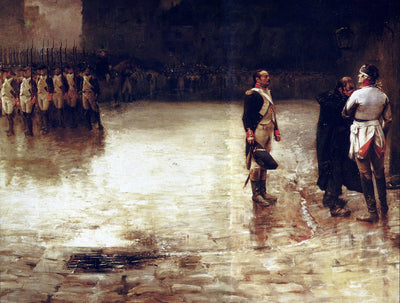
Nantes, a vibrant city in western France, played a crucial role during the tumultuous times of the French Revolution. In 1796, it became a focal point for revolutionary fervor and conflict. The execution of Général Charette marked a pivotal moment in the city's history, symbolizing the struggle between revolutionary ideals and royalist resistance.
The French Revolutionary Era, spanning from 1789 to 1799, was characterized by radical social and political upheaval. It aimed to dismantle the monarchy and establish a republic based on liberty, equality, and fraternity. However, this period also witnessed intense violence and civil strife, particularly in regions like the Vendée.
Général Charette, a prominent leader of the royalist forces, led a fierce resistance against the revolutionary government. His capture in 1796 followed a series of brutal confrontations during the Vendée Uprising, where royalists fought to restore the monarchy. Charette's execution was not just a personal tragedy; it represented the broader conflict between revolutionary ideals and the desire for traditional governance.
The Vendée Uprising had profound effects on French society. It highlighted the deep divisions within the country, as many rural populations resisted the revolutionary changes imposed by the Parisian government. The uprising led to severe reprisals, and Charette's execution became a symbol of the tragic consequences of civil war.
Julien Le Blant was a French painter born in 1828, known for his historical and genre paintings. His works often reflect a deep understanding of the events that shaped France, particularly during the revolutionary period. Le Blant's dedication to historical accuracy and emotional depth set him apart in the art world.
Le Blant drew inspiration from the Romantic movement, which emphasized emotion and individualism. His style combined realism with dramatic storytelling, allowing viewers to connect with the historical narratives he portrayed. This approach is evident in "Exécution Du Général Charette," where he captures the gravity of the moment with striking detail.
In addition to "Exécution Du Général Charette," Le Blant created several notable works that explore themes of heroism and sacrifice. His contributions to historical painting helped revive interest in France's rich past, making him a significant figure in 19th-century art.
The composition of "Exécution Du Général Charette" is both powerful and poignant. Le Blant arranged the figures to draw the viewer's eye toward the central act of execution, creating a sense of urgency. The color palette features dark, muted tones that enhance the somber mood of the scene.
Le Blant's use of color is deliberate. The dark hues symbolize despair and loss, while the stark contrasts highlight the brutality of the execution. This choice of colors evokes a strong emotional response, inviting viewers to reflect on the tragedy of the event.
The figures in the painting are arranged to convey a narrative. Charette stands resolute, embodying defiance in the face of death. The soldiers surrounding him represent the oppressive force of the revolutionary government, emphasizing the tension between authority and individual resistance.
Le Blant masterfully captures the emotional weight of the moment. The expressions on the faces of the figures convey a range of feelings, from fear to determination. This storytelling through art allows viewers to engage with the historical context on a personal level.
The facial expressions in "Exécution Du Général Charette" are particularly striking. Charette's calm demeanor contrasts sharply with the anxious faces of the soldiers, highlighting the psychological complexity of the scene. Body language further enhances this tension, as the soldiers appear tense and ready to act.
Le Blant's ability to capture the tension of the moment is remarkable. The painting freezes a pivotal historical event, allowing viewers to feel the weight of impending tragedy. This emotional resonance makes the artwork not just a visual representation but a powerful narrative experience.
The themes of justice and retribution are central to "Exécution Du Général Charette." The painting reflects the revolutionary government's harsh measures against perceived enemies. It raises questions about the nature of justice during a time of upheaval.
Charette's execution transformed him into a martyr for royalist supporters. His death symbolized the struggle against tyranny and the fight for traditional values. This theme of martyrdom resonates throughout French history, as many figures became symbols of resistance.
Général Charette emerged as a symbol of resistance against the revolutionary government. His unwavering commitment to his cause inspired many, and his legacy continues to be celebrated by those who oppose oppression. Le Blant's painting immortalizes this spirit of defiance.
Executions during the French Revolution were often public spectacles, eliciting mixed reactions from the populace. While some viewed them as necessary for justice, others saw them as brutal displays of power. Le Blant's painting captures this complexity, inviting viewers to reflect on the moral implications of such acts.
Le Blant utilized traditional oil painting techniques to create rich textures and depth in "Exécution Du Général Charette." His mastery of the medium allows for a lifelike representation of the figures and their surroundings.
The brushwork in this painting is meticulous, with layers of paint adding dimension and realism. Le Blant's technique enhances the emotional impact, drawing viewers into the scene. Each stroke contributes to the overall narrative, making the artwork a compelling visual experience.
Light and shadow play a crucial role in the painting. Le Blant skillfully uses chiaroscuro to create dramatic contrasts, emphasizing the tension of the moment. This technique not only enhances the visual appeal but also deepens the emotional resonance of the scene.
Critics have noted the painting's historical significance, recognizing it as a powerful commentary on the revolutionary period. Its emotional depth and historical accuracy have made it a subject of study for art historians and enthusiasts alike.
Le Blant's work has influenced subsequent generations of artists. His approach to historical painting paved the way for others to explore similar themes of conflict and resistance. The legacy of "Exécution Du Général Charette" continues to inspire artists today.
Général Charette was executed in 1796 after leading royalist forces against the revolutionary government during the Vendée Uprising. His death symbolized the struggle between revolutionary ideals and traditional monarchy.
The painting reflects the revolutionary values of justice and retribution, showcasing the harsh measures taken against perceived enemies. It also highlights the complexities of morality during a time of upheaval.
Le Blant employed traditional oil painting techniques, utilizing brushwork, layering, and chiaroscuro to create depth and emotional impact in "Exécution Du Général Charette."
The painting evokes a range of emotions, including sadness, tension, and contemplation. Viewers are drawn into the dramatic moment, feeling the weight of the historical event.
Art critics have praised "Exécution Du Général Charette" for its emotional depth and historical significance. It is recognized as a vital piece of French art history.
The figures in the painting represent the conflict between revolutionary forces and royalist resistance. Charette stands as a symbol of defiance, while the soldiers embody the oppressive power of the government.
To appreciate the historical context, consider the events of the French Revolution and the Vendée Uprising. Understanding the complexities of this period will enhance your viewing experience of Le Blant's work.
Before purchasing a reproduction, consider the quality of the materials and the craftsmanship involved. A high-quality oil painting reproduction will capture the essence of the original artwork far better than a simple print.
A reproduction is a hand-painted copy of the original artwork, created using similar techniques and materials. Unlike prints, which are flat and lack texture, oil painting reproductions offer depth and a tactile experience that closely resembles the original.
Owning a reproduction of "Exécution Du Général Charette" allows you to appreciate the beauty and historical significance of the piece in your own space. It serves as a conversation starter and a reminder of the rich cultural heritage of France.

Discover some of our latest oil paintings, each one carefully hand-painted on canvas.
At Art & See, we're committed to delivering the highest quality art reproductions. Our team of expert artists and state-of-the-art processes ensure that each piece is a masterpiece in its own right.

Experience your masterpiece's creation through daily photos from our expert artists, each with 15+ years of experience.

Your artwork travels first class via UPS, FedEx, or DHL, protected by museum-grade packaging for safe delivery.

Review unedited photos of your finished painting and request unlimited free revisions before it ships. We only ship when you say it's perfect.

Every piece is crafted with archival materials, UV-resistant finishes, and premium British paints to last generations.
Yes, 100% hand-painted with oil on canvas by artists with 15+ years of experience. No prints, no digital shortcuts. You'll see and feel real brushstrokes, just like the original Julien Le Blant masterpiece.
Your Exécution Du Général Charette Place De Viarmes À Nantes, Mars 1796 reproduction takes 2–5 weeks to hand-paint depending on size and detail. Once approved, shipping takes 5–8 days via FedEx, UPS, or DHL with full tracking. Free worldwide shipping included.
Absolutely. Once your Exécution Du Général Charette Place De Viarmes À Nantes, Mars 1796 is complete, we send you unedited photos, a full view and close-up details. Request unlimited free revisions until you're 100% satisfied. We don't ship until you say "yes."
Every painting goes through our Preview & Approve process: you receive unedited photos of your finished Julien Le Blant reproduction and can request unlimited free revisions before it ships. We only ship when you say it's perfect. If after delivery you have any concerns, contact us at [email protected] and our team will work with you on the best path forward.
Professional-grade oil paints (Windsor & Newton) on premium linen canvas with UV-resistant protective coating. Museum-grade materials built to last generations, the same quality used in galleries worldwide.
Our artists specialize in Julien Le Blant's technique: color accuracy, brushwork, and composition are matched to the original. Every reproduction goes through quality review before your approval photos are taken.
Every painting is insured and delivered door-to-door. Unframed paintings ship in protective hard tubes. Framed paintings are bubble-wrapped in sturdy boxes. If anything arrives damaged, we repair or replace it free.
Dive into the vibrant world of Historic Art. Discover your next painting today.