4.9/5
4.9/5





SAMPLES OF QUALITY
Recent Hand-Painted Reproductions
Discover some of our latest oil paintings, each one carefully hand-painted on canvas.

AS SEEN IN





Handmade Oil Painting on Canvas Art Reproduction, Museum-quality

The six dominant colors measured from the painting, with the share of canvas each one covers. Click a swatch to copy its hex code.
Processing & Shipping Time
Your delivery time includes two parts:
Shipping Methods
We ship with trusted couriers like FedEx, UPS, and DHL. Every shipment includes a tracking code.
Our goal is to deliver your order safely and quickly.
Shipment Safety Measures
We handle your products with care so they arrive in perfect condition:
Every product is insured and delivered right to your door, so you can feel confident buying from us.
Every Art & See painting is created by artists with 15+ years of experience using professional-grade oil paints and premium linen canvas with UV-resistant protective coating, the same museum-grade materials used in galleries worldwide. Each piece goes through quality review before your approval photos are taken. If after delivery you have any concerns about your painting, contact us at [email protected] and our team will work with you on the best path forward.
Full Warranty
Every painting is protected against physical damage during shipping. If your painting arrives damaged, we repair or replace it, free of charge.
Coverage Details
Transit damage (crushed, torn, water damage): we repair or replace at no cost. Please note that damages resulting from accidents or inappropriate use are not covered under this warranty.
Repair or Replace
Depending on the extent of damage, the affected painting will either be repaired or replaced at no additional cost to you.
Free Service
All warranty services are provided absolutely free of charge.
We want you to absolutely love your handmade artwork. Here's how it works:
In the rare case you approve the photos and the artwork has been shipped and delivered to you, and you still want additional modification requests, we can handle it as a courtesy at our discretion. If accepted, you cover the return shipping cost.
| Type | Hand-Painted Oil Painting Reproduction |
| Original Artist | Anthony van Dyck |
| Price Range | $350 to $1,150 |
| Shipping | Free Worldwide |
| Returns | 90-Day Returns |
| Medium | Oil on Canvas |
| Canvas | Museum-Grade Linen Canvas |
| Technique | Hand-painted brushstroke-by-brushstroke |
| Art Style | Baroque |
| Period | 17th Century |
| Artist Nationality | Flemish |
| Orientation | Vertical |
| Subject | Animal art, Animal art horse, Cultural heritage, Portraits, Portraits male |
| Available Sizes | 7 (15'' W × 22'' H to 49'' W × 71'' H, including the original size), plus custom sizes |
| Framing Options | Unframed, Stretched Canvas, Classic & Modern Frames |
| Delivery | 14–28 business days |
| Size | 85 × 123 cm (33.5 × 48.5 in) |
| Year | 1640 |
| Collection | Harvard Art Museums, Cambridge |
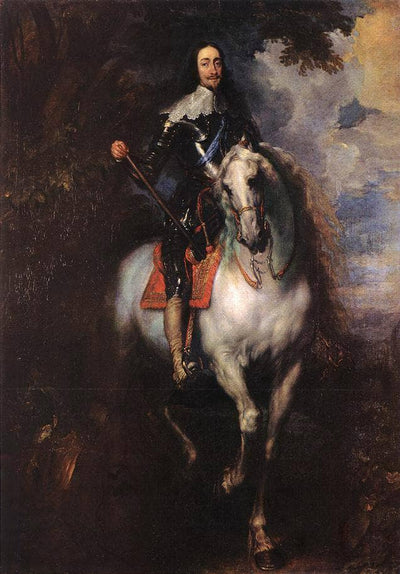
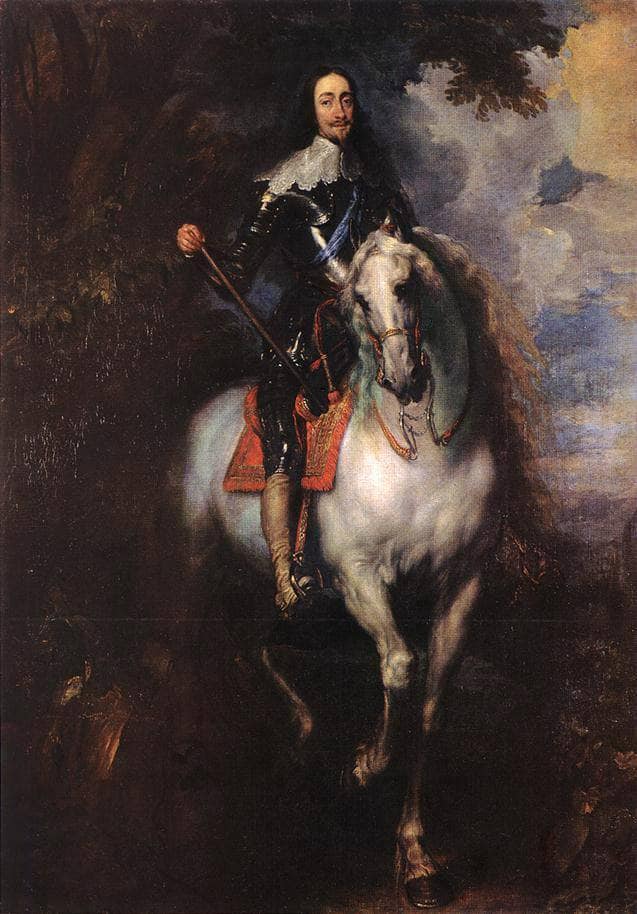
Charles I ruled England from 1625 until his execution in 1649. His reign was marked by political strife, civil war, and a struggle for power between the monarchy and Parliament. This period saw the rise of Puritanism and significant social upheaval. The Equestrian Portrait of Charles I captures the king's desire to project strength and authority during these challenging times.
Anthony van Dyck, a Flemish artist, became the principal court painter for Charles I. His unique style combined elements of realism and idealism, which set him apart from his contemporaries. Van Dyck's ability to convey the personality and status of his subjects made him a sought-after artist in the 17th century. His work not only immortalized Charles I but also influenced portraiture across Europe.
The 17th century was a time of artistic innovation, characterized by the Baroque style. This movement emphasized drama, movement, and emotional intensity. Van Dyck's Equestrian Portrait exemplifies these traits, showcasing the grandeur of the monarchy while adhering to the Baroque principles of composition and light. The painting reflects the cultural shifts of the time, merging art with political narrative.
The composition of the Equestrian Portrait is striking, with Charles I positioned prominently on his horse. The rich, dark background contrasts with the vibrant colors of the king's attire. Van Dyck's use of deep reds and golds enhances the regal quality of the portrait, drawing the viewer's eye to the figure of the king. This careful arrangement creates a sense of balance and harmony.
Symbolism plays a crucial role in the Equestrian Portrait. The horse represents nobility and strength, while the king's confident posture conveys authority. The painting serves as a visual declaration of Charles I's power, reinforcing his status as a monarch. The inclusion of the horse also reflects the importance of cavalry in 17th-century warfare, linking the king to military prowess.
The horse in the portrait is depicted with meticulous detail, showcasing its muscular build and elegant form. This attention to the horse's anatomy symbolizes the nobility associated with equestrianism. Van Dyck's ability to capture the horse's spirit adds depth to the painting, emphasizing the bond between the king and his steed. The horse is not just a mode of transport; it embodies the king's royal stature.
Charles I is adorned in luxurious garments that reflect his royal status. His attire features intricate embroidery and rich fabrics, including a lavish cloak that flows elegantly. The king's accessories, such as the ornate sword and jeweled belt, further signify his authority. These details not only enhance the visual appeal but also serve to communicate the wealth and power of the monarchy.
Van Dyck employed advanced oil painting techniques, including layering and glazing, to achieve depth and luminosity. By applying multiple layers of paint, he created a rich texture that brings the portrait to life. This method allows for subtle variations in color and tone, enhancing the overall realism of the work.
The brushwork in the Equestrian Portrait is both precise and expressive. Van Dyck's technique captures the fine details of the king's face and attire, showcasing his skill in portraiture. The texture of the painting adds a tactile quality, inviting viewers to appreciate the craftsmanship involved in its creation.
Van Dyck masterfully used lighting and shadow to create a three-dimensional effect. The strategic placement of light highlights the contours of Charles I's face and body, adding depth to the composition. This technique not only enhances the realism of the portrait but also draws attention to the king's commanding presence.
The Equestrian Portrait of Charles I set a new standard for royal portraiture. Van Dyck's innovative approach influenced countless artists, establishing a template for depicting power and nobility. His ability to blend realism with idealism became a hallmark of portrait painting, inspiring generations of artists to come.
Over the years, the Equestrian Portrait has undergone various preservation and restoration efforts. Experts work diligently to maintain its artistic integrity, ensuring that future generations can appreciate Van Dyck's masterpiece. These efforts highlight the importance of preserving cultural heritage and the value of historical artworks.
The original Equestrian Portrait of Charles I is housed in the National Gallery in London. This prestigious institution offers visitors the chance to view the painting up close, allowing them to appreciate Van Dyck's artistry and the historical significance of the work. Special exhibitions often feature the portrait, providing additional context and insights into its creation.
Portraits played a vital role in shaping the public image of monarchs. Charles I understood the power of visual representation, using portraits to convey his authority and legitimacy. The Equestrian Portrait serves as a testament to the king's desire to be seen as a strong and capable ruler during a time of political turmoil.
When first unveiled, the Equestrian Portrait received mixed reactions. Some praised its grandeur and artistry, while others criticized it as a display of vanity. This duality reflects the complex relationship between Charles I and his subjects, highlighting the challenges he faced as a monarch.
Van Dyck's influence extends beyond his time, echoing in modern art. Contemporary artists often draw inspiration from his techniques and themes, exploring the interplay of power and identity. The Equestrian Portrait remains a relevant reference point, illustrating the enduring impact of Van Dyck's work on the art world.
The Equestrian Portrait of Charles I is significant for its portrayal of royal authority during a tumultuous period in English history. It reflects the political climate of the time and the king's efforts to assert his power.
Van Dyck's style influenced many artists by introducing a blend of realism and idealism in portraiture. His techniques set a standard for capturing the essence of subjects, impacting the way portraits were created in the years that followed.
Key elements of the Equestrian Portrait that classify it as a Baroque masterpiece include its dramatic composition, rich color palette, and the use of light and shadow to create depth. These features exemplify the emotional intensity characteristic of Baroque art.
The original Equestrian Portrait of Charles I can be viewed at the National Gallery in London, where it is part of their esteemed collection of European paintings.
Van Dyck achieved realism through techniques such as layering, glazing, and meticulous brushwork. His attention to detail in the king's features and attire enhances the lifelike quality of the portrait.
The Equestrian Portrait stands out among royal portraits due to its dynamic composition and the powerful symbolism of the horse. Van Dyck's ability to convey the king's authority and personality sets it apart from other works of the time.
Reproductions of the Equestrian Portrait of Charles I offer a way to appreciate this masterpiece in your own space. Unlike prints, high-quality painting reproductions capture the texture and depth of the original artwork, making them a superior choice for art lovers.
When examining a reproduction, look for the intricate details in the king's attire, the lifelike representation of the horse, and the subtle play of light and shadow. A well-crafted reproduction will reflect the original's richness and depth, allowing you to enjoy Van Dyck's artistry.

Discover some of our latest oil paintings, each one carefully hand-painted on canvas.
At Art & See, we're committed to delivering the highest quality art reproductions. Our team of expert artists and state-of-the-art processes ensure that each piece is a masterpiece in its own right.

Experience your masterpiece's creation through daily photos from our expert artists, each with 15+ years of experience.

Your artwork travels first class via UPS, FedEx, or DHL, protected by museum-grade packaging for safe delivery.

Review unedited photos of your finished painting and request unlimited free revisions before it ships. We only ship when you say it's perfect.

Every piece is crafted with archival materials, UV-resistant finishes, and premium British paints to last generations.
Yes, 100% hand-painted with oil on canvas by artists with 15+ years of experience. No prints, no digital shortcuts. You'll see and feel real brushstrokes, just like the original Anthony van Dyck masterpiece.
Your Equestrian Portrait of Charles I, King of England reproduction takes 2–5 weeks to hand-paint depending on size and detail. Once approved, shipping takes 5–8 days via FedEx, UPS, or DHL with full tracking. Free worldwide shipping included.
Absolutely. Once your Equestrian Portrait of Charles I, King of England is complete, we send you unedited photos, a full view and close-up details. Request unlimited free revisions until you're 100% satisfied. We don't ship until you say "yes."
Every painting goes through our Preview & Approve process: you receive unedited photos of your finished Anthony van Dyck reproduction and can request unlimited free revisions before it ships. We only ship when you say it's perfect. If after delivery you have any concerns, contact us at [email protected] and our team will work with you on the best path forward.
Professional-grade oil paints (Windsor & Newton) on premium linen canvas with UV-resistant protective coating. Museum-grade materials built to last generations, the same quality used in galleries worldwide.
Our artists specialize in Anthony van Dyck's technique: color accuracy, brushwork, and composition are matched to the original. Every reproduction goes through quality review before your approval photos are taken.
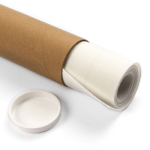
Every painting is insured and delivered door-to-door. Unframed paintings ship in protective hard tubes. Framed paintings are bubble-wrapped in sturdy boxes. If anything arrives damaged, we repair or replace it free.
Dive into the vibrant world of Historic Art. Discover your next painting today.