 4.9/5
4.9/5




SAMPLES OF QUALITY
Recent Hand-Painted Reproductions
Discover some of our latest oil paintings, each one carefully hand-painted on canvas.

AS SEEN IN






by Thomas Cole
Handmade Oil Painting on Canvas Art Reproduction, Museum-quality

Processing & Shipping Time
Your delivery time includes two parts:
Shipping Methods
We ship with trusted couriers like FedEx, UPS, and DHL. Every shipment includes a tracking code.
Our goal is to deliver your order safely and quickly.
Shipment Safety Measures
We handle your products with care so they arrive in perfect condition:
Every product is insured and delivered right to your door, so you can feel confident buying from us.
Every Art & See painting is created by artists with 15+ years of experience using professional-grade oil paints and premium linen canvas with UV-resistant protective coating, the same museum-grade materials used in galleries worldwide. Each piece goes through quality review before your approval photos are taken. If after delivery you have any concerns about your painting, contact us at [email protected] and our team will work with you on the best path forward.
Full Warranty
Every painting is protected against physical damage during shipping. If your painting arrives damaged, we repair or replace it, free of charge.
Coverage Details
Transit damage (crushed, torn, water damage): we repair or replace at no cost. Please note that damages resulting from accidents or inappropriate use are not covered under this warranty.
Repair or Replace
Depending on the extent of damage, the affected painting will either be repaired or replaced at no additional cost to you.
Free Service
All warranty services are provided absolutely free of charge.
We want you to absolutely love your handmade artwork. Here's how it works:
In the rare case you approve the photos and the artwork has been shipped and delivered to you, and you still want additional modification requests, we can handle it as a courtesy at our discretion. If accepted, you cover the return shipping cost.
| Type | Hand-Painted Oil Painting Reproduction |
| Original Artist | Thomas Cole |
| Price Range | $350 to $1,150 |
| Shipping | Free Worldwide |
| Quality | Preview & Approve Before Shipping |
| Medium | Oil on Canvas |
| Canvas | Museum-Grade Linen Canvas |
| Technique | Hand-painted brushstroke-by-brushstroke |
| Art Style | Romanticism |
| Period | 19th Century |
| Artist Nationality | American |
| Orientation | Horizontal |
| Subject | Architectural, Cultural heritage, Landscapes, Landscapes urban, Seascapes |
| Available Sizes | 7 (23'' W × 14'' H to 74'' W × 46'' H, including the original size), plus custom sizes |
| Framing Options | Unframed, Stretched Canvas, Classic & Modern Frames |
| Delivery | 14–28 business days |
| Size | 160.7 × 99.7 cm (63.5 × 39.5 in) |
| Year | 1836 |
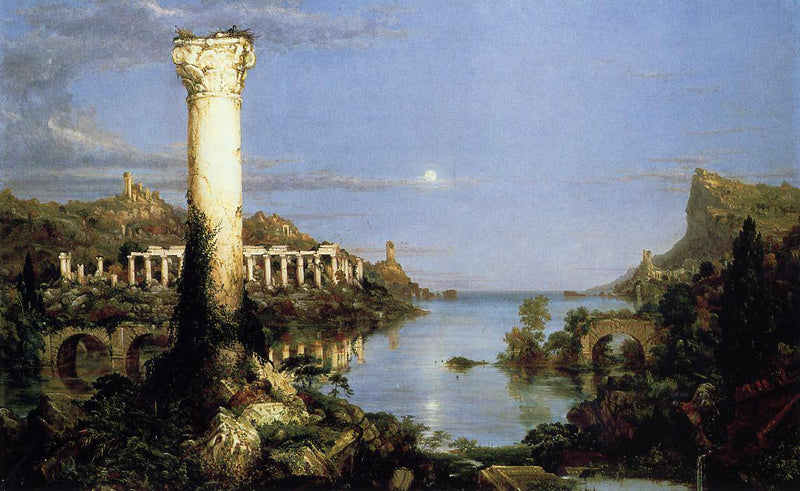
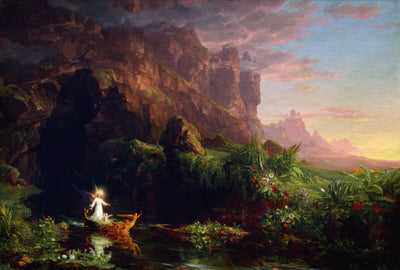
The Course of Empire: Desolation is a pivotal work within the Hudson River School, a movement that celebrated the American landscape. This group of artists, active in the mid-19th century, emphasized the beauty of nature and its spiritual significance. Their paintings often depicted the majestic scenery of the American wilderness, showcasing the interplay between light and shadow, which became a hallmark of their style.
Thomas Cole, born in 1801 in England, immigrated to the United States as a child. He became the first significant American landscape painter, establishing a unique voice that blended European Romanticism with American themes. Cole's work often reflected his deep appreciation for nature and his concerns about industrialization, making him a key figure in the development of American art.
Romanticism, a movement that emphasized emotion and individualism, profoundly influenced Cole's artistic vision. In The Course of Empire: Desolation, he captures the tension between nature and civilization. This painting serves as a poignant reminder of the fleeting nature of human achievements, echoing the Romantic ideal of the sublime, where beauty and terror coexist.
The Course of Empire series illustrates the inevitable cycle of civilization, from its glorious rise to its eventual decline. In Desolation, we witness the remnants of a once-great city, now in ruins. This theme resonates with historical events, such as the fall of Rome, and serves as a cautionary tale about the transience of human endeavors.
In Desolation, Cole vividly portrays the struggle between nature and human progress. The painting depicts a desolate landscape, overrun by nature, reclaiming what civilization has abandoned. This conflict highlights the fragility of human achievements in the face of nature's enduring power, a theme that remains relevant today as we confront environmental challenges.
The ruins in The Course of Empire: Desolation symbolize the consequences of hubris and the inevitable decay of human constructs. They serve as a powerful reminder of the impermanence of power and wealth. The crumbling structures evoke feelings of nostalgia and loss, inviting viewers to reflect on the passage of time and the legacy of civilizations.
Cole's choice of a muted color palette in Desolation enhances the painting's somber mood. Earthy tones dominate the landscape, while dramatic skies filled with swirling clouds add a sense of foreboding. This combination creates a striking visual contrast that draws the viewer's eye and evokes a deep emotional response.
The composition of Desolation employs leading lines that guide the viewer's gaze through the painting. The ruins and the surrounding landscape create a natural flow, drawing attention to the central theme of decay. Cole's strategic placement of elements ensures that the viewer's focus remains on the poignant message of the artwork.
In Desolation, figures are sparse, emphasizing the overwhelming presence of nature and the ruins. The architecture, once a symbol of human achievement, now stands as a ghostly reminder of the past. This stark contrast between human creations and the natural world reinforces the painting's themes of loss and the passage of time.
Desolation evokes powerful feelings of nostalgia and loss. Viewers may find themselves reflecting on their own experiences of change and impermanence. The painting's haunting beauty invites contemplation, making it a deeply personal experience for each observer.
In today's world, Desolation resonates with contemporary concerns about environmental degradation and the consequences of unchecked progress. Cole's work serves as a timeless reminder of the need for balance between development and preservation, urging viewers to consider the impact of their actions on the planet.
Each viewer may interpret Desolation differently, influenced by their own life experiences. For some, it may represent a warning about the fragility of civilization, while for others, it may evoke a sense of peace found in nature's resilience. This diversity of interpretation adds to the painting's richness and enduring appeal.
Thomas Cole's influence on the American Romantic movement is profound. His ability to blend landscape with narrative inspired countless artists to explore similar themes. Cole's work laid the groundwork for future generations, encouraging them to reflect on the relationship between humanity and nature.
Many landscape artists of the 19th and 20th centuries drew inspiration from Cole's techniques and themes. Artists like Frederic Edwin Church and Albert Bierstadt expanded on his ideas, creating grand landscapes that celebrated the American wilderness. Cole's legacy continues to shape the way artists approach landscape painting today.
Contemporary artists often revisit Cole's themes, exploring the tension between nature and civilization. Modern interpretations may incorporate new media and technology, but the core message remains relevant. Cole's vision of the cycle of civilization continues to inspire discussions about sustainability and environmental stewardship.
The Course of Empire series, created between 1833 and 1836, tells the story of a civilization's rise and fall. It consists of five paintings, each depicting a different stage in the life of an empire, culminating in Desolation, which illustrates the aftermath of decline.
Desolation stands out as the final painting in the series, contrasting sharply with the earlier works that depict the empire at its height. It serves as a sobering conclusion, emphasizing the themes of decay and the inevitable return of nature.
Cole employed techniques such as chiaroscuro to create depth and drama. His use of light and shadow enhances the emotional impact of the scene, while his meticulous attention to detail brings the ruins and landscape to life.
Main symbols in Desolation include the ruins of architecture, representing the fall of civilization, and the encroaching nature, symbolizing the resilience of the natural world. Together, they convey the painting's central themes of impermanence and the cycle of life.
Art critics have praised Desolation for its emotional depth and technical mastery. Many highlight its relevance to contemporary issues, noting how Cole's work continues to resonate with audiences today.
The ruins in Desolation signify the consequences of human ambition and the inevitable decline of civilizations. They serve as a powerful reminder of history's lessons and the importance of humility in the face of nature's enduring power.
High-quality oil painting reproductions of The Course of Empire: Desolation are available, offering art lovers a chance to own a piece of this masterpiece. Unlike prints, these reproductions capture the texture and depth of the original work, making them a superior choice for collectors and enthusiasts alike.

Discover some of our latest oil paintings, each one carefully hand-painted on canvas.
At Art & See, we're committed to delivering the highest quality art reproductions. Our team of expert artists and state-of-the-art processes ensure that each piece is a masterpiece in its own right.

Experience your masterpiece's creation through daily photos from our expert artists, each with 15+ years of experience.

Your artwork travels first class via UPS, FedEx, or DHL, protected by museum-grade packaging for safe delivery.

Review unedited photos of your finished painting and request unlimited free revisions before it ships. We only ship when you say it's perfect.

Every piece is crafted with archival materials, UV-resistant finishes, and premium British paints to last generations.


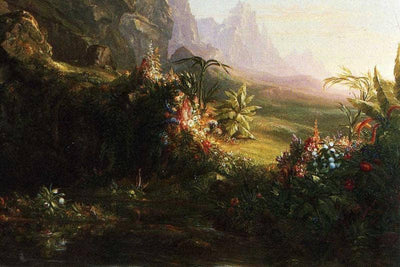


Yes, 100% hand-painted with oil on canvas by artists with 15+ years of experience. No prints, no digital shortcuts. You'll see and feel real brushstrokes, just like the original Thomas Cole masterpiece.
Your The Course of Empire: Desolation reproduction takes 2–5 weeks to hand-paint depending on size and detail. Once approved, shipping takes 5–8 days via FedEx, UPS, or DHL with full tracking. Free worldwide shipping included.
Absolutely. Once your The Course of Empire: Desolation is complete, we send you unedited photos, a full view and close-up details. Request unlimited free revisions until you're 100% satisfied. We don't ship until you say "yes."
Every painting goes through our Preview & Approve process: you receive unedited photos of your finished Thomas Cole reproduction and can request unlimited free revisions before it ships. We only ship when you say it's perfect. If after delivery you have any concerns, contact us at [email protected] and our team will work with you on the best path forward.
Professional-grade oil paints (Windsor & Newton) on premium linen canvas with UV-resistant protective coating. Museum-grade materials built to last generations, the same quality used in galleries worldwide.
Our artists specialize in Thomas Cole's technique: color accuracy, brushwork, and composition are matched to the original. Every reproduction goes through quality review before your approval photos are taken.
Every painting is insured and delivered door-to-door. Unframed paintings ship in protective hard tubes. Framed paintings are bubble-wrapped in sturdy boxes. If anything arrives damaged, we repair or replace it free.
Dive into the vibrant world of Historic Art. Discover your next painting today.
