 4.9/5
4.9/5








SAMPLES OF QUALITY
Recent Hand-Painted Reproductions
Discover some of our latest oil paintings, each one carefully hand-painted on canvas.

AS SEEN IN





Handmade Oil Painting on Canvas Art Reproduction, Museum-quality

The six dominant colors measured from the painting, with the share of canvas each one covers. Click a swatch to copy its hex code.
Processing & Shipping Time
Your delivery time includes two parts:
Shipping Methods
We ship with trusted couriers like FedEx, UPS, and DHL. Every shipment includes a tracking code.
Our goal is to deliver your order safely and quickly.
Shipment Safety Measures
We handle your products with care so they arrive in perfect condition:
Every product is insured and delivered right to your door, so you can feel confident buying from us.
Every Art & See painting is created by artists with 15+ years of experience using professional-grade oil paints and premium linen canvas with UV-resistant protective coating, the same museum-grade materials used in galleries worldwide. Each piece goes through quality review before your approval photos are taken. If after delivery you have any concerns about your painting, contact us at [email protected] and our team will work with you on the best path forward.
Full Warranty
Every painting is protected against physical damage during shipping. If your painting arrives damaged, we repair or replace it, free of charge.
Coverage Details
Transit damage (crushed, torn, water damage): we repair or replace at no cost. Please note that damages resulting from accidents or inappropriate use are not covered under this warranty.
Repair or Replace
Depending on the extent of damage, the affected painting will either be repaired or replaced at no additional cost to you.
Free Service
All warranty services are provided absolutely free of charge.
We want you to absolutely love your handmade artwork. Here's how it works:
In the rare case you approve the photos and the artwork has been shipped and delivered to you, and you still want additional modification requests, we can handle it as a courtesy at our discretion. If accepted, you cover the return shipping cost.
| Type | Hand-Painted Oil Painting Reproduction |
| Original Artist | Lorenzo Lotto |
| Price Range | $350 to $1,150 |
| Shipping | Free Worldwide |
| Quality | Preview & Approve Before Shipping |
| Medium | Oil on Canvas |
| Canvas | Museum-Grade Linen Canvas |
| Technique | Hand-painted brushstroke-by-brushstroke |
| Art Style | High Renaissance |
| Period | 17th Century |
| Artist Nationality | Italian |
| Orientation | Vertical |
| Subject | Cultural heritage, Cultural heritage mythology, Cultural heritage religious, Fantasy, Portraits, Religion |
| Available Sizes | 7 (14'' W × 23'' H to 46'' W × 74'' H, including the original size), plus custom sizes |
| Framing Options | Unframed, Stretched Canvas, Classic & Modern Frames |
| Delivery | 14–28 business days |
Bergamo, a picturesque city in northern Italy, played a crucial role during the Renaissance. It was a hub for art, culture, and commerce, attracting talented artists and patrons. The city's rich history and vibrant community fostered an environment where masterpieces like the Altar Polyptych of San Bartolomeo could flourish. This polyptych not only reflects the artistic trends of the time but also embodies the spiritual aspirations of the local populace.
Lorenzo Lotto, born in Venice around 1480, was a prominent figure in the Italian Renaissance. His artistic journey took him through various cities, including Bergamo, where he developed a unique style that blended realism with emotional depth. Lotto's works often feature intricate details and a rich color palette, showcasing his mastery of oil painting. His ability to convey human emotion and divine presence set him apart from his contemporaries.
The Altar Polyptych of San Bartolomeo was commissioned by the local community, reflecting their devotion and desire for a visual representation of their faith. This artwork served not only as a religious focal point but also as a testament to the artistic prowess of Lotto. The polyptych was designed to inspire worship and convey the importance of the saints depicted within it.
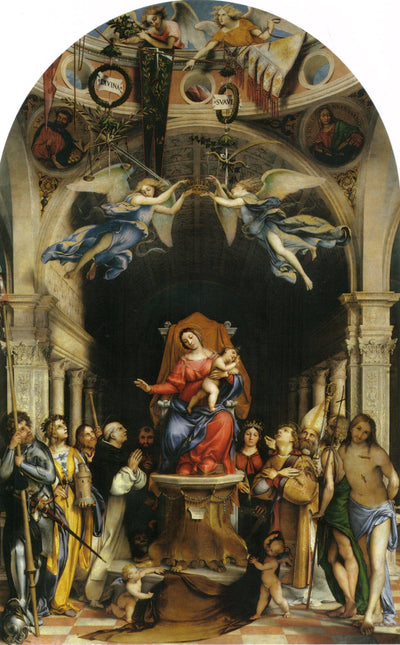
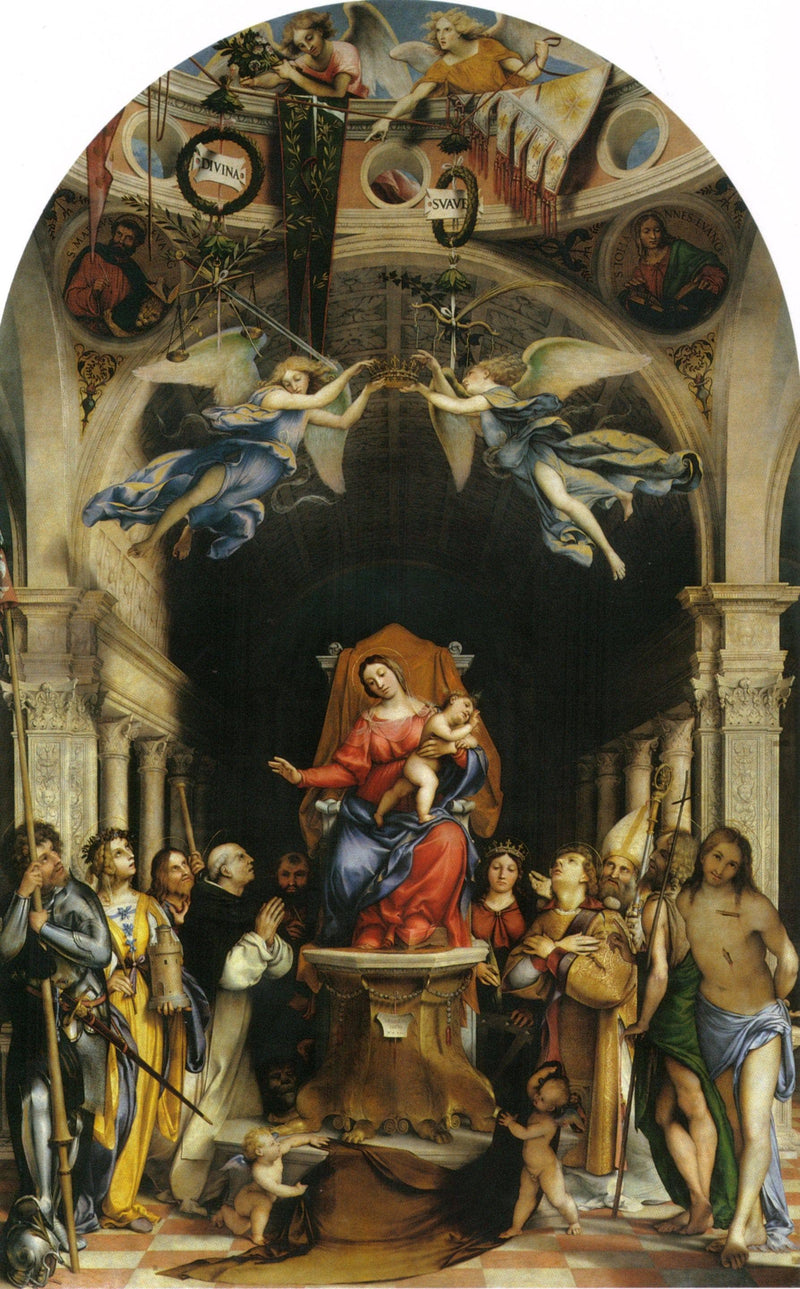
The main panel of the polyptych features the Enthroned Madonna, surrounded by a celestial assembly of angels and saints. Lotto's careful arrangement draws the viewer's eye to the Madonna, emphasizing her central role in the divine hierarchy. The composition balances figures and space, creating a harmonious scene that invites contemplation.
The Madonna, depicted with a serene expression, symbolizes divine authority and maternal compassion. Her throne, adorned with rich fabrics and intricate details, signifies her exalted status. The presence of the Christ Child in her lap further emphasizes her role as the intercessor between humanity and the divine.
Angels surround the Madonna, each contributing to the heavenly atmosphere of the painting. Their delicate features and flowing garments enhance the sense of grace and spirituality. These celestial beings serve as messengers of God, reinforcing the theme of divine intercession and protection.
Saint Alexander of Bergamo, the city's patron saint, is depicted with symbols of his martyrdom. His presence in the polyptych highlights the local devotion to him and the community's desire for his protection. Alexander's role as a defender of the faith resonates deeply with the viewers.
Saint Barbara, known for her unwavering faith, is often depicted with a tower, symbolizing her strength and resilience. Her inclusion in the polyptych serves as a reminder of the power of faith in overcoming adversity. She represents hope and divine protection for the faithful.
Saint Roch, revered as a healer during the plague, embodies compassion and care for the sick. His presence in the artwork reflects the community's reliance on divine intervention during times of crisis. Roch's story resonates with the themes of healing and protection, making him a vital figure in the polyptych.
Saint Dominic, the founder of the Dominican Order, is depicted with a book and a lily, symbols of his commitment to preaching and purity. His inclusion emphasizes the importance of education and faith in the Renaissance period. Dominic's legacy as a spiritual leader continues to inspire devotion among the faithful.
Lorenzo Lotto's mastery of oil painting is evident in the Altar Polyptych. He employed techniques such as glazing and layering to achieve depth and luminosity. This method allows for rich color variations and intricate details, enhancing the overall visual impact of the artwork.
Lotto's color palette is vibrant yet harmonious, using warm tones to evoke feelings of comfort and spirituality. The strategic use of light and shadow creates a three-dimensional effect, drawing the viewer into the scene. This emotional resonance is a hallmark of Lotto's style, making his works deeply engaging.
The brushwork in the polyptych showcases Lotto's skill in creating texture and movement. From the delicate folds of garments to the intricate details of the background, each element contributes to the overall composition. This attention to detail enhances the viewer's experience, inviting closer inspection.
The Altar Polyptych explores profound themes of salvation and redemption. The depiction of saints interceding for the faithful highlights the belief in divine mercy and protection. This theme resonates with viewers, offering hope and reassurance in their spiritual journeys.
Saints play a crucial role in the polyptych, acting as intermediaries between God and humanity. Their presence reinforces the idea that the faithful can seek their intercession in times of need. This connection to the divine is a central aspect of the painting's message.
Lotto's use of visual storytelling effectively communicates the spiritual narrative of the polyptych. Each figure contributes to the overall message of faith, protection, and divine love. The careful arrangement and expressive details invite viewers to engage with the artwork on a deeper level.
While both Lotto and Titian were masters of the Renaissance, their approaches to religious art differ significantly. Lotto's focus on emotional depth contrasts with Titian's grand, dramatic compositions. This distinction highlights Lotto's unique contribution to the genre of sacred art.
Lotto's time in Venice influenced his artistic style, evident in his use of color and light. The Venetian emphasis on vibrant hues and atmospheric effects can be seen in the Altar Polyptych. This blend of influences showcases Lotto's ability to adapt and innovate within the Renaissance art scene.
Lorenzo Lotto's innovative techniques and emotional storytelling set him apart from his contemporaries. His ability to capture the human experience within a religious context makes his work timeless. Lotto's unique perspective continues to resonate with audiences today, solidifying his place in art history.
The Altar Polyptych of San Bartolomeo is housed in the Church of San Bartolomeo in Bergamo, Italy. This historic church is easily accessible for visitors, making it a must-see destination for art lovers and history enthusiasts alike. The polyptych is a highlight of the church, drawing visitors from around the world.
Upon entering the Church of San Bartolomeo, visitors are greeted by a serene atmosphere that enhances the experience of viewing the polyptych. The soft lighting and quiet ambiance create a contemplative space, allowing for reflection on the artwork's spiritual themes. This setting amplifies the emotional impact of Lotto's masterpiece.
To fully appreciate the Altar Polyptych, take your time to observe the intricate details and symbolism within the painting. Consider the historical context and the stories of the saints depicted. Engaging with the artwork on a personal level can deepen your understanding and appreciation of Lotto's artistic vision.
The Altar Polyptych is significant as a representation of Renaissance art and local devotion in Bergamo. It reflects the community's spiritual aspirations and Lotto's artistic mastery.
The main panel features Saint Alexander of Bergamo, Saint Barbara, Saint Roch, and Saint Dominic, each representing different aspects of faith and protection.
Lotto employed oil painting techniques, including glazing and layering, to create depth and luminosity. His brushwork adds texture and movement to the composition.
The Enthroned Madonna symbolizes divine authority through her serene expression and central position in the composition. She represents the connection between humanity and the divine.
The polyptych explores themes of faith, protection, salvation, and divine intercession, inviting viewers to reflect on their spiritual journeys.
To learn more about Lorenzo Lotto, consider visiting art museums, reading books on Renaissance art, or exploring online resources dedicated to his life and works.
When purchasing a reproduction, consider the quality of materials, the artist's technique, and the level of detail. A high-quality painting reproduction will capture the essence of the original artwork.
To ensure quality, look for reproductions created by skilled artists using premium materials. Check reviews and seek out reputable sellers who specialize in art reproductions.
Yes, there are various styles of reproductions available, including hand-painted versions and high-quality prints. Hand-painted reproductions offer a more authentic experience, closely resembling the original artwork.

Discover some of our latest oil paintings, each one carefully hand-painted on canvas.
At Art & See, we're committed to delivering the highest quality art reproductions. Our team of expert artists and state-of-the-art processes ensure that each piece is a masterpiece in its own right.

Experience your masterpiece's creation through daily photos from our expert artists, each with 15+ years of experience.

Your artwork travels first class via UPS, FedEx, or DHL, protected by museum-grade packaging for safe delivery.

Review unedited photos of your finished painting and request unlimited free revisions before it ships. We only ship when you say it's perfect.

Every piece is crafted with archival materials, UV-resistant finishes, and premium British paints to last generations.

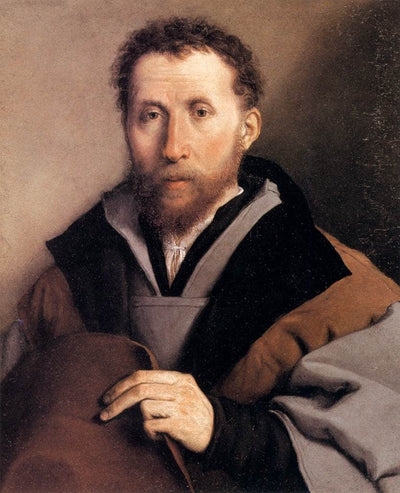
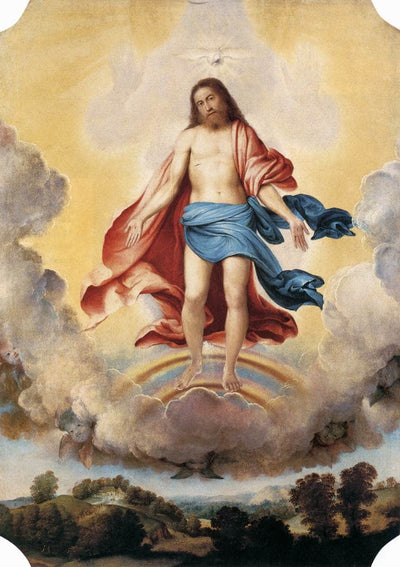
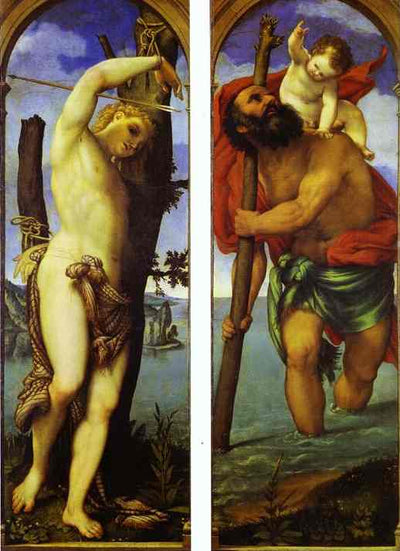
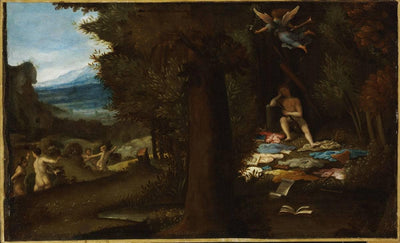

Yes, 100% hand-painted with oil on canvas by artists with 15+ years of experience. No prints, no digital shortcuts. You'll see and feel real brushstrokes, just like the original Lorenzo Lotto masterpiece.
Your Altar polyptych of San Bartolomeo, Bergamo, main panel: Enthroned Madonna with Angels and Saints - Alexander of Bergamo, Barbara, Roch, Dominic reproduction takes 2–5 weeks to hand-paint depending on size and detail. Once approved, shipping takes 5–8 days via FedEx, UPS, or DHL with full tracking. Free worldwide shipping included.
Absolutely. Once your Altar polyptych of San Bartolomeo, Bergamo, main panel: Enthroned Madonna with Angels and Saints - Alexander of Bergamo, Barbara, Roch, Dominic is complete, we send you unedited photos, a full view and close-up details. Request unlimited free revisions until you're 100% satisfied. We don't ship until you say "yes."
Every painting goes through our Preview & Approve process: you receive unedited photos of your finished Lorenzo Lotto reproduction and can request unlimited free revisions before it ships. We only ship when you say it's perfect. If after delivery you have any concerns, contact us at [email protected] and our team will work with you on the best path forward.
Professional-grade oil paints (Windsor & Newton) on premium linen canvas with UV-resistant protective coating. Museum-grade materials built to last generations, the same quality used in galleries worldwide.
Our artists specialize in Lorenzo Lotto's technique: color accuracy, brushwork, and composition are matched to the original. Every reproduction goes through quality review before your approval photos are taken.
Every painting is insured and delivered door-to-door. Unframed paintings ship in protective hard tubes. Framed paintings are bubble-wrapped in sturdy boxes. If anything arrives damaged, we repair or replace it free.
Dive into the vibrant world of Historic Art. Discover your next painting today.
