4.9/5
4.9/5






SAMPLES OF QUALITY
Recent Hand-Painted Reproductions
Discover some of our latest oil paintings, each one carefully hand-painted on canvas.

AS SEEN IN





Handmade Oil Painting on Canvas Art Reproduction, Museum-quality

The six dominant colors measured from the painting, with the share of canvas each one covers. Click a swatch to copy its hex code.
Processing & Shipping Time
Your delivery time includes two parts:
Shipping Methods
We ship with trusted couriers like FedEx, UPS, and DHL. Every shipment includes a tracking code.
Our goal is to deliver your order safely and quickly.
Shipment Safety Measures
We handle your products with care so they arrive in perfect condition:
Every product is insured and delivered right to your door, so you can feel confident buying from us.
Every Art & See painting is created by artists with 15+ years of experience using professional-grade oil paints and premium linen canvas with UV-resistant protective coating, the same museum-grade materials used in galleries worldwide. Each piece goes through quality review before your approval photos are taken. If after delivery you have any concerns about your painting, contact us at [email protected] and our team will work with you on the best path forward.
Full Warranty
Every painting is protected against physical damage during shipping. If your painting arrives damaged, we repair or replace it, free of charge.
Coverage Details
Transit damage (crushed, torn, water damage): we repair or replace at no cost. Please note that damages resulting from accidents or inappropriate use are not covered under this warranty.
Repair or Replace
Depending on the extent of damage, the affected painting will either be repaired or replaced at no additional cost to you.
Free Service
All warranty services are provided absolutely free of charge.
We want you to absolutely love your handmade artwork. Here's how it works:
In the rare case you approve the photos and the artwork has been shipped and delivered to you, and you still want additional modification requests, we can handle it as a courtesy at our discretion. If accepted, you cover the return shipping cost.
| Type | Hand-Painted Oil Painting Reproduction |
| Original Artist | John Singleton Copley |
| Price Range | $350 to $1,150 |
| Shipping | Free Worldwide |
| Quality | Preview & Approve Before Shipping |
| Medium | Oil on Canvas |
| Canvas | Museum-Grade Linen Canvas |
| Technique | Hand-painted brushstroke-by-brushstroke |
| Art Style | Neoclassicism |
| Period | 18th Century |
| Artist Nationality | American |
| Orientation | Horizontal |
| Subject | Cultural heritage religious, Portraits group, Religion |
| Available Sizes | 7 (20'' W × 15'' H to 68'' W × 51'' H, including the original size), plus custom sizes |
| Framing Options | Unframed, Stretched Canvas, Classic & Modern Frames |
| Delivery | 14–28 business days |
| Size | 307.3 × 228.6 cm (121 × 90 in) |
| Year | 1781 |
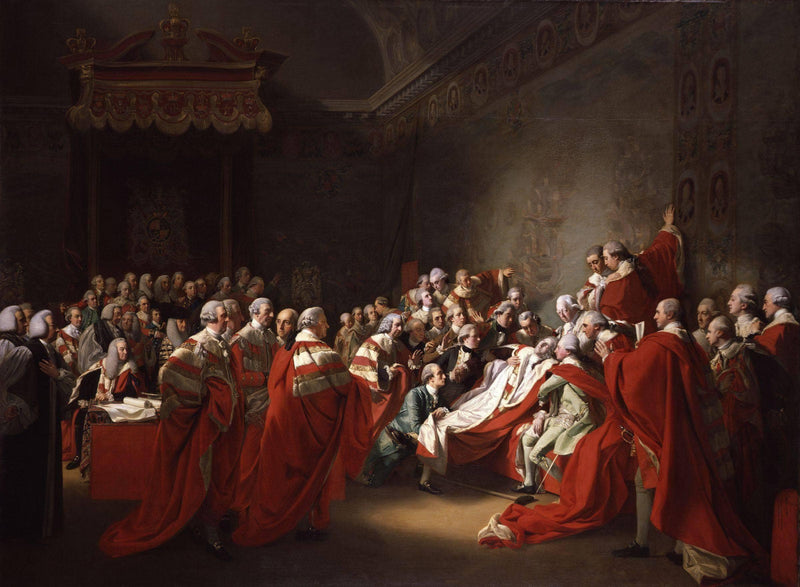
The 18th century was a time of great political upheaval in Britain. The era was marked by conflicts such as the Seven Years' War and the American Revolution. These events shaped the political landscape and influenced public opinion. The struggle for power among political factions created a backdrop for John Singleton Copley's poignant portrayal of William Pitt the Elder, the Earl of Chatham.
William Pitt the Elder, known for his oratory skills and leadership, played a crucial role in British politics. He served as Prime Minister and was a key figure in the fight against French dominance during the Seven Years' War. His policies and speeches rallied public support and helped shape modern British governance. Copley's painting captures Pitt's gravitas and the respect he commanded during his lifetime.
The Earl of Chatham's legacy extends beyond his political achievements. He is remembered for advocating for the American colonies and opposing oppressive taxation. His vision for a united British Empire influenced future leaders. Copley's artwork immortalizes Pitt's contributions, making it a significant historical document as well as a stunning piece of art.
John Singleton Copley was a master of oil painting, employing techniques that brought his subjects to life. He used layered brushwork to create texture and depth, allowing viewers to feel the weight of the moment. Copley's meticulous attention to detail showcases his skill in rendering fabrics, skin tones, and expressions, making his portraits remarkably lifelike.
Copley's color palette in The Death of the Earl of Chatham is rich and evocative. He used deep reds and muted earth tones to convey a sense of gravity and solemnity. The composition draws the viewer's eye to Pitt's figure, surrounded by a dramatic backdrop that enhances the emotional impact of the scene. This thoughtful arrangement reflects Copley's understanding of visual storytelling.
Symbolism plays a vital role in Copley's work. In this painting, the Earl's posture and expression convey a mix of dignity and vulnerability. The surrounding figures, including family members and political allies, symbolize loyalty and respect. Copley's ability to capture complex emotions adds depth to the narrative, inviting viewers to reflect on the themes of loss and legacy.
The composition features several key figures, each representing different aspects of Pitt's life and legacy. His son, William Pitt the Younger, stands nearby, symbolizing the continuation of his father's ideals. The presence of other political figures highlights the importance of collaboration in governance. Copley skillfully weaves these characters into a cohesive narrative.
Copley expertly captures the nuances of facial expressions and body language. The sorrow etched on the faces of those surrounding Pitt speaks volumes about their grief and admiration. The tension in their postures reflects the weight of the moment, making the viewer feel the emotional gravity of the scene. This attention to detail enhances the painting's impact.
The use of lighting and shadow in The Death of the Earl of Chatham adds a dramatic flair to the composition. Copley employs chiaroscuro techniques to create depth, highlighting Pitt's figure while casting shadows that evoke a sense of mourning. This interplay of light and dark not only enhances the visual appeal but also amplifies the emotional resonance of the artwork.
Copley's work significantly influenced portraiture in the 18th century. His ability to blend realism with emotional depth set a new standard for artists. The Death of the Earl of Chatham inspired contemporaries to explore similar themes of legacy and loss, paving the way for future developments in portrait painting.
Future generations of artists looked to Copley for inspiration. His innovative techniques and emotional storytelling influenced the Romantic movement and beyond. Artists such as Thomas Lawrence and John Constable drew from Copley's mastery, incorporating his principles into their own works. The Death of the Earl of Chatham remains a touchstone for understanding the evolution of portraiture.
The Death of the Earl of Chatham holds a special place in American art history. Copley, an American-born artist, bridged the gap between British and American art. His work reflects the complexities of identity during a time of colonial unrest. This painting serves as a reminder of the interconnectedness of art and politics in shaping cultural narratives.
John Singleton Copley's journey from Boston to London is a fascinating tale of ambition and talent. He began his career in colonial America, where he gained recognition for his portraits. His move to London marked a turning point, allowing him to engage with European art movements and refine his style. Copley's ability to adapt and innovate solidified his place in art history.
Copley's major works, including Watson and the Shark and The Death of the Earl of Chatham, reflect his deep understanding of human emotion and historical context. Each piece tells a story, capturing pivotal moments in time. Copley's art not only showcases his technical skill but also serves as a commentary on the social and political issues of his day.
Copley's contributions to art have been widely recognized. Critics and historians praise his ability to blend realism with narrative depth. His work has been celebrated in exhibitions and retrospectives, affirming his status as a leading figure in American and British art. Copley's legacy continues to inspire artists and art lovers alike.
The original painting, The Death of the Earl of Chatham, is housed in the National Gallery of Canada in Ottawa. This prestigious institution makes Copley's masterpiece accessible to art enthusiasts and historians. Visitors can appreciate the painting's grandeur and detail in person, experiencing its emotional depth firsthand.
Throughout the year, various exhibitions showcase Copley's work, including The Death of the Earl of Chatham. Major art institutions, such as the Museum of Fine Arts in Boston and the Tate in London, often feature his pieces. These exhibitions provide valuable insights into Copley's artistic journey and the historical context of his work.
When visiting the museum, take your time to observe the details in Copley's painting. Look closely at the expressions and the interplay of light and shadow. Consider the historical significance of the scene and how it reflects the era's political climate. Engaging with the artwork on this level enhances your appreciation and understanding of Copley's genius.
The Death of the Earl of Chatham depicts the final moments of William Pitt the Elder, showcasing the emotional impact of his passing on his family and political allies. The painting captures a pivotal moment in British history, reflecting the deep respect and admiration he garnered during his life.
The painting was commissioned by Pitt's family to honor his legacy and commemorate his contributions to British politics. It serves as a tribute to his enduring influence and the love his family held for him.
Copley aims to convey a profound sense of loss, respect, and admiration. The expressions of the figures surrounding Pitt reflect their grief and reverence, inviting viewers to empathize with their emotions.
The painting reflects the political climate of the 18th century by highlighting the tensions between Britain and its colonies. Pitt's advocacy for the American colonies and his opposition to oppressive policies resonate with the growing desire for independence during this period.
Notable features of Copley's painting style include his meticulous attention to detail, use of rich color palettes, and ability to capture complex emotions. His portraits often convey a sense of realism and narrative depth, making them compelling and relatable.
To appreciate the details, take time to observe the facial expressions, body language, and the interplay of light and shadow. Consider the historical context and the emotions conveyed through the figures. Engaging with these elements enhances your understanding of Copley's artistry.
Reproductions of The Death of the Earl of Chatham offer a way to enjoy Copley's masterpiece in your own space. Unlike prints, high-quality painting reproductions capture the texture and depth of the original artwork. They provide a more authentic experience, allowing you to appreciate the nuances of Copley's technique.
Exhibitions featuring The Death of the Earl of Chatham may vary by season. Check with major art institutions for current displays and upcoming exhibitions. These events often provide opportunities to learn more about Copley's work and its significance in art history.

Discover some of our latest oil paintings, each one carefully hand-painted on canvas.
At Art & See, we're committed to delivering the highest quality art reproductions. Our team of expert artists and state-of-the-art processes ensure that each piece is a masterpiece in its own right.

Experience your masterpiece's creation through daily photos from our expert artists, each with 15+ years of experience.

Your artwork travels first class via UPS, FedEx, or DHL, protected by museum-grade packaging for safe delivery.

Review unedited photos of your finished painting and request unlimited free revisions before it ships. We only ship when you say it's perfect.

Every piece is crafted with archival materials, UV-resistant finishes, and premium British paints to last generations.
Yes, 100% hand-painted with oil on canvas by artists with 15+ years of experience. No prints, no digital shortcuts. You'll see and feel real brushstrokes, just like the original John Singleton Copley masterpiece.
Your The Death of the Earl of Chatham reproduction takes 2–5 weeks to hand-paint depending on size and detail. Once approved, shipping takes 5–8 days via FedEx, UPS, or DHL with full tracking. Free worldwide shipping included.
Absolutely. Once your The Death of the Earl of Chatham is complete, we send you unedited photos, a full view and close-up details. Request unlimited free revisions until you're 100% satisfied. We don't ship until you say "yes."
Every painting goes through our Preview & Approve process: you receive unedited photos of your finished John Singleton Copley reproduction and can request unlimited free revisions before it ships. We only ship when you say it's perfect. If after delivery you have any concerns, contact us at [email protected] and our team will work with you on the best path forward.
Professional-grade oil paints (Windsor & Newton) on premium linen canvas with UV-resistant protective coating. Museum-grade materials built to last generations, the same quality used in galleries worldwide.
Our artists specialize in John Singleton Copley's technique: color accuracy, brushwork, and composition are matched to the original. Every reproduction goes through quality review before your approval photos are taken.
Every painting is insured and delivered door-to-door. Unframed paintings ship in protective hard tubes. Framed paintings are bubble-wrapped in sturdy boxes. If anything arrives damaged, we repair or replace it free.
Dive into the vibrant world of Historic Art. Discover your next painting today.