 4.9/5
4.9/5







SAMPLES OF QUALITY
Recent Hand-Painted Reproductions
Discover some of our latest oil paintings, each one carefully hand-painted on canvas.

AS SEEN IN





Handmade Oil Painting on Canvas Art Reproduction, Museum-quality

The six dominant colors measured from the painting, with the share of canvas each one covers. Click a swatch to copy its hex code.
Processing & Shipping Time
Your delivery time includes two parts:
Shipping Methods
We ship with trusted couriers like FedEx, UPS, and DHL. Every shipment includes a tracking code.
Our goal is to deliver your order safely and quickly.
Shipment Safety Measures
We handle your products with care so they arrive in perfect condition:
Every product is insured and delivered right to your door, so you can feel confident buying from us.
Every Art & See painting is created by artists with 15+ years of experience using professional-grade oil paints and premium linen canvas with UV-resistant protective coating, the same museum-grade materials used in galleries worldwide. Each piece goes through quality review before your approval photos are taken. If after delivery you have any concerns about your painting, contact us at [email protected] and our team will work with you on the best path forward.
Full Warranty
Every painting is protected against physical damage during shipping. If your painting arrives damaged, we repair or replace it, free of charge.
Coverage Details
Transit damage (crushed, torn, water damage): we repair or replace at no cost. Please note that damages resulting from accidents or inappropriate use are not covered under this warranty.
Repair or Replace
Depending on the extent of damage, the affected painting will either be repaired or replaced at no additional cost to you.
Free Service
All warranty services are provided absolutely free of charge.
We want you to absolutely love your handmade artwork. Here's how it works:
In the rare case you approve the photos and the artwork has been shipped and delivered to you, and you still want additional modification requests, we can handle it as a courtesy at our discretion. If accepted, you cover the return shipping cost.
| Type | Hand-Painted Oil Painting Reproduction |
| Original Artist | Henri de Toulouse-Lautrec |
| Price Range | $350 to $1,150 |
| Shipping | Free Worldwide |
| Quality | Preview & Approve Before Shipping |
| Medium | Oil on Canvas |
| Canvas | Museum-Grade Linen Canvas |
| Technique | Hand-painted brushstroke-by-brushstroke |
| Art Style | Post Impressionism |
| Period | 19th Century |
| Artist Nationality | French |
| Orientation | Horizontal |
| Subject | Portraits, Portraits female, Portraits group, Portraits male |
| Available Sizes | 7 (19'' W × 16'' H to 64'' W × 54'' H, including the original size), plus custom sizes |
| Framing Options | Unframed, Stretched Canvas, Classic & Modern Frames |
| Delivery | 14–28 business days |
| Size | 132.5 × 111.5 cm (52 × 44 in) |
| Year | 1894 |
| Collection | National Gallery of Art, Washington, D.C. |
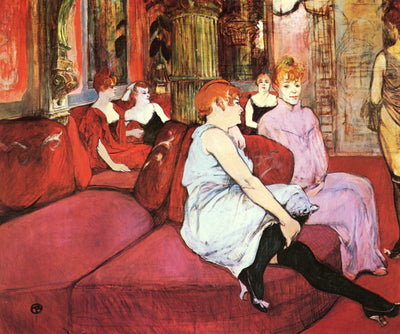
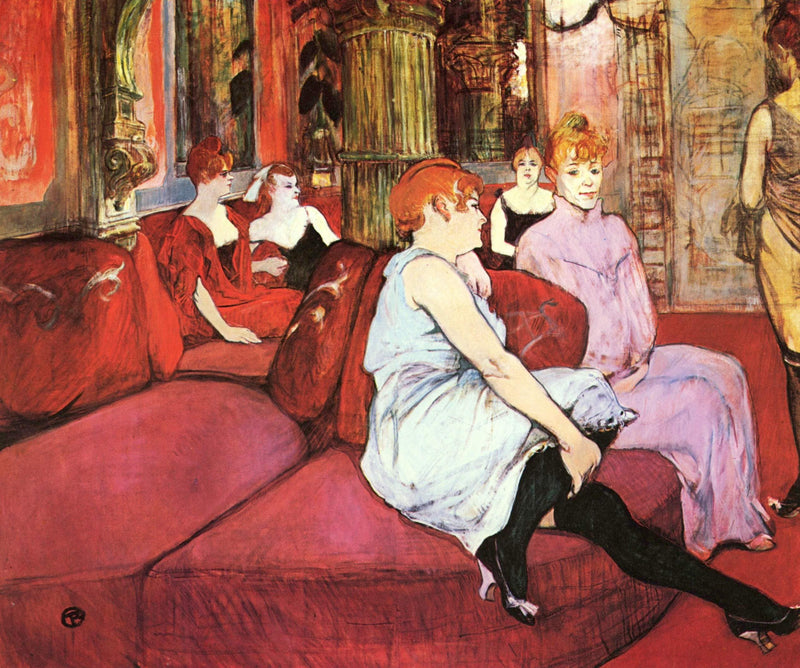
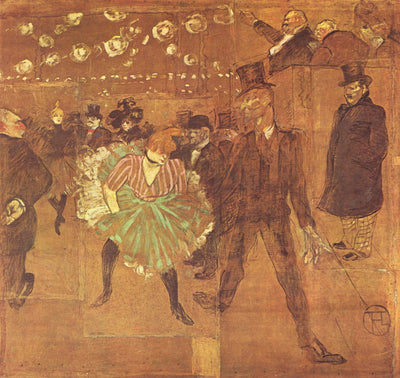
Step into the vibrant world of late 19th-century Paris with Henri de Toulouse-Lautrec's captivating oil painting, The Salon de la Rue des Moulins. This artwork immerses viewers in the lively atmosphere of the cabaret scene, showcasing the allure and excitement of Parisian nightlife. Toulouse-Lautrec's unique style and perspective bring to life the essence of the Belle Époque, a time marked by artistic innovation and cultural flourishing.
Henri de Toulouse-Lautrec was born in 1864 into an aristocratic family in Albi, France. Despite his noble lineage, he faced physical challenges due to a genetic disorder that stunted his growth. This condition, however, did not hinder his artistic ambitions. He moved to Paris and became a prominent figure in the Montmartre district, where he captured the essence of bohemian life through his art. His keen observations of the nightlife and the people within it shaped his distinctive style.
The Belle Époque, a period of cultural and artistic prosperity in France, greatly influenced Toulouse-Lautrec's work. The era was characterized by a flourishing of the arts, including theater, music, and visual arts. Cabarets like the Moulin Rouge became cultural hubs, attracting artists, writers, and performers. Toulouse-Lautrec's paintings reflect this vibrant atmosphere, showcasing the energy and excitement of Parisian nightlife.
The Salon de la Rue des Moulins holds a significant place in art history as a representation of the cabaret culture that thrived in Paris. This painting not only captures the lively spirit of the time but also serves as a historical document of the social dynamics and entertainment of the era. Toulouse-Lautrec's work provides insight into the lives of the performers and patrons who frequented these establishments.
Cabarets were more than just places for entertainment; they were social melting pots where people from various backgrounds mingled. The Salon de la Rue des Moulins illustrates this vibrant social scene, highlighting the importance of cabarets in shaping Parisian culture. These venues offered a space for artistic expression and experimentation, influencing the development of modern art.
Toulouse-Lautrec's portrayal of nightlife is characterized by bold colors and dynamic compositions. He captured the essence of the performers, their movements, and the electric atmosphere of the cabaret. His ability to convey emotion and energy through his brushwork makes The Salon de la Rue des Moulins a timeless representation of Parisian nightlife.
Toulouse-Lautrec's color palette in The Salon de la Rue des Moulins is a masterful blend of warm and cool tones. The warm hues evoke feelings of intimacy and excitement, while the cooler shades provide contrast and depth. This interplay of colors enhances the emotional impact of the scene, drawing viewers into the lively atmosphere of the cabaret.
Colors in Toulouse-Lautrec's work often carry symbolic meanings. In this painting, the vibrant reds and yellows symbolize passion and energy, while the blues and greens suggest a sense of calm amidst the chaos. This thoughtful use of color adds layers of meaning to the artwork, inviting viewers to explore the emotional landscape of the cabaret scene.
The composition of The Salon de la Rue des Moulins is carefully arranged to create a sense of movement and interaction among the figures. Toulouse-Lautrec skillfully places the characters in a way that guides the viewer's eye through the scene. This arrangement reflects the lively interactions that define the cabaret experience.
Toulouse-Lautrec employs a unique perspective that immerses viewers in the action. By using unconventional angles and viewpoints, he creates a sense of immediacy and intimacy. This technique allows the audience to feel as if they are part of the vibrant nightlife, experiencing the energy of the cabaret firsthand.
The figures in The Salon de la Rue des Moulins are not just characters; they represent the diverse personalities of the cabaret scene. Each figure tells a story, reflecting the complexities of life in Paris during the Belle Époque. Toulouse-Lautrec's ability to capture the essence of these individuals adds depth to the painting.
Women play a central role in Toulouse-Lautrec's work, often depicted as performers, dancers, and patrons. In The Salon de la Rue des Moulins, the women exude confidence and charisma, embodying the spirit of the cabaret. Toulouse-Lautrec's portrayal of women challenges societal norms and highlights their significance in the artistic and cultural landscape of the time.
Each figure in the painting has a distinct personality, contributing to the overall narrative. Toulouse-Lautrec's keen observation skills allow him to capture the nuances of human expression. This attention to detail brings the characters to life, inviting viewers to engage with their stories and experiences.
The Salon de la Rue des Moulins serves as a social commentary on the complexities of Parisian life. Toulouse-Lautrec's depiction of the cabaret scene reveals the interplay between art, entertainment, and societal issues. The painting invites viewers to reflect on the cultural dynamics of the time, including themes of class, gender, and identity.
Toulouse-Lautrec's art blurs the lines between reality and representation. His work captures the essence of life in the cabaret, showcasing the joy and struggles of its performers. This intersection of art and life creates a powerful narrative that resonates with audiences, making The Salon de la Rue des Moulins a timeless masterpiece.
The Salon de la Rue des Moulins has left a lasting impact on the art world. Toulouse-Lautrec's innovative approach to composition and color has influenced countless artists. His ability to capture the spirit of his time continues to inspire contemporary creators, making his work relevant even today.
Toulouse-Lautrec's influence extends beyond his own era. His unique style paved the way for modern art movements, including Expressionism and Fauvism. Artists have drawn inspiration from his bold use of color and dynamic compositions, showcasing the enduring legacy of his work.
Cabaret art remains a popular theme in contemporary culture. The vibrant energy and rich narratives of cabaret life continue to captivate audiences. Toulouse-Lautrec's The Salon de la Rue des Moulins stands as a testament to the timeless allure of this artistic genre.
The original The Salon de la Rue des Moulins is housed in the prestigious Mus√©e d'Orsay in Paris. This museum is renowned for its extensive collection of Impressionist and Post-Impressionist masterpieces. Visitors can experience the painting in its historical context, surrounded by other works from the Belle Époque.
Toulouse-Lautrec's work has been featured in numerous notable exhibitions worldwide. These exhibitions often highlight his contributions to the art world and his unique perspective on Parisian life. Attending such exhibitions provides a deeper understanding of his artistic legacy and the cultural significance of his work.
The Salon de la Rue des Moulins was created during the Belle Époque, a time of cultural and artistic flourishing in France. This period saw the rise of cabarets as social hubs, influencing art and entertainment.
The painting features a variety of figures, including performers and patrons, each representing different aspects of cabaret life. Toulouse-Lautrec's keen eye for detail brings these characters to life.
Toulouse-Lautrec employed oil painting techniques, utilizing bold colors and dynamic compositions to convey the energy of the cabaret scene. His unique perspective enhances the viewer's experience.
The Salon de la Rue des Moulins reflects the vibrant culture of late 19th-century Paris, showcasing the social dynamics and artistic expression of the cabaret scene. It serves as a historical document of the era.
The cabaret setting is significant as it represents a cultural melting pot where diverse individuals came together to celebrate art and entertainment. It highlights the importance of cabarets in shaping Parisian culture.
To ensure a reproduction captures the original's essence, look for high-quality oil painting reproductions. These reproductions use traditional techniques and materials to reflect the texture and vibrancy of the original artwork.
When seeking a quality reproduction, consider the artist's attention to detail, color accuracy, and the use of premium materials. A well-crafted oil painting reproduction will provide a more authentic experience than standard prints.

Discover some of our latest oil paintings, each one carefully hand-painted on canvas.
At Art & See, we're committed to delivering the highest quality art reproductions. Our team of expert artists and state-of-the-art processes ensure that each piece is a masterpiece in its own right.

Experience your masterpiece's creation through daily photos from our expert artists, each with 15+ years of experience.

Your artwork travels first class via UPS, FedEx, or DHL, protected by museum-grade packaging for safe delivery.

Review unedited photos of your finished painting and request unlimited free revisions before it ships. We only ship when you say it's perfect.

Every piece is crafted with archival materials, UV-resistant finishes, and premium British paints to last generations.
Yes, 100% hand-painted with oil on canvas by artists with 15+ years of experience. No prints, no digital shortcuts. You'll see and feel real brushstrokes, just like the original Henri de Toulouse-Lautrec masterpiece.
Your The Salon de la Rue des Moulins reproduction takes 2–5 weeks to hand-paint depending on size and detail. Once approved, shipping takes 5–8 days via FedEx, UPS, or DHL with full tracking. Free worldwide shipping included.
Absolutely. Once your The Salon de la Rue des Moulins is complete, we send you unedited photos, a full view and close-up details. Request unlimited free revisions until you're 100% satisfied. We don't ship until you say "yes."
Every painting goes through our Preview & Approve process: you receive unedited photos of your finished Henri de Toulouse-Lautrec reproduction and can request unlimited free revisions before it ships. We only ship when you say it's perfect. If after delivery you have any concerns, contact us at [email protected] and our team will work with you on the best path forward.
Professional-grade oil paints (Windsor & Newton) on premium linen canvas with UV-resistant protective coating. Museum-grade materials built to last generations, the same quality used in galleries worldwide.
Our artists specialize in Henri de Toulouse-Lautrec's technique: color accuracy, brushwork, and composition are matched to the original. Every reproduction goes through quality review before your approval photos are taken.
Every painting is insured and delivered door-to-door. Unframed paintings ship in protective hard tubes. Framed paintings are bubble-wrapped in sturdy boxes. If anything arrives damaged, we repair or replace it free.
Dive into the vibrant world of Historic Art. Discover your next painting today.
