The Fallen Jockey by Edgar Degas | Oil Painting Reproduction

The Fallen Jockey by Edgar Degas — hand-painted animal oil painting reproduction on canvas
Frame Specifications
Frame details Unframed
Information The canvas arrives unframed and rolled up in a sturdy tube, so you can have it framed locally exactly how you like.

AS SEEN IN

Royal Heritage Badge
4.8
4.8 out of 5

174 global ratings

5 star
84%
4 star
13%
3 star
1%
2 star
1%
1 star
1%
174 ratings

by Edgar Degas

Handmade Oil Painting on Canvas Art Reproduction —— Museum-quality

100% HAND-PAINTED
  • Real brushstrokes you can see & feel
  • Painting approval before shipping
  • Unlimited revisions
Select Size *
How should it arrive?
Select a Frame (optional)
Hand-Painted Oil Painting $299.95
Unframed — Shipped rolled in a protective tube Included
Shipping Free
Total
$299.95
$350.95Save 14%
Preview & Approve Free Shipping Secure Checkout
We accept
Visa Mastercard American Express Discover PayPal Apple Pay Google Pay Venmo
Support
Need help? Talk with Joey!

Processing & Shipping Time

Your delivery time includes two parts:

  1. Processing Time — From painting and drying to packaging and dispatch, usually 2–5 weeks depending on the painting complexity.
  2. Shipping Time — From when your order leaves the workshop to when it arrives at your address. You'll be able to track it with the tracking number we email you.

Shipping Methods

We ship with trusted couriers like FedEx, UPS, and DHL. Every shipment includes a tracking code.

  • Standard orders: Arrive in 5–8 days once shipped.
  • Framed, stretched, and oversized paintings: May take a few extra days.

Our goal is to deliver your order safely and quickly.

Shipment Safety Measures

We handle your products with care so they arrive in perfect condition:

  • Framed paintings — Bubble-wrapped and packed in a sturdy box.
  • Unframed paintings — Shipped in a protective hard plastic tube.

Every product is insured and delivered right to your door, so you can feel confident buying from us.

Every Art & See painting is created by artists with 15+ years of experience using professional-grade oil paints and premium linen canvas with UV-resistant protective coating — the same museum-grade materials used in galleries worldwide. Each piece goes through quality review before your approval photos are taken. If after delivery you have any concerns about your painting, contact us at [email protected] — our team will work with you on the best path forward.

Full Warranty

Every painting is protected against physical damage during shipping. If your painting arrives damaged, we repair or replace it — free.

Coverage Details

Transit damage (crushed, torn, water damage) — We repair or replace at no cost. Please note that damages resulting from accidents or inappropriate use are not covered under this warranty.

Repair or Replace

Depending on the extent of damage, the affected painting will either be repaired or replaced at no additional cost to you.

Free Service

All warranty services are provided absolutely free of charge.

We want you to absolutely love your handmade artwork. Here's how it works:

  1. Once your oil painting is complete, we'll send you unedited photos — a full view and close-up details.
  2. Review the photos and let us know if any changes are needed. We'll happily revise the painting for free.
  3. If you approve the painting, we'll ship it right away.

In the rare case you approve the photos and the artwork has been shipped and delivered to you, and you still want additional modification requests — we can handle it as a courtesy at our discretion. If accepted, you cover the return shipping cost.

Product Specifications
TypeHand-Painted Oil Painting Reproduction
Original ArtistEdgar Degas
Price Range$299.95 — $1,299.95
ShippingFree Worldwide
QualityPreview & Approve Before Shipping
MediumOil on Canvas
CanvasMuseum-Grade Linen Canvas
TechniqueHand-painted brushstroke-by-brushstroke
Art StyleImpressionism
Period19th Century
Artist NationalityFrench
OrientationVertical
SubjectAnimal art, Animal art horse, Landscapes
Available Sizes7 (16'' W × 20'' H to 48'' W × 72'' H)
Framing OptionsUnframed, Stretched Canvas, Classic & Modern Frames
Delivery14–28 business days
About This Painting
The Fallen Jockey: A Masterpiece of Movement and Emotion Understanding Edgar Degas: The Visionary Behind the Canvas Life and Artistic Journey of Edgar Degas Edgar Degas, born in 1834 in Paris, was ...

The Fallen Jockey: A Masterpiece of Movement and Emotion

Understanding Edgar Degas: The Visionary Behind the Canvas

Life and Artistic Journey of Edgar Degas

Edgar Degas, born in 1834 in Paris, was a prominent French artist known for his innovative approach to capturing movement. He grew up in a wealthy family, which allowed him to pursue his passion for art. Degas studied at the École des Beaux-Arts and traveled to Italy, where he absorbed the techniques of the Old Masters. His artistic journey was marked by a deep exploration of ballet dancers, horse racing, and everyday life, making him a key figure in the Impressionist movement.

Influences of Impressionism and Realism in Degas' Work

Degas blended elements of Impressionism and Realism, creating a unique style that emphasized the human experience. While Impressionists focused on light and color, Degas concentrated on the human form and movement. His works often depict candid moments, capturing the essence of life in motion. This duality of style is evident in "The Fallen Jockey," where he portrays the raw energy of horse racing.

Degas' Unique Approach to Capturing Motion

Degas was fascinated by movement, particularly in sports and dance. He used innovative techniques, such as unusual angles and cropped compositions, to convey a sense of dynamism. In "The Fallen Jockey," he captures the moment of a jockey's fall, showcasing his ability to freeze a fleeting instant in time. This focus on movement sets Degas apart from his contemporaries and highlights his mastery of the human figure.

The Fallen Jockey: An In-Depth Analysis of the Painting

Composition and Color Palette: A Study in Contrast

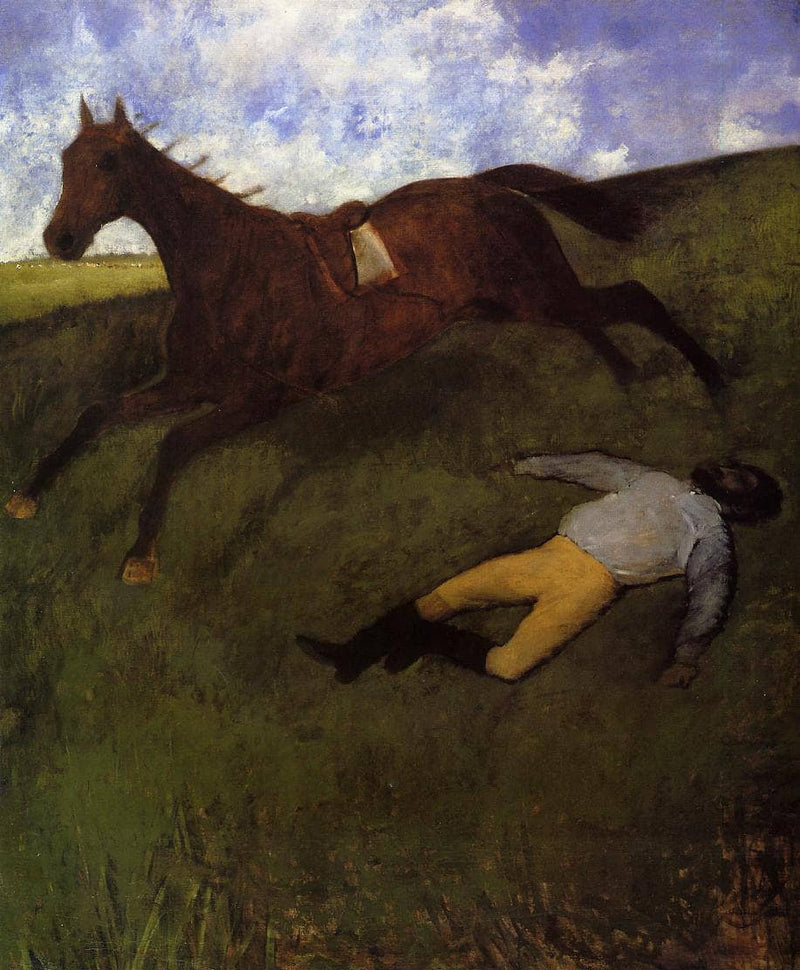
"The Fallen Jockey" features a striking composition that draws the viewer's eye. The jockey, clad in vibrant colors, contrasts sharply with the earthy tones of the horse and ground. Degas employs a limited color palette, using deep greens and browns to evoke the natural environment of the racetrack. This contrast enhances the drama of the scene, emphasizing the jockey's precarious position.

Figures and Forms: The Jockey and the Horse

In this painting, the jockey's body is depicted in a dynamic pose, illustrating the tension of the moment. The horse, powerful and muscular, is captured mid-gallop, adding to the sense of urgency. Degas' attention to anatomical detail showcases his understanding of both human and equine forms. The jockey's expression conveys a mix of surprise and fear, inviting viewers to empathize with his plight.

Symbolism and Themes: The Struggle and Triumph in Racing

"The Fallen Jockey" symbolizes the unpredictability of horse racing. It reflects the themes of struggle, risk, and the pursuit of victory. The painting captures the essence of competition, where triumph and failure coexist. Degas invites viewers to contemplate the emotional highs and lows experienced by both jockeys and horses in the world of racing.

Historical Context: The World of Horse Racing in the 19th Century

The Popularity of Horse Racing in Paris

In the 19th century, horse racing became a popular pastime in Paris, attracting the elite and the masses alike. The excitement of the racetrack was a significant part of Parisian culture, with events like the Prix de l'Arc de Triomphe drawing large crowds. This vibrant atmosphere provided a rich backdrop for Degas' artistic exploration of the sport.

Degas' Connection to the Racing Community

Degas had a personal connection to horse racing, often attending races and befriending jockeys and trainers. His passion for the sport is evident in his numerous paintings and pastels depicting racing scenes. This intimate knowledge allowed him to portray the nuances of the sport authentically, making "The Fallen Jockey" a genuine representation of the racing world.

Artistic Representations of Equestrian Sports

Throughout history, equestrian sports have inspired artists. From ancient sculptures to modern photography, the beauty and power of horses have captivated creative minds. Degas' work stands out for its focus on the human experience within this context, offering a fresh perspective on the relationship between jockeys and their mounts.

Technical Mastery: Degas' Oil Painting Techniques

Brushwork and Texture: Creating Depth and Movement

Degas employed a variety of brushwork techniques to create texture and depth in "The Fallen Jockey." His use of short, quick strokes conveys the energy of the scene, while smoother areas highlight the jockey's form. This combination of techniques adds a tactile quality to the painting, inviting viewers to engage with the artwork on a sensory level.

Light and Shadow: Enhancing Dramatic Effect

Light and shadow play a crucial role in Degas' work. In "The Fallen Jockey," he skillfully uses chiaroscuro to enhance the dramatic effect of the scene. The interplay of light and dark creates a sense of movement and urgency, drawing attention to the central figures. This mastery of light adds emotional depth, making the viewer feel the tension of the moment.

Innovative Use of Perspective in The Fallen Jockey

Degas' innovative use of perspective sets "The Fallen Jockey" apart. He often employed unusual viewpoints, such as low angles or cropped edges, to create a sense of immediacy. In this painting, the viewer feels as if they are part of the action, experiencing the thrill of the race firsthand. This technique enhances the emotional impact of the artwork.

Emotional Resonance: The Impact of The Fallen Jockey on Viewers

Capturing the Essence of Competition and Emotion

"The Fallen Jockey" captures the raw emotion of competition. The tension in the jockey's body and the urgency of the horse's movement evoke feelings of excitement and anxiety. Viewers can sense the adrenaline of the race, making the painting a powerful representation of the human experience in sports.

Viewer Interpretations: Personal Connections to the Artwork

Each viewer may interpret "The Fallen Jockey" differently, drawing on their own experiences and emotions. Some may see the painting as a cautionary tale about the risks of competition, while others may focus on the beauty of the moment. This personal connection adds to the artwork's richness, allowing it to resonate with a diverse audience.

The Role of Art in Evoking Feelings of Nostalgia and Excitement

Art has the power to evoke nostalgia and excitement, and "The Fallen Jockey" is no exception. The painting transports viewers to a time when horse racing was a thrilling spectacle. It reminds us of the joy and heartache that come with competition, making it a timeless piece that continues to inspire.

Legacy and Influence: The Fallen Jockey in Art History

How The Fallen Jockey Influenced Future Artists

Degas' innovative techniques and focus on movement influenced many artists who followed him. His ability to capture the fleeting moments of life inspired the next generation of painters, particularly those interested in sports and dynamic scenes. "The Fallen Jockey" remains a pivotal work that showcases the evolution of modern art.

Exhibitions and Collections Featuring The Fallen Jockey

"The Fallen Jockey" is part of prestigious collections, including the Musée d'Orsay in Paris. It has been featured in numerous exhibitions, highlighting Degas' contributions to art. These exhibitions allow audiences to appreciate the painting's historical significance and artistic mastery.

Degas' Enduring Impact on Equestrian Art

Degas' exploration of equestrian themes has left a lasting impact on the genre. His ability to convey the relationship between horse and rider continues to inspire contemporary artists. "The Fallen Jockey" stands as a testament to his skill and passion for capturing the beauty of the equestrian world.

FAQs About The Fallen Jockey by Edgar Degas

What is the story behind The Fallen Jockey painting?

"The Fallen Jockey" depicts a dramatic moment in horse racing, capturing the tension and emotion of a jockey's fall. It reflects the unpredictability of the sport and the risks involved.

What techniques did Degas use in The Fallen Jockey?

Degas used oil painting techniques, including dynamic brushwork, chiaroscuro for light and shadow, and innovative perspectives to create a sense of movement and depth.

How does The Fallen Jockey reflect the culture of its time?

The painting reflects the popularity of horse racing in 19th-century Paris, showcasing the excitement and risks associated with the sport during that era.

What emotions does The Fallen Jockey evoke in viewers?

Viewers often feel excitement, tension, and empathy when observing "The Fallen Jockey," as it captures the raw emotions of competition and the unpredictability of racing.

Where can I see The Fallen Jockey displayed today?

"The Fallen Jockey" is housed in the Musée d'Orsay in Paris, where visitors can appreciate its historical and artistic significance.

What makes The Fallen Jockey a significant work in Degas' oeuvre?

The painting is significant for its innovative portrayal of movement, emotional depth, and its reflection of the culture surrounding horse racing, making it a key work in Degas' body of art.

How does the reproduction of The Fallen Jockey compare to the original?

A high-quality oil painting reproduction of "The Fallen Jockey" captures the vibrancy and texture of the original artwork, offering a superior alternative to prints. Reproductions allow art lovers to enjoy the beauty of Degas' work in their own homes.

What should I consider when purchasing a reproduction of The Fallen Jockey?

When purchasing a reproduction, consider the quality of materials, the artist's technique, and the level of detail. A well-crafted oil painting reproduction will provide a more authentic experience than a standard print.
The Fallen Jockey by Edgar Degas — hand-painted animal oil painting reproduction on canvas
The Fallen Jockey by Edgar Degas Hand-Painted Oil Painting Reproduction 16'' W × 20'' H · Unframed
20” x 16” in Unframed - Arrives Rolled on a Tube
$299.95 $350.95
30% Off Today Ends soon!
OUR GUARANTEES

Why Choose Our Art Reproductions

At Art & See, we're committed to delivering the highest quality art reproductions. Our team of expert artists and state-of-the-art processes ensure that each piece is a masterpiece in its own right.

Artist working on canvas

Real Artists Only

Experience your masterpiece's creation through daily photos from our expert artists, each with 15+ years of experience.

We'll send you photos before shipping
Secure packaging

Worry-Free Shipping

Your artwork travels first class via UPS, FedEx, or DHL, protected by museum-grade packaging for safe delivery.

Safe protective packaging
Preview and approve

Preview & Approve

Review unedited photos of your finished painting and request unlimited free revisions before it ships. We only ship when you say it's perfect.

You approve before we ship
Art materials

Built to Last

Every piece is crafted with archival materials, UV-resistant finishes, and premium British paints to last generations.

Museum-grade quality

You May Also Like

Frequently Asked Questions About Edgar Degas Oil Painting Reproductions

Everything you need to know before ordering your hand-painted The Fallen Jockey reproduction.
Is "The Fallen Jockey" by Edgar Degas a real hand-painted oil painting?

Yes — 100% hand-painted with oil on canvas by artists with 15+ years of experience. No prints, no digital shortcuts. You'll see and feel real brushstrokes, just like the original Edgar Degas masterpiece.

How long does it take to receive my Edgar Degas painting?

Your The Fallen Jockey reproduction takes 2–5 weeks to hand-paint depending on size and detail. Once approved, shipping takes 5–8 days via FedEx, UPS, or DHL with full tracking. Free worldwide shipping included.

Can I see my painting before it ships?

Absolutely. Once your The Fallen Jockey is complete, we send you unedited photos — a full view and close-up details. Request unlimited free revisions until you're 100% satisfied. We don't ship until you say "yes."

How do I know I'll love it?

Every painting goes through our Preview & Approve process — you receive unedited photos of your finished Edgar Degas reproduction and can request unlimited free revisions before it ships. We only ship when you say it's perfect. If after delivery you have any concerns, contact us at [email protected] and our team will work with you on the best path forward.

What materials do you use?

Professional-grade oil paints (Windsor & Newton) on premium linen canvas with UV-resistant protective coating. Museum-grade materials built to last generations — the same quality used in galleries worldwide.

Will my painting look exactly like the original The Fallen Jockey?

Our artists specialize in Edgar Degas's technique — color accuracy, brushwork, and composition are matched to the original. Every reproduction goes through quality review before your approval photos are taken.

Is my painting shipped safely?

Every painting is insured and delivered door-to-door. Unframed paintings ship in protective hard tubes. Framed paintings are bubble-wrapped in sturdy boxes. If anything arrives damaged, we repair or replace it free.

Bring a Masterpiece to Your Décor Today

Dive into the vibrant world of Historic Art. Discover your next painting today.

Custom oil painting