 4.9/5
4.9/5







SAMPLES OF QUALITY
Recent Hand-Painted Reproductions
Discover some of our latest oil paintings, each one carefully hand-painted on canvas.

AS SEEN IN





Handmade Oil Painting on Canvas Art Reproduction, Museum-quality

The six dominant colors measured from the painting, with the share of canvas each one covers. Click a swatch to copy its hex code.
Processing & Shipping Time
Your delivery time includes two parts:
Shipping Methods
We ship with trusted couriers like FedEx, UPS, and DHL. Every shipment includes a tracking code.
Our goal is to deliver your order safely and quickly.
Shipment Safety Measures
We handle your products with care so they arrive in perfect condition:
Every product is insured and delivered right to your door, so you can feel confident buying from us.
Every Art & See painting is created by artists with 15+ years of experience using professional-grade oil paints and premium linen canvas with UV-resistant protective coating, the same museum-grade materials used in galleries worldwide. Each piece goes through quality review before your approval photos are taken. If after delivery you have any concerns about your painting, contact us at [email protected] and our team will work with you on the best path forward.
Full Warranty
Every painting is protected against physical damage during shipping. If your painting arrives damaged, we repair or replace it, free of charge.
Coverage Details
Transit damage (crushed, torn, water damage): we repair or replace at no cost. Please note that damages resulting from accidents or inappropriate use are not covered under this warranty.
Repair or Replace
Depending on the extent of damage, the affected painting will either be repaired or replaced at no additional cost to you.
Free Service
All warranty services are provided absolutely free of charge.
We want you to absolutely love your handmade artwork. Here's how it works:
In the rare case you approve the photos and the artwork has been shipped and delivered to you, and you still want additional modification requests, we can handle it as a courtesy at our discretion. If accepted, you cover the return shipping cost.
| Type | Hand-Painted Oil Painting Reproduction |
| Original Artist | Bartolomeo Passerotti |
| Price Range | $350 to $1,150 |
| Shipping | Free Worldwide |
| Quality | Preview & Approve Before Shipping |
| Medium | Oil on Canvas |
| Canvas | Museum-Grade Linen Canvas |
| Technique | Hand-painted brushstroke-by-brushstroke |
| Art Style | Mannerism Late Renaissance |
| Period | 17th Century |
| Artist Nationality | Italian |
| Orientation | Vertical |
| Subject | Cultural heritage, Cultural heritage mythology, Fantasy, Portraits female |
| Available Sizes | 7 (14'' W × 23'' H to 46'' W × 75'' H, including the original size), plus custom sizes |
| Framing Options | Unframed, Stretched Canvas, Classic & Modern Frames |
| Delivery | 14–28 business days |
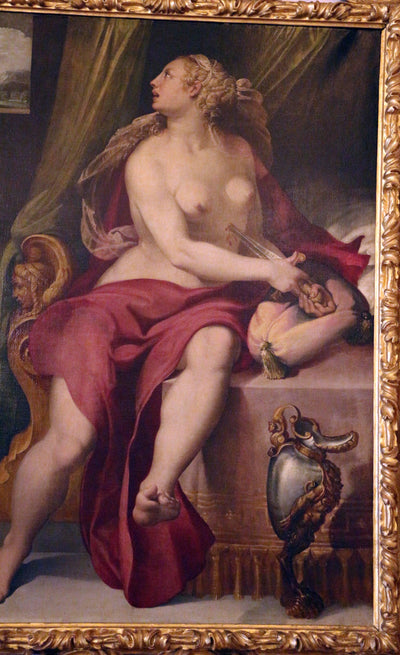
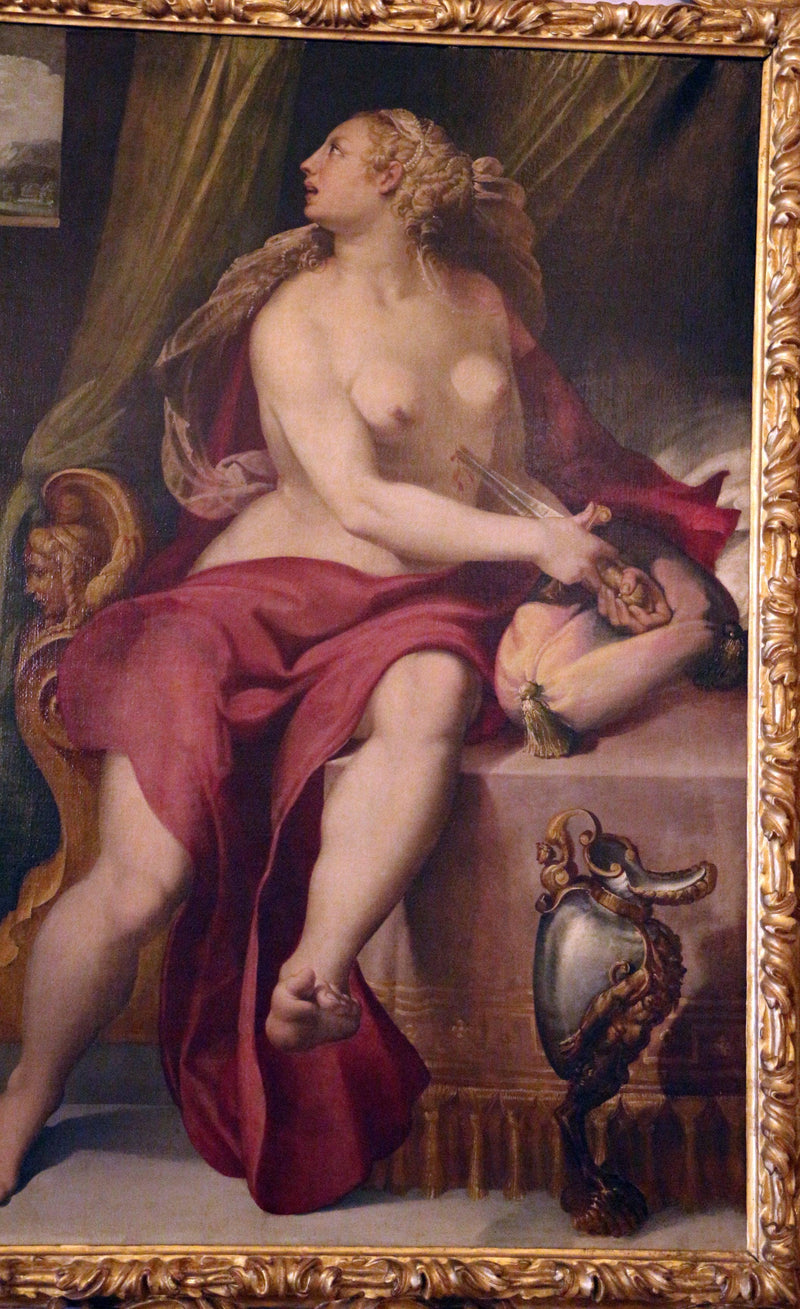
Lucretia, a noblewoman of ancient Rome, is a symbol of virtue and honor. Her tragic story unfolds in the context of the Roman Republic, where her suicide was a response to the dishonor inflicted by the tyrant Sextus Tarquin. This act of despair not only led to her death but also sparked a revolution that ultimately ended the monarchy in Rome. Lucretia's narrative has resonated through centuries, inspiring countless artists and writers, making her a pivotal figure in discussions of morality and female agency.
During the Renaissance, artists like Bartolomeo Passerotti explored themes of female tragedy, often portraying women in moments of intense emotional conflict. This period saw a resurgence of interest in classical themes, and Lucretia's story became a powerful lens through which to examine societal values. Artists depicted her not just as a victim, but as a figure embodying strength and moral integrity, challenging the traditional views of femininity.
Bartolomeo Passerotti was a prominent member of the Bolognese School, known for its rich color palettes and detailed realism. His works often reflect the influence of his contemporaries, such as the Carracci family, while maintaining a unique style that emphasizes emotional depth. Passerotti's interpretation of Lucretia's Suicide stands out for its dramatic composition and the poignant expression of despair, making it a significant contribution to Renaissance art.
Passerotti employed advanced oil painting techniques, utilizing layering and glazing to create depth and luminosity in Lucretia's Suicide. This method allowed him to build rich textures and subtle transitions in color, enhancing the emotional impact of the scene. The careful application of glazes gives the painting a vibrant quality, drawing viewers into the tragic moment.
The color palette in Lucretia's Suicide is both striking and symbolic. Deep reds and somber blacks dominate the composition, reflecting the themes of blood, betrayal, and sorrow. The use of contrasting colors highlights Lucretia's emotional turmoil, while softer hues in the background suggest a fleeting sense of peace before the tragedy unfolds. This careful selection of colors invites viewers to engage with the painting on a deeper emotional level.
Passerotti's composition is masterfully balanced, guiding the viewer's eye through the painting. The placement of Lucretia at the center draws immediate attention, while the surrounding elements create a sense of movement and tension. The perspective enhances the drama, making Lucretia's plight feel immediate and personal. This thoughtful arrangement reflects Passerotti's skill in creating a narrative that resonates with viewers.
At the heart of Lucretia's Suicide lies a profound exploration of honor and betrayal. Lucretia's choice to take her own life rather than live with the shame imposed by Sextus Tarquin speaks to the values of her time. This act of defiance against dishonor elevates her to a tragic heroine, embodying the struggle between personal integrity and societal expectations.
Passerotti's portrayal of Lucretia challenges traditional notions of femininity. While she is depicted in a moment of despair, her decision to end her life is also an assertion of agency. This duality invites viewers to reflect on the complexities of female identity in a patriarchal society. Lucretia's narrative becomes a powerful commentary on the constraints placed on women and their fight for autonomy.
The dagger in Lucretia's hand is a potent symbol of both despair and empowerment. It represents her tragic choice, yet also her control over her fate. The veil, often associated with modesty and purity, contrasts sharply with the violence of her act, highlighting the tension between societal expectations and personal truth. These symbols enrich the narrative, inviting deeper interpretation.
Lucretia's story reflects the rigid gender roles of Renaissance society. Women were often seen as vessels of virtue, and their honor was tied to their behavior. Lucretia's suicide challenges these expectations, presenting a woman who takes control of her narrative, even in death. This act of defiance resonates with modern discussions about gender and agency.
Passerotti's painting serves as a moral commentary on the consequences of betrayal and the value of virtue. By depicting Lucretia's tragic end, he invites viewers to consider the societal implications of her story. The painting becomes a reflection on the moral dilemmas faced by individuals in a complex world, making it relevant across generations.
The narrative of Lucretia has its roots in classical literature, particularly in the works of Livy and Ovid. These texts influenced Renaissance artists, who sought to capture the emotional depth of such stories. Passerotti's interpretation draws from these classical sources, blending historical context with artistic expression to create a timeless piece that resonates with audiences today.
When compared to other artists like Artemisia Gentileschi and Titian, Passerotti's Lucretia stands out for its emotional intensity and technical precision. While Gentileschi often emphasized the strength of her female subjects, Passerotti captures a moment of vulnerability that invites empathy. This contrast highlights the diverse interpretations of Lucretia's story across different artistic styles.
Historical events, such as the rise of the Renaissance and the Reformation, shaped artistic expression during Passerotti's time. The societal upheaval and changing values influenced how artists approached themes of honor, morality, and gender. Lucretia's Suicide reflects these dynamics, serving as a mirror to the cultural shifts of the era.
Lucretia's image has evolved from ancient Rome to the Renaissance, with each era interpreting her story through its cultural lens. Early representations often focused on her virtue, while Renaissance artists like Passerotti explored the emotional and psychological aspects of her tragedy. This evolution underscores the enduring relevance of Lucretia's narrative in art history.
Visitors to see Lucretia's Suicide often report a profound emotional reaction. The painting's dramatic portrayal of despair resonates deeply, prompting reflections on personal and societal values. Art enthusiasts appreciate the way Passerotti captures the complexity of human emotion, making the experience of viewing the painting unforgettable.
Art historians highlight Passerotti's innovative techniques, particularly his use of light and shadow to enhance the emotional weight of the scene. His ability to convey depth and texture through oil painting sets him apart from his contemporaries. These insights enrich the viewer's understanding of the painting and its place in art history.
Engaging with Lucretia's Suicide in person allows viewers to appreciate the intricate details and emotional nuances that may be missed in reproductions. Many visitors describe a sense of connection to Lucretia, feeling her pain and strength. This personal engagement with the artwork creates a lasting impression, making it a must-see for art lovers.
Lucretia's suicide is a response to the dishonor she faced after being assaulted by Sextus Tarquin. Her tragic choice reflects themes of honor, virtue, and the struggle against societal expectations.
Passerotti's style is characterized by emotional depth and technical precision, with a focus on the psychological aspects of his subjects. This sets him apart from artists who may emphasize different themes or techniques.
Viewers often feel a mix of sorrow, empathy, and contemplation when viewing Lucretia's Suicide. The painting's emotional intensity invites deep reflection on themes of honor and despair.
Key symbols include the dagger, representing both despair and agency, and the veil, which contrasts with the violence of her act. These symbols enrich the narrative and invite interpretation.
Lucretia's narrative continues to influence modern art by challenging traditional gender roles and exploring themes of agency and morality. Contemporary artists often draw on her story to comment on current societal issues.
Reproductions of Lucretia's Suicide capture the emotional depth and intricate details of the original oil painting. Unlike prints, these reproductions offer a richer, more textured experience, making them a superior choice for art lovers.
Yes, reproductions of Lucretia's Suicide come in various styles, including hand-painted oil reproductions and high-quality canvas prints. Each style offers a unique way to appreciate Passerotti's masterpiece, with hand-painted reproductions providing the most authentic experience.

Discover some of our latest oil paintings, each one carefully hand-painted on canvas.
At Art & See, we're committed to delivering the highest quality art reproductions. Our team of expert artists and state-of-the-art processes ensure that each piece is a masterpiece in its own right.

Experience your masterpiece's creation through daily photos from our expert artists, each with 15+ years of experience.

Your artwork travels first class via UPS, FedEx, or DHL, protected by museum-grade packaging for safe delivery.

Review unedited photos of your finished painting and request unlimited free revisions before it ships. We only ship when you say it's perfect.

Every piece is crafted with archival materials, UV-resistant finishes, and premium British paints to last generations.

Yes, 100% hand-painted with oil on canvas by artists with 15+ years of experience. No prints, no digital shortcuts. You'll see and feel real brushstrokes, just like the original Bartolomeo Passerotti masterpiece.
Your Lucretia's Suicide reproduction takes 2–5 weeks to hand-paint depending on size and detail. Once approved, shipping takes 5–8 days via FedEx, UPS, or DHL with full tracking. Free worldwide shipping included.
Absolutely. Once your Lucretia's Suicide is complete, we send you unedited photos, a full view and close-up details. Request unlimited free revisions until you're 100% satisfied. We don't ship until you say "yes."
Every painting goes through our Preview & Approve process: you receive unedited photos of your finished Bartolomeo Passerotti reproduction and can request unlimited free revisions before it ships. We only ship when you say it's perfect. If after delivery you have any concerns, contact us at [email protected] and our team will work with you on the best path forward.
Professional-grade oil paints (Windsor & Newton) on premium linen canvas with UV-resistant protective coating. Museum-grade materials built to last generations, the same quality used in galleries worldwide.
Our artists specialize in Bartolomeo Passerotti's technique: color accuracy, brushwork, and composition are matched to the original. Every reproduction goes through quality review before your approval photos are taken.
Every painting is insured and delivered door-to-door. Unframed paintings ship in protective hard tubes. Framed paintings are bubble-wrapped in sturdy boxes. If anything arrives damaged, we repair or replace it free.
Dive into the vibrant world of Historic Art. Discover your next painting today.
