4.9/5
4.9/5








SAMPLES OF QUALITY
Recent Hand-Painted Reproductions
Discover some of our latest oil paintings, each one carefully hand-painted on canvas.


AS SEEN IN





Handmade Oil Painting on Canvas Art Reproduction, Museum-quality

The six dominant colors measured from the painting, with the share of canvas each one covers. Click a swatch to copy its hex code.
Processing & Shipping Time
Your delivery time includes two parts:
Shipping Methods
We ship with trusted couriers like FedEx, UPS, and DHL. Every shipment includes a tracking code.
Our goal is to deliver your order safely and quickly.
Shipment Safety Measures
We handle your products with care so they arrive in perfect condition:
Every product is insured and delivered right to your door, so you can feel confident buying from us.
Every Art & See painting is created by artists with 15+ years of experience using professional-grade oil paints and premium linen canvas with UV-resistant protective coating, the same museum-grade materials used in galleries worldwide. Each piece goes through quality review before your approval photos are taken. If after delivery you have any concerns about your painting, contact us at [email protected] and our team will work with you on the best path forward.
Full Warranty
Every painting is protected against physical damage during shipping. If your painting arrives damaged, we repair or replace it, free of charge.
Coverage Details
Transit damage (crushed, torn, water damage): we repair or replace at no cost. Please note that damages resulting from accidents or inappropriate use are not covered under this warranty.
Repair or Replace
Depending on the extent of damage, the affected painting will either be repaired or replaced at no additional cost to you.
Free Service
All warranty services are provided absolutely free of charge.
We want you to absolutely love your handmade artwork. Here's how it works:
In the rare case you approve the photos and the artwork has been shipped and delivered to you, and you still want additional modification requests, we can handle it as a courtesy at our discretion. If accepted, you cover the return shipping cost.
| Type | Hand-Painted Oil Painting Reproduction |
| Original Artist | Sir Lawrence Alma-Tadema |
| Price Range | $350 to $1,150 |
| Shipping | Free Worldwide |
| Returns | 90-Day Returns |
| Medium | Oil on Canvas |
| Canvas | Museum-Grade Linen Canvas |
| Technique | Hand-painted brushstroke-by-brushstroke |
| Art Style | Romanticism |
| Period | 19th Century |
| Artist Nationality | Dutch |
| Orientation | Horizontal |
| Subject | Cultural heritage religious, Portraits group |
| Available Sizes | 7 (20'' W × 16'' H to 65'' W × 53'' H, including the original size), plus custom sizes |
| Framing Options | Unframed, Stretched Canvas, Classic & Modern Frames |
| Delivery | 14–28 business days |
| Size | 61 × 49.5 cm (24 × 19.5 in) |
| Year | 1867 |
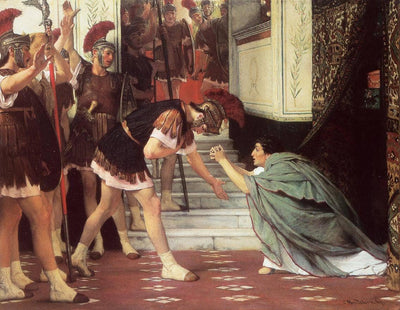
Claudius, the fourth emperor of Rome, ruled from 41 AD to 54 AD. His reign marked a significant period of expansion and consolidation for the Roman Empire. Claudius is often remembered for his military conquests, including the invasion of Britain. However, he also faced political challenges, including the assassination of his predecessor, Caligula. Alma-Tadema captures this pivotal moment in history, showcasing Claudius's ascension amidst the political turmoil of ancient Rome.
The painting illustrates the dramatic moment when Claudius is proclaimed emperor by the Roman Senate. This event was steeped in political intrigue, as Claudius was initially seen as an unlikely leader. His rise to power was marked by manipulation and the influence of powerful figures, including his wife, Messalina. Alma-Tadema's work reflects the complexities of Roman politics, highlighting the blend of ambition, loyalty, and betrayal that characterized this era.
Sir Lawrence Alma-Tadema was renowned for his ability to recreate historical scenes with stunning accuracy. His meticulous attention to detail and vibrant color palette breathe life into the past. In "Proclaiming Claudius Emperor," he employs rich textures and intricate patterns to depict the opulence of Roman attire and architecture. This dedication to authenticity allows viewers to immerse themselves in the grandeur of ancient Rome.
Alma-Tadema's work is deeply rooted in the Victorian fascination with classical antiquity. His paintings often reflect the era's romanticized view of history, blending realism with idealism. The Victorian emphasis on detail and narrative is evident in "Proclaiming Claudius Emperor," where every element serves to enhance the story being told. This connection to the past resonates with audiences, making his art timeless.
The color palette of "Proclaiming Claudius Emperor" is rich and evocative. Alma-Tadema uses warm earth tones, deep reds, and vibrant golds to convey the opulence of Roman life. These colors not only enhance the visual appeal but also evoke emotions associated with power and authority. The strategic use of color helps to create a sense of drama and urgency in the scene.
In Roman art, colors often held symbolic meanings. Red represented power and sacrifice, while gold symbolized wealth and divinity. Alma-Tadema's choice of colors reflects these associations, reinforcing the themes of leadership and authority in the painting. This thoughtful use of color adds depth to the narrative, inviting viewers to explore the underlying messages within the artwork.
The composition of "Proclaiming Claudius Emperor" is carefully crafted to guide the viewer's eye. Alma-Tadema arranges the figures in a dynamic manner, creating a sense of movement and interaction. The use of perspective draws attention to Claudius at the center, emphasizing his importance in the scene. This thoughtful arrangement enhances the storytelling aspect of the painting.
Alma-Tadema employs leading lines and focal points to direct the viewer's gaze. The architectural elements, such as columns and arches, frame the central figures, creating a natural flow throughout the painting. This technique not only enhances the visual experience but also reinforces the narrative, allowing viewers to engage with the story on a deeper level.
The figures in "Proclaiming Claudius Emperor" are meticulously rendered, each with distinct characteristics and expressions. Claudius stands at the forefront, embodying the weight of leadership. Surrounding him are senators and advisors, each contributing to the atmosphere of political tension. Alma-Tadema's attention to detail in their attire and expressions adds layers of meaning to the scene.
Key figures in the painting include Claudius, dressed in regal attire, and various senators who display a range of emotions from admiration to skepticism. Each character plays a role in the unfolding drama, reflecting the diverse perspectives within Roman society. This complexity invites viewers to consider the motivations and relationships that shaped this historical moment.
Alma-Tadema masterfully captures the nuances of body language in "Proclaiming Claudius Emperor." The gestures and expressions of the figures convey a rich narrative. Claudius's confident stance contrasts with the hesitant postures of some senators, illustrating the tension of the moment. This focus on human emotion enhances the painting's impact, making it relatable to contemporary audiences.
The theme of power is central to "Proclaiming Claudius Emperor." Alma-Tadema explores the complexities of leadership, highlighting the burdens and responsibilities that come with authority. Claudius's portrayal reflects the duality of power—admired yet scrutinized. This theme resonates with modern audiences, as the dynamics of leadership remain relevant today.
Alma-Tadema's painting also delves into the contrasts between public and private life in ancient Rome. The public proclamation of Claudius as emperor stands in stark contrast to the personal struggles he faced behind closed doors. This duality invites viewers to reflect on the nature of power and the sacrifices leaders often make for their roles.
Art serves as a mirror to the cultural values of its time. In "Proclaiming Claudius Emperor," Alma-Tadema captures the spirit of Roman civilization, emphasizing themes of honor, loyalty, and ambition. The painting reflects the societal ideals that shaped Roman identity, inviting viewers to consider how these values continue to influence contemporary culture.
Through his detailed portrayal of Roman architecture, attire, and social interactions, Alma-Tadema encapsulates the essence of Roman life. The grandeur of the setting and the intricacy of the characters' clothing highlight the sophistication of Roman society. This attention to detail allows viewers to appreciate the richness of the culture and its lasting impact on art and history.
Alma-Tadema's use of light and shadow is a hallmark of his artistic style. In "Proclaiming Claudius Emperor," he employs chiaroscuro techniques to create depth and realism. The interplay of light and shadow enhances the three-dimensional quality of the figures and the architectural elements, drawing viewers into the scene.
Chiaroscuro, the contrast between light and dark, is used effectively to highlight key figures and create a sense of drama. This technique not only adds visual interest but also emphasizes the emotional weight of the moment. Alma-Tadema's mastery of chiaroscuro elevates the painting, making it a captivating experience for viewers.
The textural details in "Proclaiming Claudius Emperor" enhance the viewer's experience. Alma-Tadema meticulously depicts the fabrics of Roman clothing, from the flowing togas to the intricate patterns of the senators' garments. These textures invite viewers to imagine the tactile sensations of the scene, making the artwork more immersive.
Textures play a crucial role in conveying the richness of Roman life. The contrast between the smooth marble of the architecture and the soft fabrics of the clothing creates a dynamic visual experience. Alma-Tadema's attention to these details allows viewers to engage with the painting on multiple sensory levels, deepening their appreciation for the artwork.
"Proclaiming Claudius Emperor" has left a lasting impact on contemporary art and culture. Alma-Tadema's ability to blend historical accuracy with artistic expression continues to inspire modern artists. His work encourages a deeper exploration of history through art, fostering a greater appreciation for the narratives that shape our understanding of the past.
Many contemporary artists draw inspiration from Alma-Tadema's techniques and themes. His focus on historical narratives and attention to detail resonate with those seeking to tell stories through their art. The legacy of "Proclaiming Claudius Emperor" lives on as artists explore the intersection of history and creativity in their own works.
"Proclaiming Claudius Emperor" is housed in prestigious collections, allowing art enthusiasts to experience Alma-Tadema's masterpiece firsthand. Major exhibitions often feature this painting, showcasing its significance in the context of Victorian art and historical representation. Visiting these exhibitions provides a unique opportunity to appreciate the intricacies of the artwork up close.
Art lovers can find "Proclaiming Claudius Emperor" in renowned galleries and museums. Institutions dedicated to preserving historical art often include this painting in their collections. Experiencing the artwork in person allows viewers to connect with the rich history and artistry that Alma-Tadema so masterfully captured.
The painting depicts the moment Claudius is proclaimed emperor, highlighting the political intrigue and drama of ancient Rome.
It showcases themes of power, authority, and the complexities of leadership, reflecting the societal ideals of honor and ambition.
Alma-Tadema employed chiaroscuro, meticulous detail, and a rich color palette to bring the scene to life.
The main figures include Claudius, senators, and advisors, each representing different perspectives within Roman society.
Claudius is depicted as a powerful yet complex leader, embodying the challenges and responsibilities of authority.
Take time to observe the textures, colors, and expressions of the figures, as they all contribute to the narrative and emotional depth of the painting.
Art reproductions, especially oil painting reproductions, capture the richness and detail of the original artwork, offering a superior alternative to prints. They allow art lovers to enjoy the beauty of Alma-Tadema's work in their own homes.

Discover some of our latest oil paintings, each one carefully hand-painted on canvas.
At Art & See, we're committed to delivering the highest quality art reproductions. Our team of expert artists and state-of-the-art processes ensure that each piece is a masterpiece in its own right.

Experience your masterpiece's creation through daily photos from our expert artists, each with 15+ years of experience.

Your artwork travels first class via UPS, FedEx, or DHL, protected by museum-grade packaging for safe delivery.

Review unedited photos of your finished painting and request unlimited free revisions before it ships. We only ship when you say it's perfect.

Every piece is crafted with archival materials, UV-resistant finishes, and premium British paints to last generations.
Yes, 100% hand-painted with oil on canvas by artists with 15+ years of experience. No prints, no digital shortcuts. You'll see and feel real brushstrokes, just like the original Sir Lawrence Alma-Tadema masterpiece.
Your Proclaiming Claudius Emperor reproduction takes 2–5 weeks to hand-paint depending on size and detail. Once approved, shipping takes 5–8 days via FedEx, UPS, or DHL with full tracking. Free worldwide shipping included.
Absolutely. Once your Proclaiming Claudius Emperor is complete, we send you unedited photos, a full view and close-up details. Request unlimited free revisions until you're 100% satisfied. We don't ship until you say "yes."
Every painting goes through our Preview & Approve process: you receive unedited photos of your finished Sir Lawrence Alma-Tadema reproduction and can request unlimited free revisions before it ships. We only ship when you say it's perfect. If after delivery you have any concerns, contact us at [email protected] and our team will work with you on the best path forward.
Professional-grade oil paints (Windsor & Newton) on premium linen canvas with UV-resistant protective coating. Museum-grade materials built to last generations, the same quality used in galleries worldwide.
Our artists specialize in Sir Lawrence Alma-Tadema's technique: color accuracy, brushwork, and composition are matched to the original. Every reproduction goes through quality review before your approval photos are taken.
Every painting is insured and delivered door-to-door. Unframed paintings ship in protective hard tubes. Framed paintings are bubble-wrapped in sturdy boxes. If anything arrives damaged, we repair or replace it free.
Dive into the vibrant world of Historic Art. Discover your next painting today.