4.9/5
4.9/5








SAMPLES OF QUALITY
Recent Hand-Painted Reproductions
Discover some of our latest oil paintings, each one carefully hand-painted on canvas.

AS SEEN IN





Handmade Oil Painting on Canvas Art Reproduction, Museum-quality

The six dominant colors measured from the painting, with the share of canvas each one covers. Click a swatch to copy its hex code.
Processing & Shipping Time
Your delivery time includes two parts:
Shipping Methods
We ship with trusted couriers like FedEx, UPS, and DHL. Every shipment includes a tracking code.
Our goal is to deliver your order safely and quickly.
Shipment Safety Measures
We handle your products with care so they arrive in perfect condition:
Every product is insured and delivered right to your door, so you can feel confident buying from us.
Every Art & See painting is created by artists with 15+ years of experience using professional-grade oil paints and premium linen canvas with UV-resistant protective coating, the same museum-grade materials used in galleries worldwide. Each piece goes through quality review before your approval photos are taken. If after delivery you have any concerns about your painting, contact us at [email protected] and our team will work with you on the best path forward.
Full Warranty
Every painting is protected against physical damage during shipping. If your painting arrives damaged, we repair or replace it, free of charge.
Coverage Details
Transit damage (crushed, torn, water damage): we repair or replace at no cost. Please note that damages resulting from accidents or inappropriate use are not covered under this warranty.
Repair or Replace
Depending on the extent of damage, the affected painting will either be repaired or replaced at no additional cost to you.
Free Service
All warranty services are provided absolutely free of charge.
We want you to absolutely love your handmade artwork. Here's how it works:
In the rare case you approve the photos and the artwork has been shipped and delivered to you, and you still want additional modification requests, we can handle it as a courtesy at our discretion. If accepted, you cover the return shipping cost.
| Type | Hand-Painted Oil Painting Reproduction |
| Original Artist | Paolo Veronese |
| Price Range | $350 to $1,150 |
| Shipping | Free Worldwide |
| Quality | Preview & Approve Before Shipping |
| Medium | Oil on Canvas |
| Canvas | Museum-Grade Linen Canvas |
| Technique | Hand-painted brushstroke-by-brushstroke |
| Art Style | Mannerism Late Renaissance |
| Period | 17th Century |
| Artist Nationality | Italian |
| Orientation | Vertical |
| Subject | Cultural heritage religious, Portraits group, Religion |
| Available Sizes | 7 (15'' W × 20'' H to 51'' W × 69'' H, including the original size), plus custom sizes |
| Framing Options | Unframed, Stretched Canvas, Classic & Modern Frames |
| Delivery | 14–28 business days |
| Size | 370 × 500 cm (145.5 × 197 in) |
| Year | 1556 |
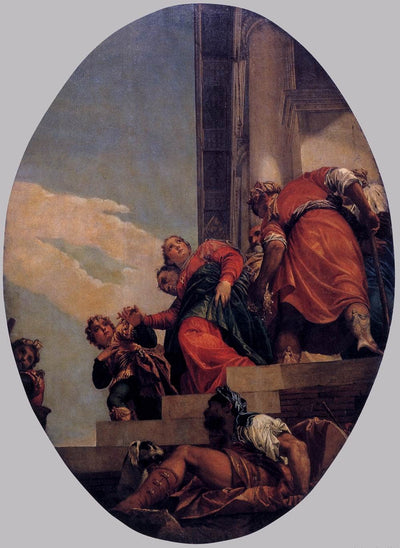
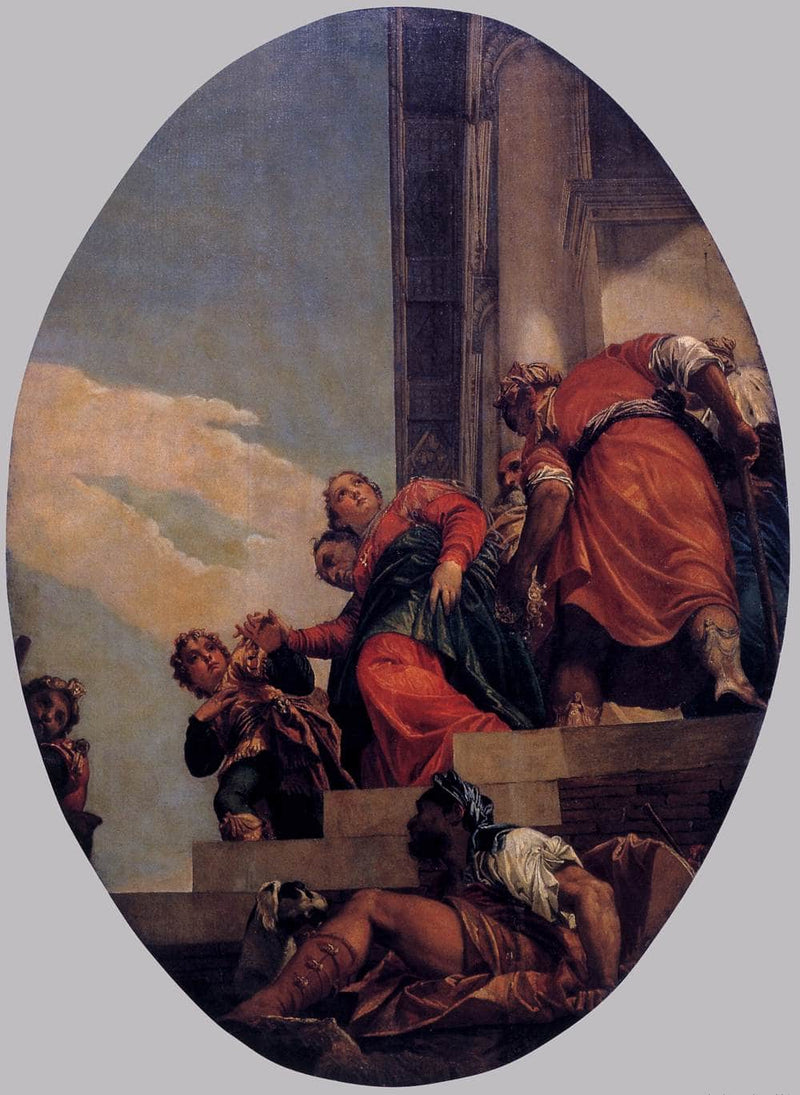
The Banishment of Vashti is rooted in the Book of Esther, a significant narrative in the Hebrew Bible. Vashti, the queen of King Ahasuerus, defies her husband's command to appear before him and his guests. This act of defiance leads to her banishment, symbolizing the struggle for female autonomy in a patriarchal society. The story highlights themes of courage and rebellion, making Vashti a powerful figure in feminist discourse.
Paolo Veronese, born in 1528 in Venice, was a leading figure of the Italian Renaissance. Known for his grandiose compositions and vibrant colors, Veronese's work often depicted historical and biblical themes. His mastery of oil painting and ability to convey emotion through color and form set him apart from his contemporaries. Veronese's unique style reflects the opulence of Venetian culture during the 16th century.
Veronese was influenced by the Mannerist movement, which emphasized elegance and complexity. His works often showcase dramatic perspectives and elaborate settings. The Venetian school, with its focus on color and light, also played a crucial role in shaping his artistic vision. Veronese's ability to blend these influences resulted in a distinctive style that celebrated both beauty and narrative depth.
The Banishment of Vashti features a rich color palette, dominated by deep reds, golds, and blues. These vibrant hues not only capture the viewer's attention but also convey the emotional weight of the scene. The use of color enhances the dramatic tension between Vashti and the king, emphasizing her strength and defiance.
Veronese expertly employs balance and symmetry in this composition. The arrangement of figures creates a harmonious flow, guiding the viewer's eye across the canvas. The central positioning of Vashti draws immediate focus, while the surrounding characters enhance the narrative context. This careful composition reflects Veronese's mastery of spatial organization.
The figures in The Banishment of Vashti are meticulously rendered, each displaying distinct emotions. Vashti's expression conveys a mix of defiance and sorrow, while the king's face reveals anger and disbelief. Veronese's ability to capture these nuanced emotions adds depth to the narrative, inviting viewers to engage with the characters' plight.
Vashti stands as a symbol of feminine strength and autonomy. Her refusal to comply with the king's demands challenges the traditional gender roles of her time. This act of rebellion resonates with modern audiences, making her a timeless figure in discussions about women's rights and empowerment.
The painting reflects the complex gender dynamics of ancient Persia. Vashti's banishment illustrates the consequences of defying male authority. This theme invites viewers to consider the historical context of women's roles and the societal expectations placed upon them, both in ancient times and today.
The Banishment of Vashti invites various interpretations of authority and rejection. Some view Vashti's actions as a courageous stand against tyranny, while others see her as a tragic figure succumbing to the whims of power. This duality enriches the narrative, allowing for diverse perspectives on the nature of authority and resistance.
The crown in the painting symbolizes both power and loss. As Vashti is stripped of her royal status, the crown becomes a poignant reminder of her former authority. This object serves as a powerful icon of the struggle between personal integrity and societal expectations.
In Veronese's work, color carries significant meaning. The deep reds associated with Vashti suggest passion and strength, while the cooler tones surrounding the king imply coldness and authority. This use of color symbolism enhances the emotional narrative, allowing viewers to connect with the characters on a deeper level.
The grand architectural elements in the background of the painting reflect the opulence of the Persian court. The intricate details of the columns and drapery create a sense of grandeur, contrasting with Vashti's personal struggle. This setting not only provides context but also amplifies the tension between individual desires and societal expectations.
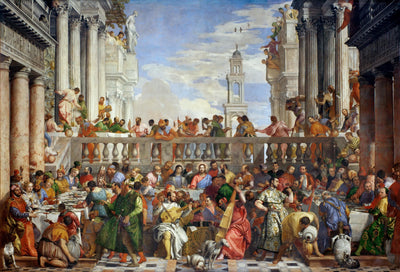
Veronese often explored themes of power and defiance in his other works, such as The Wedding at Cana. Both paintings feature strong female figures and highlight the complexities of authority. This thematic continuity showcases Veronese's interest in the dynamics of human relationships.
While Veronese's style is characterized by vibrant colors and dramatic compositions, other Renaissance artists like Michelangelo focused more on form and anatomy. Veronese's unique approach to storytelling through color and emotion sets him apart, making his works distinctively engaging.
The Banishment of Vashti has influenced numerous artists and movements, inspiring discussions about gender and power dynamics. Its impact can be seen in modern interpretations of female strength in art, as well as in literature and theater. This painting continues to resonate, encouraging new generations to explore its themes.
Veronese's mastery of oil painting techniques, such as layering and glazing, creates a luminous quality in The Banishment of Vashti. These methods allow for rich textures and depth, enhancing the overall visual experience. The careful application of paint showcases Veronese's skill and dedication to his craft.
Veronese's brushwork is characterized by fluidity and precision. His ability to blend colors seamlessly contributes to the painting's dynamic quality. This distinctive style not only highlights the figures but also adds a sense of movement to the scene, drawing viewers into the narrative.
The strategic use of light and shadow in The Banishment of Vashti creates a three-dimensional effect. Veronese skillfully illuminates certain figures while casting others in shadow, enhancing the emotional intensity of the scene. This technique adds depth and drama, inviting viewers to engage with the artwork on multiple levels.
Since its creation, The Banishment of Vashti has garnered attention for its bold themes and striking visuals. Art critics and historians have praised Veronese's ability to convey complex narratives through his work. The painting's reception reflects changing societal attitudes towards gender and power over the centuries.
The Banishment of Vashti has inspired modern interpretations in literature, theater, and visual arts. Contemporary artists often draw on Vashti's story to explore themes of resistance and empowerment. This ongoing dialogue highlights the painting's relevance in today's discussions about gender equality.
The Banishment of Vashti is housed in prestigious collections, including the Museo di Capodimonte in Naples. It has been featured in numerous exhibitions, showcasing Veronese's impact on the art world. These displays allow audiences to appreciate the painting's historical significance and artistic brilliance.
The Banishment of Vashti depicts the biblical story of Queen Vashti, who defies King Ahasuerus by refusing to appear at his banquet, leading to her banishment. This narrative explores themes of power, rebellion, and female strength.
Veronese employed oil painting techniques such as layering and glazing, along with distinctive brushwork and strategic use of light and shadow to create depth and emotion in The Banishment of Vashti.
The painting reflects Renaissance ideals through its emphasis on human emotion, the use of vibrant colors, and the exploration of complex themes such as power dynamics and individual agency.
Main themes include feminine strength, gender dynamics, authority, and rebellion. The painting invites viewers to consider the implications of Vashti's defiance in both historical and modern contexts.
The Banishment of Vashti is currently displayed at the Museo di Capodimonte in Naples, Italy. It is part of a collection that showcases Veronese's significant contributions to Renaissance art.
When reproducing The Banishment of Vashti, consider investing in high-quality oil painting reproductions. These reproductions capture the texture and vibrancy of the original artwork, offering a superior alternative to standard prints.
To care for a reproduction of The Banishment of Vashti, keep it away from direct sunlight to prevent fading. Use a soft, dry cloth for dusting, and avoid harsh chemicals. Proper care will help maintain the beauty and integrity of the artwork.

Discover some of our latest oil paintings, each one carefully hand-painted on canvas.
At Art & See, we're committed to delivering the highest quality art reproductions. Our team of expert artists and state-of-the-art processes ensure that each piece is a masterpiece in its own right.

Experience your masterpiece's creation through daily photos from our expert artists, each with 15+ years of experience.

Your artwork travels first class via UPS, FedEx, or DHL, protected by museum-grade packaging for safe delivery.

Review unedited photos of your finished painting and request unlimited free revisions before it ships. We only ship when you say it's perfect.

Every piece is crafted with archival materials, UV-resistant finishes, and premium British paints to last generations.
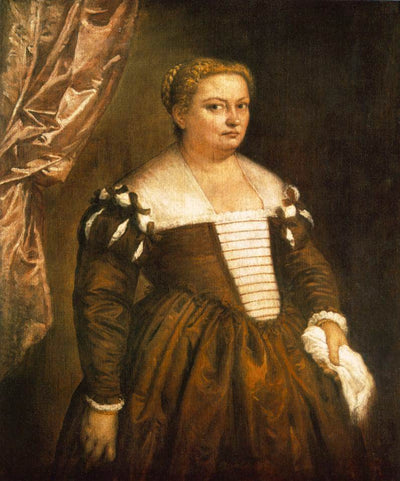
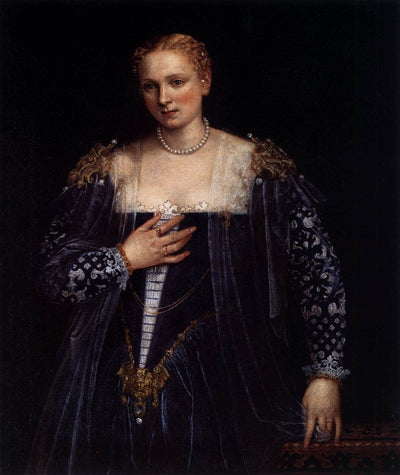
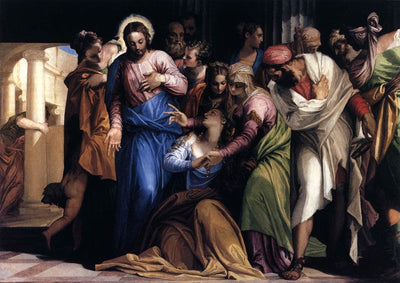
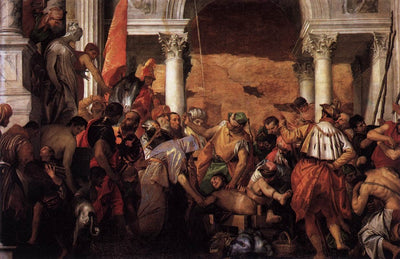
Yes, 100% hand-painted with oil on canvas by artists with 15+ years of experience. No prints, no digital shortcuts. You'll see and feel real brushstrokes, just like the original Paolo Veronese masterpiece.
Your The Banishment of Vashti reproduction takes 2–5 weeks to hand-paint depending on size and detail. Once approved, shipping takes 5–8 days via FedEx, UPS, or DHL with full tracking. Free worldwide shipping included.
Absolutely. Once your The Banishment of Vashti is complete, we send you unedited photos, a full view and close-up details. Request unlimited free revisions until you're 100% satisfied. We don't ship until you say "yes."
Every painting goes through our Preview & Approve process: you receive unedited photos of your finished Paolo Veronese reproduction and can request unlimited free revisions before it ships. We only ship when you say it's perfect. If after delivery you have any concerns, contact us at [email protected] and our team will work with you on the best path forward.
Professional-grade oil paints (Windsor & Newton) on premium linen canvas with UV-resistant protective coating. Museum-grade materials built to last generations, the same quality used in galleries worldwide.
Our artists specialize in Paolo Veronese's technique: color accuracy, brushwork, and composition are matched to the original. Every reproduction goes through quality review before your approval photos are taken.
Every painting is insured and delivered door-to-door. Unframed paintings ship in protective hard tubes. Framed paintings are bubble-wrapped in sturdy boxes. If anything arrives damaged, we repair or replace it free.
Dive into the vibrant world of Historic Art. Discover your next painting today.