4.9/5
4.9/5





SAMPLES OF QUALITY
Recent Hand-Painted Reproductions
Discover some of our latest oil paintings, each one carefully hand-painted on canvas.

AS SEEN IN





Handmade Oil Painting on Canvas Art Reproduction, Museum-quality

The six dominant colors measured from the painting, with the share of canvas each one covers. Click a swatch to copy its hex code.
Processing & Shipping Time
Your delivery time includes two parts:
Shipping Methods
We ship with trusted couriers like FedEx, UPS, and DHL. Every shipment includes a tracking code.
Our goal is to deliver your order safely and quickly.
Shipment Safety Measures
We handle your products with care so they arrive in perfect condition:
Every product is insured and delivered right to your door, so you can feel confident buying from us.
Every Art & See painting is created by artists with 15+ years of experience using professional-grade oil paints and premium linen canvas with UV-resistant protective coating, the same museum-grade materials used in galleries worldwide. Each piece goes through quality review before your approval photos are taken. If after delivery you have any concerns about your painting, contact us at [email protected] and our team will work with you on the best path forward.
Full Warranty
Every painting is protected against physical damage during shipping. If your painting arrives damaged, we repair or replace it, free of charge.
Coverage Details
Transit damage (crushed, torn, water damage): we repair or replace at no cost. Please note that damages resulting from accidents or inappropriate use are not covered under this warranty.
Repair or Replace
Depending on the extent of damage, the affected painting will either be repaired or replaced at no additional cost to you.
Free Service
All warranty services are provided absolutely free of charge.
We want you to absolutely love your handmade artwork. Here's how it works:
In the rare case you approve the photos and the artwork has been shipped and delivered to you, and you still want additional modification requests, we can handle it as a courtesy at our discretion. If accepted, you cover the return shipping cost.
| Type | Hand-Painted Oil Painting Reproduction |
| Original Artist | Martin Ferdinand Quadal |
| Price Range | $350 to $1,150 |
| Shipping | Free Worldwide |
| Returns | 90-Day Returns |
| Medium | Oil on Canvas |
| Canvas | Museum-Grade Linen Canvas |
| Technique | Hand-painted brushstroke-by-brushstroke |
| Art Style | Neoclassicism |
| Period | 18th Century |
| Artist Nationality | Czech |
| Orientation | Horizontal |
| Subject | Portraits group |
| Available Sizes | 7 (22'' W × 15'' H to 72'' W × 48'' H, including the original size), plus custom sizes |
| Framing Options | Unframed, Stretched Canvas, Classic & Modern Frames |
| Delivery | 14–28 business days |
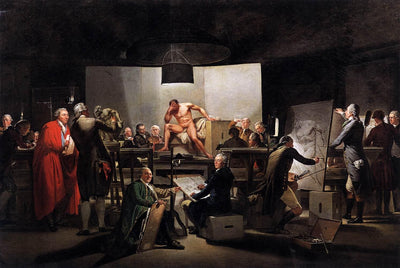
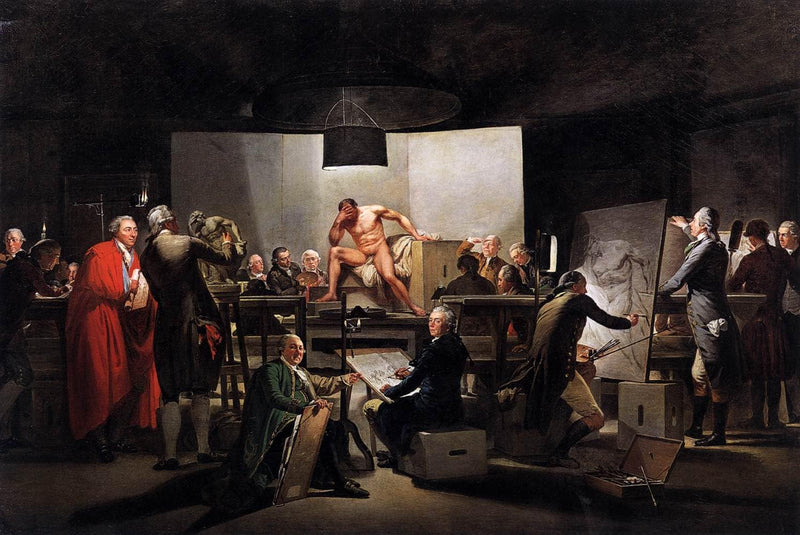
Martin Ferdinand Quadal's 'Life Class in the Vienna Academy' emerged during a vibrant period of artistic evolution. The painting reflects the influence of Neoclassicism and Romanticism, which emphasized emotion and the beauty of the human form. Artists sought to capture realism while also exploring the depths of human experience. Quadal's work stands as a testament to these movements, showcasing a blend of technical skill and emotional depth.
The Vienna Academy was a pivotal institution in the 19th century, shaping the careers of many renowned artists. It served as a hub for artistic education, where students honed their skills in life drawing and painting. The Academy's emphasis on classical techniques and the study of anatomy laid the groundwork for Quadal's approach to art. This environment fostered creativity and innovation, allowing artists to explore their unique styles while adhering to traditional methods.
Life drawing was essential in the training of artists during Quadal's time. It provided students with the opportunity to study the human figure in detail, enhancing their understanding of proportion, anatomy, and movement. Quadal's 'Life Class' captures this educational practice, illustrating the dedication of students as they strive to master their craft. This focus on the human form not only improved technical skills but also deepened the emotional connection artists had with their subjects.
In 'Life Class,' Quadal expertly arranges figures to create a sense of balance and harmony. The composition draws the viewer's eye across the canvas, guiding them through the scene. Each student and model is positioned thoughtfully, contributing to an overall sense of unity. This careful arrangement reflects Quadal's mastery of spatial dynamics, making the painting both engaging and aesthetically pleasing.
Quadal's color palette in 'Life Class' evokes a range of emotions. He employs warm earth tones alongside cooler shades, creating a dynamic interplay that enhances the mood of the scene. The subtle variations in color not only highlight the figures but also convey the atmosphere of the Academy. This thoughtful use of color invites viewers to connect emotionally with the artwork, making it a powerful representation of artistic education.
Quadal's brushwork in 'Life Class' is both expressive and precise. He skillfully captures the movement and form of the human body, bringing the figures to life. The varied brushstrokes create texture and depth, allowing viewers to appreciate the intricacies of each pose. This technique showcases Quadal's ability to blend realism with artistic interpretation, making the painting a remarkable study of the human figure.
At the heart of 'Life Class' is a celebration of the human figure. Quadal's attention to anatomical detail highlights the beauty and complexity of the body. Each model poses with grace, showcasing the elegance of human form. This focus on anatomy not only reflects the educational practices of the time but also serves as a tribute to the artistry involved in capturing the essence of humanity.
The theme of learning and mastery resonates throughout 'Life Class.' Quadal illustrates the dedication of students as they engage with their models, embodying the pursuit of artistic excellence. This dynamic interaction emphasizes the importance of mentorship and collaboration in the artistic process. The painting serves as a reminder of the transformative power of education in shaping skilled artists.
The interaction between students and models in 'Life Class' is rich with meaning. Quadal captures moments of concentration and inspiration, highlighting the relationship between the observer and the observed. This connection fosters a deeper understanding of the artistic process, showcasing the mutual respect and admiration that exists in the realm of art education. The painting invites viewers to reflect on their own experiences of learning and growth.
Martin Ferdinand Quadal was born in 1801 in Vienna, Austria. He trained at the Vienna Academy, where he developed his skills in painting and drawing. Quadal's journey as an artist was marked by a commitment to realism and a passion for the human figure. His experiences at the Academy profoundly influenced his work, leading him to create pieces that celebrate the beauty of life and learning.
Throughout his career, Quadal was influenced by prominent artists and mentors. He studied under notable figures who emphasized the importance of classical techniques and the study of anatomy. These influences shaped his artistic vision, encouraging him to explore the depths of human expression. Quadal's ability to blend traditional methods with his unique style set him apart in the art world.
Quadal's legacy endures through his contributions to the art community. His dedication to teaching and mentoring aspiring artists has left a lasting impact. Many of his students went on to achieve success in their own right, carrying forward the principles of craftsmanship and creativity that Quadal instilled in them. His work continues to inspire new generations, reminding us of the importance of artistic education.
Quadal's innovative use of chiaroscuro in 'Life Class' adds depth and dimension to the figures. By skillfully manipulating light and shadow, he creates a three-dimensional effect that enhances the realism of the scene. This technique draws attention to the contours of the human body, emphasizing the beauty of form and movement. Quadal's mastery of light sets his work apart from that of his contemporaries.
The tactile quality of oil paint is evident in 'Life Class.' Quadal's application of paint creates rich textures that invite viewers to engage with the artwork on a sensory level. The layering of paint adds depth and complexity, allowing the viewer to appreciate the nuances of each figure. This textural richness enhances the overall experience of the painting, making it a feast for the eyes.
When comparing Quadal's techniques to those of his contemporaries, his unique approach to composition and color stands out. While many artists focused solely on realism, Quadal infused his work with emotional depth and narrative. His ability to balance technical skill with expressive elements sets him apart, making 'Life Class' a remarkable example of 19th-century art. Quadal's innovations continue to influence artists today.
Art reproductions play a vital role in art education. They allow students and enthusiasts to study masterpieces like Quadal's 'Life Class' up close. Reproductions provide access to works that may be housed in distant museums, fostering a deeper appreciation for art. Unlike prints, painting reproductions capture the texture and vibrancy of the original, making them a superior choice for collectors and learners alike.
Reproductions help preserve artistic heritage by making iconic works accessible to a broader audience. They serve as educational tools, allowing people to explore the techniques and themes of renowned artists. By creating high-quality reproductions of 'Life Class,' we ensure that Quadal's legacy continues to inspire future generations. These reproductions honor the original while providing a tangible connection to the past.
When selecting a reproduction of 'Life Class,' consider the quality of materials and craftsmanship. Look for reproductions that use high-grade canvas and oil paints to replicate the original's vibrancy. Pay attention to the level of detail and accuracy in the brushwork. A well-crafted reproduction will not only enhance your space but also provide an authentic experience of Quadal's artistry.
'Life Class' is significant for its portrayal of the educational practices of the 19th century. It highlights the importance of life drawing in developing artistic skills and understanding the human form.
Quadal's painting reflects the rigorous training that artists underwent at the Vienna Academy, emphasizing the value of observation and mastery of anatomy.
Quadal employed chiaroscuro techniques, using light and shadow to create depth and dimension in the figures, enhancing their three-dimensionality.
'Life Class' has been featured in various exhibitions focused on 19th-century art, showcasing Quadal's contributions to the Vienna Academy and the broader art community.
The warm and cool tones in Quadal's palette evoke feelings of warmth, contemplation, and inspiration, inviting viewers to connect with the scene on an emotional level.
To appreciate the details, take time to observe the brushwork, the interplay of light and shadow, and the expressions of the figures. Each element contributes to the overall narrative of the painting.
When purchasing a reproduction, consider the quality of materials, the accuracy of the colors, and the craftsmanship involved. A high-quality reproduction will provide a more authentic experience of Quadal's work.

Discover some of our latest oil paintings, each one carefully hand-painted on canvas.
At Art & See, we're committed to delivering the highest quality art reproductions. Our team of expert artists and state-of-the-art processes ensure that each piece is a masterpiece in its own right.

Experience your masterpiece's creation through daily photos from our expert artists, each with 15+ years of experience.

Your artwork travels first class via UPS, FedEx, or DHL, protected by museum-grade packaging for safe delivery.

Review unedited photos of your finished painting and request unlimited free revisions before it ships. We only ship when you say it's perfect.

Every piece is crafted with archival materials, UV-resistant finishes, and premium British paints to last generations.
Yes, 100% hand-painted with oil on canvas by artists with 15+ years of experience. No prints, no digital shortcuts. You'll see and feel real brushstrokes, just like the original Martin Ferdinand Quadal masterpiece.
Your Life Class in the Vienna Academy reproduction takes 2–5 weeks to hand-paint depending on size and detail. Once approved, shipping takes 5–8 days via FedEx, UPS, or DHL with full tracking. Free worldwide shipping included.
Absolutely. Once your Life Class in the Vienna Academy is complete, we send you unedited photos, a full view and close-up details. Request unlimited free revisions until you're 100% satisfied. We don't ship until you say "yes."
Every painting goes through our Preview & Approve process: you receive unedited photos of your finished Martin Ferdinand Quadal reproduction and can request unlimited free revisions before it ships. We only ship when you say it's perfect. If after delivery you have any concerns, contact us at [email protected] and our team will work with you on the best path forward.
Professional-grade oil paints (Windsor & Newton) on premium linen canvas with UV-resistant protective coating. Museum-grade materials built to last generations, the same quality used in galleries worldwide.
Our artists specialize in Martin Ferdinand Quadal's technique: color accuracy, brushwork, and composition are matched to the original. Every reproduction goes through quality review before your approval photos are taken.
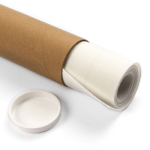
Every painting is insured and delivered door-to-door. Unframed paintings ship in protective hard tubes. Framed paintings are bubble-wrapped in sturdy boxes. If anything arrives damaged, we repair or replace it free.
Dive into the vibrant world of Historic Art. Discover your next painting today.