Discover the Enchantment of Classical Landscape by Konstantin Bogaevsky
Unveiling the Artistic Genius of Konstantin Bogaevsky
A Brief Biography of the Master Painter
Konstantin Bogaevsky, born in 1865 in the heart of Russia, emerged as a prominent figure in the world of landscape painting. His artistic journey began at the Imperial Academy of Arts in St. Petersburg, where he honed his skills under the guidance of renowned mentors. Bogaevsky's passion for capturing the beauty of
nature led him to travel extensively across Russia, from the serene banks of the Volga
River to the majestic Ural
Mountains. His dedication to portraying the natural world earned him accolades and a lasting legacy in the realm of fine art.
Influences and Artistic Movements Shaping Bogaevsky's Work
Bogaevsky was deeply influenced by the Russian
Realism movement, which emphasized the importance of depicting everyday life and nature with authenticity. He drew inspiration from the works of
Ivan Shishkin and Arkhip Kuindzhi, who were masters of landscape painting. The interplay of light and shadow in his works reflects the influence of
Impressionism, while his attention to detail showcases the meticulousness of the Academic tradition. This blend of styles allowed Bogaevsky to create landscapes that resonate with both emotional depth and technical precision.
Exploring the Rich Imagery of Classical Landscape
Symbolism and Themes in Bogaevsky's Landscape Art
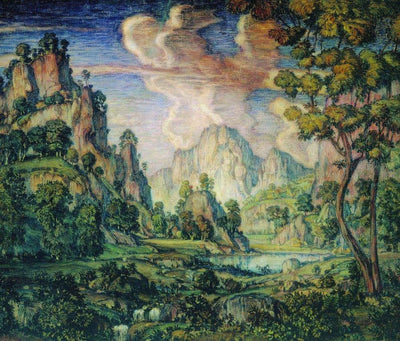
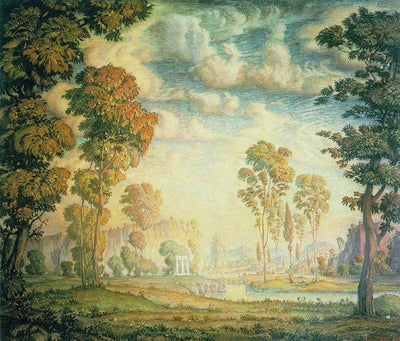
In "Classical Landscape," Bogaevsky weaves a tapestry of
symbolism that invites viewers to explore themes of tranquility, harmony, and the passage of time. The painting captures the essence of the Russian
countryside, where nature serves as a backdrop for human existence. The gentle curves of the hills and the serene waters reflect a sense of peace, while the distant mountains symbolize the challenges and aspirations of life. Each element in the composition tells a story, encouraging viewers to find their own interpretations.
Color Palette: The Harmony of Nature and Emotion
Bogaevsky's masterful use of color in "Classical Landscape" evokes a profound emotional response. The rich greens of the foliage, the soft blues of the
sky, and the warm earth tones create a harmonious balance that mirrors the beauty of nature. This carefully chosen palette not only enhances the visual appeal but also evokes feelings of nostalgia and serenity. The colors work together to transport viewers to a tranquil moment in time, inviting them to immerse themselves in the landscape.
Brushwork Techniques: Capturing Light and Texture
Bogaevsky's brushwork in "Classical Landscape" is a testament to his skill and dedication as an artist. He employs a variety of techniques to capture the play of light across the landscape. The delicate strokes used for the
leaves create a sense of movement, while the thicker application of paint in the foreground adds depth and texture. This dynamic interplay of brushwork invites viewers to explore the painting up close, revealing the intricate details that make it a true masterpiece.
The Historical Context of Classical Landscape Paintings
19th Century Russian Art: A Cultural Renaissance
The 19th century marked a cultural
renaissance in Russia, with artists like Bogaevsky at the forefront of this movement. This era saw a growing appreciation for landscape painting as a genre that could convey national identity and the beauty of the Russian landscape. The rise of the middle class and increased access to art education allowed artists to explore new themes and techniques, leading to a flourishing of creativity that defined the period.
Landscape Painting: Evolution and Significance in Art History
Landscape painting has evolved significantly over the centuries, transitioning from idealized representations to more realistic depictions of nature. In the 19th century, artists began to focus on capturing the essence of their surroundings, reflecting the changing relationship between humanity and the natural world. Bogaevsky's "Classical Landscape" exemplifies this shift, showcasing the beauty of the Russian landscape while inviting viewers to contemplate their connection to nature.
Analyzing the Composition of Classical Landscape
Foreground, Midground, and Background: A Visual Journey
The composition of "Classical Landscape" is carefully structured to guide the viewer's eye through the painting. The foreground features lush greenery and vibrant
flowers, drawing attention and creating a sense of immediacy. The midground reveals a tranquil body of water, reflecting the sky and surrounding landscape. In the background, majestic mountains rise, creating a sense of depth and inviting exploration. This layered approach enhances the overall experience, making the viewer feel as if they are stepping into the scene.
Natural Elements: Trees, Water, and Sky in Harmony
Bogaevsky's depiction of natural elements in "Classical Landscape" showcases his deep appreciation for the environment. The
trees, with their intricate branches and leaves, stand tall and proud, symbolizing strength and resilience. The water, calm and reflective, serves as a mirror to the sky, creating a harmonious balance between earth and heaven. The sky, painted in soft hues, adds a sense of tranquility, inviting viewers to pause and reflect on the beauty of the world around them.
Human Presence: The Role of Figures in the Landscape
While "Classical Landscape" primarily focuses on nature, the subtle inclusion of human figures adds depth to the composition. These figures, often depicted in the distance, serve as a reminder of humanity's connection to the natural world. They engage in simple activities, such as fishing or walking, emphasizing the theme of coexistence. This delicate balance between man and nature invites viewers to consider their own relationship with the environment.
Emotional Resonance: What Classical Landscape Evokes
Transcending Time: The Timeless Appeal of Nature
"Classical Landscape" transcends time, evoking a sense of nostalgia and longing for simpler days. The serene beauty of the landscape resonates with viewers, reminding them of the importance of nature in their lives. This timeless appeal speaks to the universal human experience, inviting reflection on the passage of time and the enduring beauty of the natural world.
Personal Reflections: Viewer Interpretations and Experiences
Each viewer brings their own experiences and emotions to "Classical Landscape." Some may find solace in the tranquil scenery, while others may feel inspired by the beauty of the Russian countryside. This personal connection to the artwork enhances its significance, making it a cherished piece for many. The painting serves as a canvas for individual interpretations, allowing each person to find their own meaning within its imagery.
Comparative Analysis: Bogaevsky vs. His Contemporaries
Contrasting Styles: Bogaevsky and the Russian Realists
Bogaevsky's style stands out among his contemporaries, particularly the Russian Realists. While artists like
Ilya Repin focused on social themes and human emotion, Bogaevsky dedicated himself to the beauty of the landscape. His emphasis on nature's tranquility and harmony offers a refreshing contrast to the often dramatic narratives of his peers. This unique approach allows Bogaevsky to carve out a distinct niche in the world of Russian art.
Influence on Future Generations of Landscape Artists
Bogaevsky's impact on future generations of landscape artists cannot be overstated. His innovative techniques and dedication to capturing the essence of nature inspired many artists who followed. The emphasis on light, color, and texture in his work paved the way for modern landscape painting, influencing artists both in Russia and abroad. His legacy continues to resonate, encouraging new artists to explore the beauty of the natural world.
Preserving the Legacy: The Importance of Art Reproductions
Art Reproductions: Bridging the Past and Present
Art reproductions play a vital role in preserving the legacy of masterpieces like "Classical Landscape." Unlike prints, which can lack depth and texture, high-quality painting reproductions capture the essence of the original artwork. These reproductions allow art lovers to experience the beauty of Bogaevsky's work in their own homes, bridging the gap between the past and present. They serve as a reminder of the importance of art in our lives.
How Reproductions Enhance Art Appreciation
Owning a reproduction of "Classical Landscape" enhances art appreciation by providing a tangible connection to the original piece. These reproductions allow viewers to explore the intricate details and vibrant colors that define Bogaevsky's work. By bringing the beauty of this landscape into everyday life, art reproductions inspire a deeper understanding and appreciation of the artistic process. They invite viewers to engage with the artwork on a personal level, fostering a love for art that transcends time.
Frequently Asked Questions about Classical Landscape
What is the significance of the elements in Classical Landscape?
The elements in "Classical Landscape" symbolize harmony and the relationship between humanity and nature. Each component, from the trees to the water, contributes to the overall theme of tranquility and coexistence.
How does Konstantin Bogaevsky's style differ from other landscape artists?
Bogaevsky's style is characterized by a unique blend of realism and impressionism. He focuses on capturing the serene beauty of nature, while many contemporaries emphasize human emotion and social themes.
What emotions does Classical Landscape evoke in viewers?
"Classical Landscape" evokes feelings of nostalgia, peace, and reflection. The tranquil scenery invites viewers to connect with their own experiences in nature, fostering a sense of calm.
What historical events influenced the creation of Classical Landscape?
The cultural renaissance in 19th century Russia, along with the rise of the middle class, influenced Bogaevsky's work. This period encouraged artists to explore themes of national identity and the beauty of the Russian landscape.
How can I interpret the symbolism in Classical Landscape?
Interpreting the symbolism in "Classical Landscape" involves considering the relationship between the natural elements and human presence. Each component invites personal reflection and interpretation, allowing viewers to find their own meaning.
FAQs about Painting Reproductions
What are the benefits of owning a reproduction of Classical Landscape?
Owning a reproduction of "Classical Landscape" allows art lovers to enjoy the beauty of Bogaevsky's work in their own space. These reproductions capture the essence of the original painting, making art accessible to everyone.
How do art reproductions maintain the essence of the original painting?
High-quality art reproductions use advanced techniques to replicate the colors, textures, and details of the original painting. This ensures that the beauty and emotional impact of "Classical Landscape" are preserved for future generations to enjoy.
 4.9/5
4.9/5