4.9/5
4.9/5







SAMPLES OF QUALITY
Recent Hand-Painted Reproductions
Discover some of our latest oil paintings, each one carefully hand-painted on canvas.

AS SEEN IN






by Jan Steen
Handmade Oil Painting on Canvas Art Reproduction, Museum-quality

The six dominant colors measured from the painting, with the share of canvas each one covers. Click a swatch to copy its hex code.
Processing & Shipping Time
Your delivery time includes two parts:
Shipping Methods
We ship with trusted couriers like FedEx, UPS, and DHL. Every shipment includes a tracking code.
Our goal is to deliver your order safely and quickly.
Shipment Safety Measures
We handle your products with care so they arrive in perfect condition:
Every product is insured and delivered right to your door, so you can feel confident buying from us.
Every Art & See painting is created by artists with 15+ years of experience using professional-grade oil paints and premium linen canvas with UV-resistant protective coating, the same museum-grade materials used in galleries worldwide. Each piece goes through quality review before your approval photos are taken. If after delivery you have any concerns about your painting, contact us at [email protected] and our team will work with you on the best path forward.
Full Warranty
Every painting is protected against physical damage during shipping. If your painting arrives damaged, we repair or replace it, free of charge.
Coverage Details
Transit damage (crushed, torn, water damage): we repair or replace at no cost. Please note that damages resulting from accidents or inappropriate use are not covered under this warranty.
Repair or Replace
Depending on the extent of damage, the affected painting will either be repaired or replaced at no additional cost to you.
Free Service
All warranty services are provided absolutely free of charge.
We want you to absolutely love your handmade artwork. Here's how it works:
In the rare case you approve the photos and the artwork has been shipped and delivered to you, and you still want additional modification requests, we can handle it as a courtesy at our discretion. If accepted, you cover the return shipping cost.
| Type | Hand-Painted Oil Painting Reproduction |
| Original Artist | Jan Steen |
| Price Range | $350 to $1,150 |
| Shipping | Free Worldwide |
| Quality | Preview & Approve Before Shipping |
| Medium | Oil on Canvas |
| Canvas | Museum-Grade Linen Canvas |
| Technique | Hand-painted brushstroke-by-brushstroke |
| Art Style | Baroque |
| Period | 17th Century |
| Artist Nationality | Dutch |
| Orientation | Horizontal |
| Subject | Cultural heritage religious, Genre painting |
| Available Sizes | 7 (21'' W × 15'' H to 70'' W × 49'' H, including the original size), plus custom sizes |
| Framing Options | Unframed, Stretched Canvas, Classic & Modern Frames |
| Delivery | 14–28 business days |
| Year | 1665 |
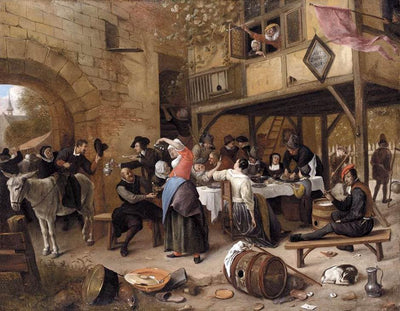
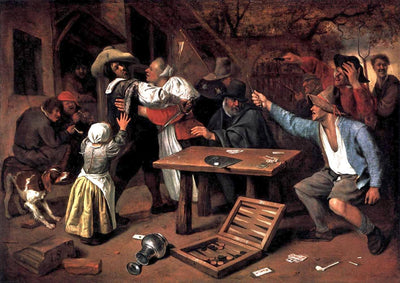
The Dutch Golden Age, spanning the 17th century, marked a remarkable period of artistic achievement. This era saw the rise of master painters like Rembrandt and Vermeer, alongside Jan Steen. The flourishing economy and the rise of the merchant class fueled a demand for art that depicted everyday life, morality, and social interactions. Steen's work, including "Argument over a Card Game," reflects the vibrant culture and complex social dynamics of this time.
Jan Steen was born in 1626 in Leiden, Netherlands. He came from a family of brewers, which influenced his understanding of social gatherings and leisure activities. Steen's artistic journey took him through various influences, including the works of Caravaggio and the Dutch genre painters. His ability to blend humor with moral lessons made his paintings both entertaining and thought-provoking.
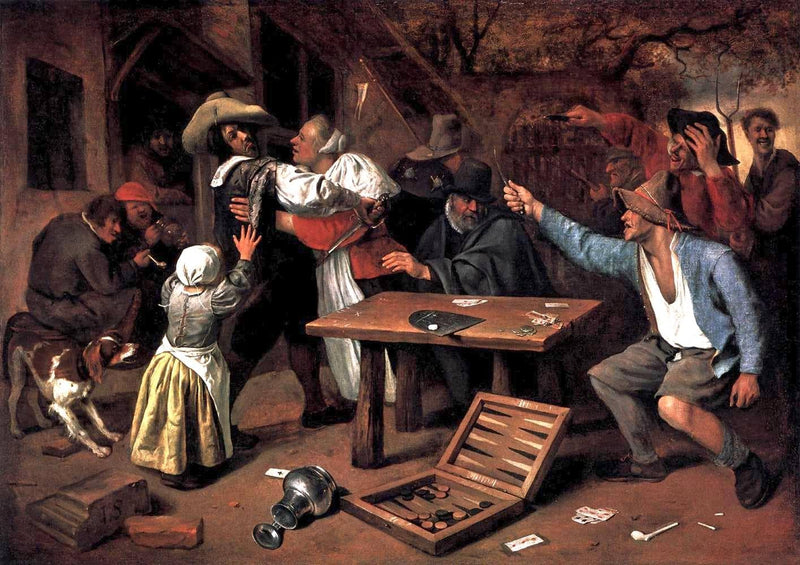
Steen's paintings often serve as social commentaries, reflecting the values and vices of 17th-century Dutch society. "Argument over a Card Game" captures the tension between leisure and morality, showcasing how games can lead to conflict. This painting invites viewers to consider the consequences of indulgence and the fragility of human relationships.
The composition of "Argument over a Card Game" is a masterclass in balancing chaos and order. Steen arranges the figures in a dynamic manner, creating a sense of movement and tension. The central conflict draws the viewer's eye, while the surrounding elements provide context and depth, illustrating the lively atmosphere of a card game gone awry.
Steen employs a rich color palette that brings the scene to life. The warm tones of the characters' clothing contrast with the cooler shades of the background, enhancing the emotional intensity of the argument. This vibrant use of color reflects the energy of daily life in 17th-century Holland, making the painting feel immediate and relatable.
The facial expressions of the characters in "Argument over a Card Game" are striking. Each figure conveys a range of emotions, from anger to amusement. Steen's ability to capture these nuanced expressions adds depth to the narrative, allowing viewers to engage with the characters' experiences and conflicts on a personal level.
The central theme of conflict in "Argument over a Card Game" highlights the complexities of human interaction. The painting illustrates how a simple game can escalate into a heated argument, reflecting the unpredictable nature of relationships. This theme resonates with audiences, as it mirrors real-life situations where misunderstandings can lead to discord.
Steen explores the duality of leisure and morality in this work. While the characters engage in a seemingly innocent card game, the underlying tension suggests that such pastimes can have serious consequences. This theme prompts viewers to reflect on their own leisure activities and the potential moral implications they may carry.
Every object in "Argument over a Card Game" carries symbolic weight. The playing cards represent chance and fate, while the drinks signify indulgence and excess. These everyday items serve as metaphors for the characters' relationships, illustrating how easily enjoyment can turn into conflict.
Jan Steen's brushwork is characterized by its fluidity and realism. He skillfully captures the textures of fabrics, skin, and objects, creating a lifelike quality in his paintings. This attention to detail enhances the viewer's connection to the scene, making it feel as though they are witnessing the argument unfold in real time.
Steen's use of lighting and shadow adds depth and drama to "Argument over a Card Game." The interplay of light highlights the central figures, drawing attention to their expressions and actions. This technique not only enhances the visual impact but also emphasizes the emotional stakes of the scene.
As a genre painter, Steen excelled at depicting everyday life. His works often feature scenes of domesticity, leisure, and social interaction. "Argument over a Card Game" exemplifies this genre, showcasing the vibrancy and complexity of 17th-century Dutch culture through relatable, human experiences.
Steen's body of work often contrasts themes of joy and conflict. In "Argument over a Card Game," the initial enjoyment of the game quickly turns into a dispute, reflecting the dual nature of human interactions. This contrast is a recurring motif in Steen's paintings, inviting viewers to explore the complexities of life.
Many of Steen's paintings feature recurring characters that represent archetypes of Dutch society. In "Argument over a Card Game," we see familiar figures such as the boisterous drinker and the concerned onlooker. These characters serve to create a relatable narrative that resonates with viewers across generations.
Jan Steen's style evolved throughout his career, reflecting changes in his personal life and the art world. Early in his career, he focused on more straightforward genre scenes, while later works, like "Argument over a Card Game," showcase a greater complexity in composition and theme. This evolution highlights Steen's adaptability and keen observation of human nature.
"Argument over a Card Game" has left a lasting legacy on contemporary artists and movements. Its exploration of human emotion and social dynamics continues to inspire modern painters. Artists today draw from Steen's ability to blend humor with serious themes, creating works that resonate with audiences on multiple levels.
The preservation and restoration of "Argument over a Card Game" are vital for maintaining its historical significance. Art conservators work diligently to protect the painting from deterioration, ensuring that future generations can appreciate its beauty and complexity. This commitment to preservation highlights the importance of art in understanding our cultural heritage.
Over the centuries, "Argument over a Card Game" has garnered varied public reception. Initially celebrated for its humor and realism, the painting has also been critiqued for its moral implications. Today, it is recognized as a significant work that encapsulates the spirit of the Dutch Golden Age, appealing to art lovers and historians alike.
The story behind "Argument over a Card Game" revolves around a lively gathering that turns into a heated dispute. The painting captures the moment when the joy of the game is overshadowed by conflict, reflecting the complexities of human relationships.
The main themes in "Argument over a Card Game" include conflict, leisure, morality, and the dynamics of human interaction. Steen uses the card game as a metaphor for the unpredictability of relationships and the consequences of indulgence.
Jan Steen's style reflects the culture of his time through its focus on everyday life and social interactions. His use of humor, vibrant colors, and detailed realism captures the essence of 17th-century Dutch society, making his work relatable and engaging.
The characters in "Argument over a Card Game" convey a range of emotions, from joy to frustration. Their expressions and body language illustrate the tension of the moment, allowing viewers to connect with their experiences on an emotional level.
"Argument over a Card Game" has influenced modern art by inspiring artists to explore themes of human interaction and social commentary. Its blend of humor and serious undertones encourages contemporary creators to reflect on the complexities of life in their own works.
When purchasing a reproduction of "Argument over a Card Game," consider the quality of the materials used. Look for reproductions that capture the vibrant colors and intricate details of the original oil painting, as these will provide a more authentic experience than standard prints.
To ensure the quality of the reproduction matches the original, seek out reputable art reproduction companies that specialize in oil painting reproductions. Check for customer reviews and request samples if possible to assess the craftsmanship and fidelity to the original artwork.
Yes, there are various styles of reproductions available for "Argument over a Card Game." You can find options ranging from traditional oil painting reproductions to modern interpretations. Each style offers a unique way to appreciate Steen's masterpiece, allowing you to choose one that best fits your aesthetic preferences.

Discover some of our latest oil paintings, each one carefully hand-painted on canvas.
At Art & See, we're committed to delivering the highest quality art reproductions. Our team of expert artists and state-of-the-art processes ensure that each piece is a masterpiece in its own right.

Experience your masterpiece's creation through daily photos from our expert artists, each with 15+ years of experience.

Your artwork travels first class via UPS, FedEx, or DHL, protected by museum-grade packaging for safe delivery.

Review unedited photos of your finished painting and request unlimited free revisions before it ships. We only ship when you say it's perfect.

Every piece is crafted with archival materials, UV-resistant finishes, and premium British paints to last generations.
Yes, 100% hand-painted with oil on canvas by artists with 15+ years of experience. No prints, no digital shortcuts. You'll see and feel real brushstrokes, just like the original Jan Steen masterpiece.
Your Argument over a Card Game reproduction takes 2–5 weeks to hand-paint depending on size and detail. Once approved, shipping takes 5–8 days via FedEx, UPS, or DHL with full tracking. Free worldwide shipping included.
Absolutely. Once your Argument over a Card Game is complete, we send you unedited photos, a full view and close-up details. Request unlimited free revisions until you're 100% satisfied. We don't ship until you say "yes."
Every painting goes through our Preview & Approve process: you receive unedited photos of your finished Jan Steen reproduction and can request unlimited free revisions before it ships. We only ship when you say it's perfect. If after delivery you have any concerns, contact us at [email protected] and our team will work with you on the best path forward.
Professional-grade oil paints (Windsor & Newton) on premium linen canvas with UV-resistant protective coating. Museum-grade materials built to last generations, the same quality used in galleries worldwide.
Our artists specialize in Jan Steen's technique: color accuracy, brushwork, and composition are matched to the original. Every reproduction goes through quality review before your approval photos are taken.
Every painting is insured and delivered door-to-door. Unframed paintings ship in protective hard tubes. Framed paintings are bubble-wrapped in sturdy boxes. If anything arrives damaged, we repair or replace it free.
Dive into the vibrant world of Historic Art. Discover your next painting today.