4.9/5
4.9/5





SAMPLES OF QUALITY
Recent Hand-Painted Reproductions
Discover some of our latest oil paintings, each one carefully hand-painted on canvas.


AS SEEN IN





Handmade Oil Painting on Canvas Art Reproduction, Museum-quality

The six dominant colors measured from the painting, with the share of canvas each one covers. Click a swatch to copy its hex code.
Processing & Shipping Time
Your delivery time includes two parts:
Shipping Methods
We ship with trusted couriers like FedEx, UPS, and DHL. Every shipment includes a tracking code.
Our goal is to deliver your order safely and quickly.
Shipment Safety Measures
We handle your products with care so they arrive in perfect condition:
Every product is insured and delivered right to your door, so you can feel confident buying from us.
Every Art & See painting is created by artists with 15+ years of experience using professional-grade oil paints and premium linen canvas with UV-resistant protective coating, the same museum-grade materials used in galleries worldwide. Each piece goes through quality review before your approval photos are taken. If after delivery you have any concerns about your painting, contact us at [email protected] and our team will work with you on the best path forward.
Full Warranty
Every painting is protected against physical damage during shipping. If your painting arrives damaged, we repair or replace it, free of charge.
Coverage Details
Transit damage (crushed, torn, water damage): we repair or replace at no cost. Please note that damages resulting from accidents or inappropriate use are not covered under this warranty.
Repair or Replace
Depending on the extent of damage, the affected painting will either be repaired or replaced at no additional cost to you.
Free Service
All warranty services are provided absolutely free of charge.
We want you to absolutely love your handmade artwork. Here's how it works:
In the rare case you approve the photos and the artwork has been shipped and delivered to you, and you still want additional modification requests, we can handle it as a courtesy at our discretion. If accepted, you cover the return shipping cost.
| Type | Hand-Painted Oil Painting Reproduction |
| Original Artist | Jacques Stella |
| Price Range | $350 to $1,300 |
| Shipping | Free Worldwide |
| Returns | 90-Day Returns |
| Medium | Oil on Canvas |
| Canvas | Museum-Grade Linen Canvas |
| Technique | Hand-painted brushstroke-by-brushstroke |
| Period | 17th Century |
| Artist Nationality | French |
| Orientation | Vertical |
| Subject | Cultural heritage, Cultural heritage religious, Portraits group, Religion |
| Available Sizes | 7 (16'' W × 19'' H to 45'' W × 54'' H, including the original size), plus custom sizes |
| Framing Options | Unframed, Stretched Canvas, Classic & Modern Frames |
| Delivery | 14–28 business days |
| Size | 147 × 178 cm (58 × 70 in) |
| Year | 1636 |
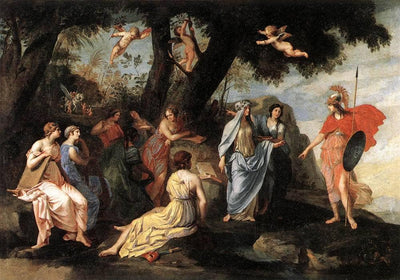
The early 17th century was a transformative period for France, marked by the reign of Louis XIII from 1610 to 1643. This era witnessed the consolidation of royal power and the flourishing of arts and culture. Louis XIII, a patron of the arts, sought to elevate France's status in Europe. His reign was characterized by political intrigue, religious conflict, and the emergence of a centralized state. The painting captures this dynamic atmosphere, reflecting the king's commitment to both governance and cultural patronage.
Cardinal Richelieu, serving as Louis XIII's chief minister, played a pivotal role in shaping France's political landscape. He was a master strategist who aimed to strengthen the monarchy and diminish the power of the nobility. Richelieu's influence extended beyond politics; he was also a significant patron of the arts. His vision for a powerful France is embodied in the painting, showcasing the collaboration between church and state during a time of great upheaval.
The Baroque art movement, which flourished in the 17th century, is known for its dramatic use of light, rich colors, and emotional intensity. Artists sought to evoke feelings and convey complex narratives through their work. The Liberality of Louis XIII and Cardinal Richelieu exemplifies these characteristics, using grandeur and opulence to reflect the power dynamics of the time. This painting not only serves as a visual feast but also as a historical document of Baroque ideals.
Jacques Stella, born in 1596 in Lyon, was a prominent French painter of the Baroque period. He trained in Italy, where he absorbed the techniques of the Italian Renaissance. Stella's career flourished in Paris, where he became known for his historical and religious paintings. His ability to blend realism with idealism set him apart from his contemporaries. The Liberality of Louis XIII and Cardinal Richelieu is one of his most celebrated works, showcasing his mastery of oil painting.
Stella's artistic style is characterized by a harmonious blend of realism and idealism. He portrayed figures with lifelike accuracy while infusing them with a sense of grandeur. This duality is evident in the painting, where Louis XIII and Richelieu are depicted with both human emotion and regal dignity. Stella's ability to capture the essence of his subjects makes this artwork a timeless representation of power and authority.
Stella was heavily influenced by the works of Italian masters such as Caravaggio and Raphael. The dramatic use of light and shadow, known as chiaroscuro, is a hallmark of Stella's technique, reflecting his Italian training. This influence is particularly evident in The Liberality of Louis XIII and Cardinal Richelieu, where the interplay of light enhances the emotional depth of the figures. Stella's work serves as a bridge between the Renaissance and Baroque styles.
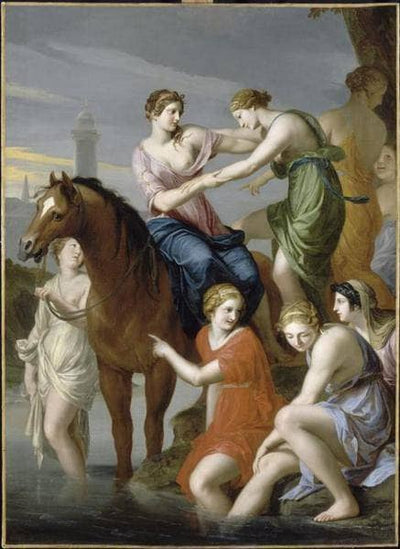
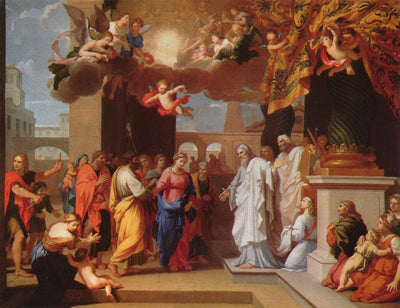
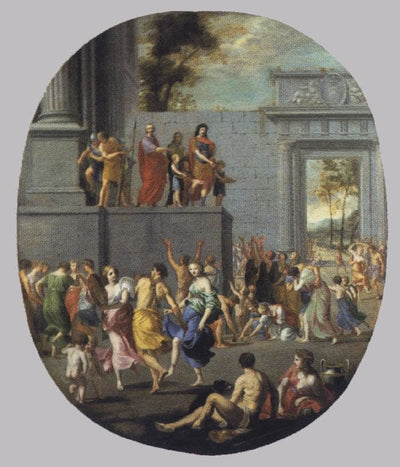
The composition of the painting is meticulously arranged, with Louis XIII and Cardinal Richelieu positioned prominently. The figures are surrounded by a rich tapestry of symbols representing power and generosity. The layout draws the viewer's eye towards the central figures, emphasizing their importance in the narrative. This thoughtful arrangement creates a sense of balance and harmony within the artwork.
The color palette of The Liberality of Louis XIII and Cardinal Richelieu is vibrant and rich, featuring deep reds, golds, and blues. These colors symbolize wealth, power, and divine favor. The warm tones evoke a sense of warmth and generosity, aligning with the themes of patronage and benevolence. Stella's choice of colors enhances the emotional resonance of the painting, inviting viewers to connect with the subjects on a deeper level.
Stella's use of light and shadow adds a three-dimensional quality to the painting. The strategic placement of light highlights the faces of Louis XIII and Richelieu, drawing attention to their expressions. This technique not only enhances the realism of the figures but also creates a dramatic atmosphere. The contrast between light and dark serves to heighten the emotional impact of the scene.
In the painting, Louis XIII is depicted as a generous patron, symbolizing the king's commitment to the arts and his subjects. His outstretched hand suggests a willingness to share his wealth and power. This portrayal reinforces the idea of the monarch as a benevolent ruler, dedicated to the welfare of his people. The painting serves as a visual testament to the king's legacy of patronage.
Cardinal Richelieu's presence in the painting highlights the intricate relationship between religion and politics during this period. As a key advisor to Louis XIII, Richelieu's influence extended beyond the church into the realm of governance. The painting captures this intersection, illustrating how religious authority and state power coexisted and shaped the course of French history.
The Liberality of Louis XIII and Cardinal Richelieu also functions as a piece of propaganda. It was created to bolster the image of the monarchy and reinforce the idea of absolute rule. By depicting the king and his minister in a positive light, Stella contributed to the narrative of a strong and benevolent government. This painting played a crucial role in shaping public perception during a time of political uncertainty.
Stella's brushwork is characterized by its fluidity and precision. He employed a variety of techniques to create texture and depth in his paintings. The careful layering of paint adds richness to the surface, making the figures appear almost lifelike. This mastery of oil painting techniques is evident in The Liberality of Louis XIII and Cardinal Richelieu, where every detail contributes to the overall impact of the artwork.
Stella skillfully employed perspective to create a sense of depth in the painting. The arrangement of figures and the use of overlapping elements draw the viewer into the scene. This technique enhances the realism of the composition, making it feel as though one could step into the world of Louis XIII and Richelieu. The effective use of perspective is a hallmark of Baroque art, and Stella executed it with finesse.
Glazing is a technique that involves applying thin layers of transparent paint over dried layers. Stella utilized this method to achieve luminosity and depth in his work. The glazing technique enhances the richness of colors and allows for subtle variations in tone. This innovative approach is evident in The Liberality of Louis XIII and Cardinal Richelieu, where the interplay of light and color creates a captivating visual experience.
The Liberality of Louis XIII and Cardinal Richelieu has been celebrated and studied since its creation. Initially, it was praised for its grandeur and historical significance. Over time, art critics and historians have examined its themes and techniques, recognizing its importance in the Baroque canon. The painting continues to inspire admiration and scholarly interest, reflecting its enduring legacy in art history.
Stella's influence can be seen in the works of contemporary artists who explore themes of power and patronage. His ability to convey complex narratives through visual art resonates with modern audiences. Artists today draw inspiration from Stella's techniques and thematic explorations, ensuring that his legacy lives on in the art world.
Efforts to preserve and restore The Liberality of Louis XIII and Cardinal Richelieu are crucial for future generations. Art conservators work diligently to maintain the painting's integrity, addressing issues such as fading colors and surface damage. These preservation efforts ensure that this masterpiece continues to be appreciated and studied for years to come.
The figures of Louis XIII and Cardinal Richelieu symbolize the collaboration between monarchy and religion, representing the political and cultural landscape of 17th-century France.
The painting reflects the absolute monarchy's power dynamics, showcasing Louis XIII's role as a patron and Richelieu's influence in shaping state policies.
Stella employed techniques such as chiaroscuro, glazing, and careful brushwork to create depth, texture, and emotional resonance in the painting.
The original painting is housed in the Musée des Beaux-Arts in Lyon, France, where it continues to attract art enthusiasts and historians alike.
The main themes include power, patronage, the intersection of religion and state, and the role of art as propaganda in shaping public perception.
To ensure quality, look for art reproductions created using high-quality materials and techniques that replicate the original's colors and textures. Choose reputable artists or companies specializing in oil painting reproductions.
When displaying a reproduction, consider the lighting, framing, and placement to enhance its visual impact. Ensure it complements your decor and is positioned where it can be appreciated fully.

Discover some of our latest oil paintings, each one carefully hand-painted on canvas.
At Art & See, we're committed to delivering the highest quality art reproductions. Our team of expert artists and state-of-the-art processes ensure that each piece is a masterpiece in its own right.

Experience your masterpiece's creation through daily photos from our expert artists, each with 15+ years of experience.

Your artwork travels first class via UPS, FedEx, or DHL, protected by museum-grade packaging for safe delivery.

Review unedited photos of your finished painting and request unlimited free revisions before it ships. We only ship when you say it's perfect.

Every piece is crafted with archival materials, UV-resistant finishes, and premium British paints to last generations.
Yes, 100% hand-painted with oil on canvas by artists with 15+ years of experience. No prints, no digital shortcuts. You'll see and feel real brushstrokes, just like the original Jacques Stella masterpiece.
Your The Liberality of Louis XIII and Cardinal Richelieu reproduction takes 2–5 weeks to hand-paint depending on size and detail. Once approved, shipping takes 5–8 days via FedEx, UPS, or DHL with full tracking. Free worldwide shipping included.
Absolutely. Once your The Liberality of Louis XIII and Cardinal Richelieu is complete, we send you unedited photos, a full view and close-up details. Request unlimited free revisions until you're 100% satisfied. We don't ship until you say "yes."
Every painting goes through our Preview & Approve process: you receive unedited photos of your finished Jacques Stella reproduction and can request unlimited free revisions before it ships. We only ship when you say it's perfect. If after delivery you have any concerns, contact us at [email protected] and our team will work with you on the best path forward.
Professional-grade oil paints (Windsor & Newton) on premium linen canvas with UV-resistant protective coating. Museum-grade materials built to last generations, the same quality used in galleries worldwide.
Our artists specialize in Jacques Stella's technique: color accuracy, brushwork, and composition are matched to the original. Every reproduction goes through quality review before your approval photos are taken.
Every painting is insured and delivered door-to-door. Unframed paintings ship in protective hard tubes. Framed paintings are bubble-wrapped in sturdy boxes. If anything arrives damaged, we repair or replace it free.
Dive into the vibrant world of Historic Art. Discover your next painting today.