Exploring the Artistic Brilliance of Włodzimierz Żeleński in Jacek Malczewski's Portrait
Historical Context of Włodzimierz Żeleński: A Polish Cultural Icon
Life and Legacy of Włodzimierz Żeleński
Włodzimierz Żeleński, often known as "Włodek," was a prominent figure in Polish culture during the late 19th and early 20th centuries. Born in 1856, he became a celebrated composer and conductor, significantly shaping the landscape of Polish music. His contributions to the operatic and symphonic repertoire are still revered today.
Żeleński's legacy extends beyond his compositions; he was a mentor to many young musicians, fostering a new generation of Polish artists. His dedication to Polish nationalism in music helped to inspire a sense of identity during a time of political upheaval.
Influence on Polish Music and Arts
As a key figure in the Young Poland movement, Żeleński's work reflected the cultural revival of Poland. He blended traditional Polish folk elements with contemporary styles, creating a unique sound that resonated with audiences. His influence can be seen in the works of later composers who sought to capture the essence of Polish identity through music.
Jacek Malczewski: The Master Behind the Canvas
Biography of Jacek Malczewski: A Pioneer of Symbolism
Jacek Malczewski, born in 1854, is celebrated as one of Poland's most important painters. He was a pioneer of the
Symbolist movement, known for his ability to convey deep emotional and philosophical themes through his art. Malczewski's works often reflect his fascination with Polish history, mythology, and identity.
His artistic journey took him across Europe, where he absorbed various influences, from the Impressionists to the Symbolists. This diverse exposure enriched his style, allowing him to create works that are both visually stunning and intellectually engaging.
Malczewski's Artistic Style: Merging Realism with Symbolism
Malczewski's paintings are characterized by a unique blend of
realism and symbolism. He often used vivid colors and intricate details to create a sense of depth and emotion. His
portraits, including that of Żeleński, showcase his ability to capture the essence of his subjects while infusing them with symbolic meaning.
The interplay of light and shadow in his works adds a dramatic flair, inviting viewers to explore the deeper narratives behind each piece. This distinctive style has made Malczewski a pivotal figure in the history of Polish art.
In-Depth Analysis of the Portrait of Włodzimierz Żeleński
Composition and Color Palette: A Study in Contrast
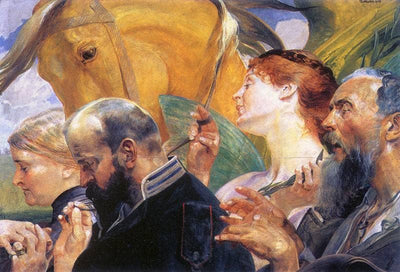
In the portrait of Włodzimierz Żeleński, Malczewski employs a striking composition that draws the viewer's eye. The use of contrasting colors enhances the emotional impact of the painting. Rich, warm tones juxtaposed with cooler shades create a dynamic visual experience.
The arrangement of elements within the portrait reflects Malczewski's mastery of balance and harmony. Each brushstroke contributes to the overall narrative, inviting viewers to delve into the life and spirit of Żeleński.
Symbolic Elements: Decoding Malczewski's Visual Language
Malczewski's portrait is rich with symbolic elements that reflect Żeleński's character and contributions. The inclusion of musical instruments and motifs alludes to his legacy as a composer. Additionally, the background features subtle references to Polish landscapes, grounding the portrait in its cultural context.
These symbols serve to elevate the portrait beyond a mere likeness, transforming it into a celebration of Polish identity and artistic achievement.
Facial Expressions and Emotions: Capturing the Essence of Żeleński
The facial expression of Włodzimierz Żeleński in the portrait is both contemplative and vibrant. Malczewski captures a moment of introspection, reflecting the depth of Żeleński's character. The slight smile hints at his passion for music and life, inviting viewers to connect with his spirit.
This emotional resonance is a hallmark of Malczewski's work, showcasing his ability to convey complex feelings through the subtleties of facial expressions.
The Role of Light and Shadow in the Portrait
Chiaroscuro Techniques: Enhancing Depth and Dimension
Malczewski's use of chiaroscuro techniques in the portrait adds a remarkable depth and dimension. The interplay of light and shadow creates a three-dimensional effect, making Żeleński appear almost lifelike. This technique draws attention to the subject's features, enhancing the overall impact of the painting.
The careful manipulation of light not only highlights the physical attributes of Żeleński but also evokes a sense of mood and atmosphere, enriching the viewer's experience.
Illumination and Mood: Setting the Tone of the Painting
The illumination in the portrait sets a contemplative tone, inviting viewers to reflect on the life of Włodzimierz Żeleński. The warm light envelops him, suggesting warmth and approachability, while the shadows hint at the complexities of his artistic journey.
This careful balance of light and shadow contributes to the overall narrative, making the portrait a powerful representation of a cultural icon.
Comparative Analysis: Malczewski's Portraits of Other Figures
Similarities and Differences with Other Notable Portraits
When comparing Malczewski's portrait of Żeleński to his other works, one can observe both similarities and differences. Like his other portraits, this piece showcases his signature style of blending realism with symbolism. However, the unique context of Żeleński's life adds a distinct layer of meaning.
Malczewski often portrayed figures from Polish history and culture, each with their own narrative. The portrait of Żeleński stands out due to its focus on the arts, celebrating the intersection of music and visual art.
Influence of Polish National Identity in Malczewski's Work
Malczewski's work is deeply rooted in Polish national identity. His portraits often reflect the struggles and triumphs of the Polish people. In the case of Żeleński, the portrait serves as a tribute to the cultural revival of Poland, emphasizing the importance of music in shaping national identity.
This connection to Polish heritage is a recurring theme in Malczewski's oeuvre, making his work resonate with audiences on a profound level.
Artistic Techniques and Materials Used by Malczewski
Oil Painting Techniques: Brushwork and Texture
Malczewski's mastery of oil painting techniques is evident in the portrait of Żeleński. His brushwork is both delicate and expressive, creating a rich texture that adds depth to the composition. The layering of paint allows for a vibrant color palette that captures the viewer's attention.
This technique not only enhances the visual appeal but also contributes to the emotional weight of the portrait, making it a compelling piece of art.
Color Theory: The Impact of Color Choices on Perception
The color choices in Malczewski's portrait play a crucial role in shaping the viewer's perception. The warm hues evoke feelings of nostalgia and warmth, while cooler tones introduce a sense of introspection. This thoughtful application of color theory enhances the overall narrative, inviting viewers to engage with the painting on multiple levels.
The Cultural Significance of the Portrait in Polish Art History
Reception and Critique: How the Portrait Was Initially Viewed
Upon its unveiling, the portrait of Włodzimierz Żeleński received a mixed reception. Critics praised Malczewski's technical skill and emotional depth, while some questioned the symbolic elements. Over time, however, the portrait has come to be regarded as a significant contribution to Polish art history.
Its portrayal of a cultural icon resonates with audiences, highlighting the importance of music and the arts in Polish identity.
Legacy of the Portrait: Influence on Future Generations of Artists
The legacy of Malczewski's portrait extends beyond its initial reception. It has inspired countless artists to explore the intersection of visual art and music. The symbolic elements and emotional depth of the painting continue to influence contemporary artists, encouraging them to reflect on their
cultural heritage.
This enduring impact underscores the importance of Malczewski's work in shaping the narrative of Polish art.
FAQs About the Portrait of Włodzimierz Żeleński
What is the historical significance of Włodzimierz Żeleński in Polish culture?
Włodzimierz Żeleński is significant for his contributions to Polish music and his role in the cultural revival during a pivotal time in Poland's history. His work embodies the spirit of Polish nationalism and artistic expression.
How did Jacek Malczewski's style influence Polish art?
Malczewski's unique blend of realism and symbolism has influenced generations of Polish artists. His ability to convey deep emotional narratives through visual art has set a standard for artistic expression in Poland.
What are the key symbolic elements in the portrait of Włodzimierz Żeleński?
Key symbolic elements include musical instruments that represent Żeleński's legacy as a composer and subtle references to Polish landscapes that ground the portrait in its cultural context.
How does the use of light and shadow enhance the portrait's impact?
The use of light and shadow creates depth and dimension, drawing attention to Żeleński's features and evoking a sense of mood. This chiaroscuro technique enhances the emotional resonance of the portrait.
What techniques did Malczewski use to create depth in the painting?
Malczewski employed oil painting techniques, including layering and expressive brushwork, to create a rich texture and vibrant color palette that adds depth to the composition.
What was the initial reception of the portrait when it was unveiled?
The portrait received mixed reviews, with critics praising its technical skill but questioning some symbolic elements. Over time, it has gained recognition as a significant work in Polish art history.
How does this painting compare to other works by Jacek Malczewski?
This painting stands out for its focus on a cultural icon in the arts, blending Malczewski's signature style with a unique narrative that celebrates Polish music and identity.
FAQs About the Painting Reproduction
What should I consider when purchasing a reproduction of this painting?
When purchasing a reproduction, consider the quality of materials used, the accuracy of colors, and the level of detail. A high-quality painting reproduction will capture the essence of the original artwork.
How can I ensure the quality of the reproduction matches the original?
Look for reputable art reproduction companies that specialize in oil painting reproductions. Check for customer reviews and request samples if possible to assess quality.
Are there different styles of reproductions available for this painting?
Yes, there are various styles of reproductions available, including hand-painted oil reproductions and high-quality giclée prints. Hand-painted reproductions are often considered superior due to their craftsmanship and attention to detail.
 4.8/5
4.8/5