4.9/5
4.9/5





SAMPLES OF QUALITY
Recent Hand-Painted Reproductions
Discover some of our latest oil paintings, each one carefully hand-painted on canvas.

AS SEEN IN





Handmade Oil Painting on Canvas Art Reproduction, Museum-quality

The six dominant colors measured from the painting, with the share of canvas each one covers. Click a swatch to copy its hex code.
Processing & Shipping Time
Your delivery time includes two parts:
Shipping Methods
We ship with trusted couriers like FedEx, UPS, and DHL. Every shipment includes a tracking code.
Our goal is to deliver your order safely and quickly.
Shipment Safety Measures
We handle your products with care so they arrive in perfect condition:
Every product is insured and delivered right to your door, so you can feel confident buying from us.
Every Art & See painting is created by artists with 15+ years of experience using professional-grade oil paints and premium linen canvas with UV-resistant protective coating, the same museum-grade materials used in galleries worldwide. Each piece goes through quality review before your approval photos are taken. If after delivery you have any concerns about your painting, contact us at [email protected] and our team will work with you on the best path forward.
Full Warranty
Every painting is protected against physical damage during shipping. If your painting arrives damaged, we repair or replace it, free of charge.
Coverage Details
Transit damage (crushed, torn, water damage): we repair or replace at no cost. Please note that damages resulting from accidents or inappropriate use are not covered under this warranty.
Repair or Replace
Depending on the extent of damage, the affected painting will either be repaired or replaced at no additional cost to you.
Free Service
All warranty services are provided absolutely free of charge.
We want you to absolutely love your handmade artwork. Here's how it works:
In the rare case you approve the photos and the artwork has been shipped and delivered to you, and you still want additional modification requests, we can handle it as a courtesy at our discretion. If accepted, you cover the return shipping cost.
| Type | Hand-Painted Oil Painting Reproduction |
| Original Artist | Gustave Loiseau |
| Price Range | $350 to $1,150 |
| Shipping | Free Worldwide |
| Quality | Preview & Approve Before Shipping |
| Medium | Oil on Canvas |
| Canvas | Museum-Grade Linen Canvas |
| Technique | Hand-painted brushstroke-by-brushstroke |
| Art Style | Post Impressionism |
| Period | 1910 Century |
| Artist Nationality | French |
| Orientation | Horizontal |
| Subject | Botanicals, Botanicals tree, Landscapes, Landscapes forest, Landscapes river, Seascapes |
| Available Sizes | 7 (20'' W × 16'' H to 65'' W × 53'' H, including the original size), plus custom sizes |
| Framing Options | Unframed, Stretched Canvas, Classic & Modern Frames |
| Delivery | 14–28 business days |
| Size | 81 × 65.5 cm (32 × 26 in) |
| Year | 1919 |
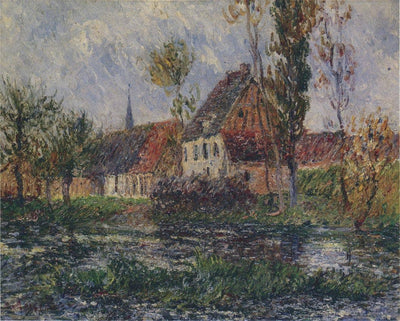
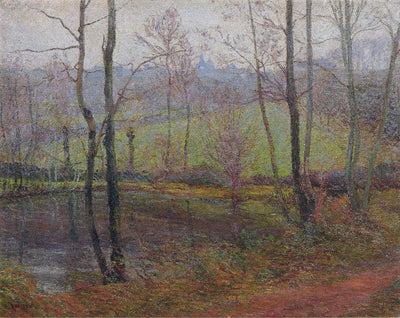
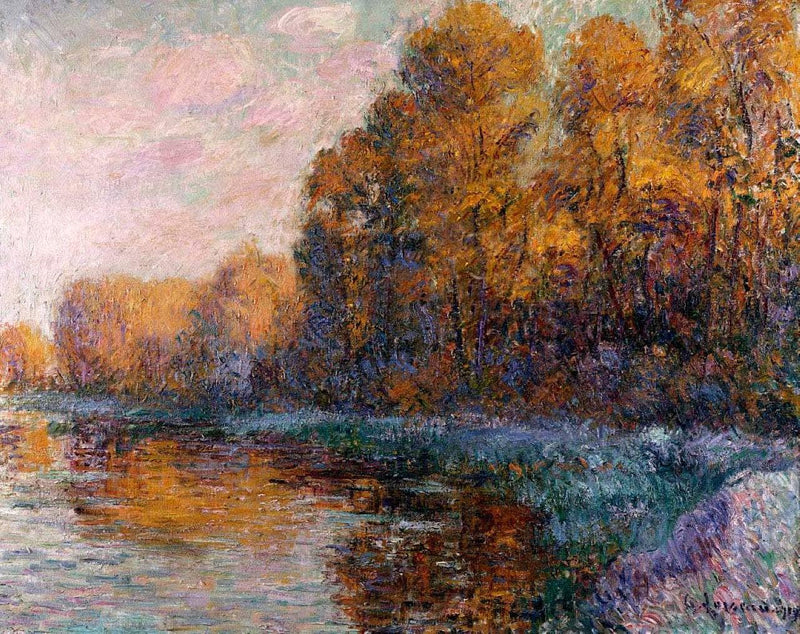
Gustave Loiseau's "River in Autumn" is a stunning oil painting that captures the essence of the fall season. The artwork showcases a rich tapestry of colors, from deep oranges to soft yellows, reflecting the beauty of nature during this transitional time. Loiseau's masterful use of light and shadow creates a dynamic scene that invites viewers to immerse themselves in the tranquil riverside landscape.
Loiseau's work exemplifies the Impressionist style, which emphasizes capturing fleeting moments in nature. His brushstrokes convey movement and emotion, making the viewer feel as if they are part of the scene. The Impressionist movement, known for its focus on light and color, profoundly influenced Loiseau's artistic vision.
Loiseau was deeply inspired by the Impressionist movement, particularly by artists like Claude Monet and Camille Pissarro. He embraced their techniques, using vibrant colors and loose brushwork to depict the changing seasons. This influence is evident in "River in Autumn," where the interplay of light and color creates a sense of immediacy and life.
The color palette in "River in Autumn" is carefully chosen to evoke feelings of warmth and nostalgia. The warm hues of autumn leaves contrast beautifully with the cool blues of the river, creating a harmonious balance. This emotional impact is a hallmark of Loiseau's work, as he skillfully uses color theory to connect with viewers on a deeper level.
Gustave Loiseau (1865-1935) was a prominent French painter known for his captivating landscapes. His journey as an artist reflects a deep connection to nature and a commitment to capturing its beauty through art. Loiseau's works often depict serene river scenes, showcasing his love for the French countryside.
Born in Paris, Loiseau initially trained in academic art, but he soon gravitated towards Impressionism. His artistic evolution is marked by a shift from traditional techniques to a more expressive style that celebrates the natural world. This transformation allowed him to create works that resonate with viewers, inviting them to experience the beauty of nature.
Loiseau's academic training provided him with a solid foundation in art. However, his true mastery emerged as he embraced the principles of Impressionism. He learned to capture the essence of light and atmosphere, which became defining features of his landscapes, including "River in Autumn."
Loiseau's work is deeply rooted in the French landscape tradition. He often painted scenes from the Normandy region, where the interplay of land and water inspired him. His connection to this tradition is evident in "River in Autumn," where the lush foliage and flowing river reflect the beauty of the French countryside.
"River in Autumn" is rich with symbolism, reflecting themes of change and reflection. The autumn season represents a time of transition, where nature prepares for the winter ahead. Loiseau captures this moment beautifully, inviting viewers to contemplate the cycles of life.
Autumn is a season of transformation, and Loiseau's painting embodies this idea. The vibrant colors of the leaves signify change, while the calm river suggests serenity. This duality invites viewers to reflect on their own experiences of change and the beauty that can be found in it.
The colors in "River in Autumn" symbolize the fleeting nature of time. The warm oranges and reds evoke feelings of warmth and nostalgia, while the cool blues of the river provide a sense of calm. This contrast encourages viewers to reflect on their own journeys and the beauty of life's transitions.
Water plays a significant role in Loiseau's landscapes. In "River in Autumn," the flowing river serves as a metaphor for life's journey. It represents continuity and the passage of time, while also providing a sense of peace and tranquility. This duality enhances the emotional depth of the painting.
Loiseau's technical mastery is evident in his brushwork and composition. He employs various techniques to create depth and texture, making "River in Autumn" a visually captivating piece. His attention to detail and composition enhances the overall impact of the artwork.
Loiseau's brushwork is characterized by a combination of impasto and glazing techniques. This approach adds dimension to the painting, allowing colors to interact and create a sense of movement. The textured surface invites viewers to explore the painting up close, revealing the intricacies of his technique.
By using impasto, Loiseau applies thick layers of paint that create a three-dimensional effect. This technique brings the autumn foliage to life, making it appear vibrant and dynamic. Glazing, on the other hand, allows for subtle color variations, enhancing the overall luminosity of the scene.
The composition of "River in Autumn" is carefully balanced, drawing the viewer's eye through the landscape. The placement of the river, trees, and sky creates a harmonious flow that reflects the natural world. Loiseau's ability to balance these elements showcases his skill as a masterful composer of landscapes.
"River in Autumn" holds a significant place within the Impressionist movement. Loiseau's unique approach to light and color sets him apart from his contemporaries. His ability to capture the essence of a moment in nature resonates with the core principles of Impressionism.
When compared to other Impressionists, Loiseau's work stands out for its emotional depth and vibrant color palette. While artists like Monet focused on water lilies and gardens, Loiseau's landscapes emphasize the beauty of rivers and autumn foliage. This unique perspective enriches the Impressionist narrative.
Loiseau's innovative use of light creates a sense of atmosphere in "River in Autumn." He captures the golden glow of autumn sunlight filtering through the trees, enhancing the painting's emotional resonance. This mastery of light and color is a defining characteristic of his work.
Loiseau was influenced by various artists, including Alfred Sisley and Pierre-Auguste Renoir. Their focus on capturing the beauty of nature inspired him to explore similar themes in his own work. This influence is evident in the serene quality of "River in Autumn," where nature takes center stage.
Viewing "River in Autumn" evokes a deep emotional response. The painting invites viewers to connect with nature and reflect on their own experiences. Loiseau's ability to capture the essence of autumn creates a sense of nostalgia and tranquility.
The emotional resonance of "River in Autumn" lies in its ability to transport viewers to a serene riverside. The warm colors and gentle brushstrokes evoke feelings of peace and contemplation. This connection to nature allows viewers to escape the hustle and bustle of everyday life.
As viewers stand before "River in Autumn," they can almost hear the rustling leaves and flowing water. This immersive experience fosters a connection to the natural world, reminding us of the beauty that surrounds us. Loiseau's painting serves as a reminder to appreciate the simple joys of life.
Imagine taking a leisurely stroll along the riverbank depicted in Loiseau's painting. The vibrant colors of the trees reflect in the water, creating a picturesque scene. This imagery invites viewers to engage their senses and experience the beauty of autumn firsthand.
Loiseau was inspired by the beauty of the French countryside, particularly during the autumn season. The vibrant colors and serene landscapes motivated him to capture this moment in time.
The main colors in "River in Autumn" include warm oranges, yellows, and reds, contrasted with cool blues and greens. This palette reflects the richness of the autumn landscape.
"River in Autumn" reflects the Impressionist style through its loose brushwork, vibrant colors, and emphasis on capturing the effects of light. Loiseau's technique invites viewers to experience the scene as if they were present in the moment.
The painting evokes feelings of nostalgia, tranquility, and appreciation for nature. Viewers often feel a deep connection to the changing seasons and the beauty of the landscape.
"River in Autumn" is part of various private collections and may be displayed in art museums that focus on Impressionist works. Check local galleries or exhibitions for opportunities to view this masterpiece.
To ensure a high-quality reproduction, choose a reputable art reproduction company that specializes in oil paintings. Look for reproductions that use premium materials and techniques to replicate the texture and colors of the original.
When displaying a reproduction of "River in Autumn," consider the lighting and placement. Natural light can enhance the colors, while a well-chosen frame can complement the artwork. Position it in a space where it can be appreciated and enjoyed by all.

Discover some of our latest oil paintings, each one carefully hand-painted on canvas.
At Art & See, we're committed to delivering the highest quality art reproductions. Our team of expert artists and state-of-the-art processes ensure that each piece is a masterpiece in its own right.

Experience your masterpiece's creation through daily photos from our expert artists, each with 15+ years of experience.

Your artwork travels first class via UPS, FedEx, or DHL, protected by museum-grade packaging for safe delivery.

Review unedited photos of your finished painting and request unlimited free revisions before it ships. We only ship when you say it's perfect.

Every piece is crafted with archival materials, UV-resistant finishes, and premium British paints to last generations.
Yes, 100% hand-painted with oil on canvas by artists with 15+ years of experience. No prints, no digital shortcuts. You'll see and feel real brushstrokes, just like the original Gustave Loiseau masterpiece.
Your River in Autumn reproduction takes 2–5 weeks to hand-paint depending on size and detail. Once approved, shipping takes 5–8 days via FedEx, UPS, or DHL with full tracking. Free worldwide shipping included.
Absolutely. Once your River in Autumn is complete, we send you unedited photos, a full view and close-up details. Request unlimited free revisions until you're 100% satisfied. We don't ship until you say "yes."
Every painting goes through our Preview & Approve process: you receive unedited photos of your finished Gustave Loiseau reproduction and can request unlimited free revisions before it ships. We only ship when you say it's perfect. If after delivery you have any concerns, contact us at [email protected] and our team will work with you on the best path forward.
Professional-grade oil paints (Windsor & Newton) on premium linen canvas with UV-resistant protective coating. Museum-grade materials built to last generations, the same quality used in galleries worldwide.
Our artists specialize in Gustave Loiseau's technique: color accuracy, brushwork, and composition are matched to the original. Every reproduction goes through quality review before your approval photos are taken.
Every painting is insured and delivered door-to-door. Unframed paintings ship in protective hard tubes. Framed paintings are bubble-wrapped in sturdy boxes. If anything arrives damaged, we repair or replace it free.
Dive into the vibrant world of Historic Art. Discover your next painting today.