4.9/5
4.9/5





SAMPLES OF QUALITY
Recent Hand-Painted Reproductions
Discover some of our latest oil paintings, each one carefully hand-painted on canvas.

AS SEEN IN





Handmade Oil Painting on Canvas Art Reproduction, Museum-quality

The six dominant colors measured from the painting, with the share of canvas each one covers. Click a swatch to copy its hex code.
Processing & Shipping Time
Your delivery time includes two parts:
Shipping Methods
We ship with trusted couriers like FedEx, UPS, and DHL. Every shipment includes a tracking code.
Our goal is to deliver your order safely and quickly.
Shipment Safety Measures
We handle your products with care so they arrive in perfect condition:
Every product is insured and delivered right to your door, so you can feel confident buying from us.
Every Art & See painting is created by artists with 15+ years of experience using professional-grade oil paints and premium linen canvas with UV-resistant protective coating, the same museum-grade materials used in galleries worldwide. Each piece goes through quality review before your approval photos are taken. If after delivery you have any concerns about your painting, contact us at [email protected] and our team will work with you on the best path forward.
Full Warranty
Every painting is protected against physical damage during shipping. If your painting arrives damaged, we repair or replace it, free of charge.
Coverage Details
Transit damage (crushed, torn, water damage): we repair or replace at no cost. Please note that damages resulting from accidents or inappropriate use are not covered under this warranty.
Repair or Replace
Depending on the extent of damage, the affected painting will either be repaired or replaced at no additional cost to you.
Free Service
All warranty services are provided absolutely free of charge.
We want you to absolutely love your handmade artwork. Here's how it works:
In the rare case you approve the photos and the artwork has been shipped and delivered to you, and you still want additional modification requests, we can handle it as a courtesy at our discretion. If accepted, you cover the return shipping cost.
| Type | Hand-Painted Oil Painting Reproduction |
| Original Artist | George Caleb Bingham |
| Price Range | $299.95 to $1,299.95 |
| Shipping | Free Worldwide |
| Returns | 90-Day Returns |
| Medium | Oil on Canvas |
| Canvas | Museum-Grade Linen Canvas |
| Technique | Hand-painted brushstroke-by-brushstroke |
| Art Style | Romanticism |
| Period | 19th Century |
| Artist Nationality | American |
| Orientation | Horizontal |
| Subject | Cultural heritage, Cultural heritage mythology |
| Available Sizes | 7 (20'' W × 16'' H to 72'' W × 48'' H) |
| Framing Options | Unframed, Stretched Canvas, Classic & Modern Frames |
| Delivery | 14–28 business days |
In the 19th century, flatboating was a vital mode of transportation and trade along America's rivers. Flatboats carried goods and people, connecting rural communities to bustling markets. This practice was essential for the economy, especially in regions like the Midwest, where rivers served as highways for commerce.
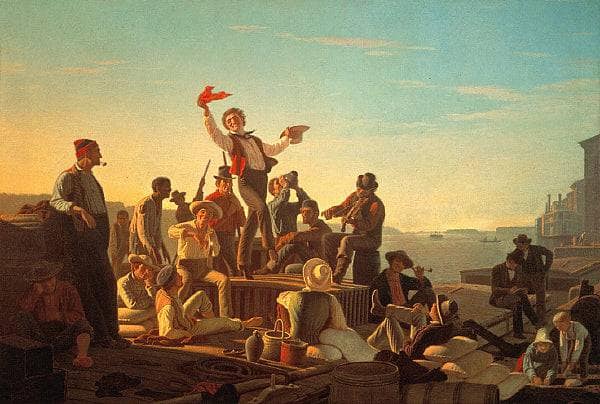
George Caleb Bingham captured this dynamic lifestyle in his painting, "Jolly Flatboatmen in Port." The artwork reflects the spirit of adventure and the hard work of flatboatmen, who navigated the mighty Mississippi River. Bingham's portrayal highlights the importance of rivers in shaping American life and culture during this period.
Bingham is often hailed as a pioneer of American genre painting, a style that depicts everyday life and ordinary people. His works celebrate the American spirit, showcasing scenes of labor, leisure, and community. "Jolly Flatboatmen in Port" exemplifies his ability to blend realism with narrative, making the viewer feel connected to the subjects.
His influence extended beyond his lifetime, inspiring future artists to explore themes of American identity and social dynamics. Bingham's unique perspective on American life remains relevant, making his work a cornerstone of American art history.
The color palette of "Jolly Flatboatmen in Port" is a striking combination of vibrant hues and earthy tones. Bingham used rich greens and browns to depict the lush landscape, while the bright blues of the river evoke a sense of tranquility. This contrast creates a lively yet harmonious scene, drawing the viewer's eye across the canvas.
The colors not only enhance the visual appeal but also reflect the mood of the flatboatmen, who are depicted in a moment of joy and camaraderie. The warm tones of the figures contrast beautifully with the coolness of the water, emphasizing their connection to the environment.
Bingham's composition skillfully balances the figures of the flatboatmen with the expansive landscape. The arrangement of the men, engaged in conversation and laughter, creates a sense of movement and energy. The flatboat itself serves as a focal point, anchoring the scene while allowing the surrounding nature to flourish.
This thoughtful composition invites viewers to explore the relationships between the characters and their environment, highlighting the interplay between human activity and the natural world.
Light and shadow play a crucial role in "Jolly Flatboatmen in Port." Bingham expertly uses chiaroscuro to create depth and dimension, giving life to the figures and the landscape. The sunlight casts gentle shadows, enhancing the three-dimensional quality of the painting.
This technique not only adds realism but also evokes emotion, allowing viewers to feel the warmth of the sun and the camaraderie among the flatboatmen. The interplay of light and shadow enriches the narrative, making the scene more engaging and relatable.
The theme of community is central to "Jolly Flatboatmen in Port." The flatboatmen are depicted as a close-knit group, sharing stories and laughter. This camaraderie reflects the social bonds formed through shared experiences on the river.
Bingham's portrayal of these men emphasizes the importance of friendship and cooperation in their daily lives. The painting serves as a tribute to the hardworking individuals who contributed to the fabric of American society.
The river in "Jolly Flatboatmen in Port" symbolizes more than just a physical landscape; it represents a lifeline for the characters. Rivers were essential for trade, travel, and communication in 19th-century America. Bingham captures this significance, showcasing the river as a source of livelihood and connection.
This theme resonates with viewers, reminding them of the vital role that waterways played in shaping communities and economies across the nation.
Bingham masterfully contrasts leisure and labor in this painting. While the flatboatmen are engaged in a moment of relaxation, their hard work is evident in the details of the flatboat and the surrounding environment. This dual perspective highlights the balance between work and play in their lives.
The painting invites viewers to reflect on the value of both labor and leisure, emphasizing that moments of joy often arise from the fruits of hard work.
Bingham's brushwork in "Jolly Flatboatmen in Port" is both dynamic and textured. He employs a variety of strokes to convey movement, from the gentle ripples of the water to the lively gestures of the flatboatmen. This technique brings the scene to life, making it feel as if the viewer is part of the action.
The texture of the painting adds depth, allowing viewers to appreciate the details of the clothing, the flatboat, and the natural surroundings.
Bingham's work embodies a unique blend of realism and romanticism. He captures the authentic experiences of flatboatmen while infusing the scene with a sense of idealism. This combination allows viewers to appreciate the beauty of everyday life while recognizing the challenges faced by these individuals.
This balance makes "Jolly Flatboatmen in Port" a compelling representation of American life, resonating with audiences both then and now.
Bingham's use of perspective in this painting is masterful. He creates a sense of depth that draws viewers into the scene, making them feel as if they are part of the gathering. The arrangement of figures and the receding landscape guide the eye, enhancing the immersive experience.
This technique not only showcases Bingham's skill but also invites viewers to engage with the narrative, fostering a deeper connection to the artwork.
When comparing "Jolly Flatboatmen in Port" to Bingham's "The County Election," distinct differences emerge. While "The County Election" focuses on political themes and social commentary, "Jolly Flatboatmen" celebrates leisure and community. Both paintings reflect Bingham's keen observation of American life, yet they explore different aspects of society.
This contrast highlights Bingham's versatility as an artist, showcasing his ability to capture a wide range of human experiences.
Bingham often revisits themes of community, labor, and the American landscape in his works. "Jolly Flatboatmen in Port" features these motifs prominently, emphasizing the interconnectedness of people and their environment. This consistency in subject matter allows viewers to recognize Bingham's unique voice in American art.
His ability to portray the essence of American life through various lenses makes his work timeless and relevant.
Upon its completion, "Jolly Flatboatmen in Port" received acclaim for its vibrant depiction of American life. Critics praised Bingham's ability to capture the spirit of the flatboatmen and the significance of the river. The painting resonated with audiences, reflecting their own experiences and aspirations.
This positive reception solidified Bingham's reputation as a leading figure in American art, paving the way for future recognition of his contributions.
Bingham's work has had a lasting impact on generations of artists. His focus on American themes and everyday life inspired many to explore similar subjects in their own art. The authenticity and emotional depth of "Jolly Flatboatmen in Port" continue to influence contemporary artists seeking to capture the essence of American culture.
His legacy endures, reminding us of the importance of storytelling through art.
Today, "Jolly Flatboatmen in Port" holds a significant place in American art history. It is celebrated as a quintessential example of genre painting, showcasing the beauty and complexity of American life. The painting is often studied in art history courses, highlighting Bingham's contributions to the genre.
As a beloved piece in museum collections, it continues to engage and inspire viewers, ensuring its relevance for years to come.
"Jolly Flatboatmen in Port" depicts a group of flatboatmen enjoying a moment of leisure after a long journey on the river. The painting captures the camaraderie and joy of these hardworking individuals, reflecting the importance of community in their lives.
Bingham employed techniques such as chiaroscuro for depth, dynamic brushwork for movement, and a balanced composition to create an engaging scene. His use of color and perspective draws viewers into the narrative.
The painting reflects American culture by showcasing the significance of rivers in commerce and community life. It highlights the values of hard work, friendship, and the balance between labor and leisure, which are central to the American experience.
The main themes include community and camaraderie among flatboatmen, the river as a lifeline, and the duality of leisure and labor. These themes resonate with viewers, emphasizing the interconnectedness of people and their environment.
The original painting is housed in the collection of the Metropolitan Museum of Art in New York City. It is part of their American art collection, where visitors can appreciate Bingham's work up close.
When reproducing "Jolly Flatboatmen in Port," it's essential to focus on capturing the vibrant colors and intricate details of the original. High-quality painting reproductions offer a superior alternative to prints, providing a more authentic representation of Bingham's artistry.
Reproductions of "Jolly Flatboatmen in Port" can closely mimic the original's colors and textures, allowing art lovers to enjoy Bingham's brilliance in their own homes. Unlike prints, which can lack depth and detail, painting reproductions provide a richer, more immersive experience.

Discover some of our latest oil paintings, each one carefully hand-painted on canvas.
At Art & See, we're committed to delivering the highest quality art reproductions. Our team of expert artists and state-of-the-art processes ensure that each piece is a masterpiece in its own right.

Experience your masterpiece's creation through daily photos from our expert artists, each with 15+ years of experience.

Your artwork travels first class via UPS, FedEx, or DHL, protected by museum-grade packaging for safe delivery.

Review unedited photos of your finished painting and request unlimited free revisions before it ships. We only ship when you say it's perfect.

Every piece is crafted with archival materials, UV-resistant finishes, and premium British paints to last generations.





Yes, 100% hand-painted with oil on canvas by artists with 15+ years of experience. No prints, no digital shortcuts. You'll see and feel real brushstrokes, just like the original George Caleb Bingham masterpiece.
Your Jolly Flatboatmen in Port reproduction takes 2–5 weeks to hand-paint depending on size and detail. Once approved, shipping takes 5–8 days via FedEx, UPS, or DHL with full tracking. Free worldwide shipping included.
Absolutely. Once your Jolly Flatboatmen in Port is complete, we send you unedited photos, a full view and close-up details. Request unlimited free revisions until you're 100% satisfied. We don't ship until you say "yes."
Every painting goes through our Preview & Approve process: you receive unedited photos of your finished George Caleb Bingham reproduction and can request unlimited free revisions before it ships. We only ship when you say it's perfect. If after delivery you have any concerns, contact us at [email protected] and our team will work with you on the best path forward.
Professional-grade oil paints (Windsor & Newton) on premium linen canvas with UV-resistant protective coating. Museum-grade materials built to last generations, the same quality used in galleries worldwide.
Our artists specialize in George Caleb Bingham's technique: color accuracy, brushwork, and composition are matched to the original. Every reproduction goes through quality review before your approval photos are taken.
Every painting is insured and delivered door-to-door. Unframed paintings ship in protective hard tubes. Framed paintings are bubble-wrapped in sturdy boxes. If anything arrives damaged, we repair or replace it free.
Dive into the vibrant world of Historic Art. Discover your next painting today.