The Green Interior: A Deep Dive into Edouard Vuillard's Masterpiece
Understanding Edouard Vuillard: The Artist Behind the Canvas
Vuillard's Unique Style: Intimacy and Domesticity in Art
Edouard Vuillard, a prominent French painter, is celebrated for his ability to capture intimate moments within domestic settings. His work often reflects a deep connection to the everyday lives of his subjects. In "The Green Interior," Vuillard invites viewers into a serene space filled with warmth and familiarity. His brushstrokes convey a sense of closeness, making the viewer feel like a part of the scene.
The Nabis Movement: A New Wave of Artistic Expression
Vuillard was a key figure in the Nabis movement, which emerged in the late 19th century. This group of artists sought to break away from traditional representation and explore color, pattern, and
symbolism. "The Green Interior" exemplifies this movement, showcasing Vuillard's innovative approach to composition and color. The Nabis artists believed in the power of art to evoke emotions and convey personal experiences, a philosophy that resonates throughout Vuillard's work.
Influences on Vuillard: Symbolism and Impressionism
Vuillard's artistic style was influenced by both Symbolism and
Impressionism. He drew inspiration from the Impressionists' focus on light and color, while also embracing the Symbolists' emphasis on emotional depth. This blend of influences is evident in "The Green Interior," where the interplay of light and shadow creates a dreamlike atmosphere. Vuillard's ability to merge these styles allows him to express complex themes of domestic life and emotional connection.
Exploring the Composition of The Green Interior
Color Palette: The Harmony of Greens and Earthy Tones
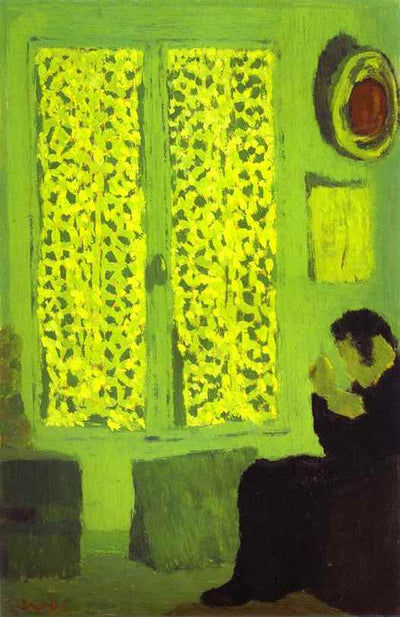
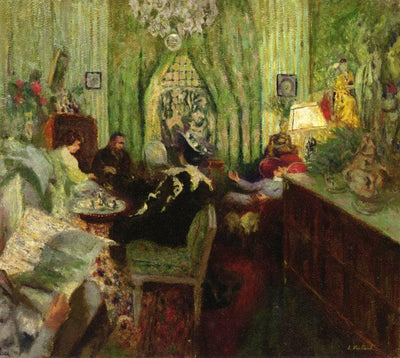
The color palette of "The Green Interior" is dominated by lush greens and warm earthy tones. These colors evoke a sense of tranquility and comfort, inviting viewers to immerse themselves in the scene. The rich greens symbolize growth and renewal, while the earthy hues ground the composition in reality. This harmonious blend creates a soothing visual experience that reflects the essence of domestic life.
Light and Shadow: The Play of Natural Light Through Curtains
Natural light plays a crucial role in "The Green Interior." Vuillard masterfully captures the way sunlight filters through drawn curtains, casting soft shadows across the room. This technique enhances the painting's depth and dimension, creating a dynamic interplay between light and dark. The gentle illumination highlights the textures of the fabrics and the figure, adding to the overall warmth of the scene.
Figures in Focus: The Woman's Role in Domestic Spaces
In "The Green Interior," the central figure—a woman—embodies the essence of domesticity. Her presence suggests a narrative of daily life, reflecting the roles women played in 19th-century French society. Vuillard's portrayal of the woman is both intimate and respectful, capturing her in a moment of quiet reflection. This focus on the female figure emphasizes the importance of domestic spaces as sites of emotional and social significance.
Thematic Elements in The Green Interior
Domestic Life: A Reflection of 19th Century French Society
"The Green Interior" serves as a poignant reflection of 19th-century French domestic life. The painting encapsulates the values and aesthetics of the time, highlighting the importance of home and family. Vuillard's work invites viewers to consider the complexities of domestic existence, from the mundane to the profound. This thematic exploration resonates with audiences, making the painting a timeless representation of human experience.
Isolation vs. Connection: The Emotional Landscape of the Painting
The emotional landscape of "The Green Interior" navigates the tension between isolation and connection. The woman in the painting appears contemplative, suggesting a moment of solitude. Yet, the warm colors and inviting space create a sense of belonging. This duality reflects the complexities of human relationships, inviting viewers to ponder their own experiences of connection and solitude.
Nature and Interior: The Relationship Between Inside and Outside
Vuillard's "The Green Interior" beautifully illustrates the relationship between the interior and the natural world. The drawn curtains hint at the outside environment, suggesting a connection to
nature. This interplay between inside and outside emphasizes the importance of both spaces in shaping human experience. The painting encourages viewers to reflect on how our surroundings influence our emotions and interactions.
Artistic Techniques: Brushwork and Texture in Vuillard's Work
Oil Painting Techniques: Layering and Impasto Effects
Vuillard's mastery of oil painting techniques is evident in "The Green Interior." He employs layering to build depth and richness in color. The impasto effects create a tactile quality, inviting viewers to appreciate the physicality of the paint. This technique enhances the overall visual impact, making the scene feel alive and dynamic.
Textural Elements: The Fabric of Life Captured on Canvas
The textural elements in "The Green Interior" are crucial to its emotional resonance. Vuillard captures the softness of fabrics and the warmth of the domestic environment. The intricate patterns and textures evoke a sense of comfort and familiarity, drawing viewers into the intimate world he portrays. This attention to detail reflects Vuillard's belief in the significance of everyday life.
Composition Techniques: Balancing Figures and Space
Vuillard's composition in "The Green Interior" expertly balances figures and space. The placement of the woman within the room creates a sense of harmony and proportion. This careful arrangement invites viewers to explore the painting, guiding their eyes through the various elements. The balance between figure and background enhances the overall narrative, making the scene feel cohesive and complete.
The Cultural Impact of The Green Interior
Reception in the Art World: Critiques and Celebrations
Upon its release, "The Green Interior" received both critiques and celebrations from the art community. Critics praised Vuillard's innovative use of color and light, while some traditionalists questioned his departure from
realism. Over time, the painting has gained recognition as a significant work within the Nabis movement, celebrated for its emotional depth and artistic innovation.
Influence on Modern Art: Vuillard's Legacy in Contemporary Works
Vuillard's influence extends into
modern art, inspiring countless artists with his unique approach to domestic scenes. His exploration of color, texture, and emotional resonance can be seen in contemporary works that seek to capture the essence of everyday life. "The Green Interior" remains a touchstone for artists exploring themes of intimacy and domesticity.
Exhibitions and Collections: Where to Experience Vuillard's Art
Art enthusiasts can experience "The Green Interior" in various prestigious collections and exhibitions worldwide. Major museums, such as the Musée d'Orsay in Paris, house Vuillard's works, allowing visitors to appreciate his artistry firsthand. Special exhibitions often highlight his contributions to the Nabis movement, providing deeper insights into his creative process.
Personal Reflections: Experiencing The Green Interior
Emotional Resonance: What the Painting Evokes in Viewers
"The Green Interior" evokes a range of emotions in viewers, from nostalgia to tranquility. The intimate setting and warm colors create a sense of comfort, inviting personal reflections on home and family. Many find themselves drawn into the scene, experiencing a connection to the woman and her surroundings.
Imagining Life Within the Frame: A Narrative Perspective
As viewers gaze at "The Green Interior," they may imagine the life unfolding within the frame. What thoughts occupy the woman's mind? What stories lie behind the drawn curtains? This narrative perspective encourages viewers to engage with the painting on a deeper level, fostering a sense of curiosity and wonder.
Connecting with the Past: The Timelessness of Vuillard's Work
Vuillard's work transcends time, connecting viewers with the past. "The Green Interior" captures a moment in history while remaining relevant today. Its themes of domesticity, emotional connection, and the beauty of everyday life resonate across generations, making it a timeless masterpiece.
FAQs About The Green Interior by Edouard Vuillard
What is the historical context of The Green Interior?
"The Green Interior" was created during a time of significant social change in France. The late 19th century saw shifts in gender roles and the rise of the middle class, which influenced Vuillard's focus on domestic life. The painting reflects these societal changes, offering a glimpse into the intimate spaces of the time.
What techniques did Edouard Vuillard use in this painting?
Vuillard employed various oil painting techniques in "The Green Interior," including layering and impasto. His brushwork creates rich textures and depth, enhancing the emotional impact of the scene. The careful application of color and light showcases his mastery of the medium.
How does The Green Interior reflect Vuillard's artistic philosophy?
"The Green Interior" embodies Vuillard's belief in the significance of everyday life. His focus on domestic spaces and intimate moments reflects his desire to capture the essence of human experience. The painting serves as a testament to the beauty found in the ordinary.
What are the main themes depicted in The Green Interior?
The main themes in "The Green Interior" include domestic life, emotional connection, and the relationship between inside and outside. Vuillard explores the complexities of human relationships and the significance of home, inviting viewers to reflect on their own experiences.
Where can I see The Green Interior in person?
You can see "The Green Interior" in person at major art institutions, such as the Musée d'Orsay in Paris. Special exhibitions may also feature Vuillard's work, providing opportunities to experience his art up close.
FAQs About Painting Reproductions
What should I consider when purchasing a reproduction of The Green Interior?
When purchasing a reproduction of "The Green Interior," consider the quality of the materials used. Look for reproductions that capture the colors and textures of the original painting. High-quality reproductions can enhance your space and provide a lasting connection to Vuillard's art.
How can I ensure the quality of a painting reproduction?
To ensure the quality of a painting reproduction, choose a reputable seller who specializes in art reproductions. Look for reproductions created using high-quality materials and techniques that mimic the original painting. A well-crafted reproduction can offer a superior visual experience compared to standard prints.