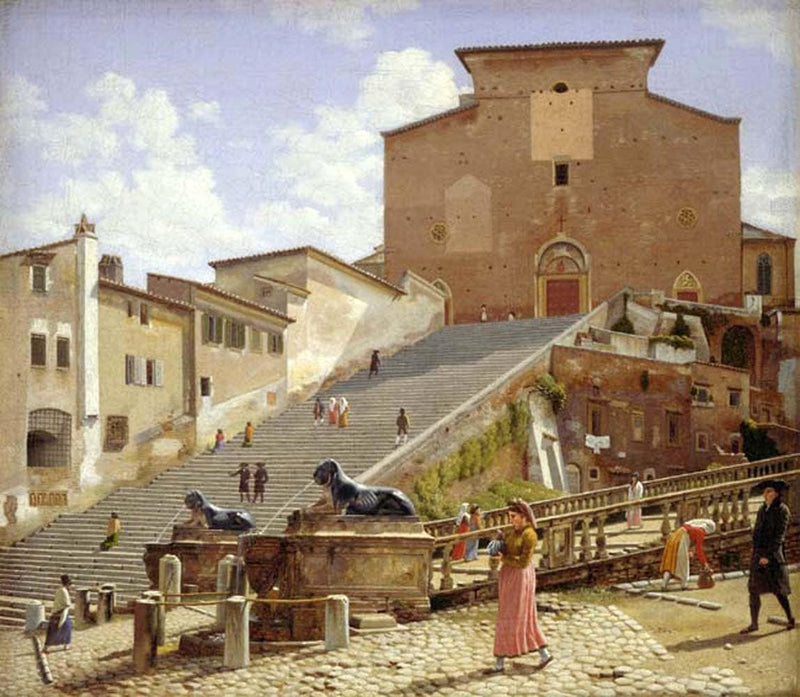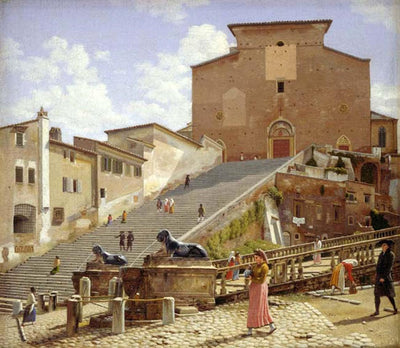

The Marble Staircase which Leads up to S. Maria in Aracoeli in Rome by Christoffer Wilhelm Eckersberg | Oil Painting Reproduction

The Marble Staircase which Leads up to S. Maria in Aracoeli in Rome by Christoffer Wilhelm Eckersberg — hand-painted architectural oil painting reproduction on canvas
Frame Specifications
Frame details Unframed
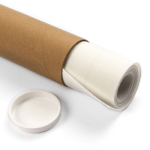
Information The canvas arrives unframed and rolled up in a sturdy tube, so you can have it framed locally exactly how you like.

AS SEEN IN

Royal Heritage Badge
4.7
4.7 out of 5

185 global ratings

5 star
78%
4 star
17%
3 star
3%
2 star
1%
1 star
1%
185 ratings

by Christoffer Wilhelm Eckersberg

Handmade Oil Painting on Canvas Art Reproduction —— Museum-quality

100% HAND-PAINTED
  • Real brushstrokes you can see & feel
  • Painting approval before shipping
  • Unlimited revisions
Select Size *
How should it arrive?
Select a Frame (optional)
Hand-Painted Oil Painting $249.95
Unframed — Shipped rolled in a protective tube Included
Shipping Free
Total
$249.95
$292.45Save 14%
Preview & Approve Free Shipping Secure Checkout
We accept
Visa Mastercard American Express Discover PayPal Apple Pay Google Pay Venmo
Support
Need help? Talk with Joey!

Processing & Shipping Time

Your delivery time includes two parts:

  1. Processing Time — From painting and drying to packaging and dispatch, usually 2–5 weeks depending on the painting complexity.
  2. Shipping Time — From when your order leaves the workshop to when it arrives at your address. You'll be able to track it with the tracking number we email you.

Shipping Methods

We ship with trusted couriers like FedEx, UPS, and DHL. Every shipment includes a tracking code.

  • Standard orders: Arrive in 5–8 days once shipped.
  • Framed, stretched, and oversized paintings: May take a few extra days.

Our goal is to deliver your order safely and quickly.

Shipment Safety Measures

We handle your products with care so they arrive in perfect condition:

  • Framed paintings — Bubble-wrapped and packed in a sturdy box.
  • Unframed paintings — Shipped in a protective hard plastic tube.

Every product is insured and delivered right to your door, so you can feel confident buying from us.

Every Art & See painting is created by artists with 15+ years of experience using professional-grade oil paints and premium linen canvas with UV-resistant protective coating — the same museum-grade materials used in galleries worldwide. Each piece goes through quality review before your approval photos are taken. If after delivery you have any concerns about your painting, contact us at [email protected] — our team will work with you on the best path forward.

Full Warranty

Every painting is protected against physical damage during shipping. If your painting arrives damaged, we repair or replace it — free.

Coverage Details

Transit damage (crushed, torn, water damage) — We repair or replace at no cost. Please note that damages resulting from accidents or inappropriate use are not covered under this warranty.

Repair or Replace

Depending on the extent of damage, the affected painting will either be repaired or replaced at no additional cost to you.

Free Service

All warranty services are provided absolutely free of charge.

We want you to absolutely love your handmade artwork. Here's how it works:

  1. Once your oil painting is complete, we'll send you unedited photos — a full view and close-up details.
  2. Review the photos and let us know if any changes are needed. We'll happily revise the painting for free.
  3. If you approve the painting, we'll ship it right away.

In the rare case you approve the photos and the artwork has been shipped and delivered to you, and you still want additional modification requests — we can handle it as a courtesy at our discretion. If accepted, you cover the return shipping cost.

Product Specifications
TypeHand-Painted Oil Painting Reproduction
Original ArtistChristoffer Wilhelm Eckersberg
Price Range$249.95 — $1,249.95
ShippingFree Worldwide
QualityPreview & Approve Before Shipping
MediumOil on Canvas
CanvasMuseum-Grade Linen Canvas
TechniqueHand-painted brushstroke-by-brushstroke
Art StyleNeoclassicism
Period19th Century
Artist NationalityFalse
OrientationSquare
SubjectArchitectural, Landscapes urban
Available Sizes7 (16'' W × 16'' H to 60'' W × 60'' H)
Framing OptionsUnframed, Stretched Canvas, Classic & Modern Frames
Delivery14–28 business days
About This Painting
The Marble Staircase: A Journey to S. Maria in Aracoeli Historical Context of Christoffer Wilhelm Eckersberg's Masterpiece 19th Century Art Movements and Their Influence The 19th century was a vibr...

The Marble Staircase: A Journey to S. Maria in Aracoeli

Historical Context of Christoffer Wilhelm Eckersberg's Masterpiece

19th Century Art Movements and Their Influence

The 19th century was a vibrant period for art, marked by movements such as Romanticism and Realism. Artists sought to capture the essence of human experience and the beauty of nature. Christoffer Wilhelm Eckersberg, a pivotal figure in this era, embraced these influences while also drawing inspiration from classical themes. His work reflects a deep appreciation for both the emotional depth of Romanticism and the meticulous detail of Realism.

Eckersberg's Role in the Danish Golden Age

Eckersberg is often hailed as the father of Danish painting, leading the charge during the Danish Golden Age. His innovative techniques and dedication to realism set a new standard for artists in Denmark. He traveled extensively, including a significant stay in Italy, where he developed a profound connection with Roman art and architecture. This experience greatly influenced his portrayal of the Marble Staircase, showcasing his ability to blend Danish sensibilities with Italian grandeur.

Significance of Roman Architecture in the 1800s

During the 1800s, Roman architecture symbolized the pinnacle of artistic achievement. The grandeur of structures like the Basilica of S. Maria in Aracoeli inspired many artists, including Eckersberg. The staircase in his painting serves as a metaphorical bridge between the earthly and the divine, inviting viewers to ascend into a space rich with history and spirituality. This architectural marvel reflects the cultural reverence for ancient Rome during this period.

Visual Analysis of The Marble Staircase

Composition and Perspective: A Closer Look

Eckersberg's composition in The Marble Staircase is masterful. He employs a strong linear perspective that draws the viewer's eye upward, creating a sense of movement and depth. The arrangement of figures and architectural elements guides the viewer's journey, making the staircase a focal point that symbolizes ascension and enlightenment.

Color Palette: The Use of Light and Shadow

The color palette in The Marble Staircase is both vibrant and subdued. Eckersberg skillfully uses light and shadow to create a three-dimensional effect. The warm tones of the marble contrast beautifully with the cooler shadows, enhancing the realism of the scene. This interplay of light not only highlights the staircase but also evokes a sense of time and place.

Textural Elements: Marble vs. Oil Paint

Eckersberg's choice of oil paint allows him to replicate the smooth, polished surface of marble with remarkable accuracy. The texture of the staircase appears almost tangible, inviting viewers to imagine the coolness of the stone underfoot. This attention to detail showcases Eckersberg's technical prowess and his deep understanding of materials.

The Symbolism Behind The Marble Staircase

Religious Significance of S. Maria in Aracoeli

S. Maria in Aracoeli is not just an architectural wonder; it is a site of profound religious significance. The basilica, dedicated to the Virgin Mary, serves as a spiritual haven. Eckersberg's painting captures this essence, with the staircase symbolizing the journey of faith and devotion. Each step represents a move closer to the divine, inviting contemplation and reverence.

Staircases in Art: Pathways to Enlightenment

Staircases have long been used in art as symbols of transition and enlightenment. In The Marble Staircase, Eckersberg uses this motif to suggest a journey toward higher understanding. The upward movement of the figures reflects the human quest for knowledge and spiritual growth, making the staircase a powerful symbol of aspiration.

Figures and Architecture: A Dialogue in the Painting

The figures in The Marble Staircase interact harmoniously with the architectural elements. Each character contributes to the narrative, embodying the spirit of the time. Their placement within the composition creates a dialogue between humanity and the grandeur of the basilica, emphasizing the relationship between people and their environment.

Exploring the Artistic Techniques of Eckersberg

Brushwork and Layering: Techniques of the Old Masters

Eckersberg's brushwork in The Marble Staircase reflects the techniques of the Old Masters. He employs layering to build depth and richness in color. This method allows for subtle gradations of tone, enhancing the realism of the marble and the figures. His skillful application of paint demonstrates a mastery that few artists achieve.

Innovations in Oil Painting: Eckersberg's Contributions

Eckersberg was not only a master of traditional techniques but also an innovator in oil painting. He experimented with new methods that allowed for greater luminosity and vibrancy in his works. His contributions helped pave the way for future generations of artists, influencing the evolution of oil painting in Denmark and beyond.

Comparative Analysis with Other Works by Eckersberg

When compared to other works by Eckersberg, The Marble Staircase stands out for its intricate detail and emotional depth. His ability to capture the essence of a moment in time is evident in this piece. Other notable works, such as "The View of the Copenhagen Harbor," showcase his versatility, but The Marble Staircase remains a testament to his dedication to realism and architectural beauty.

The Cultural Impact of The Marble Staircase

Reception of the Painting in Contemporary Art Circles

The Marble Staircase has garnered significant attention in contemporary art circles. Critics praise Eckersberg's ability to blend realism with emotional resonance. The painting is often discussed in the context of 19th-century art movements, highlighting its relevance and impact on modern artistic practices.

Influence on Future Generations of Artists

Eckersberg's work has inspired countless artists who followed in his footsteps. His techniques and themes resonate with those exploring the relationship between architecture and human experience. The Marble Staircase serves as a reference point for artists seeking to capture the interplay of light, space, and emotion in their own works.

Preservation and Restoration Efforts of the Original Work

Preserving The Marble Staircase is crucial for future generations. Restoration efforts focus on maintaining the integrity of the original painting while ensuring its longevity. These initiatives highlight the importance of Eckersberg's work in the canon of art history, ensuring that his contributions continue to be appreciated.

Visiting S. Maria in Aracoeli: A Personal Experience

Architectural Features of the Basilica

Visiting S. Maria in Aracoeli is a breathtaking experience. The basilica boasts stunning architectural features, including intricate frescoes and grand columns. Each element tells a story, inviting visitors to explore its rich history and spiritual significance.

Connecting with History: The Atmosphere of the Site

The atmosphere at S. Maria in Aracoeli is palpable. As you ascend the marble staircase, you can feel the weight of history surrounding you. The echoes of prayers and the whispers of past visitors create a sense of connection to something greater than oneself.

Artistic Inspirations Found in the Surroundings

The surroundings of S. Maria in Aracoeli are filled with artistic inspiration. From the stunning views of Rome to the intricate details of the basilica, every corner offers a new perspective. Artists and visitors alike find themselves captivated by the beauty and history that permeate this sacred space.

Frequently Asked Questions (FAQs)

What is the story behind The Marble Staircase painting?

The Marble Staircase painting depicts the grand staircase leading to S. Maria in Aracoeli, capturing the essence of 19th-century Rome and its architectural beauty. It reflects Eckersberg's admiration for Roman culture and his mastery of oil painting.

How does Eckersberg's style reflect the era he painted in?

Eckersberg's style embodies the realism and attention to detail characteristic of the 19th century. His work showcases a blend of emotional depth and technical precision, making it a hallmark of the period.

What are the main themes depicted in The Marble Staircase?

The main themes include the journey of faith, the relationship between humanity and architecture, and the pursuit of enlightenment. The staircase serves as a powerful symbol of ascension and spiritual growth.

Where can I see the original painting today?

The original painting is housed in a prominent museum in Denmark, where it is part of the national collection. Art enthusiasts can view it alongside other masterpieces from the Danish Golden Age.

What techniques did Eckersberg use in this artwork?

Eckersberg employed traditional oil painting techniques, including layering and meticulous brushwork. His ability to capture light and texture is particularly notable in this piece.

How does the reproduction of The Marble Staircase compare to the original?

Reproductions of The Marble Staircase offer a superior alternative to prints. They capture the intricate details and vibrant colors of the original painting, allowing art lovers to appreciate Eckersberg's work in their own homes.

What should I consider when purchasing a reproduction of this painting?

When purchasing a reproduction, consider the quality of materials used, the accuracy of colors, and the level of detail. A high-quality reproduction will provide a more authentic experience, reflecting the beauty of Eckersberg's original masterpiece.
The Marble Staircase which Leads up to S. Maria in Aracoeli in Rome by Christoffer Wilhelm Eckersberg — hand-painted architectural oil painting reproduction on canvas
The Marble Staircase which Leads up to S. Maria in Aracoeli in Rome by Christoffer Wilhelm Eckersberg Hand-Painted Oil Painting Reproduction 16'' W × 16'' H · Unframed
20” x 16” in Unframed - Arrives Rolled on a Tube
$249.95 $292.45
30% Off Today Ends soon!
OUR GUARANTEES

Why Choose Our Art Reproductions

At Art & See, we're committed to delivering the highest quality art reproductions. Our team of expert artists and state-of-the-art processes ensure that each piece is a masterpiece in its own right.

Artist working on canvas

Real Artists Only

Experience your masterpiece's creation through daily photos from our expert artists, each with 15+ years of experience.

We'll send you photos before shipping
Secure packaging

Worry-Free Shipping

Your artwork travels first class via UPS, FedEx, or DHL, protected by museum-grade packaging for safe delivery.

Safe protective packaging
Preview and approve

Preview & Approve

Review unedited photos of your finished painting and request unlimited free revisions before it ships. We only ship when you say it's perfect.

You approve before we ship
Art materials

Built to Last

Every piece is crafted with archival materials, UV-resistant finishes, and premium British paints to last generations.
Museum-grade quality

You May Also Like

Frequently Asked Questions About Christoffer Wilhelm Eckersberg Oil Painting Reproductions

Everything you need to know before ordering your hand-painted The Marble Staircase which Leads up to S. Maria in Aracoeli in Rome reproduction.
Is "The Marble Staircase which Leads up to S. Maria in Aracoeli in Rome" by Christoffer Wilhelm Eckersberg a real hand-painted oil painting?

Yes — 100% hand-painted with oil on canvas by artists with 15+ years of experience. No prints, no digital shortcuts. You'll see and feel real brushstrokes, just like the original Christoffer Wilhelm Eckersberg masterpiece.

How long does it take to receive my Christoffer Wilhelm Eckersberg painting?

Your The Marble Staircase which Leads up to S. Maria in Aracoeli in Rome reproduction takes 2–5 weeks to hand-paint depending on size and detail. Once approved, shipping takes 5–8 days via FedEx, UPS, or DHL with full tracking. Free worldwide shipping included.

Can I see my painting before it ships?

Absolutely. Once your The Marble Staircase which Leads up to S. Maria in Aracoeli in Rome is complete, we send you unedited photos — a full view and close-up details. Request unlimited free revisions until you're 100% satisfied. We don't ship until you say "yes."

How do I know I'll love it?

Every painting goes through our Preview & Approve process — you receive unedited photos of your finished Christoffer Wilhelm Eckersberg reproduction and can request unlimited free revisions before it ships. We only ship when you say it's perfect. If after delivery you have any concerns, contact us at [email protected] and our team will work with you on the best path forward.

What materials do you use?

Professional-grade oil paints (Windsor & Newton) on premium linen canvas with UV-resistant protective coating. Museum-grade materials built to last generations — the same quality used in galleries worldwide.

Will my painting look exactly like the original The Marble Staircase which Leads up to S. Maria in Aracoeli in Rome?

Our artists specialize in Christoffer Wilhelm Eckersberg's technique — color accuracy, brushwork, and composition are matched to the original. Every reproduction goes through quality review before your approval photos are taken.

Is my painting shipped safely?

Every painting is insured and delivered door-to-door. Unframed paintings ship in protective hard tubes. Framed paintings are bubble-wrapped in sturdy boxes. If anything arrives damaged, we repair or replace it free.

Bring a Masterpiece to Your Décor Today

Dive into the vibrant world of Historic Art. Discover your next painting today.

Custom oil painting