4.9/5
4.9/5





SAMPLES OF QUALITY
Recent Hand-Painted Reproductions
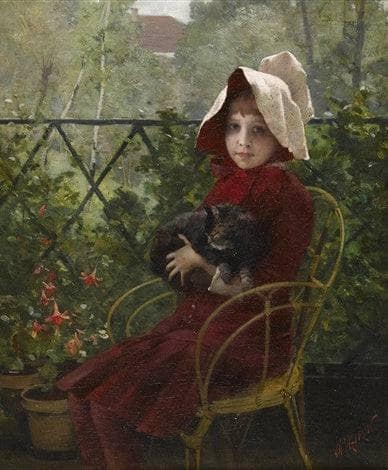
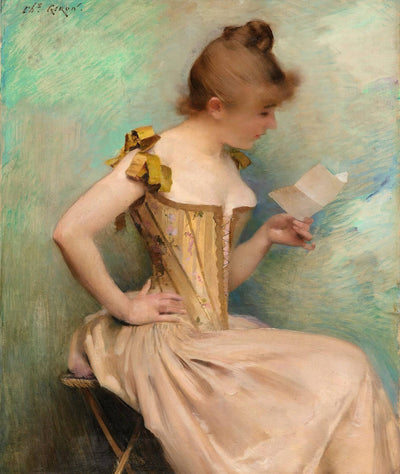
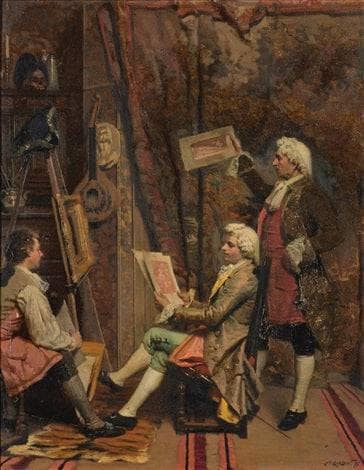
Discover some of our latest oil paintings, each one carefully hand-painted on canvas.

AS SEEN IN





Handmade Oil Painting on Canvas Art Reproduction, Museum-quality

The six dominant colors measured from the painting, with the share of canvas each one covers. Click a swatch to copy its hex code.
Processing & Shipping Time
Your delivery time includes two parts:
Shipping Methods
We ship with trusted couriers like FedEx, UPS, and DHL. Every shipment includes a tracking code.
Our goal is to deliver your order safely and quickly.
Shipment Safety Measures
We handle your products with care so they arrive in perfect condition:
Every product is insured and delivered right to your door, so you can feel confident buying from us.
Every Art & See painting is created by artists with 15+ years of experience using professional-grade oil paints and premium linen canvas with UV-resistant protective coating, the same museum-grade materials used in galleries worldwide. Each piece goes through quality review before your approval photos are taken. If after delivery you have any concerns about your painting, contact us at [email protected] and our team will work with you on the best path forward.
Full Warranty
Every painting is protected against physical damage during shipping. If your painting arrives damaged, we repair or replace it, free of charge.
Coverage Details
Transit damage (crushed, torn, water damage): we repair or replace at no cost. Please note that damages resulting from accidents or inappropriate use are not covered under this warranty.
Repair or Replace
Depending on the extent of damage, the affected painting will either be repaired or replaced at no additional cost to you.
Free Service
All warranty services are provided absolutely free of charge.
We want you to absolutely love your handmade artwork. Here's how it works:
In the rare case you approve the photos and the artwork has been shipped and delivered to you, and you still want additional modification requests, we can handle it as a courtesy at our discretion. If accepted, you cover the return shipping cost.
| Type | Hand-Painted Oil Painting Reproduction |
| Original Artist | Charles Giron |
| Price Range | $350 to $1,150 |
| Shipping | Free Worldwide |
| Quality | Preview & Approve Before Shipping |
| Medium | Oil on Canvas |
| Canvas | Museum-Grade Linen Canvas |
| Technique | Hand-painted brushstroke-by-brushstroke |
| Period | 19th Century |
| Artist Nationality | Swiss |
| Orientation | Vertical |
| Subject | Portraits male |
| Available Sizes | 7 (17'' W × 19'' H to 55'' W × 62'' H, including the original size), plus custom sizes |
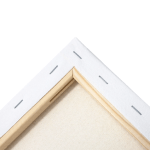
| Framing Options | Unframed, Stretched Canvas, Classic & Modern Frames |
| Delivery | 14–28 business days |
| Size | 49.5 × 55.5 cm (19.5 × 22 in) |
| Year | 1885 |
Charles Giron (1850-1914) emerged as a prominent figure in 19th-century French art, particularly known for his exquisite portraiture. Born in the vibrant city of Lyon, Giron honed his skills at the École des Beaux-Arts in Paris. His dedication to capturing the essence of his subjects set him apart in a time when realism and impressionism were gaining momentum. Giron's portraits often reflect a deep understanding of human emotion, making his work resonate with audiences even today.
Giron's artistic journey was influenced by the Romantic movement, which emphasized emotion and individualism. He also drew inspiration from the Realist movement, focusing on authentic representation. His exposure to the works of masters like Ingres and Delacroix enriched his style, allowing him to blend classical techniques with contemporary themes. This fusion created a unique approach that defined his portraits, including the notable work featuring Constant Coquelin.
Constant Coquelin Ainée (1841-1909) was a celebrated French actor and a key figure in the Comédie-Française. Known for his remarkable versatility, Coquelin captivated audiences with his performances in both classical and modern plays. His dedication to the craft of acting earned him a revered place in French theatre history, where he became synonymous with the art of performance.
As a member of the prestigious Comédie-Française, Coquelin played a pivotal role in shaping the theatrical landscape of France. He was instrumental in reviving classic French plays and introducing innovative interpretations. His performances not only showcased his talent but also elevated the status of the Comédie-Française as a cultural institution.
Coquelin's influence extended beyond the stage. He became a cultural icon, representing the spirit of French theatre during a transformative period. His ability to connect with audiences and convey complex emotions helped to popularize theatre as a vital form of entertainment and artistic expression in France. Coquelin's legacy continues to inspire actors and theatre enthusiasts alike.
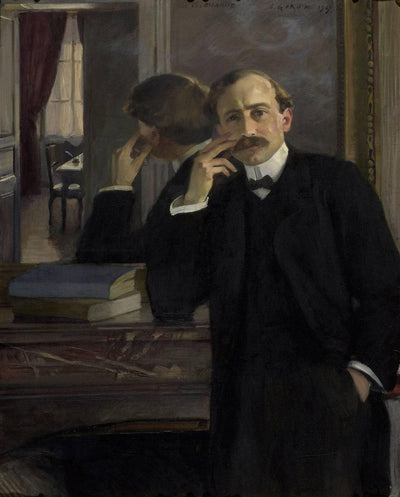
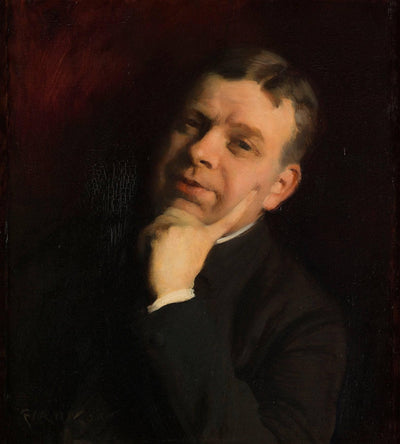
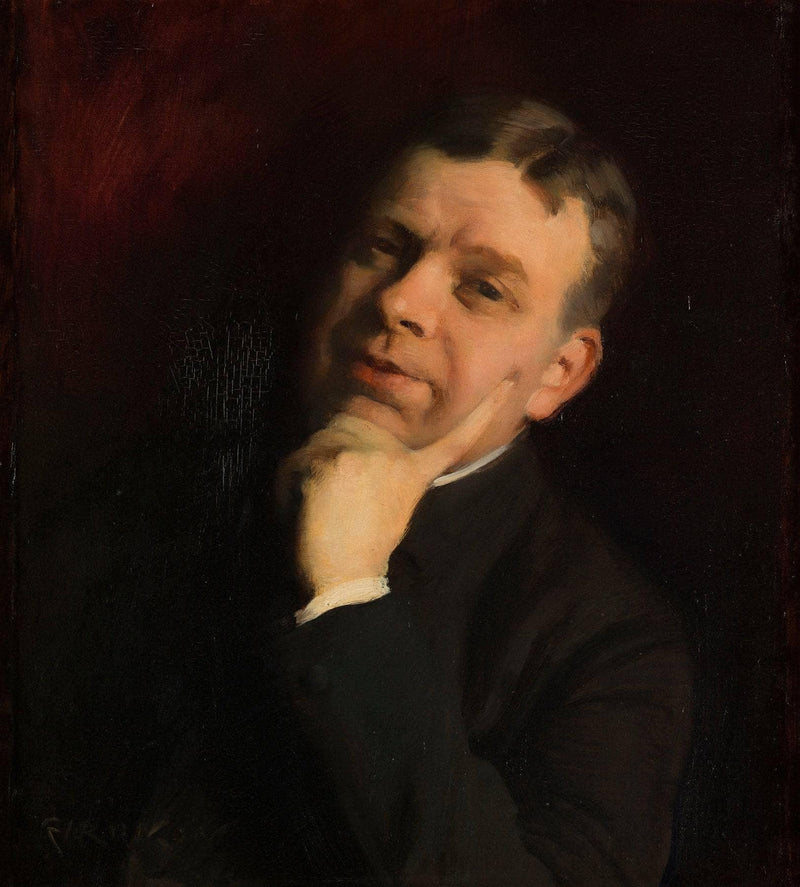
In the portrait of Constant Coquelin, Charles Giron employed a masterful blend of realism and impressionism. The painting captures Coquelin's charismatic presence, showcasing Giron's ability to convey personality through brushwork and color. This portrait stands as a testament to Giron's skill in portraying the human spirit.
Giron's choice of a rich color palette enhances the emotional depth of the portrait. Deep reds and warm browns dominate the canvas, reflecting Coquelin's vibrant personality. The brushwork is both precise and fluid, allowing for a lifelike representation that draws viewers into the subject's world. Each stroke contributes to the overall dynamism of the piece.
The composition of the painting is thoughtfully arranged, with Coquelin positioned prominently against a muted background. This choice emphasizes his stature and presence. The subject matter reveals not just a likeness but also the essence of Coquelin as an artist and performer, inviting viewers to appreciate the nuances of his character.
The 19th century was a period of significant transformation in France, marked by political upheaval and cultural evolution. The arts flourished as new movements emerged, reflecting the changing societal values. Theatre became a central part of French culture, with playwrights and actors pushing boundaries and exploring new themes.
Theatre served as a mirror to society, addressing contemporary issues and providing a platform for social commentary. It was during this time that the Comédie-Française solidified its reputation as a leading institution, showcasing the talents of actors like Coquelin. The interplay between theatre and society enriched the cultural fabric of France.
Giron's work was influenced by the artistic trends of his time, including the rise of realism and the exploration of psychological depth in portraiture. These trends encouraged artists to delve deeper into the human experience, allowing Giron to create portraits that were not only visually striking but also emotionally resonant.
The portrait of Constant Coquelin is rich with symbolism. The expression on Coquelin's face conveys a sense of introspection, suggesting the complexities of his character. This depth invites viewers to ponder the duality of the performer's public persona versus his private self.
Coquelin's facial expression is a focal point of the painting. His slight smile and thoughtful gaze reflect both confidence and vulnerability. This duality captures the essence of an actor who navigated the highs and lows of public life, making the portrait a profound exploration of identity.
The attire Coquelin wears in the portrait is meticulously detailed, showcasing the fashion of the era. His elegant clothing not only signifies his status as a prominent actor but also reflects the artistic sensibilities of 19th-century France. The accessories, such as a cravat and tailored jacket, further enhance his sophisticated image.
When comparing Giron's portraits to those of his contemporaries, a distinct style emerges. While many artists focused on idealized forms, Giron embraced realism, capturing the true essence of his subjects. This approach set him apart in a crowded field of portrait artists.
Giron's work shares similarities with artists like Édouard Manet and Pierre-Auguste Renoir, who also explored realism. However, Giron's emphasis on psychological depth and emotional expression distinguishes his portraits. His ability to convey the inner life of his subjects adds a unique layer to his artistic legacy.
Giron's contribution to portrait art lies in his ability to blend technical skill with emotional resonance. His portraits invite viewers to connect with the subject on a personal level, making them timeless pieces that continue to captivate audiences. The portrait of Constant Coquelin exemplifies this unique approach, showcasing Giron's mastery of the genre.
The portrait of Constant Coquelin has traveled through time, witnessing the evolution of art and culture. Originally displayed in prestigious galleries, it has become a cherished piece in the history of French portraiture. Its journey reflects the changing tastes and values of society.
Restoration efforts have played a crucial role in preserving the integrity of Giron's work. Experts have carefully maintained the painting, ensuring that its colors and details remain vibrant. These efforts highlight the importance of conservation in keeping art alive for future generations.
Today, the portrait of Constant Coquelin is housed in a prominent museum, where it continues to be a focal point for art enthusiasts. Its exhibition history includes showcases in major art festivals and galleries, allowing audiences to appreciate Giron's talent and Coquelin's legacy.
Constant Coquelin is significant for his contributions to the Comédie-Française and his role in popularizing French theatre during the 19th century.
Giron's style influenced portrait painting by emphasizing realism and emotional depth, setting a standard for future portrait artists.
Giron's notable painting techniques include a rich color palette, dynamic brushwork, and a focus on capturing the psychological essence of his subjects.
Themes of identity, emotion, and the duality of public versus private life are prevalent in Giron's portraits, inviting deep reflection.
The portrait reflects 19th-century French culture by showcasing the importance of theatre and the arts during a time of social and political change.
The painting was created during a period of artistic exploration, capturing the essence of Coquelin as a leading figure in French theatre.
To appreciate the details in a reproduction, focus on the color variations, brushwork, and the emotional expressions that Giron masterfully captured in the original.

Discover some of our latest oil paintings, each one carefully hand-painted on canvas.
At Art & See, we're committed to delivering the highest quality art reproductions. Our team of expert artists and state-of-the-art processes ensure that each piece is a masterpiece in its own right.

Experience your masterpiece's creation through daily photos from our expert artists, each with 15+ years of experience.

Your artwork travels first class via UPS, FedEx, or DHL, protected by museum-grade packaging for safe delivery.

Review unedited photos of your finished painting and request unlimited free revisions before it ships. We only ship when you say it's perfect.

Every piece is crafted with archival materials, UV-resistant finishes, and premium British paints to last generations.
Yes, 100% hand-painted with oil on canvas by artists with 15+ years of experience. No prints, no digital shortcuts. You'll see and feel real brushstrokes, just like the original Charles Giron masterpiece.
Your Constant Coquelin, Dit Coquelin Ainé (1841 1909), Sociétaire De La Comédie Française reproduction takes 2–5 weeks to hand-paint depending on size and detail. Once approved, shipping takes 5–8 days via FedEx, UPS, or DHL with full tracking. Free worldwide shipping included.
Absolutely. Once your Constant Coquelin, Dit Coquelin Ainé (1841 1909), Sociétaire De La Comédie Française is complete, we send you unedited photos, a full view and close-up details. Request unlimited free revisions until you're 100% satisfied. We don't ship until you say "yes."
Every painting goes through our Preview & Approve process: you receive unedited photos of your finished Charles Giron reproduction and can request unlimited free revisions before it ships. We only ship when you say it's perfect. If after delivery you have any concerns, contact us at [email protected] and our team will work with you on the best path forward.
Professional-grade oil paints (Windsor & Newton) on premium linen canvas with UV-resistant protective coating. Museum-grade materials built to last generations, the same quality used in galleries worldwide.
Our artists specialize in Charles Giron's technique: color accuracy, brushwork, and composition are matched to the original. Every reproduction goes through quality review before your approval photos are taken.
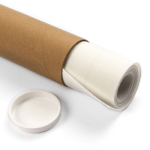
Every painting is insured and delivered door-to-door. Unframed paintings ship in protective hard tubes. Framed paintings are bubble-wrapped in sturdy boxes. If anything arrives damaged, we repair or replace it free.
Dive into the vibrant world of Historic Art. Discover your next painting today.