4.9/5
4.9/5


Expressionism Paintings
Expressionism paintings from the modernist movement that originated in Northern Europe around the beginning of the 20th century, here as 1,070 hand-painted oil reproductions: The Scream, The Tower of Blue Horses, The Blue Rider, Cat and Bird, Self-portrait with Skeleton, Old Fisherman, The Street Enters the House. Each canvas is painted in oil by a studio artist, in seven sizes, with an optional frame and free worldwide shipping.
-
Das Heilige Grab


 Vendor:Albin Egger-Lienz
Das Heilige Grab
- Regular price
- From $249.95
- Sale price
- From $249.95
- Regular price
-
$292.45
-
Sonnenuntergang Auf Der Mendel


 Vendor:Albin Egger-Lienz
Sonnenuntergang Auf Der Mendel
- Regular price
- From $299.95
- Sale price
- From $299.95
- Regular price
-
$350.95
-
Bildnis Costenoble in Tracht


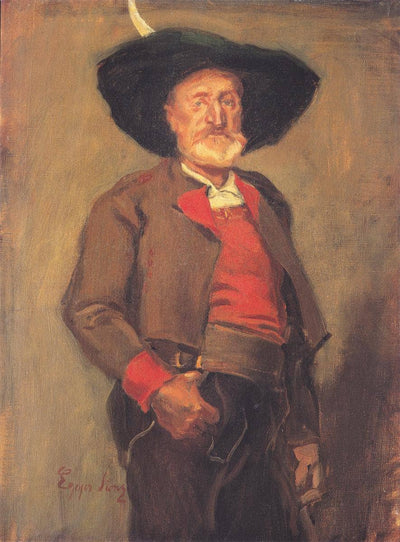 Vendor:Albin Egger-Lienz
Bildnis Costenoble in Tracht
- Regular price
- From $299.95
- Sale price
- From $299.95
- Regular price
-
$350.95
-
Der Pflüger


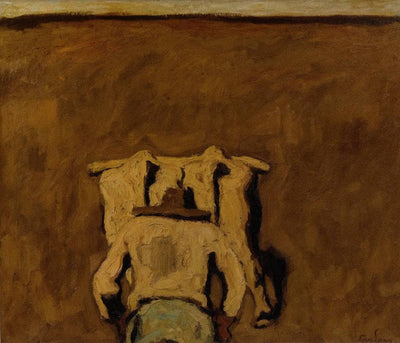 Vendor:Albin Egger-Lienz
Der Pflüger
- Regular price
- From $249.95
- Sale price
- From $249.95
- Regular price
-
$292.45
-
Die Prozession I


 Vendor:Albin Egger-Lienz
Die Prozession I
- Regular price
- From $299.95
- Sale price
- From $299.95
- Regular price
-
$350.95
-
The sower


 Vendor:Albin Egger-Lienz
The sower
- Regular price
- From $249.95
- Sale price
- From $249.95
- Regular price
-
$292.45
-
Resting Shepherds

 Vendor:Albin Egger-Lienz
Resting Shepherds
- Regular price
- From $299.95
- Sale price
- From $299.95
- Regular price
-
$350.95
-
Bildnis Des Malers Ploner

 Vendor:Albin Egger-Lienz
Bildnis Des Malers Ploner
- Regular price
- From $299.95
- Sale price
- From $299.95
- Regular price
-
$350.95
-
Finale

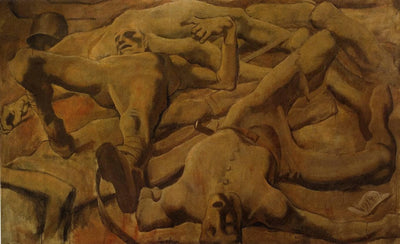 Vendor:Albin Egger-Lienz
Finale
- Regular price
- From $299.95
- Sale price
- From $299.95
- Regular price
-
$350.95
-
South-front


 Vendor:Albin Egger-Lienz
South-front
- Regular price
- From $249.95
- Sale price
- From $249.95
- Regular price
-
$292.45
-
Almlandschaft Im Ötztal

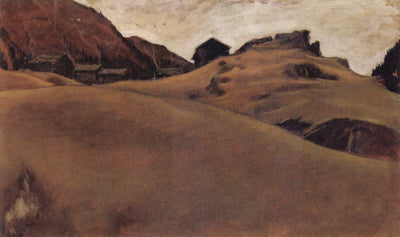 Vendor:Albin Egger-Lienz
Almlandschaft Im Ötztal
- Regular price
- From $299.95
- Sale price
- From $299.95
- Regular price
-
$350.95
-
Zwei Bergmäher (zweite Fassung)

 Vendor:Albin Egger-Lienz
Zwei Bergmäher (zweite Fassung)
- Regular price
- From $299.95
- Sale price
- From $299.95
- Regular price
-
$350.95
-
Der Totentanz Von Anno Neun


 Vendor:Albin Egger-Lienz
Der Totentanz Von Anno Neun
- Regular price
- From $249.95
- Sale price
- From $249.95
- Regular price
-
$292.45
-
Kopf Des Kreuztragenden Mannes (das Kreuz)


 Vendor:Albin Egger-Lienz
Kopf Des Kreuztragenden Mannes (das Kreuz)
- Regular price
- From $299.95
- Sale price
- From $299.95
- Regular price
-
$350.95
-
Betendes Kind

 Vendor:Albin Egger-Lienz
Betendes Kind
- Regular price
- From $299.95
- Sale price
- From $299.95
- Regular price
-
$350.95
-
Inneres Der Johanneskirche Zu München

 Vendor:Albin Egger-Lienz
Inneres Der Johanneskirche Zu München
- Regular price
- From $299.95
- Sale price
- From $299.95
- Regular price
-
$350.95
-
the Brother of the Artist, Eduard Egger

 Vendor:Albin Egger-Lienz
the Brother of the Artist, Eduard Egger
- Regular price
- From $249.95
- Sale price
- From $249.95
- Regular price
-
$292.45
-
Nach Dem Friedensschluss 1809

 Vendor:Albin Egger-Lienz
Nach Dem Friedensschluss 1809
- Regular price
- From $299.95
- Sale price
- From $299.95
- Regular price
-
$350.95
-
Mann Und Weib

 Vendor:Albin Egger-Lienz
Mann Und Weib
- Regular price
- From $299.95
- Sale price
- From $299.95
- Regular price
-
$350.95
-
Auf Der Treppe

 Vendor:Albin Egger-Lienz
Auf Der Treppe
- Regular price
- From $299.95
- Sale price
- From $299.95
- Regular price
-
$350.95
-
Bauernhof in Grafendorf

 Vendor:Albin Egger-Lienz
Bauernhof in Grafendorf
- Regular price
- From $299.95
- Sale price
- From $299.95
- Regular price
-
$350.95
-
Das Tor

 Vendor:Albin Egger-Lienz
Das Tor
- Regular price
- From $299.95
- Sale price
- From $299.95
- Regular price
-
$350.95
-
The Fall

 Vendor:Alan Stephens Foster
The Fall
- Regular price
- From $299.95
- Sale price
- From $299.95
- Regular price
-
$350.95


Frequently Asked Questions
How much do Expressionism oil painting reproductions cost?
Our Expressionism oil painting reproductions start at $299.95. Prices vary by size: larger canvases and custom dimensions cost more. Every painting includes free worldwide shipping and a 90-day satisfaction guarantee.
What Expressionism paintings can I buy?
Browse 1013+ Expressionism oil painting reproductions from masters of the movement. Popular choices include Das Heilige Grab, Sonnenuntergang Auf Der Mendel, Bildnis Costenoble in Tracht, Der Pflüger, Die Prozession I. All hand-painted on canvas.
Are these Expressionism prints or hand-painted reproductions?
Every Expressionism reproduction is 100% hand-painted by professional artists using premium oil paints on gallery-grade canvas. These are not prints, giclées, or digital reproductions. Each piece captures the original brushwork, texture, and color depth of the masterpiece.
What sizes are available for Expressionism painting reproductions?
Each Expressionism painting is available in multiple standard sizes, from small (16" × 20") to large museum-scale formats. Custom dimensions are available upon request. Contact us with your preferred size for a quote.
How long does it take to receive my painting?
Each painting is made to order. Production takes 2–3 weeks, plus 5–10 business days for worldwide shipping. Total delivery time is typically 3–5 weeks depending on your location. Shipping is free worldwide.
What is your return policy?
We offer a 90-day satisfaction guarantee. If you're not completely happy with your painting, contact us for a full refund or replacement, no questions asked.
What is Expressionism?
Expressionism is a modernist movement, initially in poetry and painting, originating in Northern Europe around the beginning of the 20th century. Its typical trait is to present the world solely from a subjective perspective, distorting it radically for emotional effect in order to evoke moods or ideas. Expressionist artists have sought to express the meaning of emotional experience rather than physical reality.
That is the whole program, and it explains what the pictures look like: color chosen for feeling rather than for description, drawing pushed until a face or a horse deforms, and the self portrait as a recurring subject. In German painting the movement organized itself into two groups. Die Brücke, the bridge, formed in Dresden in 1905; Der Blaue Reiter, the Blue Rider, formed in Munich in 1911, where Wassily Kandinsky and Franz Marc worked. Between them they are the reason the word expressionist means what it means, and both groups were known in Paris and Berlin within a few years of forming. Expressionist art was new, it was noisy, and it sold badly at the time.
Edvard Munch comes just before both and is usually read as the precedent. The Scream of 1893 belongs to his Frieze of Life, and so do Melancholy, Ashes and Evening on Karl Johan Street of 1892; Anxiety of 1894 is a synthesis of the last two motifs. What Munch found, and what the German artists of the next twenty years used after him, is that a red sky and a distorted face are not a failure of drawing. They are a statement about the person looking. Vincent van Gogh had shown the same thing twenty years earlier, and every account of the movement says so: the expressionists took what Van Gogh did with color and made a style out of it, the way Impressionism had made a style out of light.
One point of vocabulary. Abstract expressionism, in mid-century America, is a separate modern movement with a borrowed name, and its artists are all still in copyright, so it is not part of this collection. The same applies to the later work of the German expressionists themselves, and to the first world war generation that did not survive it. What this collection covers is the early 20th century material that has entered the public domain: most of Munch, most of Kandinsky before 1929, all of Franz Marc, and the central and eastern European artists who worked in the same style at the same time. Emil Nolde and Erich Heckel, who belong in any serious account of German modern art, are not in the catalogue at all, and it is worth knowing that before you go looking.
Famous Expressionism painters
The expressionist artists best represented in this collection, each with a collection of their own. Munch and Kandinsky between them account for nearly three hundred canvases here, and the two German groups account for most of the rest. Well known names and unknown ones are priced the same way.
- Edvard Munch: 160 works from the Norwegian painter of The Scream, Melancholy, Ashes and the rest of the Frieze of Life
- Wassily Kandinsky: a Russian artist associated in turn with Der Blaue Reiter, with Expressionism and with abstract painting, and one of the most important figures in modern art. 133 works here, of which the ones we reproduce are the early and pre-1929 canvases
- Franz Marc: 70 works, the animal painter of the Blue Rider group, including The Tower of Blue Horses and Blue Horse I
- Paul Klee: 43 works, including Cat and Bird and The Goldfish
- Egon Schiele: 106 works from Vienna, and the hardest drawing of any painter in this style, alongside 102 by Ernst Ludwig Kirchner of Die Brücke and 7 by Lovis Corinth
Famous Expressionism paintings
Famous expressionism paintings in the collection, by group. Every one is painted by hand in oil on canvas, in seven sizes, and photographed for your approval before it ships. If you are new to the style, start with the Munch list: it is the widest and the most forgiving in a normal room.
Munch and the precedent
Edvard Munch is the deepest holding in this collection at 160 works, and the range is much wider than the one painting everyone knows. The Frieze of Life pictures, a long series of self portraits, the Norwegian landscapes, and the late garden canvases from Ekely. Many of them were painted more than once, because he kept returning to the same motif for years. If you want an expressionist painting that will not be recognized by every visitor, this is where to look.
- The Scream, Edvard Munch, 1893
- Evening on Karl Johan Street, Edvard Munch, 1892, one of the two motifs that Munch synthesised in Anxiety of 1894
- Melancholy, a shoreline and a man who cannot leave it
- Ashes, after the affair, in a wood
- Self-Portrait with Burning Cigarette, the painter at thirty-two
- Puberty, a girl on the edge of a bed
- Vampire, a red-haired woman over a man, the picture he called Love and Pain
- The Day After, a woman asleep after a night out, and a scandal in its time
- Eye in Eye, two figures and a tree between them
- The Sick Child, the later version of the painting he returned to for forty years
- Friedrich Nietzsche, a portrait of a philosopher who was already dead
- Red Virginia Creeper, a house swallowed by a red plant
- Self-Portrait, Between the Clock and the Bed, the late one, painted as an old man
- Self-Portrait with Striped Pullover, a self portrait from the middle years
- Girl Combing Her Hair, an interior, quiet for him
- Galloping Horse, a horse coming straight at the viewer
- Woman in Blue, Frau Barth, a commissioned portrait, done his way
- Self-Portrait in the Garden, Ekely, the garden at the house he bought with his own money
Der Blaue Reiter
The Munich group, and the point at which expressionist painting turns into abstract painting. Wassily Kandinsky was associated with Der Blaue Reiter, with Expressionism and with abstract art in turn, and the blue horses of Franz Marc are the best loved animal artworks of the whole early 20th century. We reproduce the work of theirs that has entered the public domain.
- The Blue Rider, Wassily Kandinsky, 1903, the painting the Munich group took its name from
- Lady in Moscow, a street in Moscow, seen from above
- St George and the Dragon, a saint dissolved into colors
- All Saints Day I, forms taken from Russian folk art
- The Tower of Blue Horses, Franz Marc, the important one, and the one that was lost
- Blue Horse I, one horse, in blue
- Cat and Bird, Paul Klee, a cat with a bird in its head
- The Goldfish, a fish in the dark
- At the Garden Table, August Macke
Central and eastern Europe
Beyond Germany and Norway, the same impulse produced a generation of artists in Hungary, Greece, Poland, Spain, Italy and Russia whose names are not famous and whose canvases are as strong as anything above. This is the best value here, and the part almost nobody browses. Their colors are as strong as the German ones and their prices are the same as everything else, because we charge by size and not by fame.
- Self-portrait with Skeleton, Lovis Corinth
- The Blinded Samson, Lovis Corinth
- Old Fisherman, Tivadar Kosztka Csontvary, the most viewed painting in this collection
- The Light, Vilmos Aba-Novak
- The straw hat, Nikolaos Lytras
- The Hairdresser, Jose Gutierrez Solana
- Portrait H. K., Walter Gramatte
- Stanczyk, Leon Wyczolkowski
- The Street Enters the House, Umberto Boccioni
- Christ and the Robber, Nikolai Ge, a religious subject painted with expressionist distortion thirty years early
- States of Mind I: The Farewells, Umberto Boccioni, a railway station as an emotional state
- Elasticity, Umberto Boccioni, a horse and rider taken apart
- The Strengths of a Street, Umberto Boccioni
- Zapatistas Marching, Jose Clemente Orozco, the Mexican version of the same idea
- Composition, Sirak Skitnik, Bulgaria
Related styles
Fauvism paintings for sale are the French movement doing something similar with strong color at the same moment. Symbolism art reproductions are where the taste for subjective, non-literal subject matter comes from. Futurism oil paintings are the Italian parallel, Boccioni included.
Frequently asked questions
What is Expressionism in art?
A modernist movement, initially in poetry and painting, that originated in Northern Europe around the beginning of the 20th century. It presents the world solely from a subjective perspective, distorting it radically for emotional effect, seeking the meaning of emotional experience rather than physical reality.
What is the most famous expressionist painting?
Edvard Munch's The Scream of 1893, which is one of the most recognized images ever made in any style. After it, Franz Marc's The Tower of Blue Horses and Kandinsky's The Blue Rider of 1903, the painting the Munich group took its name from. Csontvary's Old Fisherman is the most viewed page in this collection, which says something about what people actually want on a wall.
Is abstract expressionism part of this collection?
No. Abstract expressionism is a separate mid-century American movement with a similar name, and its artists are all still in copyright, so we do not reproduce them and there is no collection of that work here. The word expressionism on this page means the modern European movement of the early 20th century: Die Brücke, Der Blaue Reiter, Munch, and the central European artists of the same years.
We’ll Paint Any Image You Want
Just send us a photo or the painting name and our artists will hand-paint it for you.