4.9/5
4.9/5








SAMPLES OF QUALITY
Recent Hand-Painted Reproductions
Discover some of our latest oil paintings, each one carefully hand-painted on canvas.

AS SEEN IN






by Paul Leroy
Handmade Oil Painting on Canvas Art Reproduction, Museum-quality

The six dominant colors measured from the painting, with the share of canvas each one covers. Click a swatch to copy its hex code.
Processing & Shipping Time
Your delivery time includes two parts:
Shipping Methods
We ship with trusted couriers like FedEx, UPS, and DHL. Every shipment includes a tracking code.
Our goal is to deliver your order safely and quickly.
Shipment Safety Measures
We handle your products with care so they arrive in perfect condition:
Every product is insured and delivered right to your door, so you can feel confident buying from us.
Every Art & See painting is created by artists with 15+ years of experience using professional-grade oil paints and premium linen canvas with UV-resistant protective coating, the same museum-grade materials used in galleries worldwide. Each piece goes through quality review before your approval photos are taken. If after delivery you have any concerns about your painting, contact us at [email protected] and our team will work with you on the best path forward.
Full Warranty
Every painting is protected against physical damage during shipping. If your painting arrives damaged, we repair or replace it, free of charge.
Coverage Details
Transit damage (crushed, torn, water damage): we repair or replace at no cost. Please note that damages resulting from accidents or inappropriate use are not covered under this warranty.
Repair or Replace
Depending on the extent of damage, the affected painting will either be repaired or replaced at no additional cost to you.
Free Service
All warranty services are provided absolutely free of charge.
We want you to absolutely love your handmade artwork. Here's how it works:
In the rare case you approve the photos and the artwork has been shipped and delivered to you, and you still want additional modification requests, we can handle it as a courtesy at our discretion. If accepted, you cover the return shipping cost.
| Type | Hand-Painted Oil Painting Reproduction |
| Original Artist | Paul Leroy |
| Price Range | $350 to $1,150 |
| Shipping | Free Worldwide |
| Quality | Preview & Approve Before Shipping |
| Medium | Oil on Canvas |
| Canvas | Museum-Grade Linen Canvas |
| Technique | Hand-painted brushstroke-by-brushstroke |
| Art Style | Orientalism |
| Artist Nationality | French |
| Orientation | Horizontal |
| Subject | Portraits female, Portraits male |
| Available Sizes | 7 (20'' W × 15'' H to 68'' W × 51'' H, including the original size), plus custom sizes |
| Framing Options | Unframed, Stretched Canvas, Classic & Modern Frames |
| Delivery | 14–28 business days |
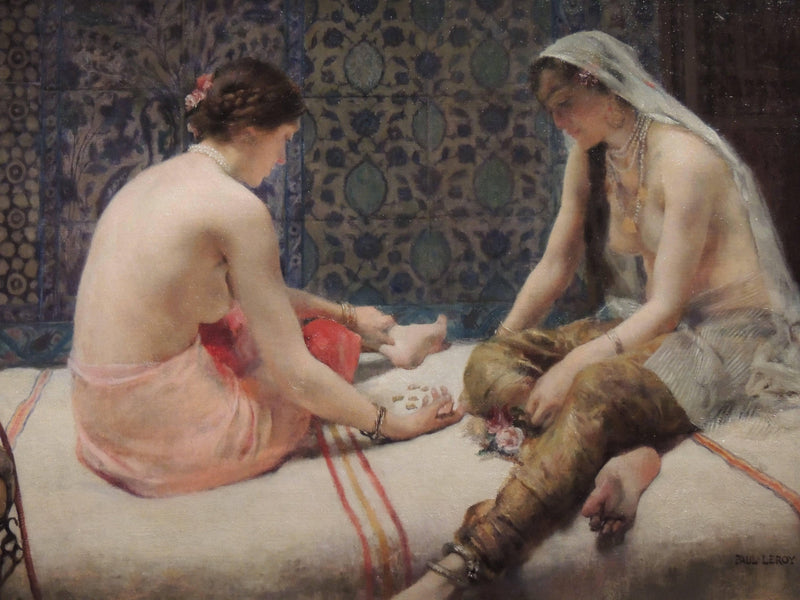
Le Jeu D'osselets, painted in 1880, stands as a testament to the vibrant world of 19th century French art. This period was marked by a shift towards realism and the celebration of everyday life. Artists like Paul Leroy embraced genre painting, capturing intimate moments that resonated with the public. The painting reflects the cultural milieu of post-revolutionary France, where social dynamics were evolving, and the innocence of childhood was increasingly celebrated.
Paul Leroy, born in 1848, was a prominent figure in the French art scene. He studied at the École des Beaux-Arts and was influenced by the works of masters like Gustave Courbet and Édouard Manet. Leroy's dedication to portraying the simplicity and joy of daily life is evident in Le Jeu D'osselets. His ability to capture the essence of childhood play reflects his deep understanding of human emotions and social interactions.
Genre painting flourished in the 19th century, allowing artists to depict scenes of ordinary life. This style was significant as it provided a window into the social fabric of the time. Leroy's work, particularly Le Jeu D'osselets, showcases the playful spirit of children, emphasizing the importance of leisure and community in a rapidly changing society. The painting invites viewers to reflect on their own childhood experiences, making it timeless and relatable.
The color palette of Le Jeu D'osselets is rich and lively, filled with warm hues that evoke a sense of joy and nostalgia. Leroy skillfully uses vibrant reds, greens, and yellows to bring the scene to life. These colors not only enhance the visual appeal but also symbolize the warmth of childhood and the innocence of play. The lively colors invite viewers to immerse themselves in the playful atmosphere of the painting.
Leroy employs masterful composition techniques in Le Jeu D'osselets. The arrangement of children playing with the osselets creates a dynamic balance between figures and negative space. This thoughtful composition draws the viewer's eye across the canvas, allowing for a deeper engagement with the scene. The placement of each child adds to the narrative, showcasing their interactions and the joy of shared play.
The interplay of light and shadow in Le Jeu D'osselets adds depth and emotion to the painting. Leroy's use of chiaroscuro highlights the children's expressions and movements, enhancing the overall sense of realism. The soft light filtering through the scene creates a warm, inviting atmosphere, making the viewer feel as if they are part of the joyful moment. This technique effectively captures the fleeting nature of childhood happiness.
In 19th century society, games held significant cultural value. They symbolized innocence, community, and the joys of childhood. Le Jeu D'osselets captures this essence, showcasing children engaged in a traditional game that reflects their carefree spirit. The osselets, or knucklebones, were not just toys; they represented social interaction and the development of skills, making them a vital part of childhood in that era.
Children have long been a focal point in art, representing purity and innocence. Leroy's portrayal of children in Le Jeu D'osselets emphasizes their unfiltered joy and spontaneity. The painting serves as a reminder of the simple pleasures of youth, inviting viewers to reconnect with their own childhood memories. This theme resonates deeply, making the artwork relatable across generations.
Le Jeu D'osselets also reflects the social dynamics of its time. The gathering of children from different backgrounds playing together illustrates a sense of community and shared experience. This depiction challenges the rigid social structures of the era, suggesting that play transcends class boundaries. Leroy's work encourages viewers to consider the importance of unity and joy in a diverse society.
Le Jeu D'osselets shares similarities with other genre paintings of the 19th century, such as works by Jean-Baptiste-Siméon Chardin and Pierre-Auguste Renoir. Like these artists, Leroy captures the essence of everyday life, focusing on the beauty found in simple moments. This connection to genre painting highlights the enduring appeal of capturing human experiences in art.
While Leroy's work celebrates the innocence of childhood play, modern interpretations often explore more complex themes. Contemporary artists may depict play in a digital context or address societal issues surrounding childhood. This contrast highlights how the concept of play has evolved, yet the fundamental joy captured in Le Jeu D'osselets remains timeless.
Le Jeu D'osselets has influenced many artists who seek to capture the essence of childhood and play. Leroy's focus on realism and emotional depth serves as an inspiration for contemporary painters. His ability to evoke nostalgia and connection through art continues to resonate, encouraging new generations to explore similar themes in their work.
Viewers often find themselves connecting deeply with Le Jeu D'osselets. The scene evokes personal memories of childhood games and carefree days. This emotional connection enhances the viewing experience, allowing individuals to reflect on their own lives and the joy of play. Leroy's painting serves as a bridge between past and present, inviting introspection.
The nostalgic quality of Le Jeu D'osselets is powerful. The depiction of children at play stirs memories of innocence and joy, reminding viewers of simpler times. This emotional resonance makes the painting not just a visual experience but a heartfelt journey into the past. The universal theme of childhood play transcends time, making it relatable to all.
Art has the unique ability to create shared experiences among viewers. Le Jeu D'osselets fosters a sense of community as people gather to appreciate the beauty of childhood. The painting encourages conversations about play, innocence, and the importance of connection. Leroy's work serves as a reminder that art can unite us through shared memories and emotions.
Preserving Le Jeu D'osselets is crucial for maintaining its artistic integrity. Restoration efforts focus on cleaning and repairing the canvas while respecting Leroy's original techniques. These efforts ensure that future generations can appreciate the painting's beauty and historical significance. The careful preservation of this artwork reflects a commitment to honoring the legacy of 19th century French art.
Since its creation, Le Jeu D'osselets has been featured in numerous exhibitions, captivating audiences with its charm. Public reception has evolved, with contemporary viewers appreciating the painting's nostalgic qualities. The artwork continues to draw interest, highlighting the enduring appeal of genre painting and its relevance in today's art world.
Le Jeu D'osselets holds a special place among art collectors and enthusiasts. Its historical significance and emotional depth make it a sought-after piece. Collectors value the painting not only for its aesthetic qualities but also for its ability to evoke memories and connections. Leroy's work remains a cherished part of art history, inspiring admiration and appreciation.
Le Jeu D'osselets tells the story of children engaged in a traditional game, capturing the essence of childhood joy and innocence. The painting reflects the social dynamics of 19th century France, emphasizing the importance of play in community life.
Paul Leroy employed techniques such as chiaroscuro to create depth and emotion. His vibrant color palette and thoughtful composition enhance the realism of the scene, inviting viewers to connect with the subject matter.
The painting reflects the culture of 19th century France by showcasing the significance of childhood and play. It highlights the social interactions among children, emphasizing the importance of community and shared experiences in a changing society.
Le Jeu D'osselets evokes feelings of nostalgia, joy, and connection. Viewers often reflect on their own childhood memories, making the painting a deeply personal experience that resonates across generations.
The original Le Jeu D'osselets is housed in a prominent museum, where it is part of the permanent collection. Art enthusiasts can visit to experience the painting's beauty and historical significance firsthand.
When purchasing a reproduction of Le Jeu D'osselets, consider the quality of materials used, the accuracy of colors, and the level of detail. Look for reproductions that capture the essence of the original painting, as they offer a more authentic experience than standard prints.
To ensure the quality of a reproduction, choose a reputable art reproduction company that specializes in oil painting reproductions. Check for customer reviews and examples of their work to confirm their commitment to artistic integrity and detail.

Discover some of our latest oil paintings, each one carefully hand-painted on canvas.
At Art & See, we're committed to delivering the highest quality art reproductions. Our team of expert artists and state-of-the-art processes ensure that each piece is a masterpiece in its own right.

Experience your masterpiece's creation through daily photos from our expert artists, each with 15+ years of experience.

Your artwork travels first class via UPS, FedEx, or DHL, protected by museum-grade packaging for safe delivery.

Review unedited photos of your finished painting and request unlimited free revisions before it ships. We only ship when you say it's perfect.

Every piece is crafted with archival materials, UV-resistant finishes, and premium British paints to last generations.
Yes, 100% hand-painted with oil on canvas by artists with 15+ years of experience. No prints, no digital shortcuts. You'll see and feel real brushstrokes, just like the original Paul Leroy masterpiece.
Your Le Jeu D'osselets, reproduction takes 2–5 weeks to hand-paint depending on size and detail. Once approved, shipping takes 5–8 days via FedEx, UPS, or DHL with full tracking. Free worldwide shipping included.
Absolutely. Once your Le Jeu D'osselets, is complete, we send you unedited photos, a full view and close-up details. Request unlimited free revisions until you're 100% satisfied. We don't ship until you say "yes."
Every painting goes through our Preview & Approve process: you receive unedited photos of your finished Paul Leroy reproduction and can request unlimited free revisions before it ships. We only ship when you say it's perfect. If after delivery you have any concerns, contact us at [email protected] and our team will work with you on the best path forward.
Professional-grade oil paints (Windsor & Newton) on premium linen canvas with UV-resistant protective coating. Museum-grade materials built to last generations, the same quality used in galleries worldwide.
Our artists specialize in Paul Leroy's technique: color accuracy, brushwork, and composition are matched to the original. Every reproduction goes through quality review before your approval photos are taken.
Every painting is insured and delivered door-to-door. Unframed paintings ship in protective hard tubes. Framed paintings are bubble-wrapped in sturdy boxes. If anything arrives damaged, we repair or replace it free.
Dive into the vibrant world of Historic Art. Discover your next painting today.