 4.9/5
4.9/5






SAMPLES OF QUALITY
Recent Hand-Painted Reproductions
Discover some of our latest oil paintings, each one carefully hand-painted on canvas.

AS SEEN IN





Handmade Oil Painting on Canvas Art Reproduction, Museum-quality

The six dominant colors measured from the painting, with the share of canvas each one covers. Click a swatch to copy its hex code.
Processing & Shipping Time
Your delivery time includes two parts:
Shipping Methods
We ship with trusted couriers like FedEx, UPS, and DHL. Every shipment includes a tracking code.
Our goal is to deliver your order safely and quickly.
Shipment Safety Measures
We handle your products with care so they arrive in perfect condition:
Every product is insured and delivered right to your door, so you can feel confident buying from us.
Every Art & See painting is created by artists with 15+ years of experience using professional-grade oil paints and premium linen canvas with UV-resistant protective coating, the same museum-grade materials used in galleries worldwide. Each piece goes through quality review before your approval photos are taken. If after delivery you have any concerns about your painting, contact us at [email protected] and our team will work with you on the best path forward.
Full Warranty
Every painting is protected against physical damage during shipping. If your painting arrives damaged, we repair or replace it, free of charge.
Coverage Details
Transit damage (crushed, torn, water damage): we repair or replace at no cost. Please note that damages resulting from accidents or inappropriate use are not covered under this warranty.
Repair or Replace
Depending on the extent of damage, the affected painting will either be repaired or replaced at no additional cost to you.
Free Service
All warranty services are provided absolutely free of charge.
We want you to absolutely love your handmade artwork. Here's how it works:
In the rare case you approve the photos and the artwork has been shipped and delivered to you, and you still want additional modification requests, we can handle it as a courtesy at our discretion. If accepted, you cover the return shipping cost.
| Type | Hand-Painted Oil Painting Reproduction |
| Original Artist | Jacob Jordaens |
| Price Range | $360 to $1,150 |
| Shipping | Free Worldwide |
| Quality | Preview & Approve Before Shipping |
| Medium | Oil on Canvas |
| Canvas | Museum-Grade Linen Canvas |
| Technique | Hand-painted brushstroke-by-brushstroke |
| Art Style | Baroque |
| Period | 17th Century |
| Artist Nationality | Flemish |
| Orientation | Vertical |
| Subject | Cultural heritage, Cultural heritage mythology, Cultural heritage religious, Fantasy, Portraits group, Religion |
| Available Sizes | 7 (15'' W × 23'' H to 48'' W × 72'' H, including the original size), plus custom sizes |
| Framing Options | Unframed, Stretched Canvas, Classic & Modern Frames |
| Delivery | 14–28 business days |
The 17th century was marked by the catastrophic spread of the bubonic plague across Europe. This deadly epidemic claimed millions of lives, leaving cities in despair. Milan, a bustling hub of culture and commerce, faced severe outbreaks that devastated its population. The plague not only caused physical suffering but also instigated a crisis of faith and morality among the people. The societal impact of the plague was profound, leading to a surge in religious fervor and charitable acts as communities sought solace and hope amidst the chaos.
Jacob Jordaens, a prominent figure in Flemish Baroque painting, was known for his vibrant compositions and emotional depth. Born in Antwerp in 1593, Jordaens became a master of oil painting, often drawing inspiration from the works of his contemporaries like Peter Paul Rubens. His unique style combined realism with dramatic lighting, making his paintings resonate with viewers. Jordaens' ability to capture the human experience, especially in times of crisis, is evident in his poignant portrayal of St. Charles Borromeo caring for plague victims.
St. Charles Borromeo, a key figure in the Catholic Reformation, is celebrated for his unwavering compassion during the plague outbreaks in Milan. As the Archbishop of Milan, he dedicated his life to serving the sick and the needy. His selfless acts of charity, including providing food and medical care, left a lasting legacy of hope and resilience. Jordaens immortalized St. Charles in this painting, showcasing his role as a beacon of light in a time of darkness.
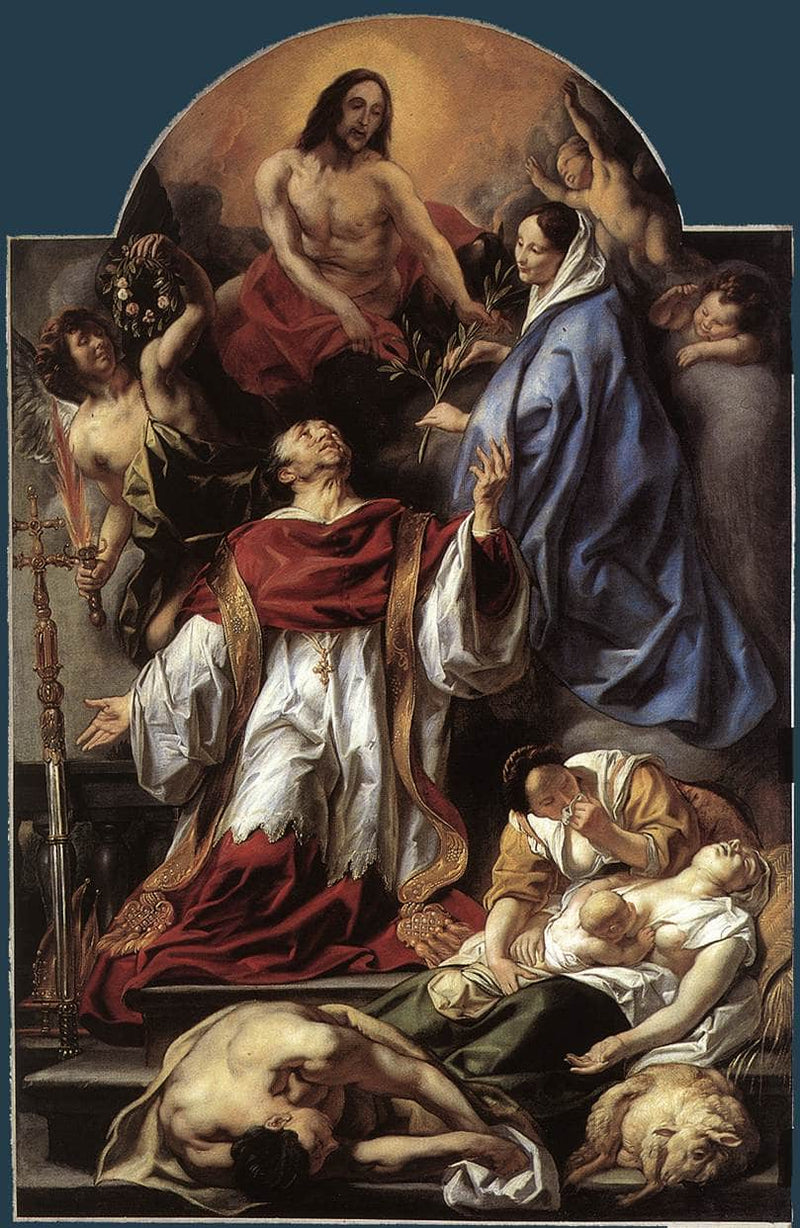
The color palette in "St. Charles Cares for the Plague Victims of Milan" is rich and evocative. Jordaens used deep reds, earthy browns, and luminous whites to convey a sense of urgency and compassion. The warm tones symbolize the warmth of charity, while the darker shades reflect the somber reality of suffering. This masterful use of color enhances the emotional impact of the scene, drawing viewers into the narrative.
Jordaens expertly arranged the figures in a dynamic composition that guides the viewer's eye through the painting. The central figure of St. Charles stands out, surrounded by the suffering victims. The diagonal lines created by the figures lead the viewer's gaze towards the saint, emphasizing his role as a compassionate leader. This thoughtful composition creates a sense of movement and urgency, reflecting the chaotic environment of a plague-stricken city.
The figures in the painting are rendered with remarkable detail, showcasing a range of emotions from despair to hope. Jordaens captured the anguish of the plague victims, their faces etched with pain and fear. In contrast, St. Charles' expression radiates compassion and determination. This juxtaposition highlights the struggle between suffering and the hope that charity can bring, making the painting a powerful commentary on the human condition.
The painting is steeped in religious symbolism, reflecting the importance of faith during the plague. St. Charles Borromeo embodies the Christian ideals of charity and sacrifice. His actions serve as a reminder of the role of faith in providing comfort and strength in times of crisis. The presence of religious iconography reinforces the message that divine intervention and human compassion can coexist in the face of adversity.
Jordaens' portrayal of St. Charles caring for the plague victims is a powerful representation of altruism. The saint's willingness to risk his own life to help others exemplifies the highest ideals of charity. This theme resonates deeply, reminding viewers of the importance of selflessness and community support during challenging times. The painting serves as a timeless call to action for compassion and humanitarian efforts.
Amidst the despair depicted in the painting, there is a strong undercurrent of resilience. The victims, though suffering, are shown in a moment of connection with St. Charles, symbolizing hope and the strength of the human spirit. Jordaens captures this duality beautifully, illustrating that even in the darkest times, the potential for recovery and renewal exists. This theme of resilience is particularly relevant today, as communities continue to face their own challenges.
St. Charles Borromeo is depicted as a figure of compassion and leadership. His attire, a simple yet dignified clerical robe, signifies humility and service. The saint's outstretched arms invite the viewer to witness his dedication to the suffering. This portrayal reinforces his role as a protector and caregiver, embodying the essence of Christian charity.
The plague victims in the painting are not just figures of despair; they represent the broader human experience of suffering and the quest for redemption. Their expressions convey a mix of pain and hope, suggesting that through compassion, healing is possible. Jordaens' choice to focus on their humanity invites viewers to empathize with their plight, making the painting a poignant reflection on the human condition.
Jordaens masterfully employs light and shadow to create a dramatic contrast between life and death. The light illuminating St. Charles symbolizes hope and divine presence, while the shadows surrounding the victims evoke the somber reality of the plague. This interplay of light and dark enhances the emotional depth of the painting, inviting viewers to contemplate the fragility of life and the power of compassion.
While Jordaens shared the Baroque stage with artists like Rubens and Rembrandt, his style is distinct. Jordaens favored vibrant colors and dynamic compositions, often focusing on themes of everyday life and human emotion. In contrast, Rubens' works are characterized by their grandeur and mythological themes, while Rembrandt is known for his mastery of light and shadow. Jordaens' unique approach to depicting human suffering sets him apart in the Baroque movement.
The influence of Italian Baroque, particularly Caravaggio, is evident in Jordaens' work. Caravaggio's dramatic use of chiaroscuro and realistic portrayals of human emotion inspired many artists, including Jordaens. This influence is seen in the way Jordaens captures the raw emotions of his subjects, creating a sense of immediacy and connection with the viewer. The legacy of Caravaggio's style is woven into the fabric of Jordaens' artistic expression.
Jordaens holds a significant place in the legacy of Flemish art. His ability to blend realism with emotional depth has influenced generations of artists. As a key figure in the Baroque movement, Jordaens' works continue to be celebrated for their vibrant storytelling and humanistic themes. His contributions to art history are invaluable, making him a pivotal figure in the evolution of European painting.
The original "St. Charles Cares for the Plague Victims of Milan" is housed in the prestigious Museo del Prado in Madrid, Spain. This renowned museum features an extensive collection of European art, making it a must-visit for art enthusiasts. Viewing the original allows one to appreciate the intricate details and vibrant colors that Jordaens employed, providing a deeper understanding of the painting's emotional impact.
Modern art critiques often highlight the relevance of Jordaens' work in today's context. The themes of compassion, resilience, and community support resonate strongly in contemporary society. Critics appreciate how Jordaens' portrayal of human suffering and hope invites viewers to reflect on their own experiences and the importance of altruism in times of crisis. This timeless relevance keeps the painting alive in discussions about art and humanity.
To fully appreciate "St. Charles Cares for the Plague Victims of Milan," art enthusiasts and students should take time to observe the details. Focus on the expressions of the figures and the use of color and light. Consider the historical context and the emotions conveyed through the composition. Engaging with the painting on a personal level can enhance the viewing experience, making it a meaningful exploration of art and history.
This painting depicts St. Charles Borromeo's compassionate response to the plague victims in Milan during the 17th century. It illustrates his dedication to serving the sick and his role as a symbol of hope amidst despair.
Jordaens employed oil painting techniques, utilizing a vivid color palette and dramatic lighting to enhance the emotional depth of the scene. His mastery of composition guides the viewer's eye and emphasizes the central figures.
The painting reflects the social issues of the 17th century, particularly the impact of the plague on communities. It highlights themes of charity, faith, and the human response to suffering, resonating with the struggles faced by society during that era.
Key themes include compassion, resilience, and the role of faith in times of crisis. The painting emphasizes the importance of charity and the human spirit's ability to endure adversity.
The painting's themes of compassion and resilience continue to inspire modern artists and cultural discussions. Its relevance in addressing social issues makes it a significant work in contemporary art discourse.
Art reproductions of "St. Charles Cares for the Plague Victims of Milan" offer a superior alternative to prints. They capture the intricate details and vibrant colors of the original, allowing art lovers to appreciate Jordaens' work in their own space.
To appreciate the details in a reproduction, observe the textures and colors closely. Consider the emotional expressions of the figures and the overall composition. Engaging with the artwork thoughtfully can enhance your understanding and enjoyment.

Discover some of our latest oil paintings, each one carefully hand-painted on canvas.
At Art & See, we're committed to delivering the highest quality art reproductions. Our team of expert artists and state-of-the-art processes ensure that each piece is a masterpiece in its own right.

Experience your masterpiece's creation through daily photos from our expert artists, each with 15+ years of experience.

Your artwork travels first class via UPS, FedEx, or DHL, protected by museum-grade packaging for safe delivery.

Review unedited photos of your finished painting and request unlimited free revisions before it ships. We only ship when you say it's perfect.

Every piece is crafted with archival materials, UV-resistant finishes, and premium British paints to last generations.



Yes, 100% hand-painted with oil on canvas by artists with 15+ years of experience. No prints, no digital shortcuts. You'll see and feel real brushstrokes, just like the original Jacob Jordaens masterpiece.
Your St. Charles Cares for the Plague Victims of Milan reproduction takes 2–5 weeks to hand-paint depending on size and detail. Once approved, shipping takes 5–8 days via FedEx, UPS, or DHL with full tracking. Free worldwide shipping included.
Absolutely. Once your St. Charles Cares for the Plague Victims of Milan is complete, we send you unedited photos, a full view and close-up details. Request unlimited free revisions until you're 100% satisfied. We don't ship until you say "yes."
Every painting goes through our Preview & Approve process: you receive unedited photos of your finished Jacob Jordaens reproduction and can request unlimited free revisions before it ships. We only ship when you say it's perfect. If after delivery you have any concerns, contact us at [email protected] and our team will work with you on the best path forward.
Professional-grade oil paints (Windsor & Newton) on premium linen canvas with UV-resistant protective coating. Museum-grade materials built to last generations, the same quality used in galleries worldwide.
Our artists specialize in Jacob Jordaens's technique: color accuracy, brushwork, and composition are matched to the original. Every reproduction goes through quality review before your approval photos are taken.
Every painting is insured and delivered door-to-door. Unframed paintings ship in protective hard tubes. Framed paintings are bubble-wrapped in sturdy boxes. If anything arrives damaged, we repair or replace it free.
Dive into the vibrant world of Historic Art. Discover your next painting today.
