 4.9/5
4.9/5






SAMPLES OF QUALITY
Recent Hand-Painted Reproductions
Discover some of our latest oil paintings, each one carefully hand-painted on canvas.

AS SEEN IN





Handmade Oil Painting on Canvas Art Reproduction, Museum-quality

The six dominant colors measured from the painting, with the share of canvas each one covers. Click a swatch to copy its hex code.
Processing & Shipping Time
Your delivery time includes two parts:
Shipping Methods
We ship with trusted couriers like FedEx, UPS, and DHL. Every shipment includes a tracking code.
Our goal is to deliver your order safely and quickly.
Shipment Safety Measures
We handle your products with care so they arrive in perfect condition:
Every product is insured and delivered right to your door, so you can feel confident buying from us.
Every Art & See painting is created by artists with 15+ years of experience using professional-grade oil paints and premium linen canvas with UV-resistant protective coating, the same museum-grade materials used in galleries worldwide. Each piece goes through quality review before your approval photos are taken. If after delivery you have any concerns about your painting, contact us at [email protected] and our team will work with you on the best path forward.
Full Warranty
Every painting is protected against physical damage during shipping. If your painting arrives damaged, we repair or replace it, free of charge.
Coverage Details
Transit damage (crushed, torn, water damage): we repair or replace at no cost. Please note that damages resulting from accidents or inappropriate use are not covered under this warranty.
Repair or Replace
Depending on the extent of damage, the affected painting will either be repaired or replaced at no additional cost to you.
Free Service
All warranty services are provided absolutely free of charge.
We want you to absolutely love your handmade artwork. Here's how it works:
In the rare case you approve the photos and the artwork has been shipped and delivered to you, and you still want additional modification requests, we can handle it as a courtesy at our discretion. If accepted, you cover the return shipping cost.
| Type | Hand-Painted Oil Painting Reproduction |
| Original Artist | Francesco Solimena |
| Price Range | $350 to $1,150 |
| Shipping | Free Worldwide |
| Quality | Preview & Approve Before Shipping |
| Medium | Oil on Canvas |
| Canvas | Museum-Grade Linen Canvas |
| Technique | Hand-painted brushstroke-by-brushstroke |
| Art Style | Baroque |
| Period | 18th Century |
| Artist Nationality | Italian |
| Orientation | Horizontal |
| Subject | Cultural heritage, Cultural heritage mythology, Cultural heritage religious, Fantasy, Portraits group |
| Available Sizes | 7 (22'' W × 15'' H to 72'' W × 48'' H, including the original size), plus custom sizes |
| Framing Options | Unframed, Stretched Canvas, Classic & Modern Frames |
| Delivery | 14–28 business days |
| Size | 310.2 × 207.2 cm (122 × 81.5 in) |
| Year | 1720 |
The tale of Dido and Aeneas originates from Virgil's epic poem, the "Aeneid," written in the 1st century BCE. This poignant narrative explores themes of love, duty, and betrayal. Dido, the Queen of Carthage, falls deeply in love with Aeneas, a Trojan hero destined to found Rome. Their tragic romance unfolds against the backdrop of ancient Mediterranean politics and mythology, highlighting the conflict between personal desire and fate.
Interestingly, the story has inspired countless adaptations in literature and art, from operas to paintings. The emotional depth of Dido's character resonates with audiences, making her a symbol of unrequited love and sacrifice. This mythological narrative continues to captivate artists and writers, showcasing its timeless relevance.
Francesco Solimena, an influential Baroque painter, captures the essence of Dido and Aeneas's tragic love in his artwork. His interpretation emphasizes the emotional turmoil and complexity of their relationship. Solimena's brushwork conveys the intensity of Dido's longing and despair, while Aeneas embodies the weight of his destiny.
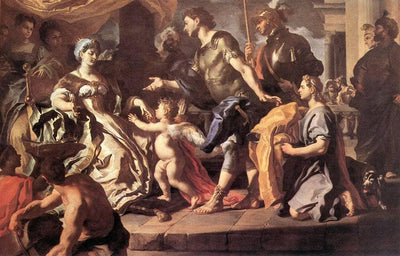
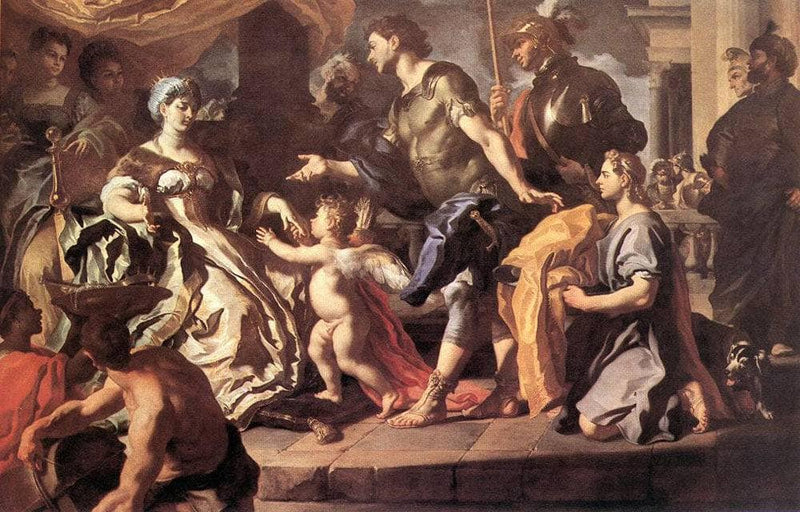
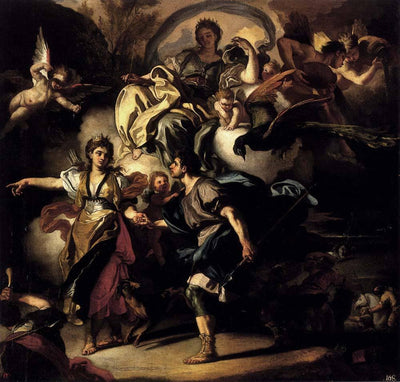
In this painting, Solimena skillfully portrays the moment when Dido receives Aeneas, infusing the scene with dramatic tension. The artist's choice to depict Cupid disguised as Ascanius adds a layer of intrigue, suggesting the manipulation of love and fate. This nuanced portrayal invites viewers to reflect on the nature of love and the consequences of betrayal.
Cupid, the god of desire, plays a pivotal role in this narrative. In Solimena's painting, he appears disguised as Ascanius, Aeneas's son. This clever disguise symbolizes the deceptive nature of love and the power of fate. By using this imagery, Solimena highlights how love can be both a blessing and a curse.
The presence of Cupid suggests that Dido's feelings for Aeneas are not entirely her own. This manipulation raises questions about free will and destiny, making the viewer ponder the true nature of love. Solimena's choice to include this element enriches the painting's narrative depth.
Solimena employs a rich color palette, utilizing deep reds and golds to evoke passion and opulence. The warm tones create an inviting atmosphere, drawing viewers into the emotional landscape of the scene. The composition is carefully balanced, with Dido and Aeneas positioned to emphasize their connection and the tension between them.
The artist's use of diagonal lines guides the viewer's eye through the painting, enhancing the sense of movement and drama. This dynamic composition reflects the tumultuous emotions experienced by the characters, making the artwork a powerful visual narrative.
Solimena masterfully captures the emotional expressions of Dido and Aeneas. Dido's face reveals a mixture of hope and despair, while Aeneas's expression reflects his internal conflict. These nuanced portrayals invite viewers to empathize with the characters, deepening their connection to the story.
The artist's attention to detail in the characters' facial expressions and body language enhances the painting's emotional impact. This ability to convey complex feelings through visual art is a hallmark of Solimena's style, making "Dido Receiving Aeneas" a compelling exploration of love and longing.
Francesco Solimena, born in 1657 in Italy, became a prominent figure in the Neapolitan Baroque movement. His artistic journey was marked by a dedication to capturing dramatic narratives and emotional depth. Solimena's work reflects the influences of his contemporaries, including Caravaggio and the Neapolitan school, which emphasized realism and emotional expression.
Throughout his career, Solimena produced numerous masterpieces, earning recognition for his ability to blend classical themes with Baroque flair. His contributions to art history are significant, as he helped shape the visual language of his time.
The Neapolitan Baroque style profoundly influenced Solimena's artistic approach. This movement emphasized dramatic lighting, rich colors, and emotional intensity. Solimena embraced these elements, creating works that resonate with viewers on a visceral level.
His paintings often feature dynamic compositions and intricate details, showcasing his technical skill and artistic vision. This commitment to the Baroque aesthetic is evident in "Dido Receiving Aeneas," where the interplay of light and shadow enhances the emotional narrative.
In addition to "Dido Receiving Aeneas," Solimena created several notable works, including "The Triumph of David" and "The Virgin and Child with Saints." His ability to convey complex narratives through visual art has left a lasting impact on the Baroque tradition.
Solimena's contributions extend beyond his individual works; he played a crucial role in shaping the artistic landscape of Naples. His influence can be seen in the works of later artists who sought to emulate his dramatic style and emotional depth.
Solimena's mastery of oil painting techniques is evident in "Dido Receiving Aeneas." His brushwork is fluid and expressive, creating a sense of movement and life within the scene. The texture of the paint adds depth, inviting viewers to explore the intricacies of the characters' emotions.
By layering paint, Solimena achieves a richness that enhances the overall visual experience. This technique allows for subtle variations in color and light, contributing to the painting's dynamic quality.
Layering and glazing are essential techniques in Solimena's artistic repertoire. These methods involve applying multiple layers of paint to create luminosity and depth. In "Dido Receiving Aeneas," this technique enhances the richness of the colors and the complexity of the characters' expressions.
The careful application of glazes allows for a sense of transparency, making the figures appear almost ethereal. This depth adds to the emotional weight of the scene, drawing viewers into the narrative.
Solimena's use of chiaroscuro, the contrast between light and shadow, is a hallmark of his style. This technique creates a dramatic effect, highlighting the emotional intensity of the moment. In "Dido Receiving Aeneas," the interplay of light and shadow emphasizes the characters' expressions and the tension in their relationship.
The strategic placement of light draws attention to key elements in the composition, guiding the viewer's eye and enhancing the overall impact of the artwork. This mastery of light and shadow is a testament to Solimena's skill as a Baroque artist.
The story of Dido and Aeneas has had a profound influence on artists and writers throughout history. From operas to paintings, the themes of love and betrayal resonate across cultures and time periods. Solimena's interpretation adds a unique perspective to this rich tradition, inspiring future generations of artists.
Many artists have drawn inspiration from this myth, creating their own interpretations that reflect contemporary themes and concerns. The enduring nature of Dido and Aeneas's story speaks to its universal appeal and relevance.
When comparing Solimena's "Dido Receiving Aeneas" to other depictions, such as those by Jean-Baptiste Corot or Edward Burne-Jones, one can see distinct differences in style and emotional focus. Solimena's Baroque approach emphasizes dramatic tension and emotional depth, while other artists may focus on idealized beauty or romanticism.
This comparative analysis highlights the diverse interpretations of the same myth, showcasing the richness of artistic expression across different periods and styles.
In modern times, the story of Dido and Aeneas continues to inspire adaptations in various forms, including theater, film, and literature. Contemporary interpretations often explore themes of feminism and agency, reimagining Dido as a powerful figure in her own right.
These modern adaptations reflect changing societal values and offer fresh perspectives on the timeless themes of love, loss, and destiny. Solimena's work remains a vital part of this ongoing dialogue, reminding us of the enduring power of myth.
The story of Dido and Aeneas is a tragic love tale from Virgil's "Aeneid," where Dido, the Queen of Carthage, falls in love with Aeneas, a Trojan hero. Their romance is complicated by Aeneas's destiny to found Rome, leading to heartbreak and betrayal.
Solimena's painting emphasizes emotional depth and dramatic tension, using Baroque techniques to enhance the narrative. Unlike other artists, he focuses on the moment of Dido's reception of Aeneas, capturing the complexity of their relationship.
The key themes in "Dido Receiving Aeneas" include love, betrayal, and the conflict between personal desire and fate. Solimena's portrayal invites viewers to reflect on the nature of love and the consequences of choices made in its name.
Solimena employed oil painting techniques, including layering, glazing, and chiaroscuro. These methods create depth, texture, and emotional intensity, making the painting a powerful visual narrative.
The story of Dido and Aeneas continues to inspire modern artists and writers, leading to adaptations that explore contemporary themes. The myth's enduring relevance speaks to its universal appeal and emotional resonance.
Art reproductions of "Dido Receiving Aeneas" offer a superior alternative to prints. They capture the intricate details and rich textures of the original oil painting, allowing art lovers to appreciate Solimena's masterful techniques in their own space.
To fully appreciate Solimena's artwork, take time to observe the emotional expressions, color palette, and composition techniques. Notice how light and shadow interact to create depth and drama, enhancing the storytelling within the painting.

Discover some of our latest oil paintings, each one carefully hand-painted on canvas.
At Art & See, we're committed to delivering the highest quality art reproductions. Our team of expert artists and state-of-the-art processes ensure that each piece is a masterpiece in its own right.

Experience your masterpiece's creation through daily photos from our expert artists, each with 15+ years of experience.

Your artwork travels first class via UPS, FedEx, or DHL, protected by museum-grade packaging for safe delivery.

Review unedited photos of your finished painting and request unlimited free revisions before it ships. We only ship when you say it's perfect.

Every piece is crafted with archival materials, UV-resistant finishes, and premium British paints to last generations.
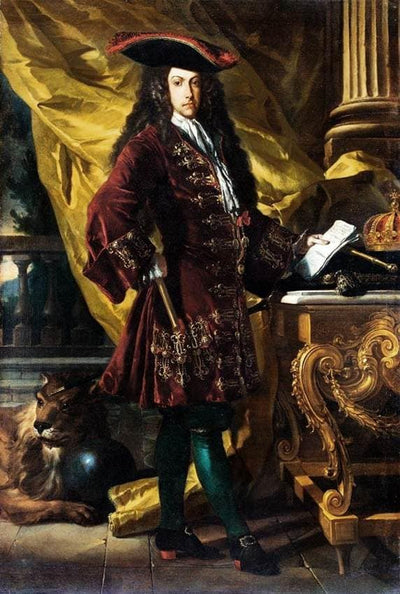

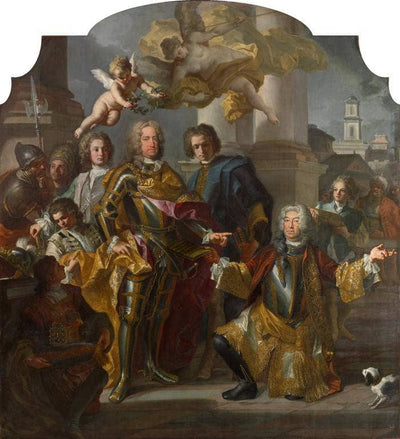
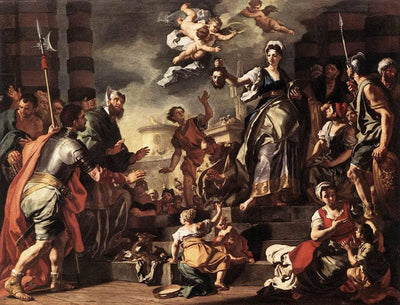
Yes, 100% hand-painted with oil on canvas by artists with 15+ years of experience. No prints, no digital shortcuts. You'll see and feel real brushstrokes, just like the original Francesco Solimena masterpiece.
Your Dido Receiveng Aeneas and Cupid Disguised as Ascanius reproduction takes 2–5 weeks to hand-paint depending on size and detail. Once approved, shipping takes 5–8 days via FedEx, UPS, or DHL with full tracking. Free worldwide shipping included.
Absolutely. Once your Dido Receiveng Aeneas and Cupid Disguised as Ascanius is complete, we send you unedited photos, a full view and close-up details. Request unlimited free revisions until you're 100% satisfied. We don't ship until you say "yes."
Every painting goes through our Preview & Approve process: you receive unedited photos of your finished Francesco Solimena reproduction and can request unlimited free revisions before it ships. We only ship when you say it's perfect. If after delivery you have any concerns, contact us at [email protected] and our team will work with you on the best path forward.
Professional-grade oil paints (Windsor & Newton) on premium linen canvas with UV-resistant protective coating. Museum-grade materials built to last generations, the same quality used in galleries worldwide.
Our artists specialize in Francesco Solimena's technique: color accuracy, brushwork, and composition are matched to the original. Every reproduction goes through quality review before your approval photos are taken.
Every painting is insured and delivered door-to-door. Unframed paintings ship in protective hard tubes. Framed paintings are bubble-wrapped in sturdy boxes. If anything arrives damaged, we repair or replace it free.
Dive into the vibrant world of Historic Art. Discover your next painting today.
