4.9/5
4.9/5




SAMPLES OF QUALITY
Recent Hand-Painted Reproductions
Discover some of our latest oil paintings, each one carefully hand-painted on canvas.

AS SEEN IN





Handmade Oil Painting on Canvas Art Reproduction, Museum-quality

The six dominant colors measured from the painting, with the share of canvas each one covers. Click a swatch to copy its hex code.
Processing & Shipping Time
Your delivery time includes two parts:
Shipping Methods
We ship with trusted couriers like FedEx, UPS, and DHL. Every shipment includes a tracking code.
Our goal is to deliver your order safely and quickly.
Shipment Safety Measures
We handle your products with care so they arrive in perfect condition:
Every product is insured and delivered right to your door, so you can feel confident buying from us.
Every Art & See painting is created by artists with 15+ years of experience using professional-grade oil paints and premium linen canvas with UV-resistant protective coating, the same museum-grade materials used in galleries worldwide. Each piece goes through quality review before your approval photos are taken. If after delivery you have any concerns about your painting, contact us at [email protected] and our team will work with you on the best path forward.
Full Warranty
Every painting is protected against physical damage during shipping. If your painting arrives damaged, we repair or replace it, free of charge.
Coverage Details
Transit damage (crushed, torn, water damage): we repair or replace at no cost. Please note that damages resulting from accidents or inappropriate use are not covered under this warranty.
Repair or Replace
Depending on the extent of damage, the affected painting will either be repaired or replaced at no additional cost to you.
Free Service
All warranty services are provided absolutely free of charge.
We want you to absolutely love your handmade artwork. Here's how it works:
In the rare case you approve the photos and the artwork has been shipped and delivered to you, and you still want additional modification requests, we can handle it as a courtesy at our discretion. If accepted, you cover the return shipping cost.
| Type | Hand-Painted Oil Painting Reproduction |
| Original Artist | Charles Willson Peale |
| Price Range | $350 to $1,070 |
| Shipping | Free Worldwide |
| Returns | 90-Day Returns |
| Medium | Oil on Canvas |
| Canvas | Museum-Grade Linen Canvas |
| Technique | Hand-painted brushstroke-by-brushstroke |
| Art Style | Rococo |
| Period | 19th Century |
| Artist Nationality | American |
| Orientation | Horizontal |
| Subject | Cultural heritage, Landscapes rural |
| Available Sizes | 7 (20'' W × 16'' H to 55'' W × 44'' H, including the original size), plus custom sizes |
| Framing Options | Unframed, Stretched Canvas, Classic & Modern Frames |
| Delivery | 14–28 business days |
| Size | 158.7 × 127 cm (62.5 × 50 in) |
| Year | 1808 |
The late 18th century marked a pivotal time in American paleontology. As the nation expanded westward, naturalists began to uncover the remnants of prehistoric creatures. The discovery of the mastodon, a colossal elephant-like mammal, sparked immense curiosity and debate among scientists and the public alike. This period was characterized by a growing interest in natural history, fueled by the Enlightenment's emphasis on observation and empirical evidence.
Charles Willson Peale was not just an artist; he was a visionary who blended art with science. Born in 1741, Peale became a prominent figure in American art and natural history. He founded the first major museum in the United States, the Philadelphia Museum, which showcased his extensive collection of natural specimens. His dedication to accurately depicting nature made him a key player in the development of natural history art.
The mastodon discoveries played a crucial role in shaping American scientific thought. These findings challenged existing beliefs about the age of the Earth and the existence of prehistoric life. Peale's painting captures this moment of scientific awakening, illustrating the excitement and wonder surrounding these monumental discoveries. The mastodon became a symbol of America's rich natural heritage and the quest for knowledge.
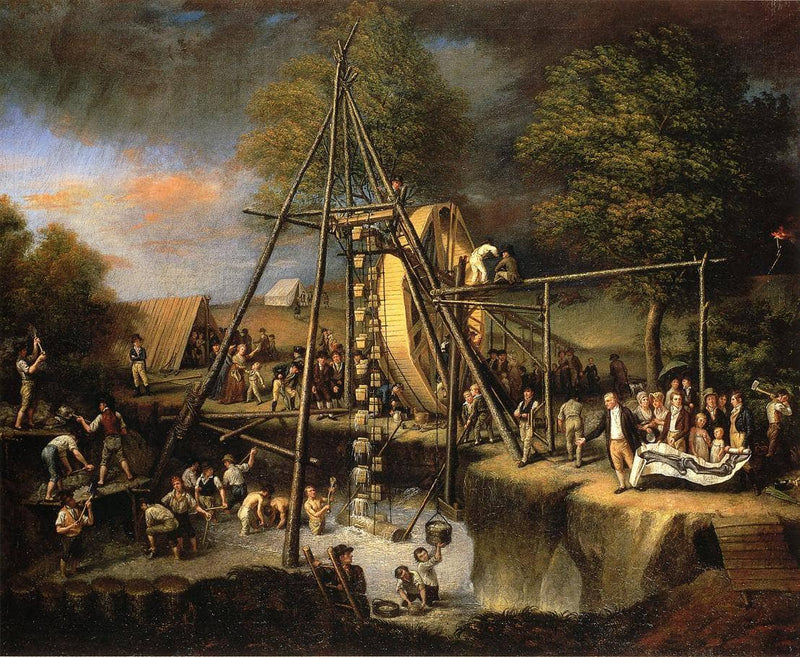
Peale employed masterful oil painting techniques to create depth and realism in "Exhumation of the Mastodon." His use of layering allowed him to build texture, giving the viewer a sense of the rough earth and the intricate details of the mastodon's bones. This technique enhances the painting's visual impact, drawing the audience into the scene.
The color palette of the painting features earthy tones, such as browns, greens, and ochres. These colors symbolize the connection between nature and humanity. The warm hues evoke a sense of nostalgia and reflect the natural landscape of 18th-century America. Peale's choice of colors enhances the painting's themes of exploration and discovery.
Peale's composition skillfully balances the figures of the excavators with the expansive landscape. The arrangement guides the viewer's eye across the canvas, creating a dynamic interaction between the human figures and the mastodon remains. This balance emphasizes the significance of the discovery while showcasing the beauty of the natural world.
"Exhumation of the Mastodon" captures a moment of intense discovery. The painting depicts a group of men carefully excavating the massive bones, their expressions filled with awe and determination. This scene immortalizes the excitement of scientific inquiry and the thrill of uncovering the past.
The figures in the painting include Peale himself, along with fellow naturalists and laborers. Each character represents a different aspect of the scientific community, from the enthusiastic amateur to the dedicated scientist. Their diverse roles highlight the collaborative nature of scientific discovery during this era.
The mastodon stands as an iconic symbol of prehistoric America. These magnificent creatures roamed the continent thousands of years ago, leaving behind a legacy that continues to fascinate us today. Peale's painting not only showcases the mastodon but also serves as a reminder of the rich biodiversity that once existed in North America.
The painting explores the theme of nature versus civilization. It reflects the tension between the encroachment of human development and the preservation of the natural world. Peale's work invites viewers to consider the impact of progress on the environment and the importance of understanding our natural history.
"Exhumation of the Mastodon" exemplifies the intersection of art and science during the 18th century. Peale's ability to blend artistic expression with scientific accuracy showcases the era's belief in the power of observation. This painting serves as a testament to the importance of visual representation in the study of natural history.
The themes of exploration and curiosity resonate throughout the painting. Peale captures the human spirit's desire to uncover the mysteries of the past. This sense of wonder is palpable, inviting viewers to reflect on their own quest for knowledge and understanding of the world around them.
"Exhumation of the Mastodon" has left a lasting impact on both American art and natural history. Peale's innovative approach to depicting scientific subjects paved the way for future artists and naturalists. His work inspired a generation to appreciate the beauty of nature and the importance of scientific inquiry.
Peale's establishment of the Philadelphia Museum marked a significant milestone in the museum movement. His commitment to showcasing natural history specimens helped to educate the public and foster a greater appreciation for the natural world. This legacy continues to influence museums today.
Today, "Exhumation of the Mastodon" remains relevant as it speaks to ongoing discussions about conservation and the importance of understanding our planet's history. Modern interpretations of Peale's work encourage viewers to engage with the themes of exploration and the relationship between humanity and nature.
Peale was inspired by the excitement surrounding the discovery of the mastodon bones in New York. He sought to capture the moment of scientific discovery and the thrill of uncovering the past.
The mastodon was a significant discovery in American paleontology, challenging existing beliefs about prehistoric life and the age of the Earth. It became a symbol of America's natural history.
The painting reflects the 18th-century emphasis on observation and empirical evidence. It showcases the blending of art and science, highlighting the importance of visual representation in understanding natural history.
Peale used oil painting techniques such as layering and texture to create depth and realism. His careful attention to detail enhances the lifelike quality of the scene.
The main themes include the tension between nature and civilization, the intersection of art and science, and the spirit of exploration and curiosity that drives human discovery.
The painting has influenced modern art by inspiring artists to explore themes of nature and science. Peale's innovative approach continues to resonate with contemporary discussions about the environment.
When considering a reproduction of "Exhumation of the Mastodon," opt for a high-quality oil painting reproduction. These reproductions capture the richness and texture of the original artwork, offering a superior alternative to standard prints. They provide a more authentic experience, allowing you to appreciate Peale's artistry in your own space.

Discover some of our latest oil paintings, each one carefully hand-painted on canvas.
At Art & See, we're committed to delivering the highest quality art reproductions. Our team of expert artists and state-of-the-art processes ensure that each piece is a masterpiece in its own right.

Experience your masterpiece's creation through daily photos from our expert artists, each with 15+ years of experience.

Your artwork travels first class via UPS, FedEx, or DHL, protected by museum-grade packaging for safe delivery.

Review unedited photos of your finished painting and request unlimited free revisions before it ships. We only ship when you say it's perfect.

Every piece is crafted with archival materials, UV-resistant finishes, and premium British paints to last generations.


Yes, 100% hand-painted with oil on canvas by artists with 15+ years of experience. No prints, no digital shortcuts. You'll see and feel real brushstrokes, just like the original Charles Willson Peale masterpiece.
Your Exhumation of the Mastadon reproduction takes 2–5 weeks to hand-paint depending on size and detail. Once approved, shipping takes 5–8 days via FedEx, UPS, or DHL with full tracking. Free worldwide shipping included.
Absolutely. Once your Exhumation of the Mastadon is complete, we send you unedited photos, a full view and close-up details. Request unlimited free revisions until you're 100% satisfied. We don't ship until you say "yes."
Every painting goes through our Preview & Approve process: you receive unedited photos of your finished Charles Willson Peale reproduction and can request unlimited free revisions before it ships. We only ship when you say it's perfect. If after delivery you have any concerns, contact us at [email protected] and our team will work with you on the best path forward.
Professional-grade oil paints (Windsor & Newton) on premium linen canvas with UV-resistant protective coating. Museum-grade materials built to last generations, the same quality used in galleries worldwide.
Our artists specialize in Charles Willson Peale's technique: color accuracy, brushwork, and composition are matched to the original. Every reproduction goes through quality review before your approval photos are taken.
Every painting is insured and delivered door-to-door. Unframed paintings ship in protective hard tubes. Framed paintings are bubble-wrapped in sturdy boxes. If anything arrives damaged, we repair or replace it free.
Dive into the vibrant world of Historic Art. Discover your next painting today.