4.9/5
4.9/5




SAMPLES OF QUALITY
Recent Hand-Painted Reproductions
Discover some of our latest oil paintings, each one carefully hand-painted on canvas.

AS SEEN IN






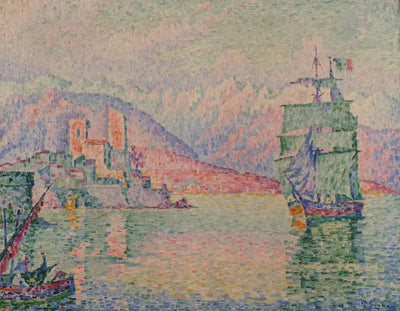
by Paul Signac
Handmade Oil Painting on Canvas Art Reproduction, Museum-quality

The six dominant colors measured from the painting, with the share of canvas each one covers. Click a swatch to copy its hex code.
Processing & Shipping Time
Your delivery time includes two parts:
Shipping Methods
We ship with trusted couriers like FedEx, UPS, and DHL. Every shipment includes a tracking code.
Our goal is to deliver your order safely and quickly.
Shipment Safety Measures
We handle your products with care so they arrive in perfect condition:
Every product is insured and delivered right to your door, so you can feel confident buying from us.
Every Art & See painting is created by artists with 15+ years of experience using professional-grade oil paints and premium linen canvas with UV-resistant protective coating, the same museum-grade materials used in galleries worldwide. Each piece goes through quality review before your approval photos are taken. If after delivery you have any concerns about your painting, contact us at [email protected] and our team will work with you on the best path forward.
Full Warranty
Every painting is protected against physical damage during shipping. If your painting arrives damaged, we repair or replace it, free of charge.
Coverage Details
Transit damage (crushed, torn, water damage): we repair or replace at no cost. Please note that damages resulting from accidents or inappropriate use are not covered under this warranty.
Repair or Replace
Depending on the extent of damage, the affected painting will either be repaired or replaced at no additional cost to you.
Free Service
All warranty services are provided absolutely free of charge.
We want you to absolutely love your handmade artwork. Here's how it works:
In the rare case you approve the photos and the artwork has been shipped and delivered to you, and you still want additional modification requests, we can handle it as a courtesy at our discretion. If accepted, you cover the return shipping cost.
| Type | Hand-Painted Oil Painting Reproduction |
| Original Artist | Paul Signac |
| Price Range | $350 to $1,150 |
| Shipping | Free Worldwide |
| Returns | 90-Day Returns |
| Medium | Oil on Canvas |
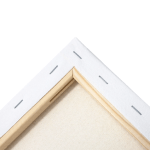
| Canvas | Museum-Grade Linen Canvas |
| Technique | Hand-painted brushstroke-by-brushstroke |
| Art Style | Pointillism |
| Period | 19th Century |
| Artist Nationality | French |
| Orientation | Horizontal |
| Subject | Botanicals, Botanicals leaf, Botanicals tree, Landscapes forest |
| Available Sizes | 7 (26'' W × 18'' H to 70'' W × 49'' H, including the original size), plus custom sizes |
| Framing Options | Unframed, Stretched Canvas, Classic & Modern Frames |
| Delivery | 14–28 business days |
| Size | 47 × 33 cm (18.5 × 13 in) |
| Year | 1886 |
Paul Signac, born in 1863 in Paris, was a pioneering French painter known for his vibrant use of color and innovative techniques. He played a crucial role in the development of Neo-Impressionism, a movement that emphasized the optical effects of color. Signac's artistic journey began in the late 19th century, a time when Paris was a hub of artistic experimentation and cultural evolution.
Signac's early work was heavily influenced by the Pointillist technique, which he mastered alongside Georges Seurat. This method involved applying small dots of color to create a cohesive image when viewed from a distance. Over time, Signac evolved his style, embracing broader brush strokes and a more expressive use of color, which became hallmarks of his Neo-Impressionist works.
The vibrant Parisian art scene of the late 19th century greatly influenced Signac. He was inspired by the works of Impressionists like Claude Monet and Edgar Degas, as well as the Symbolist movement. The bustling life of Paris, with its cafes, parks, and railways, provided a rich tapestry of subjects for his paintings, including the iconic 'The Railway at Bois Colombes.'
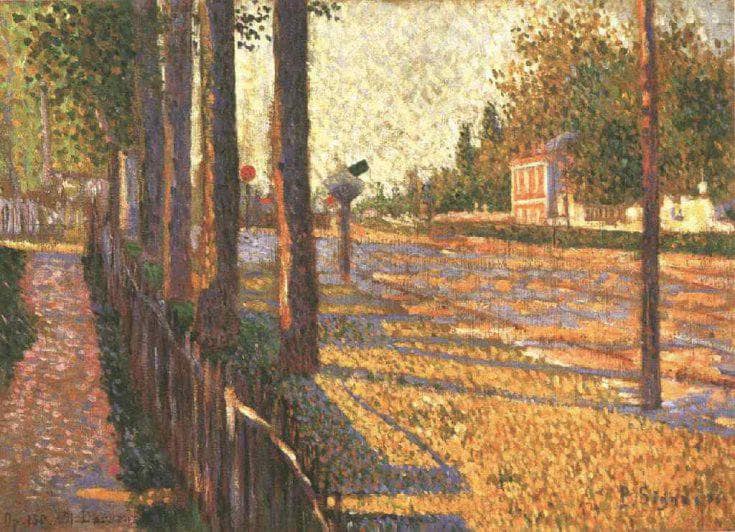
In 'The Railway at Bois Colombes,' Signac employs the Pointillist technique to create a mesmerizing visual experience. Each dot of paint contributes to the overall composition, allowing the viewer to engage with the artwork on multiple levels. This meticulous method showcases Signac's dedication to capturing light and movement.
Signac's use of color in this painting is striking. He carefully selected hues that evoke the warmth of a sunny day, with vibrant greens, blues, and yellows. This color palette not only enhances the beauty of the scene but also reflects the emotional resonance of the moment, inviting viewers to feel the energy of the railway and its surroundings.
The brushwork in 'The Railway at Bois Colombes' is dynamic and fluid. Signac's technique creates a sense of movement, as if the train is about to depart. The texture of the paint adds depth, making the landscape feel alive. This interplay of brushwork and color draws the viewer into the scene, creating an immersive experience.
'The Railway at Bois Colombes' captures the tension between industrialization and the natural world. The train symbolizes progress, while the lush greenery represents the beauty of nature. This duality reflects the changing landscape of France during the late 19th century, where technology began to reshape the environment.
The train in Signac's painting serves as a powerful symbol of progress and change. It represents the rapid industrial growth of the era, connecting people and places like never before. This theme resonates with viewers, as it reflects the transformative power of technology in society.
Signac's work encapsulates the essence of modern life in late 19th century France. The scene depicts everyday activities, from the train's arrival to the people interacting with their environment. This focus on daily life highlights the importance of capturing the ordinary moments that define a culture.
The composition of 'The Railway at Bois Colombes' is masterfully arranged. Signac uses perspective to guide the viewer's eye towards the train, creating a focal point that draws attention. The arrangement of figures and landscape elements enhances the sense of depth, inviting viewers to explore the entire scene.
Light plays a crucial role in this painting. Signac skillfully captures the interplay of light and shadow, creating a sense of time and atmosphere. The bright sunlight illuminates the train and the surrounding landscape, while shadows add depth and dimension, enhancing the overall visual impact.
The figures in 'The Railway at Bois Colombes' interact harmoniously with the landscape. They represent the human experience within the natural world, emphasizing the connection between people and their environment. This relationship is central to understanding the painting's themes of modernity and progress.
The late 19th century was a period of significant transformation in France. The rise of industrialization brought about changes in society, economy, and culture. Railways became a vital part of urban development, connecting cities and facilitating trade and travel.
Railways played a crucial role in shaping modern cities. They enabled the movement of goods and people, leading to the growth of urban areas. Signac's painting reflects this transformation, showcasing the railway as a symbol of progress and connectivity in a rapidly changing world.
Paul Signac occupies a unique position in art history. He served as a bridge between Impressionism and modern art movements. His innovative techniques and vibrant color palette influenced many artists, paving the way for future generations to explore new artistic expressions.
When compared to other Neo-Impressionist artists, Signac's work stands out for its bold use of color and dynamic compositions. While artists like Seurat focused on meticulous detail, Signac embraced a more expressive approach, allowing for greater emotional resonance in his paintings.
Signac often explored themes of modernity and nature in his other works. Paintings like 'Port of Saint-Tropez' and 'The Pine Tree at Saint-Tropez' reflect similar motifs of industrialization and the beauty of the natural world. This thematic consistency showcases his dedication to capturing the essence of his time.
Signac's innovative techniques and vibrant style have left a lasting impact on future generations of artists. His approach to color and composition inspired movements such as Fauvism and Abstract Expressionism. Many contemporary artists continue to draw inspiration from his work, highlighting his significance in art history.
The original 'The Railway at Bois Colombes' is housed in the Musée d'Orsay in Paris. This renowned museum is easily accessible and offers a rich collection of Impressionist and Post-Impressionist masterpieces. Visitors can immerse themselves in the world of Signac and his contemporaries.
Throughout the year, the Musée d'Orsay hosts various exhibitions and events that celebrate the legacy of Paul Signac. These events provide opportunities for art lovers to engage with his work and learn more about his contributions to the art world.
Art tours in Paris often include visits to the Musée d'Orsay, where 'The Railway at Bois Colombes' is featured. These guided tours offer insights into the Neo-Impressionist movement and Signac's role within it, enriching the visitor experience and deepening appreciation for his art.
The train symbolizes progress and the rapid changes brought by industrialization, reflecting the transformative power of technology in society.
The painting captures the essence of modern life, showcasing the interaction between industrial progress and the natural environment during a time of significant change.
Signac used the Pointillist technique, applying small dots of color to create a vibrant and dynamic composition that captures light and movement.
You can see the original painting at the Musée d'Orsay in Paris, which houses an extensive collection of Impressionist and Post-Impressionist art.
The main themes include industrialization, the relationship between nature and technology, and the depiction of everyday life in a modernizing society.
It shares similar themes of modernity and nature with Signac's other works, but stands out for its vibrant color palette and dynamic composition.
Reproductions of 'The Railway at Bois Colombes' are superior to prints, as they capture the texture and depth of the original painting, allowing art lovers to appreciate Signac's technique in detail.
Yes, the Musée d'Orsay frequently features exhibitions that highlight Signac's work, providing opportunities to engage with his artistic legacy.

Discover some of our latest oil paintings, each one carefully hand-painted on canvas.
At Art & See, we're committed to delivering the highest quality art reproductions. Our team of expert artists and state-of-the-art processes ensure that each piece is a masterpiece in its own right.

Experience your masterpiece's creation through daily photos from our expert artists, each with 15+ years of experience.

Your artwork travels first class via UPS, FedEx, or DHL, protected by museum-grade packaging for safe delivery.

Review unedited photos of your finished painting and request unlimited free revisions before it ships. We only ship when you say it's perfect.

Every piece is crafted with archival materials, UV-resistant finishes, and premium British paints to last generations.
Yes, 100% hand-painted with oil on canvas by artists with 15+ years of experience. No prints, no digital shortcuts. You'll see and feel real brushstrokes, just like the original Paul Signac masterpiece.
Your The Railway at Bois Colombes reproduction takes 2–5 weeks to hand-paint depending on size and detail. Once approved, shipping takes 5–8 days via FedEx, UPS, or DHL with full tracking. Free worldwide shipping included.
Absolutely. Once your The Railway at Bois Colombes is complete, we send you unedited photos, a full view and close-up details. Request unlimited free revisions until you're 100% satisfied. We don't ship until you say "yes."
Every painting goes through our Preview & Approve process: you receive unedited photos of your finished Paul Signac reproduction and can request unlimited free revisions before it ships. We only ship when you say it's perfect. If after delivery you have any concerns, contact us at [email protected] and our team will work with you on the best path forward.
Professional-grade oil paints (Windsor & Newton) on premium linen canvas with UV-resistant protective coating. Museum-grade materials built to last generations, the same quality used in galleries worldwide.
Our artists specialize in Paul Signac's technique: color accuracy, brushwork, and composition are matched to the original. Every reproduction goes through quality review before your approval photos are taken.
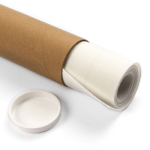
Every painting is insured and delivered door-to-door. Unframed paintings ship in protective hard tubes. Framed paintings are bubble-wrapped in sturdy boxes. If anything arrives damaged, we repair or replace it free.
Dive into the vibrant world of Historic Art. Discover your next painting today.