4.9/5
4.9/5






SAMPLES OF QUALITY
Recent Hand-Painted Reproductions
Discover some of our latest oil paintings, each one carefully hand-painted on canvas.

AS SEEN IN





Handmade Oil Painting on Canvas Art Reproduction, Museum-quality

The six dominant colors measured from the painting, with the share of canvas each one covers. Click a swatch to copy its hex code.
Processing & Shipping Time
Your delivery time includes two parts:
Shipping Methods
We ship with trusted couriers like FedEx, UPS, and DHL. Every shipment includes a tracking code.
Our goal is to deliver your order safely and quickly.
Shipment Safety Measures
We handle your products with care so they arrive in perfect condition:
Every product is insured and delivered right to your door, so you can feel confident buying from us.
Every Art & See painting is created by artists with 15+ years of experience using professional-grade oil paints and premium linen canvas with UV-resistant protective coating, the same museum-grade materials used in galleries worldwide. Each piece goes through quality review before your approval photos are taken. If after delivery you have any concerns about your painting, contact us at [email protected] and our team will work with you on the best path forward.
Full Warranty
Every painting is protected against physical damage during shipping. If your painting arrives damaged, we repair or replace it, free of charge.
Coverage Details
Transit damage (crushed, torn, water damage): we repair or replace at no cost. Please note that damages resulting from accidents or inappropriate use are not covered under this warranty.
Repair or Replace
Depending on the extent of damage, the affected painting will either be repaired or replaced at no additional cost to you.
Free Service
All warranty services are provided absolutely free of charge.
We want you to absolutely love your handmade artwork. Here's how it works:
In the rare case you approve the photos and the artwork has been shipped and delivered to you, and you still want additional modification requests, we can handle it as a courtesy at our discretion. If accepted, you cover the return shipping cost.
| Type | Hand-Painted Oil Painting Reproduction |
| Original Artist | Lorenzo Lotto |
| Price Range | $350 to $1,190 |
| Shipping | Free Worldwide |
| Quality | Preview & Approve Before Shipping |
| Medium | Oil on Canvas |
| Canvas | Museum-Grade Linen Canvas |
| Technique | Hand-painted brushstroke-by-brushstroke |
| Art Style | High Renaissance |
| Period | 17th Century |
| Artist Nationality | Italian |
| Orientation | Vertical |
| Subject | Cultural heritage religious, Portraits group, Religion |
| Available Sizes | 7 (16'' W × 20'' H to 44'' W × 55'' H, including the original size), plus custom sizes |
| Framing Options | Unframed, Stretched Canvas, Classic & Modern Frames |
| Delivery | 14–28 business days |
| Size | 136.5 × 172 cm (53.5 × 67.5 in) |
| Year | 1556 |
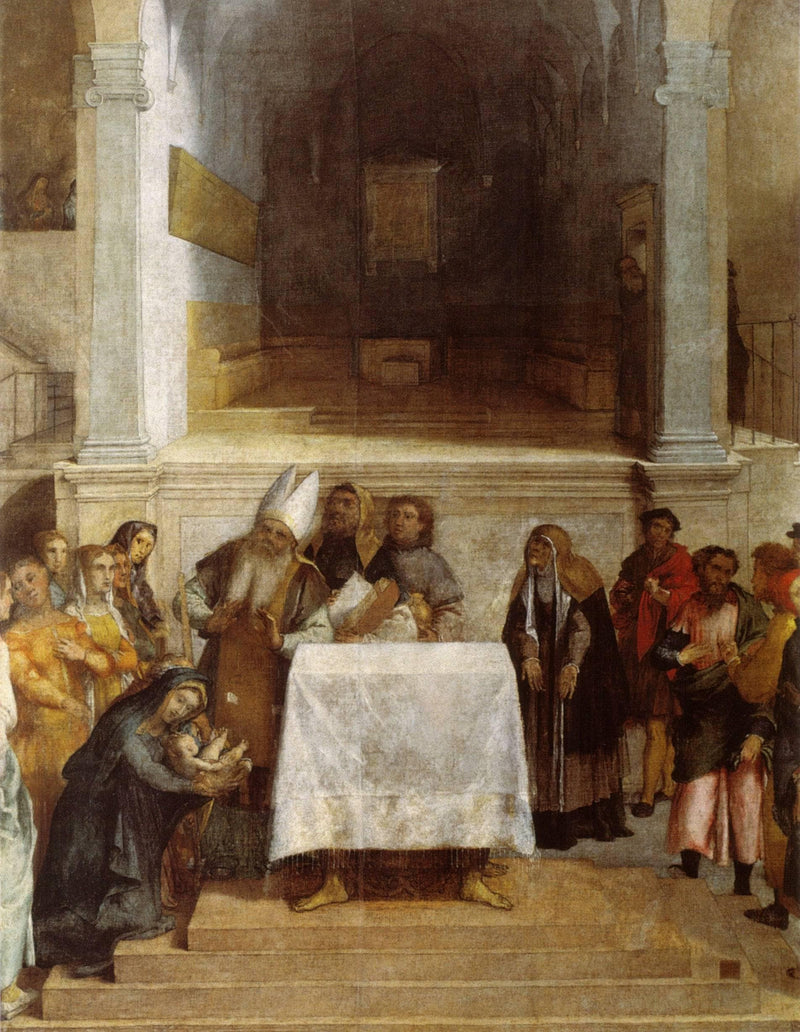
The Presentation of Christ in the Temple holds a vital place in the religious and cultural landscape of 16th century Venice. During this period, the Temple symbolized not only a sacred space but also a center of community life. It was a place where faith, art, and daily life intertwined, reflecting the deep spiritual values of the Venetian people. The act of presenting Christ in the Temple is rooted in Jewish tradition, emphasizing the importance of rituals in both Jewish and Christian faiths.
Lorenzo Lotto, born in 1480, was a prominent figure in the Italian Renaissance. He was known for his unique approach to portraiture and religious themes. Lotto's life was marked by his travels across Italy, from Venice to Bergamo, which influenced his artistic style. His works often reveal a deep understanding of human emotion and spirituality, making him a standout artist of his time. Unlike many of his contemporaries, Lotto focused on the individual stories within his paintings, allowing viewers to connect on a personal level.
The Presentation of Christ in the Temple is a significant event in Christian tradition, celebrated on February 2nd as Candlemas. This moment marks the fulfillment of the Jewish law, where Mary and Joseph present their firstborn son to God. The painting captures this pivotal moment, highlighting the themes of sacrifice, redemption, and divine revelation. Lotto's interpretation invites viewers to reflect on the spiritual journey of Christ and the importance of faith in everyday life.
Lotto masterfully employs color and light to create a dynamic visual experience in The Presentation of Christ in the Temple. His use of vibrant hues contrasts with softer tones, drawing attention to key figures and elements within the composition. The interplay of light and shadow enhances the three-dimensionality of the scene, making it feel alive and engaging. This technique not only highlights the emotional weight of the moment but also reflects the Renaissance fascination with naturalism.
The composition of Lotto's painting is carefully structured to guide the viewer's gaze. He uses diagonal lines and strategic placement of figures to create a sense of movement and depth. The arrangement of characters, including Simeon and Anna, leads the eye toward the central figure of Christ, emphasizing his significance. This thoughtful perspective invites viewers to immerse themselves in the narrative, experiencing the moment as if they were present in the Temple.
Lotto's brushwork showcases his skill in rendering textures, from the delicate fabrics of the characters' garments to the smoothness of Christ's skin. The attention to detail in the clothing and the architectural elements of the Temple adds a layer of realism to the painting. This meticulous approach not only enhances the visual appeal but also reflects the artist's dedication to capturing the essence of his subjects.
Simeon and Anna are pivotal figures in The Presentation of Christ in the Temple. Simeon, a righteous man, symbolizes the fulfillment of prophecy, having been promised by the Holy Spirit that he would see the Messiah before his death. Anna, a prophetess, represents wisdom and devotion. Their presence in the painting underscores the significance of recognizing Christ's divine nature and the joy of salvation.
The ritual of presenting Christ in the Temple is rich with meaning. It signifies obedience to the law and the acknowledgment of Jesus as the Savior. This moment connects the Old and New Testaments, illustrating the continuity of God's plan for humanity. Lotto captures this profound moment, inviting viewers to contemplate the spiritual implications of Christ's arrival.
Color plays a crucial role in conveying symbolism in Lotto's work. The use of gold and white often represents divinity and purity, while darker tones may signify the weight of sin and the need for redemption. Objects within the painting, such as the dove and the scroll, further enhance the narrative, symbolizing the Holy Spirit and the fulfillment of the law, respectively. Each element is carefully chosen to enrich the viewer's understanding of the scene.
Lotto excels at capturing the emotional depth of his characters. The expressions of Simeon and Anna convey a mix of joy, reverence, and fulfillment. Their faces reflect the weight of their experiences and the significance of the moment. This emotional resonance invites viewers to connect with the characters on a personal level, evoking feelings of hope and faith.
The atmosphere in The Presentation of Christ in the Temple is one of reverence and awe. Lotto's careful composition and use of light create a sacred space that feels both intimate and grand. The viewer can sense the spiritual significance of the moment, as if they are witnessing a divine encounter. This emotional engagement is a hallmark of Lotto's artistry, making the painting resonate with audiences even today.
The Presentation of Christ in the Temple continues to resonate with modern viewers due to its timeless themes of faith, hope, and redemption. The emotional expressions and rich symbolism invite contemplation and reflection. In a world often filled with uncertainty, Lotto's painting serves as a reminder of the enduring power of belief and the importance of recognizing the divine in everyday life.
Lotto's style stands out when compared to other Renaissance artists like Titian and Raphael. While Titian focused on bold colors and dramatic compositions, Lotto's approach is more intimate and personal. His attention to detail and emotional depth sets him apart, allowing viewers to connect with the narrative on a deeper level. This unique perspective enriches the Renaissance art movement, showcasing the diversity of artistic expression during this period.
The themes present in The Presentation of Christ in the Temple can be seen in contemporary art as well. Modern artists often explore spirituality, identity, and the human experience, echoing the sentiments expressed by Lotto. This continuity of themes highlights the universal nature of art and its ability to transcend time and cultural boundaries.
Lotto's influence extends beyond his lifetime, impacting future generations of artists. His focus on emotional expression and narrative depth inspired later artists, including Caravaggio and Rembrandt. The techniques he employed, such as chiaroscuro and detailed textures, continue to be studied and admired in art schools today. Lotto's legacy is a testament to the lasting power of his work and its relevance in the art world.
The Presentation of Christ in the Temple is housed in the prestigious Accademia Gallery in Venice, Italy. This location is easily accessible for art lovers and tourists alike. Visitors can immerse themselves in the rich history of Venetian art while experiencing Lotto's masterpiece in its original context. The gallery offers a unique opportunity to appreciate the painting's details up close.
Throughout the year, the Accademia Gallery hosts various exhibitions and events that celebrate Renaissance art. These events provide an engaging way to learn more about Lotto and his contemporaries. Attending these exhibitions allows visitors to deepen their understanding of the cultural and historical significance of The Presentation of Christ in the Temple.
Participating in guided art tours can enhance your experience of The Presentation of Christ in the Temple. Knowledgeable guides share insights into Lotto's techniques, the historical context, and the painting's symbolism. These tours offer a richer understanding of the artwork, making your visit to the gallery even more memorable.
The Presentation of Christ in the Temple depicts the moment when Mary and Joseph present their son, Jesus, to God in accordance with Jewish law. This event highlights the significance of Jesus as the Messiah and fulfills ancient prophecies.
Lotto used oil on canvas, employing techniques such as chiaroscuro to create depth and realism. His careful attention to color and light enhances the emotional impact of the scene.
This painting reflects Renaissance values through its focus on human emotion, individual stories, and the blending of religious themes with naturalism. Lotto's work embodies the spirit of inquiry and exploration characteristic of the era.
Key symbols include the dove, representing the Holy Spirit, and the scroll, symbolizing the fulfillment of the law. The colors used also carry significant meanings, enhancing the painting's narrative.
Lotto's emphasis on emotional expression and narrative depth has influenced modern artists, encouraging them to explore similar themes in their work. His techniques continue to be studied and admired in contemporary art circles.
When reproducing The Presentation of Christ in the Temple, it's essential to focus on capturing the rich colors and textures that Lotto employed. High-quality painting reproductions offer a more authentic experience than standard prints, allowing viewers to appreciate the artwork's details.
To appreciate the details in a reproduction, take time to observe the brushwork, color variations, and the emotional expressions of the characters. Engaging with the artwork on a personal level can enhance your understanding and enjoyment of Lotto's masterpiece.

Discover some of our latest oil paintings, each one carefully hand-painted on canvas.
At Art & See, we're committed to delivering the highest quality art reproductions. Our team of expert artists and state-of-the-art processes ensure that each piece is a masterpiece in its own right.

Experience your masterpiece's creation through daily photos from our expert artists, each with 15+ years of experience.

Your artwork travels first class via UPS, FedEx, or DHL, protected by museum-grade packaging for safe delivery.

Review unedited photos of your finished painting and request unlimited free revisions before it ships. We only ship when you say it's perfect.

Every piece is crafted with archival materials, UV-resistant finishes, and premium British paints to last generations.
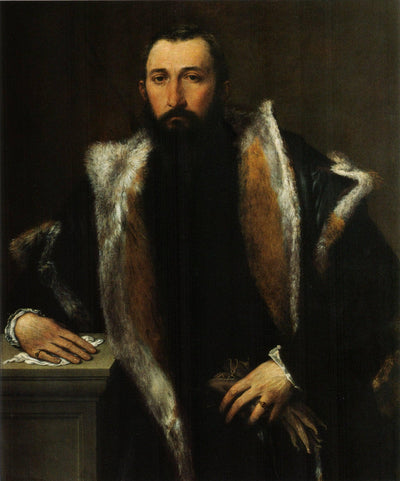

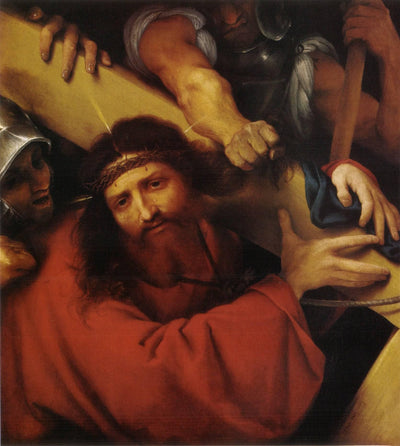
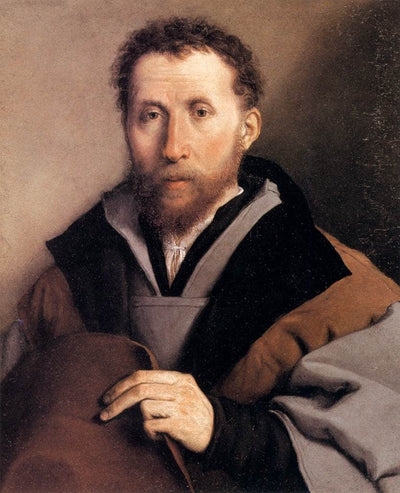

Yes, 100% hand-painted with oil on canvas by artists with 15+ years of experience. No prints, no digital shortcuts. You'll see and feel real brushstrokes, just like the original Lorenzo Lotto masterpiece.
Your The Presentation of Christ in the Temple reproduction takes 2–5 weeks to hand-paint depending on size and detail. Once approved, shipping takes 5–8 days via FedEx, UPS, or DHL with full tracking. Free worldwide shipping included.
Absolutely. Once your The Presentation of Christ in the Temple is complete, we send you unedited photos, a full view and close-up details. Request unlimited free revisions until you're 100% satisfied. We don't ship until you say "yes."
Every painting goes through our Preview & Approve process: you receive unedited photos of your finished Lorenzo Lotto reproduction and can request unlimited free revisions before it ships. We only ship when you say it's perfect. If after delivery you have any concerns, contact us at [email protected] and our team will work with you on the best path forward.
Professional-grade oil paints (Windsor & Newton) on premium linen canvas with UV-resistant protective coating. Museum-grade materials built to last generations, the same quality used in galleries worldwide.
Our artists specialize in Lorenzo Lotto's technique: color accuracy, brushwork, and composition are matched to the original. Every reproduction goes through quality review before your approval photos are taken.
Every painting is insured and delivered door-to-door. Unframed paintings ship in protective hard tubes. Framed paintings are bubble-wrapped in sturdy boxes. If anything arrives damaged, we repair or replace it free.
Dive into the vibrant world of Historic Art. Discover your next painting today.