4.9/5
4.9/5




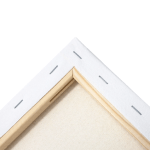


SAMPLES OF QUALITY
Recent Hand-Painted Reproductions
Discover some of our latest oil paintings, each one carefully hand-painted on canvas.

AS SEEN IN





Handmade Oil Painting on Canvas Art Reproduction, Museum-quality

The six dominant colors measured from the painting, with the share of canvas each one covers. Click a swatch to copy its hex code.
Processing & Shipping Time
Your delivery time includes two parts:
Shipping Methods
We ship with trusted couriers like FedEx, UPS, and DHL. Every shipment includes a tracking code.
Our goal is to deliver your order safely and quickly.
Shipment Safety Measures
We handle your products with care so they arrive in perfect condition:
Every product is insured and delivered right to your door, so you can feel confident buying from us.
Every Art & See painting is created by artists with 15+ years of experience using professional-grade oil paints and premium linen canvas with UV-resistant protective coating, the same museum-grade materials used in galleries worldwide. Each piece goes through quality review before your approval photos are taken. If after delivery you have any concerns about your painting, contact us at [email protected] and our team will work with you on the best path forward.
Full Warranty
Every painting is protected against physical damage during shipping. If your painting arrives damaged, we repair or replace it, free of charge.
Coverage Details
Transit damage (crushed, torn, water damage): we repair or replace at no cost. Please note that damages resulting from accidents or inappropriate use are not covered under this warranty.
Repair or Replace
Depending on the extent of damage, the affected painting will either be repaired or replaced at no additional cost to you.
Free Service
All warranty services are provided absolutely free of charge.
We want you to absolutely love your handmade artwork. Here's how it works:
In the rare case you approve the photos and the artwork has been shipped and delivered to you, and you still want additional modification requests, we can handle it as a courtesy at our discretion. If accepted, you cover the return shipping cost.
| Type | Hand-Painted Oil Painting Reproduction |
| Original Artist | Léon Augustin Lhermitte |
| Price Range | $350 to $1,150 |
| Shipping | Free Worldwide |
| Quality | Preview & Approve Before Shipping |
| Medium | Oil on Canvas |
| Canvas | Museum-Grade Linen Canvas |
| Technique | Hand-painted brushstroke-by-brushstroke |
| Art Style | Realism |
| Period | 1920 Century |
| Artist Nationality | French |
| Orientation | Horizontal |
| Subject | Landscapes rural |
| Available Sizes | 7 (20'' W × 16'' H to 66'' W × 53'' H, including the original size), plus custom sizes |
| Framing Options | Unframed, Stretched Canvas, Classic & Modern Frames |
| Delivery | 14–28 business days |
| Size | 81.2 × 64.8 cm (32 × 25.5 in) |
| Year | 1920 |
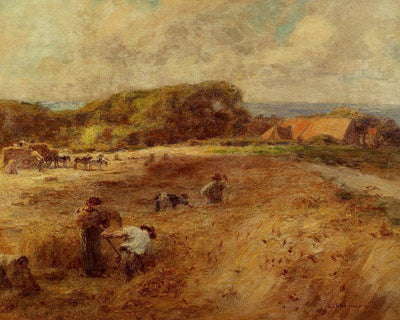
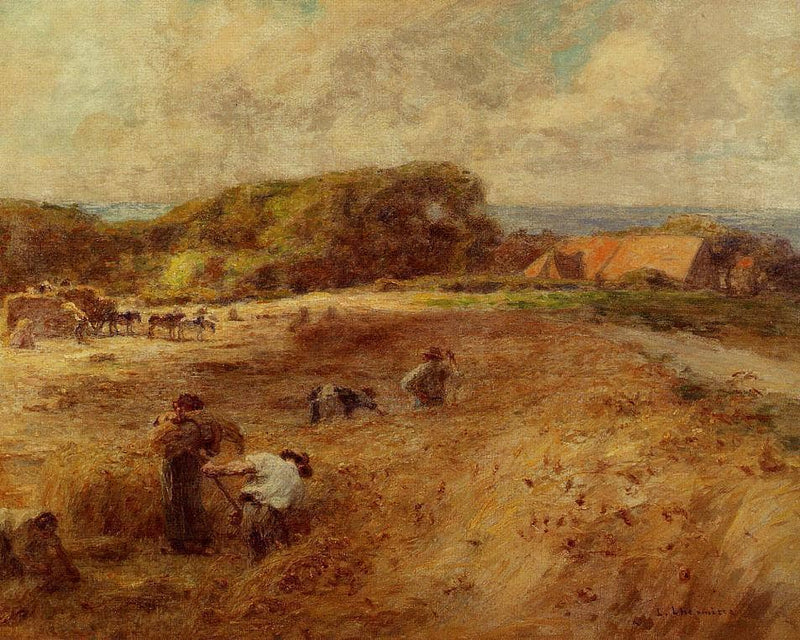
Reapers Near The Sambre Farm, painted by Léon Augustin Lhermitte in 1884, stands as a testament to the 19th-century French Realism movement. This artistic style focused on depicting everyday life with honesty and accuracy. Lhermitte, influenced by the works of Gustave Courbet and Jean-François Millet, embraced the beauty of rural labor and the dignity of the working class. His paintings often reflect the struggles and joys of peasant life, showcasing the importance of agriculture in France's economy and culture.
Lhermitte was born in 1844 in the small town of Mont-Saint-PÉre, France. He grew up in a rural environment that deeply influenced his artistic vision. Throughout his life, he became known for his ability to capture the essence of rural existence. His dedication to portraying the lives of farmers and laborers earned him recognition in the art world. Lhermitte's works often highlight the connection between humanity and nature, making him a significant figure in the Realist movement.
The Realist movement emerged as a reaction against Romanticism, which often idealized nature and human experience. Artists like Lhermitte sought to present a more truthful representation of life. This shift allowed for a deeper exploration of rural themes, emphasizing the hard work and resilience of farmers. Lhermitte's Reapers Near The Sambre Farm exemplifies this focus, showcasing the laborers in the fields with a sense of respect and admiration.
The color palette of Reapers Near The Sambre Farm features rich earthy tones, including deep greens, browns, and golden yellows. These colors symbolize the fertility of the land and the importance of the harvest. The warm hues evoke a sense of warmth and connection to the earth, reflecting the laborers' relationship with their environment. Lhermitte's choice of colors enhances the painting's emotional depth, inviting viewers to appreciate the beauty of rural life.
Lhermitte's composition skillfully balances the elements of nature and human labor. The figures of the reapers are positioned against the backdrop of the Sambre River, creating a harmonious relationship between the workers and their surroundings. This balance emphasizes the theme of coexistence, highlighting how human effort is intertwined with the natural world. The arrangement draws the viewer's eye across the canvas, creating a sense of movement and life.
Lhermitte's brushwork in Reapers Near The Sambre Farm is both expressive and deliberate. He employs a technique that captures the dynamic movements of the laborers as they harvest the crops. The visible brushstrokes convey a sense of urgency and energy, reflecting the hard work involved in the harvest. This technique not only brings the scene to life but also evokes the emotions tied to the labor and the changing seasons.
At its core, Reapers Near The Sambre Farm explores the theme of labor and the human condition. Lhermitte portrays the reapers with dignity, showcasing their hard work and perseverance. This painting serves as a reminder of the importance of agricultural labor in sustaining communities. It reflects the struggles and triumphs of rural life, inviting viewers to connect with the experiences of the laborers.
The Sambre River plays a significant role in the painting, acting as a silent witness to the labor taking place. The river symbolizes the passage of time and the cycles of nature. It reflects the changing seasons and the importance of water in agriculture. Lhermitte's inclusion of the river adds depth to the narrative, emphasizing the interconnectedness of human life and the natural world.
Harvest time is a crucial theme in Reapers Near The Sambre Farm. The painting captures the essence of autumn, a season associated with abundance and gratitude. This time of year is vital for farmers, as it represents the culmination of their hard work. Lhermitte's depiction of the harvest evokes feelings of celebration and reflection, highlighting the significance of this seasonal change in rural life.
When compared to other Realist artists, Lhermitte's style stands out for its emotional depth and attention to detail. While artists like Courbet focused on social issues, Lhermitte emphasized the beauty of everyday labor. His approach offers a more intimate portrayal of rural life, inviting viewers to appreciate the dignity of the working class.
Lhermitte's work has influenced many artists who followed him. His focus on rural themes and the human experience paved the way for later movements, including Impressionism. Artists like Vincent van Gogh and Claude Monet drew inspiration from Lhermitte's ability to capture the essence of nature and labor, further developing these themes in their own works.
Impressionist and Post-Impressionist artists often explored similar themes of nature and labor. They built upon Lhermitte's foundation, using light and color to convey emotion and movement. The connection between Lhermitte's work and these later movements highlights the lasting impact of his artistic vision on the evolution of modern art.
Reapers Near The Sambre Farm resonates with viewers on a personal level. Many people find a connection to their own experiences of rural life or the stories of their ancestors. The painting evokes nostalgia and appreciation for the hard work that sustains communities. This emotional connection enhances the viewer's experience, making the artwork more impactful.
Modern audiences often reflect on the themes of labor and nature presented in Lhermitte's painting. It prompts discussions about the value of hard work and the importance of agriculture in today's society. The painting serves as a reminder of the beauty found in everyday life, encouraging viewers to appreciate the simple yet profound moments of existence.
Reapers Near The Sambre Farm is currently housed in a prominent museum, where it continues to be appreciated by art lovers and scholars alike. The painting has been featured in various exhibitions, showcasing Lhermitte's contributions to the Realist movement. Its presence in galleries allows new generations to discover and engage with this remarkable work of art.
Conservation efforts for 19th-century oil paintings like Reapers Near The Sambre Farm are crucial for preserving their integrity. Experts use advanced techniques to restore and protect these artworks from deterioration. These efforts ensure that future generations can enjoy and learn from Lhermitte's masterpiece.
Reapers Near The Sambre Farm plays a significant role in art education. It serves as an example of the Realist movement and its focus on rural life. Students and art enthusiasts study this painting to understand the techniques and themes that define Lhermitte's work. Its educational value contributes to a greater appreciation of art history and the importance of cultural heritage.
The story behind Reapers Near The Sambre Farm revolves around the depiction of laborers harvesting crops along the Sambre River. Lhermitte captures the essence of rural life, celebrating the hard work and dedication of farmers during the harvest season.
Lhermitte's upbringing in a rural environment greatly influenced his artistic vision. His experiences shaped his understanding of the struggles and joys of agricultural life, which he beautifully portrays in this painting.
Lhermitte employed a combination of expressive brushwork and a rich color palette to create movement and emotion in Reapers Near The Sambre Farm. His attention to detail and composition enhances the overall impact of the painting.
The prevalent themes in Reapers Near The Sambre Farm include labor, the human condition, and the relationship between nature and humanity. The painting reflects the significance of harvest time and the dignity of rural work.
Art critics have praised Reapers Near The Sambre Farm for its emotional depth and realistic portrayal of rural life. Lhermitte's ability to capture the essence of labor has earned him recognition as a key figure in the Realist movement.
When considering a reproduction of Reapers Near The Sambre Farm, it's important to note that painting reproductions offer a superior quality compared to prints. They capture the texture and vibrancy of the original artwork, allowing you to appreciate Lhermitte's techniques in your own space.
Reapers Near The Sambre Farm has been featured in several notable exhibitions, showcasing Lhermitte's contributions to the art world. These exhibitions highlight the significance of his work and its impact on the Realist movement.

Discover some of our latest oil paintings, each one carefully hand-painted on canvas.
At Art & See, we're committed to delivering the highest quality art reproductions. Our team of expert artists and state-of-the-art processes ensure that each piece is a masterpiece in its own right.

Experience your masterpiece's creation through daily photos from our expert artists, each with 15+ years of experience.

Your artwork travels first class via UPS, FedEx, or DHL, protected by museum-grade packaging for safe delivery.

Review unedited photos of your finished painting and request unlimited free revisions before it ships. We only ship when you say it's perfect.

Every piece is crafted with archival materials, UV-resistant finishes, and premium British paints to last generations.
Yes, 100% hand-painted with oil on canvas by artists with 15+ years of experience. No prints, no digital shortcuts. You'll see and feel real brushstrokes, just like the original Léon Augustin Lhermitte masterpiece.
Your Reapers Near The Sambre Farm reproduction takes 2–5 weeks to hand-paint depending on size and detail. Once approved, shipping takes 5–8 days via FedEx, UPS, or DHL with full tracking. Free worldwide shipping included.
Absolutely. Once your Reapers Near The Sambre Farm is complete, we send you unedited photos, a full view and close-up details. Request unlimited free revisions until you're 100% satisfied. We don't ship until you say "yes."
Every painting goes through our Preview & Approve process: you receive unedited photos of your finished Léon Augustin Lhermitte reproduction and can request unlimited free revisions before it ships. We only ship when you say it's perfect. If after delivery you have any concerns, contact us at [email protected] and our team will work with you on the best path forward.
Professional-grade oil paints (Windsor & Newton) on premium linen canvas with UV-resistant protective coating. Museum-grade materials built to last generations, the same quality used in galleries worldwide.
Our artists specialize in Léon Augustin Lhermitte's technique: color accuracy, brushwork, and composition are matched to the original. Every reproduction goes through quality review before your approval photos are taken.
Every painting is insured and delivered door-to-door. Unframed paintings ship in protective hard tubes. Framed paintings are bubble-wrapped in sturdy boxes. If anything arrives damaged, we repair or replace it free.
Dive into the vibrant world of Historic Art. Discover your next painting today.