4.9/5
4.9/5






SAMPLES OF QUALITY
Recent Hand-Painted Reproductions
Discover some of our latest oil paintings, each one carefully hand-painted on canvas.

AS SEEN IN





Handmade Oil Painting on Canvas Art Reproduction, Museum-quality

The six dominant colors measured from the painting, with the share of canvas each one covers. Click a swatch to copy its hex code.
Processing & Shipping Time
Your delivery time includes two parts:
Shipping Methods
We ship with trusted couriers like FedEx, UPS, and DHL. Every shipment includes a tracking code.
Our goal is to deliver your order safely and quickly.
Shipment Safety Measures
We handle your products with care so they arrive in perfect condition:
Every product is insured and delivered right to your door, so you can feel confident buying from us.
Every Art & See painting is created by artists with 15+ years of experience using professional-grade oil paints and premium linen canvas with UV-resistant protective coating, the same museum-grade materials used in galleries worldwide. Each piece goes through quality review before your approval photos are taken. If after delivery you have any concerns about your painting, contact us at [email protected] and our team will work with you on the best path forward.
Full Warranty
Every painting is protected against physical damage during shipping. If your painting arrives damaged, we repair or replace it, free of charge.
Coverage Details
Transit damage (crushed, torn, water damage): we repair or replace at no cost. Please note that damages resulting from accidents or inappropriate use are not covered under this warranty.
Repair or Replace
Depending on the extent of damage, the affected painting will either be repaired or replaced at no additional cost to you.
Free Service
All warranty services are provided absolutely free of charge.
We want you to absolutely love your handmade artwork. Here's how it works:
In the rare case you approve the photos and the artwork has been shipped and delivered to you, and you still want additional modification requests, we can handle it as a courtesy at our discretion. If accepted, you cover the return shipping cost.
| Type | Hand-Painted Oil Painting Reproduction |
| Original Artist | John Everett Millais |
| Price Range | $350 to $1,120 |
| Shipping | Free Worldwide |
| Returns | 90-Day Returns |
| Medium | Oil on Canvas |
| Canvas | Museum-Grade Linen Canvas |
| Technique | Hand-painted brushstroke-by-brushstroke |
| Art Style | Romanticism |
| Period | 19th Century |
| Artist Nationality | British |
| Orientation | Horizontal |
| Subject | Animal art, Animal art horse, Cultural heritage, Cultural heritage mythology, Fantasy, Landscapes, Landscapes lake, Portraits, Portraits group |
| Available Sizes | 7 (21'' W × 15'' H to 57'' W × 42'' H, including the original size), plus custom sizes |
| Framing Options | Unframed, Stretched Canvas, Classic & Modern Frames |
| Delivery | 14–28 business days |
| Size | 171.5 × 125.5 cm (67.5 × 49.5 in) |
| Year | 1857 |
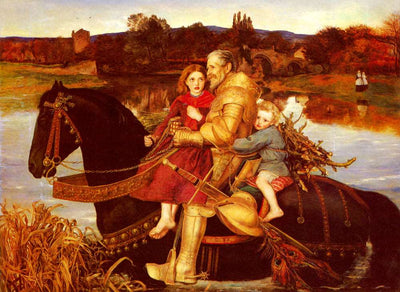
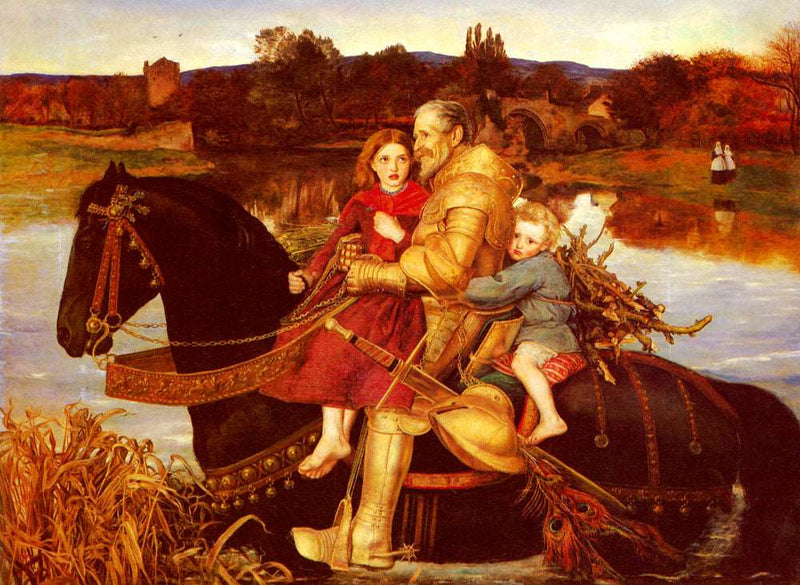
Sir Isumbras is a legendary figure from medieval literature, known for his noble quests and chivalric values. The tale recounts his trials, including a journey across a treacherous ford, symbolizing the challenges of honor and duty. This narrative resonates with themes of sacrifice and redemption, making it a rich source of inspiration for artists like John Everett Millais.
Millais painted during the Victorian Era, a time marked by a fascination with medievalism and romanticism. The Pre-Raphaelite Brotherhood, which Millais co-founded, sought to revive the detailed realism and vibrant colors of early Renaissance art. This cultural backdrop influenced Millais' portrayal of Sir Isumbras, infusing the painting with a sense of nostalgia and moral complexity.
In the 19th century, art often served as a mirror to societal values and struggles. Millais' work reflects the Victorian ideals of chivalry, duty, and the moral dilemmas faced by individuals. The symbolism in "Sir Isumbras at the Ford" invites viewers to contemplate the nature of sacrifice and the human condition, making it a timeless piece of art.
John Everett Millais began his artistic journey as a founding member of the Pre-Raphaelite Brotherhood in 1848. His early works showcased a commitment to detail and vibrant color, setting him apart from his contemporaries. Over time, Millais evolved into a leading figure in Victorian art, blending realism with romantic themes.
Millais was known for his meticulous brushwork and innovative techniques. He often employed layering and glazing to achieve depth and luminosity in his paintings. In "Sir Isumbras at the Ford," his skillful application of oil paints brings the scene to life, capturing the intricate details of the figures and landscape.
Millais' influence extended beyond the Pre-Raphaelite movement. His approach to color, composition, and emotional expression inspired future generations of artists. His ability to blend narrative with visual beauty set a standard for storytelling in art, making him a pivotal figure in the transition to modern art.
The color palette of "Sir Isumbras at the Ford" is rich and evocative. Millais used deep greens and earthy tones to create a sense of realism and connection to nature. The contrasting colors of the figures against the landscape enhance the emotional impact, drawing viewers into the narrative.
Millais expertly arranged the composition to guide the viewer's eye through the painting. The placement of Sir Isumbras in the foreground, with the ford and landscape receding into the background, creates a sense of depth. This perspective invites viewers to engage with the story unfolding before them.
The figures in "Sir Isumbras at the Ford" are rendered with remarkable detail and expressiveness. Millais captured the emotions of the characters, from determination to vulnerability. This focus on human emotion adds a layer of relatability, making the painting resonate with audiences across generations.
Chivalry and sacrifice are central themes in "Sir Isumbras at the Ford." The painting illustrates the noble ideals of the medieval knight, emphasizing the importance of duty and honor. Sir Isumbras' journey symbolizes the sacrifices made in the name of love and loyalty, reflecting the values of the time.
The landscape in Millais' painting serves as more than just a backdrop; it enhances the narrative. The lush greenery and flowing water symbolize the challenges and beauty of nature. This connection between the figures and their environment underscores the harmony between humanity and the natural world.
Religious undertones permeate "Sir Isumbras at the Ford." The act of crossing the ford can be interpreted as a spiritual journey, representing trials faced in life. Millais often infused his works with spiritual significance, inviting viewers to reflect on deeper meanings beyond the surface narrative.
When compared to other Pre-Raphaelite works, "Sir Isumbras at the Ford" stands out for its narrative depth and emotional resonance. While many Pre-Raphaelite paintings focus on beauty and idealism, Millais' piece delves into the complexities of human experience, making it a unique contribution to the movement.
Millais was influenced by contemporary artists, including Dante Gabriel Rossetti and Edward Burne-Jones. Their shared commitment to detail and storytelling can be seen in "Sir Isumbras at the Ford." This collaboration of ideas enriched the Pre-Raphaelite movement and shaped Millais' artistic vision.
Unlike some of his peers, Millais combined realism with a strong narrative focus in "Sir Isumbras at the Ford." His ability to convey emotion through color and composition sets this painting apart. Millais' unique approach to storytelling through art continues to captivate audiences today.
Millais mastered oil painting techniques, particularly layering and glazing. These methods allowed him to create rich textures and luminous colors in "Sir Isumbras at the Ford." The depth achieved through these techniques enhances the overall visual experience, making the painting a true masterpiece.
The craftsmanship in "Sir Isumbras at the Ford" is exceptional. Millais paid close attention to the details of the figures' clothing and the natural elements surrounding them. This meticulous approach adds a tactile quality to the painting, inviting viewers to appreciate the artistry involved.
Millais' innovative use of light and shadow creates a sense of depth and dimension in the painting. The interplay of light highlights the figures while casting shadows that enhance the drama of the scene. This technique draws viewers into the narrative, making them feel part of the story.
Upon its debut, "Sir Isumbras at the Ford" received mixed reviews. Some critics praised Millais for his technical skill and emotional depth, while others found the subject matter unconventional. Over time, however, the painting gained recognition as a significant work of art, appreciated for its narrative complexity.
Today, "Sir Isumbras at the Ford" is celebrated for its rich storytelling and emotional depth. Modern interpretations often explore themes of sacrifice and the human experience, making it relevant in contemporary discussions about art and society. Millais' work continues to inspire artists and art lovers alike.
"Sir Isumbras at the Ford" is part of the collection at the Tate Britain in London. This prestigious institution showcases Millais' work alongside other masterpieces of the Victorian era. Art enthusiasts can also find high-quality reproductions of this painting, which offer a superior alternative to standard prints, allowing for a more authentic appreciation of Millais' artistry.
The painting depicts Sir Isumbras, a knight on a quest, facing trials that test his honor and bravery. His journey across the ford symbolizes the challenges of life and the sacrifices made for love and duty.
Millais' style evolved from the detailed realism of the Pre-Raphaelite Brotherhood to a broader range of subjects and techniques. He incorporated more impressionistic elements in his later works while maintaining a focus on emotional depth.
The main themes include chivalry, sacrifice, and the relationship between humanity and nature. The painting invites viewers to reflect on the moral dilemmas faced by individuals in their quests for honor.
"Sir Isumbras at the Ford" stands out for its narrative complexity and emotional resonance. While many of Millais' works focus on beauty, this painting delves into the struggles and sacrifices of its characters.
Millais used oil painting techniques such as layering and glazing to achieve depth and luminosity. His meticulous attention to detail and innovative use of light and shadow enhance the overall impact of the painting.
High-quality reproductions of "Sir Isumbras at the Ford" are available from various art retailers. These reproductions offer a superior alternative to prints, allowing art lovers to enjoy the intricate details and vibrant colors of Millais' masterpiece.
Currently, "Sir Isumbras at the Ford" is part of the Tate Britain's collection. The museum frequently hosts exhibitions that highlight Millais' work, providing opportunities for visitors to engage with this iconic painting.

Discover some of our latest oil paintings, each one carefully hand-painted on canvas.
At Art & See, we're committed to delivering the highest quality art reproductions. Our team of expert artists and state-of-the-art processes ensure that each piece is a masterpiece in its own right.

Experience your masterpiece's creation through daily photos from our expert artists, each with 15+ years of experience.

Your artwork travels first class via UPS, FedEx, or DHL, protected by museum-grade packaging for safe delivery.

Review unedited photos of your finished painting and request unlimited free revisions before it ships. We only ship when you say it's perfect.

Every piece is crafted with archival materials, UV-resistant finishes, and premium British paints to last generations.
Yes, 100% hand-painted with oil on canvas by artists with 15+ years of experience. No prints, no digital shortcuts. You'll see and feel real brushstrokes, just like the original John Everett Millais masterpiece.
Your A Dream of the Past: Sir Isumbras at the Ford reproduction takes 2–5 weeks to hand-paint depending on size and detail. Once approved, shipping takes 5–8 days via FedEx, UPS, or DHL with full tracking. Free worldwide shipping included.
Absolutely. Once your A Dream of the Past: Sir Isumbras at the Ford is complete, we send you unedited photos, a full view and close-up details. Request unlimited free revisions until you're 100% satisfied. We don't ship until you say "yes."
Every painting goes through our Preview & Approve process: you receive unedited photos of your finished John Everett Millais reproduction and can request unlimited free revisions before it ships. We only ship when you say it's perfect. If after delivery you have any concerns, contact us at [email protected] and our team will work with you on the best path forward.
Professional-grade oil paints (Windsor & Newton) on premium linen canvas with UV-resistant protective coating. Museum-grade materials built to last generations, the same quality used in galleries worldwide.
Our artists specialize in John Everett Millais's technique: color accuracy, brushwork, and composition are matched to the original. Every reproduction goes through quality review before your approval photos are taken.
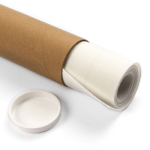
Every painting is insured and delivered door-to-door. Unframed paintings ship in protective hard tubes. Framed paintings are bubble-wrapped in sturdy boxes. If anything arrives damaged, we repair or replace it free.
Dive into the vibrant world of Historic Art. Discover your next painting today.