4.7/5
4.7/5






SAMPLES OF QUALITY
Recent Hand-Painted Reproductions
Discover some of our latest oil paintings, each one carefully hand-painted on canvas.


AS SEEN IN


Handmade Oil Painting on Canvas Art Reproduction, Museum-quality
Original size: the exact size Giulio Romano painted it.
Not the size you want? Type your width and height and we'll paint it to fit, 12 to 80 in (30 to 203 cm) per side.

The six dominant colors measured from the painting, with the share of canvas each one covers. Click a swatch to copy its hex code.
Processing & Shipping Time
Your delivery time includes two parts:
Shipping Methods
We ship with trusted couriers like FedEx, UPS, and DHL. Every shipment includes a tracking code.
Our goal is to deliver your order safely and quickly.
Shipment Safety Measures
We handle your products with care so they arrive in perfect condition:
Every product is insured and delivered right to your door, so you can feel confident buying from us.
Every Art & See painting is created by artists with 15+ years of experience using professional-grade oil paints and premium linen canvas with UV-resistant protective coating, the same museum-grade materials used in galleries worldwide. Each piece goes through quality review before your approval photos are taken. If after delivery you have any concerns about your painting, contact us at [email protected] and our team will work with you on the best path forward.
Full Warranty
Every painting is protected against physical damage during shipping. If your painting arrives damaged, we repair or replace it, free of charge.
Coverage Details
Transit damage (crushed, torn, water damage): we repair or replace at no cost. Please note that damages resulting from accidents or inappropriate use are not covered under this warranty.
Repair or Replace
Depending on the extent of damage, the affected painting will either be repaired or replaced at no additional cost to you.
Free Service
All warranty services are provided absolutely free of charge.
We want you to absolutely love your handmade artwork. Here's how it works:
In the rare case you approve the photos and the artwork has been shipped and delivered to you, and you still want additional modification requests, we can handle it as a courtesy at our discretion. If accepted, you cover the return shipping cost.
| Type | Hand-Painted Oil Painting Reproduction |
| Original Artist | Giulio Romano |
| Price Range | $350 to $1,150 |
| Shipping | Free Worldwide |
| Quality | Preview & Approve Before Shipping |
| Medium | Oil on Canvas |
| Canvas | Museum-Grade Linen Canvas |
| Technique | Hand-painted brushstroke-by-brushstroke |
| Art Style | Mannerism Late Renaissance |
| Period | 17th Century |
| Artist Nationality | Italian |
| Orientation | Horizontal |
| Subject | Cultural heritage, Cultural heritage mythology, Cultural heritage religious, Fantasy, Portraits group |
| Available Sizes | 7 (18'' W × 17'' H to 61'' W × 57'' H, including the original size), plus custom sizes |
| Framing Options | Unframed, Stretched Canvas, Classic & Modern Frames |
| Delivery | 14–28 business days |
| Size | 122 × 115 cm (48 × 45.5 in) |
| Year | 1525 |
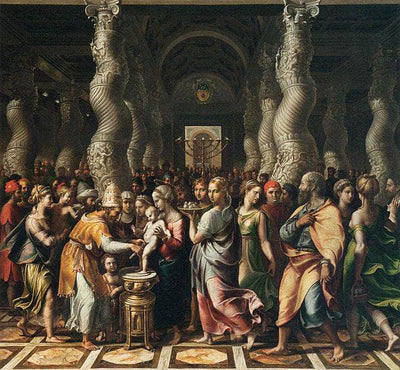
Giulio Romano, a prominent figure of the High Renaissance, created The Circumcision during a time of great artistic innovation. This period, spanning the late 15th to early 16th centuries, was marked by a renewed interest in classical antiquity and humanism. Artists like Romano drew inspiration from the works of masters such as Leonardo da Vinci and Michelangelo, blending realism with idealism. The Circumcision reflects these influences through its dynamic composition and emotional depth.
The theme of circumcision holds profound religious significance in Christian art. It symbolizes the covenant between God and His people, marking the introduction of Jesus into the Jewish faith. This event, celebrated on the eighth day after His birth, emphasizes the importance of tradition and obedience in Christianity. Romano's depiction captures this sacred moment, inviting viewers to reflect on the spiritual implications of the scene.
Romano masterfully employs color and light in The Circumcision to create a vivid atmosphere. The warm tones of the figures contrast beautifully with the cooler background, drawing attention to the central action. His use of chiaroscuro enhances the three-dimensionality of the characters, making them appear lifelike and engaging. This technique not only highlights the emotional intensity of the moment but also showcases Romano's skill in manipulating light.
The composition of The Circumcision is carefully structured to guide the viewer's eye through the scene. Romano uses diagonal lines and a triangular arrangement of figures to create a sense of movement and depth. This dynamic layout invites the audience to explore the relationships between the characters, enhancing the narrative quality of the painting. The perspective draws the viewer into the intimate setting, making them feel part of the sacred event.
Romano's brushwork in The Circumcision is both delicate and expressive. He skillfully layers paint to create rich textures, from the soft fabric of the garments to the smooth skin of the figures. This attention to detail adds a tactile quality to the painting, making it visually captivating. Romano's unique style, characterized by fluid lines and vibrant colors, sets him apart from his contemporaries and showcases his artistic prowess.
The Circumcision is rich in symbolism, with each element carefully chosen to convey deeper meanings. The presence of the knife symbolizes sacrifice and the covenant, while the figures surrounding Jesus represent the community's role in faith. The act of circumcision itself signifies the transition from childhood to spiritual maturity, reflecting the broader themes of growth and commitment in the Christian tradition.
This painting explores themes of faith and tradition, emphasizing the importance of religious rituals in shaping identity. Romano captures the solemnity of the moment, inviting viewers to consider their own beliefs and practices. The Circumcision serves as a reminder of the enduring significance of faith in the lives of individuals and communities alike.
Romano skillfully contrasts emotions in The Circumcision, depicting both joy and sorrow. The expressions of Mary and Joseph reflect a mix of pride and apprehension, highlighting the complexity of parenthood. This emotional depth resonates with viewers, allowing them to connect with the characters on a personal level. The painting encapsulates the bittersweet nature of significant life events, making it a poignant representation of human experience.
The Circumcision features several key figures, each playing a vital role in the narrative. Central to the scene is the infant Jesus, surrounded by His parents, Mary and Joseph. The presence of the priest, who performs the circumcision, adds a layer of authority and tradition to the event. Other attendants, including family members and onlookers, contribute to the communal atmosphere, emphasizing the significance of this moment in the life of Jesus.
Mary and Joseph are depicted with great tenderness in The Circumcision. Their expressions convey a deep sense of love and responsibility. Mary, often portrayed as a nurturing figure, embodies maternal devotion, while Joseph represents protective strength. Together, they illustrate the balance of emotions that accompany the arrival of a new life, making their roles essential to the painting's narrative.
The attendants in The Circumcision play a crucial role in enhancing the scene's emotional and social context. They represent the community's involvement in religious practices, highlighting the collective nature of faith. Their varied expressions and postures add depth to the composition, inviting viewers to consider the broader implications of the event beyond the immediate family.
Giulio Romano, born in 1499, was a gifted artist and architect who studied under Raphael. His exposure to Raphael's innovative techniques profoundly influenced his style. Romano's career flourished in Mantua, where he became known for his vibrant frescoes and paintings. His ability to blend classical themes with emotional depth set him apart as a master of the Renaissance.
Romano's journey from Raphael's apprentice to a celebrated master is a testament to his talent and dedication. He absorbed Raphael's teachings while developing his unique voice. This evolution is evident in The Circumcision, where Romano's distinct style emerges, characterized by dynamic compositions and rich color palettes. His ability to convey emotion through art solidified his reputation in the Renaissance art world.
Giulio Romano's legacy extends beyond his lifetime, influencing generations of artists. His innovative approaches to composition and color inspired the Baroque movement and beyond. Artists such as Caravaggio and Rubens drew from Romano's techniques, showcasing the lasting impact of his work. The Circumcision remains a significant example of his artistic contributions, celebrated for its emotional resonance and technical mastery.
The Circumcision shares notable similarities with Raphael's artistic style, particularly in its use of harmonious color and balanced composition. Romano's training under Raphael is evident in the graceful figures and serene expressions. However, Romano infuses his work with a unique emotional depth that sets it apart, creating a distinct narrative quality.
While many Renaissance paintings focus on idealized beauty, The Circumcision explores the raw emotions of a significant life event. This contrast highlights Romano's ability to capture the human experience authentically. Unlike other works that emphasize grandeur, Romano's painting invites viewers to engage with the intimate and personal aspects of faith and tradition.
Romano's work, including The Circumcision, laid the groundwork for the Baroque style that followed. His dynamic compositions and emotional expressiveness influenced artists like Gian Lorenzo Bernini and Peter Paul Rubens. The transition from the balanced forms of the Renaissance to the dramatic intensity of the Baroque can be traced through Romano's innovative techniques and thematic explorations.
The original painting of The Circumcision is housed in the prestigious Palazzo Ducale in Mantua, Italy. This historic palace, known for its stunning architecture and rich art collection, provides an ideal setting for Romano's masterpiece. Visitors can easily access the museum, which offers guided tours and educational resources to enhance the experience.
When visiting The Circumcision, pay attention to the intricate details in the figures' expressions and the vibrant colors that bring the scene to life. The interplay of light and shadow creates a captivating atmosphere, inviting viewers to immerse themselves in the moment. Don't miss the opportunity to explore other works by Giulio Romano in the museum, as they provide valuable context for understanding his artistic evolution.
To fully appreciate The Circumcision, take your time observing the painting from different angles. Notice the emotional expressions and the relationships between the figures. Consider the historical and religious context of the scene, reflecting on its significance in both art and faith. Engaging with the artwork on a personal level will deepen your understanding and enjoyment of this Renaissance masterpiece.
The Circumcision is significant as it represents a pivotal moment in the life of Jesus, emphasizing the importance of tradition and faith in Christianity.
Romano used techniques such as chiaroscuro, dynamic composition, and vibrant color to create depth and emotional resonance in The Circumcision.
The main figures include the infant Jesus, Mary, Joseph, and the priest, along with various attendants who contribute to the scene's narrative.
The Circumcision reflects Renaissance ideals through its focus on human emotion, classical themes, and innovative artistic techniques that emphasize realism and depth.
The painting explores themes of faith, tradition, and the emotional contrasts of joy and sorrow surrounding significant life events.
The Circumcision showcases Romano's unique style, blending influences from Raphael with his own emotional depth, setting it apart from his other works.
Art reproductions of The Circumcision are superior to prints, capturing the intricate details and vibrant colors that make the original painting so captivating.
To appreciate a reproduction of The Circumcision, examine the textures, colors, and emotional expressions closely, allowing yourself to connect with the artwork on a deeper level.

Discover some of our latest oil paintings, each one carefully hand-painted on canvas.
At Art & See, we're committed to delivering the highest quality art reproductions. Our team of expert artists and state-of-the-art processes ensure that each piece is a masterpiece in its own right.

Experience your masterpiece's creation through daily photos from our expert artists, each with 15+ years of experience.

Your artwork travels first class via UPS, FedEx, or DHL, protected by museum-grade packaging for safe delivery.

Review unedited photos of your finished painting and request unlimited free revisions before it ships. We only ship when you say it's perfect.

Every piece is crafted with archival materials, UV-resistant finishes, and premium British paints to last generations.
Yes, 100% hand-painted with oil on canvas by artists with 15+ years of experience. No prints, no digital shortcuts. You'll see and feel real brushstrokes, just like the original Giulio Romano masterpiece.
Your The Circumcision reproduction takes 2–5 weeks to hand-paint depending on size and detail. Once approved, shipping takes 5–8 days via FedEx, UPS, or DHL with full tracking. Free worldwide shipping included.
Absolutely. Once your The Circumcision is complete, we send you unedited photos, a full view and close-up details. Request unlimited free revisions until you're 100% satisfied. We don't ship until you say "yes."
Every painting goes through our Preview & Approve process: you receive unedited photos of your finished Giulio Romano reproduction and can request unlimited free revisions before it ships. We only ship when you say it's perfect. If after delivery you have any concerns, contact us at [email protected] and our team will work with you on the best path forward.
Professional-grade oil paints (Windsor & Newton) on premium linen canvas with UV-resistant protective coating. Museum-grade materials built to last generations, the same quality used in galleries worldwide.
Our artists specialize in Giulio Romano's technique: color accuracy, brushwork, and composition are matched to the original. Every reproduction goes through quality review before your approval photos are taken.
Every painting is insured and delivered door-to-door. Unframed paintings ship in protective hard tubes. Framed paintings are bubble-wrapped in sturdy boxes. If anything arrives damaged, we repair or replace it free.
Dive into the vibrant world of Historic Art. Discover your next painting today.