


The Virgin and Child with St. Peter and St. Sebastian: A Masterpiece of Renaissance Art
Historical Context of Giovanni Bellini's Work
The Venetian Renaissance: A Flourishing Era of Art
The Venetian
Renaissance marked a vibrant period in art history, characterized by innovation and creativity. This era saw the rise of master painters who transformed the visual landscape of Europe. Venice became a cultural hub, attracting artists, scholars, and patrons. The
city's unique blend of
Byzantine and Western influences shaped its artistic output, leading to the creation of stunning works that celebrated both
religious themes and the beauty of the human form.
Giovanni Bellini: The Pioneer of Venetian Painting
Giovanni Bellini stands as a pivotal figure in the Venetian Renaissance. Born around 1430, he revolutionized the use of color and light in painting. His ability to convey emotion through facial expressions and gestures set him apart from his contemporaries. Bellini's work laid the foundation for future artists, including
Titian and
Giorgione, who would further develop the Venetian style. His paintings often reflect a deep spirituality, making him a beloved figure in the history of art.
Influences and Inspirations Behind the Artwork
Bellini drew inspiration from various sources, including the natural world and classical antiquity. His travels and exposure to different cultures enriched his artistic vision. The influence of his father,
Jacopo Bellini, and the works of the
early Renaissance masters also shaped his style. In "The Virgin and Child with St. Peter and St. Sebastian," Bellini combines these influences to create a harmonious composition that resonates with viewers on multiple levels.
Detailed Analysis of The Virgin and Child with St. Peter and St. Sebastian
Composition and Arrangement: A Harmonious Triad
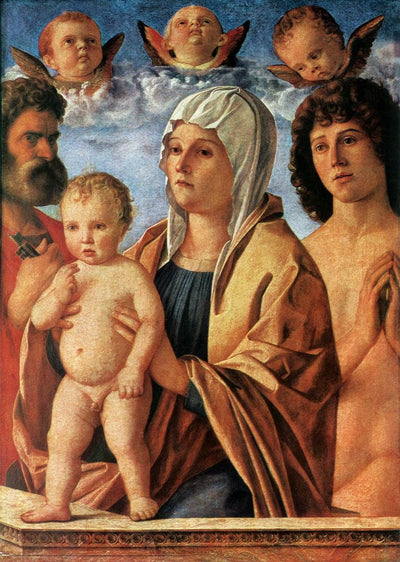
The composition of "The Virgin and Child with St. Peter and St. Sebastian" features a balanced arrangement of figures. The Virgin Mary cradles the Child
Jesus, while St. Peter and St. Sebastian stand beside them, creating a triangular formation. This arrangement draws the viewer's eye toward the central figures, emphasizing their importance. The careful placement of each character enhances the sense of unity and divine presence in the scene.
Color Palette: The Use of Rich, Vibrant Hues
Bellini's masterful use of color brings the painting to life. He employs a rich palette of deep blues, warm reds, and soft golds. These colors not only enhance the visual appeal but also convey the emotional depth of the subjects. The vibrant hues reflect the divine
nature of the Virgin and Child, while the earthy tones of St. Peter and St. Sebastian ground the composition in reality.
Symbolism in the Painting: Religious and Cultural Significance
The painting is rich in
symbolism, reflecting key themes of Christianity. The Virgin Mary represents purity and motherhood, while the Child Jesus embodies innocence and divine love. St. Peter, often depicted with keys, symbolizes the foundation of the Church. St. Sebastian, known for his martyrdom, represents faith and resilience. Together, these figures convey a powerful message of hope and salvation.
Facial Expressions and Gestures: Conveying Emotion and Divinity
Bellini's attention to detail in facial expressions and gestures adds a profound emotional layer to the painting. The serene expression of the Virgin Mary radiates compassion, while the Child Jesus gazes with innocence. St. Peter's protective stance and St. Sebastian's calm demeanor evoke a sense of reverence. These subtle nuances invite viewers to connect with the divine narrative unfolding before them.
Iconography of the Virgin and Child
The Virgin Mary: Maternal Symbolism and Iconic Representation
In this artwork, the Virgin Mary is depicted as the ultimate maternal figure. Her gentle embrace of the Child Jesus symbolizes unconditional love and protection. This portrayal aligns with the traditional iconography of Mary, who is often seen as a
bridge between humanity and the divine. Bellini's representation emphasizes her role as a nurturing mother, making her an enduring symbol of faith.
The Child Jesus: Innocence and Divine Nature
The Child Jesus is portrayed with an aura of innocence and divinity. His small stature and tender expression highlight his vulnerability, while his gaze suggests a deeper understanding of his divine mission. This duality captures the essence of Christ's nature, embodying both humanity and divinity. Bellini's depiction invites viewers to reflect on the significance of the Incarnation.
St. Peter: The Rock of the Church and His Symbolic Role
St. Peter, often referred to as the "
Rock of the Church," plays a crucial role in this composition. His presence signifies strength and leadership within the Christian faith. The keys he holds symbolize his authority and the power to bind and loose, as described in the Gospel. Bellini's portrayal of St. Peter reinforces the importance of faith and the Church's foundation.
St. Sebastian: The Martyr and His Significance in Christian Art
St. Sebastian is depicted as a symbol of endurance and faith. Known for his martyrdom, he represents the trials faced by early Christians. His inclusion in the painting highlights the theme of sacrifice and the strength of belief. Bellini's portrayal of St. Sebastian serves as a reminder of the courage required to uphold one's faith in the face of adversity.
Artistic Techniques Employed by Bellini
Oil Painting Techniques: Layering and Glazing for Depth
Bellini's mastery of oil painting techniques is evident in this artwork. He employed layering and glazing to create depth and luminosity. This method allows for a rich texture that enhances the three-dimensional quality of the figures. The careful application of paint results in a vibrant surface that captures light beautifully, drawing viewers into the scene.
Use of Light and Shadow: Chiaroscuro in Renaissance Art
The use of chiaroscuro, or the contrast of light and shadow, is a hallmark of Bellini's style. This technique adds drama and dimension to the figures, making them appear lifelike. The soft transitions between light and dark create a sense of volume and space, enhancing the overall composition. Bellini's skillful manipulation of light guides the viewer's eye and emphasizes the spiritual significance of the scene.
Brushwork and Texture: Creating Lifelike Figures
Bellini's brushwork is characterized by its precision and fluidity. He skillfully captures the textures of skin, fabric, and hair, bringing the figures to life. The delicate details in the clothing and the softness of the Virgin's face showcase his attention to
realism. This meticulous approach allows viewers to connect with the characters on a personal level, making the painting resonate deeply.
The Legacy of The Virgin and Child with St. Peter and St. Sebastian
Impact on Future Generations of Artists
Bellini's influence extends far beyond his lifetime. His innovative techniques and emotional depth inspired countless artists in the Renaissance and beyond. The harmonious compositions and rich color palettes he developed became foundational elements in Western art. Artists such as Titian and
Raphael drew from Bellini's work, ensuring his legacy lived on through their masterpieces.
Preservation and Restoration Efforts Over the Years
Over the years, "The Virgin and Child with St. Peter and St. Sebastian" has undergone various preservation and restoration efforts. These initiatives aim to maintain the painting's integrity and vibrancy. Experts carefully analyze the artwork to ensure that any restoration work respects Bellini's original techniques and intentions. This commitment to preservation allows future generations to appreciate the masterpiece in its full glory.
Current Location and Exhibition History
Today, this iconic painting is housed in a prominent museum, where it continues to captivate audiences. Its exhibition history includes numerous showcases in prestigious galleries around the world. Each display offers art lovers the chance to experience Bellini's genius firsthand. The painting remains a highlight in the study of Renaissance art, drawing visitors eager to witness its beauty.
Exploring the Cultural Impact of Bellini's Masterpiece
Influence on Religious Art and Iconography
Bellini's work has significantly influenced
religious art and iconography. His ability to convey spiritual themes through visual storytelling set a standard for future artists. The emotional depth and clarity of his figures resonate with viewers, making religious narratives more accessible. This impact is evident in the works of later artists who sought to emulate his style and approach.
Reception by Contemporary Audiences and Critics
Contemporary audiences and critics continue to celebrate Bellini's contributions to art. His ability to blend technical skill with emotional resonance has earned him a lasting place in art history. Critics often highlight the innovative aspects of his work, noting how he pushed the boundaries of traditional painting. This ongoing appreciation underscores the timeless nature of his masterpieces.
Art Market Value and Collectibility of Bellini's Works
The art market values Bellini's works highly, reflecting their historical significance and artistic merit. Collectors seek out his paintings for their beauty and cultural importance. Reproductions of Bellini's masterpieces, especially oil painting reproductions, offer art enthusiasts a chance to own a piece of this legacy. Unlike prints, these reproductions capture the depth and texture of the original works, making them a superior choice for collectors.
Frequently Asked Questions (FAQs)
What is the significance of St. Peter and St. Sebastian in the painting?
St. Peter represents the foundation of the Church, while St. Sebastian symbolizes faith and martyrdom. Their presence enhances the painting's religious themes.
How does Giovanni Bellini's style differ from other Renaissance artists?
Bellini's style is characterized by his innovative use of color, light, and emotional expression, setting him apart from contemporaries like
Michelangelo and Raphael.
What are the main themes depicted in The Virgin and Child with St. Peter and St. Sebastian?
The main themes include maternal love, divine innocence, faith, and the strength of belief in the face of adversity.
Where can I view the original painting today?
The original painting is housed in a renowned museum, where it is part of the permanent collection.
What techniques did Bellini use to create depth in this artwork?
Bellini used layering and glazing techniques, along with chiaroscuro, to create depth and a lifelike quality in the figures.
How can I ensure the quality of a reproduction of this painting?
To ensure quality, look for oil painting reproductions created by skilled artists who use high-quality materials and techniques that mimic the original.
What should I look for when purchasing a reproduction of Bellini's work?
When purchasing a reproduction, consider the artist's technique, the quality of materials used, and the overall fidelity to the original painting's colors and textures.