 4.9/5
4.9/5








SAMPLES OF QUALITY
Recent Hand-Painted Reproductions
Discover some of our latest oil paintings, each one carefully hand-painted on canvas.

AS SEEN IN






by Anton Romako
Handmade Oil Painting on Canvas Art Reproduction, Museum-quality

The six dominant colors measured from the painting, with the share of canvas each one covers. Click a swatch to copy its hex code.
Processing & Shipping Time
Your delivery time includes two parts:
Shipping Methods
We ship with trusted couriers like FedEx, UPS, and DHL. Every shipment includes a tracking code.
Our goal is to deliver your order safely and quickly.
Shipment Safety Measures
We handle your products with care so they arrive in perfect condition:
Every product is insured and delivered right to your door, so you can feel confident buying from us.
Every Art & See painting is created by artists with 15+ years of experience using professional-grade oil paints and premium linen canvas with UV-resistant protective coating, the same museum-grade materials used in galleries worldwide. Each piece goes through quality review before your approval photos are taken. If after delivery you have any concerns about your painting, contact us at [email protected] and our team will work with you on the best path forward.
Full Warranty
Every painting is protected against physical damage during shipping. If your painting arrives damaged, we repair or replace it, free of charge.
Coverage Details
Transit damage (crushed, torn, water damage): we repair or replace at no cost. Please note that damages resulting from accidents or inappropriate use are not covered under this warranty.
Repair or Replace
Depending on the extent of damage, the affected painting will either be repaired or replaced at no additional cost to you.
Free Service
All warranty services are provided absolutely free of charge.
We want you to absolutely love your handmade artwork. Here's how it works:
In the rare case you approve the photos and the artwork has been shipped and delivered to you, and you still want additional modification requests, we can handle it as a courtesy at our discretion. If accepted, you cover the return shipping cost.
| Type | Hand-Painted Oil Painting Reproduction |
| Original Artist | Anton Romako |
| Price Range | $350 to $1,150 |
| Shipping | Free Worldwide |
| Quality | Preview & Approve Before Shipping |
| Medium | Oil on Canvas |
| Canvas | Museum-Grade Linen Canvas |
| Technique | Hand-painted brushstroke-by-brushstroke |
| Art Style | Realism |
| Period | 19th Century |
| Artist Nationality | Austrian |
| Orientation | Horizontal |
| Subject | Landscapes mountain, Landscapes rock |
| Available Sizes | 7 (26'' W × 18'' H to 71'' W × 49'' H, including the original size), plus custom sizes |
| Framing Options | Unframed, Stretched Canvas, Classic & Modern Frames |
| Delivery | 14–28 business days |
| Size | 24 × 16.6 cm (9.5 × 6.5 in) |
| Year | 1885 |
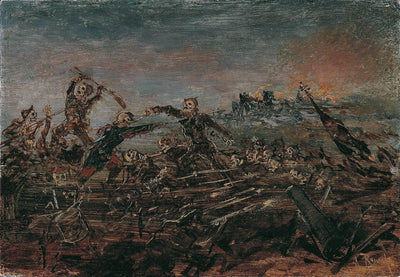
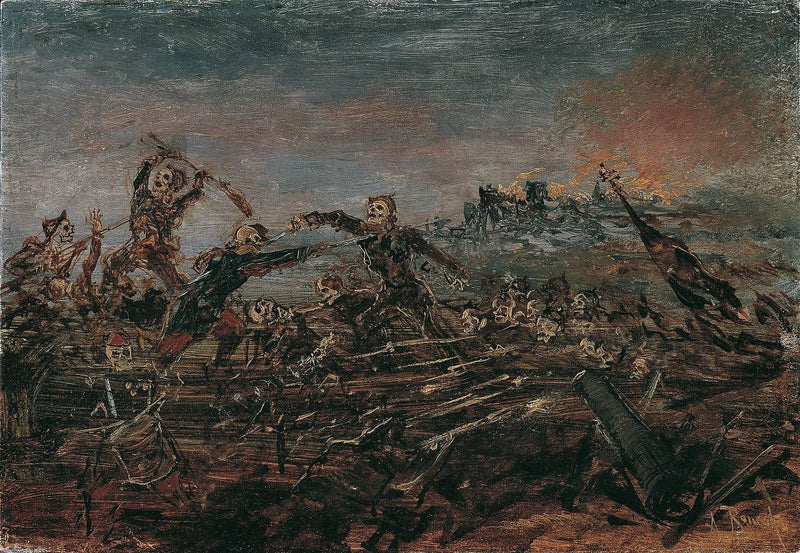
The 19th century was a tumultuous time in Europe, marked by revolutions, wars, and social upheaval. Artists like Anton Romako captured the chaos and despair of this era through their work. "Dance of Death on the Battlefield" serves as a poignant reminder of the horrors of war and its lasting impact on humanity. This painting reflects the collective trauma experienced during conflicts such as the Napoleonic Wars and the Franco-Prussian War, showcasing how art can serve as a powerful commentary on societal issues.
Anton Romako, born in 1832 in the Austrian Empire, was influenced by the Romantic movement and the emerging Realism of his time. His travels across Europe exposed him to various artistic styles and cultural narratives. Romako's experiences in war-torn regions deeply affected his perspective, leading him to create works that reflect the human condition amidst conflict. His ability to blend personal experiences with broader historical themes makes his art resonate with viewers even today.
Romako's style is a unique fusion of Romanticism and Realism. He captures the emotional intensity of his subjects while grounding them in realistic settings. This duality allows viewers to connect with the raw emotions portrayed in "Dance of Death on the Battlefield." The painting's dramatic scenes evoke feelings of fear, despair, and resilience, making it a timeless piece that speaks to the human experience.
The color palette of "Dance of Death" is striking, dominated by dark tones that evoke a sense of foreboding. Fiery hues of red and orange illuminate the battlefield, symbolizing destruction and chaos. This contrast not only enhances the visual impact but also reflects the emotional turmoil of the scene. The interplay of light and shadow creates a haunting atmosphere, drawing viewers into the heart of the conflict.
Romako masterfully depicts figures in motion, capturing the frenetic energy of battle. Soldiers, skeletons, and other figures intertwine in a chaotic dance, illustrating the fragility of life in wartime. The dynamic poses and expressions convey a sense of urgency and despair, making the viewer feel the weight of the moment. This vivid portrayal of movement is a hallmark of Romako's technique, showcasing his ability to bring scenes to life.
Skulls and skeletons are powerful symbols in "Dance of Death." They represent mortality and the inevitability of death, serving as a reminder of the consequences of war. This motif, known as the "Danse Macabre," has appeared in art for centuries, emphasizing the transient nature of life. Romako's use of these symbols invites viewers to reflect on their own mortality and the impact of conflict on society.
The painting evokes a spectrum of emotions, from fear and despair to resilience and hope. Romako captures the anguish of soldiers facing death while also hinting at the strength of the human spirit. This emotional depth adds layers to the artwork, encouraging viewers to engage with the themes of life and death. The contrasting emotions create a powerful narrative that resonates with audiences across generations.
The "Dance of Death" motif is a recurring theme in art, symbolizing the universality of death. Romako's interpretation highlights the fragility of life, especially in the context of war. This theme encourages viewers to confront their own mortality and consider the impact of their actions. The painting serves as a reminder that death is an inevitable part of the human experience, transcending time and culture.
Romako's work delves into the psychological toll of war on soldiers. The chaos depicted in "Dance of Death" reflects the trauma and despair faced by those who experience battle. This exploration of mental health in the context of war is particularly relevant today, as society continues to grapple with the effects of conflict on individuals. Romako's portrayal invites empathy and understanding for those affected by the horrors of war.
Through "Dance of Death," Romako offers a poignant commentary on the futility of war. The chaotic scenes and the presence of death serve as a critique of the violence and destruction that accompany conflict. This message resonates with viewers, prompting them to question the motives behind war and its consequences. Romako's art encourages a deeper reflection on the human cost of warfare.
The dance depicted in the painting serves as a metaphor for life's fragility. Romako illustrates how quickly life can change in the face of conflict. This interpretation encourages viewers to appreciate the moments of joy and connection in their lives. The dance becomes a reminder to cherish life, even amidst chaos and uncertainty.
Romako's brushwork in "Dance of Death" is both meticulous and expressive. He employs a variety of techniques to create texture and depth, enhancing the emotional impact of the scene. The layering of paint adds richness to the composition, allowing viewers to feel the weight of the moment. This mastery of oil painting techniques sets Romako apart from his contemporaries.
The use of lighting and shadow in "Dance of Death" is crucial to its dramatic effect. Romako skillfully manipulates light to highlight key figures while casting others in shadow. This technique creates a sense of depth and draws the viewer's eye to the focal points of the painting. The interplay of light and dark enhances the overall mood, making the scene more immersive.
Romako's layering techniques are evident in the complexity of "Dance of Death." He builds the scene gradually, adding layers of color and texture to create a cohesive composition. This approach allows for a rich visual experience, inviting viewers to explore the details within the painting. The careful construction of the artwork showcases Romako's dedication to his craft.
When compared to his contemporaries, Romako's techniques stand out for their emotional depth and realism. While many artists of his time focused on idealized forms, Romako embraced the rawness of human experience. His ability to convey complex emotions through his brushwork and composition sets him apart in the art world. This unique approach continues to influence artists today.
Romako's "Dance of Death" has left a lasting legacy in the art world. Contemporary artists draw inspiration from his exploration of war and the human condition. His ability to blend emotional depth with historical context resonates with modern audiences, encouraging artists to tackle similar themes in their work. Romako's influence can be seen in various forms of art, from painting to multimedia installations.
"Dance of Death on the Battlefield" occupies a significant place in art history as a powerful example of war art. It captures the essence of the human experience during times of conflict, making it a vital piece for understanding the impact of war on society. This painting serves as a historical document, reflecting the emotions and struggles of those who lived through it.
The original "Dance of Death on the Battlefield" is housed in prestigious collections, allowing art enthusiasts to experience its grandeur firsthand. Major exhibitions often feature Romako's work, providing opportunities to appreciate his artistic mastery. Visiting these exhibitions offers a chance to connect with the historical and emotional significance of the painting.
Art critics have praised Romako for his ability to convey complex themes through his work. "Dance of Death" is often highlighted for its emotional depth and historical relevance. Critics recognize Romako's unique perspective on war, noting how his art challenges viewers to confront uncomfortable truths about humanity. This critical reception solidifies Romako's place in the canon of important artists.
"Dance of Death on the Battlefield" tells the story of the chaos and despair experienced during war. It reflects the emotional and psychological toll of conflict on soldiers and society as a whole.
The painting explores themes of mortality, the futility of war, and the resilience of the human spirit. It invites viewers to reflect on the impact of conflict on life and death.
Romako's work captures the essence of 19th-century Europe, a period marked by wars and social upheaval. It serves as a commentary on the collective trauma experienced during this time.
Romako employed techniques such as expressive brushwork, dramatic lighting, and layering to create depth and emotion in "Dance of Death." His mastery of oil painting enhances the overall impact of the piece.
The original painting can be found in various prestigious art collections and exhibitions. Art lovers can visit these venues to experience Romako's work in person.
The Dance of Death motif symbolizes the universality of mortality. It serves as a reminder of the fragility of life and the inevitability of death, transcending cultural and historical boundaries.
Incorporating a reproduction of "Dance of Death on the Battlefield" into your home decor can add a dramatic and thought-provoking element to your space. Unlike prints, high-quality painting reproductions capture the texture and depth of the original artwork, making them a superior choice for art lovers. Consider placing it in a prominent location to spark conversation and reflection.

Discover some of our latest oil paintings, each one carefully hand-painted on canvas.
At Art & See, we're committed to delivering the highest quality art reproductions. Our team of expert artists and state-of-the-art processes ensure that each piece is a masterpiece in its own right.

Experience your masterpiece's creation through daily photos from our expert artists, each with 15+ years of experience.

Your artwork travels first class via UPS, FedEx, or DHL, protected by museum-grade packaging for safe delivery.

Review unedited photos of your finished painting and request unlimited free revisions before it ships. We only ship when you say it's perfect.

Every piece is crafted with archival materials, UV-resistant finishes, and premium British paints to last generations.
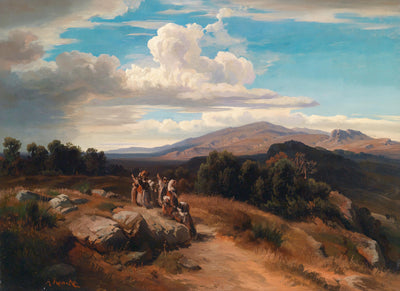



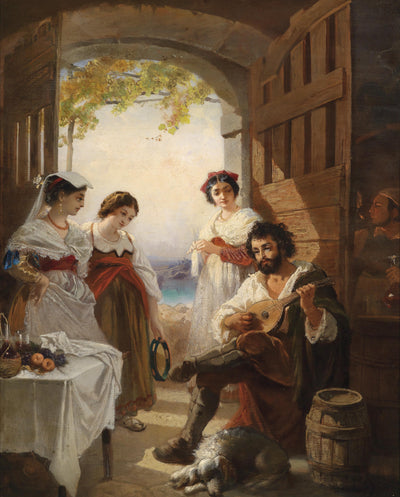
Yes, 100% hand-painted with oil on canvas by artists with 15+ years of experience. No prints, no digital shortcuts. You'll see and feel real brushstrokes, just like the original Anton Romako masterpiece.
Your Dance of death on the battlefield in front of burning ruins reproduction takes 2–5 weeks to hand-paint depending on size and detail. Once approved, shipping takes 5–8 days via FedEx, UPS, or DHL with full tracking. Free worldwide shipping included.
Absolutely. Once your Dance of death on the battlefield in front of burning ruins is complete, we send you unedited photos, a full view and close-up details. Request unlimited free revisions until you're 100% satisfied. We don't ship until you say "yes."
Every painting goes through our Preview & Approve process: you receive unedited photos of your finished Anton Romako reproduction and can request unlimited free revisions before it ships. We only ship when you say it's perfect. If after delivery you have any concerns, contact us at [email protected] and our team will work with you on the best path forward.
Professional-grade oil paints (Windsor & Newton) on premium linen canvas with UV-resistant protective coating. Museum-grade materials built to last generations, the same quality used in galleries worldwide.
Our artists specialize in Anton Romako's technique: color accuracy, brushwork, and composition are matched to the original. Every reproduction goes through quality review before your approval photos are taken.
Every painting is insured and delivered door-to-door. Unframed paintings ship in protective hard tubes. Framed paintings are bubble-wrapped in sturdy boxes. If anything arrives damaged, we repair or replace it free.
Dive into the vibrant world of Historic Art. Discover your next painting today.
