Exploring the Masterpiece: Mother with Child Inside the Basilica of Santa Maria del Popolo
Artistic Context: Noè Bordignon and His Influence on 19th Century Painting
The Life and Times of Noè Bordignon
Noè Bordignon, born in 1820 in Italy, emerged as a prominent figure in 19th-century art. His works reflect the rich cultural tapestry of his time, blending traditional techniques with innovative themes. Bordignon's artistic journey took him through various European
cities, where he absorbed diverse influences that shaped his unique style. His dedication to capturing emotional depth and spiritual themes set him apart from his contemporaries.
Art Movements and Styles: Romanticism and Beyond
Bordignon's work is often associated with the
Romantic movement, which emphasized emotion and individualism. This period celebrated the beauty of
nature and the human experience, and Bordignon's paintings resonate with these ideals. His ability to convey profound feelings through his art aligns with the Romantic ethos, making his pieces timeless treasures. As he transitioned into the
Realism movement, Bordignon maintained a focus on emotional narratives, bridging the gap between these influential styles.
Significance of Religious Themes in Bordignon's Work
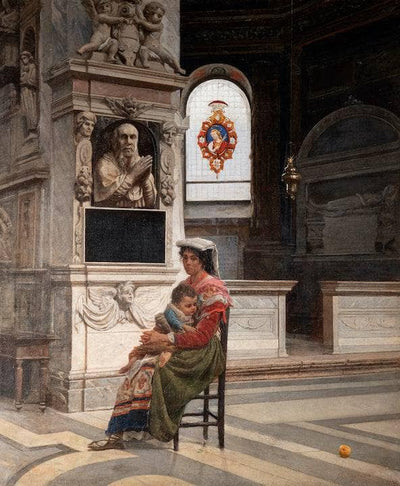
Religious themes play a crucial role in Bordignon's oeuvre. His painting "Mother with Child" captures the essence of maternal love and divine connection, reflecting the deep spiritual beliefs of his time. The portrayal of the mother and child within the sacred space of the Basilica of Santa Maria del Popolo elevates the artwork, inviting viewers to contemplate the intersection of the earthly and the divine. This theme resonates with audiences, making it a significant aspect of Bordignon's artistic legacy.
Visual Analysis: Composition and Color Palette of the Painting
Understanding the Use of Light and Shadow in the Basilica
Bordignon masterfully employs light and shadow to create a sense of depth and dimension in "Mother with Child." The soft illumination filtering through the basilica's windows highlights the figures, drawing attention to their intimate connection. This technique enhances the spiritual atmosphere, inviting viewers to experience the sacredness of the moment.
Color Symbolism: The Emotional Impact of Bordignon's Choices
The color palette in Bordignon's painting is rich and evocative. Warm earth tones dominate the scene, symbolizing warmth, love, and security. The gentle blues and greens add a sense of tranquility, reflecting the peaceful bond between mother and child. Each color choice contributes to the emotional resonance of the artwork, making it a powerful visual experience.
Figures and Gestures: The Mother and Child Connection
The figures of the mother and child are central to the painting's narrative. Their gestures convey tenderness and affection, embodying the universal theme of maternal love. The mother's protective stance and the child's innocent gaze create a poignant connection that resonates with viewers. This intimate portrayal invites reflection on the profound bond shared between a mother and her child.
Architectural Elements: The Basilica of Santa Maria del Popolo
A Historical Overview of the Basilica's Architecture
The Basilica of Santa Maria del Popolo, located in Rome, is a stunning example of
Renaissance architecture. Built in the 15th century, it features a blend of Gothic and
Baroque elements. The basilica's grandeur and intricate details provide a breathtaking backdrop for Bordignon's painting, enhancing its spiritual significance. The rich history of the basilica adds layers of meaning to the artwork, making it a compelling subject for exploration.
Symbolism of the Basilica in Religious Art
In
religious art, the basilica symbolizes a sacred space where the divine meets the earthly. Its architecture, adorned with beautiful frescoes and sculptures, serves as a testament to faith and devotion. Bordignon's choice to set "Mother with Child" within this revered space amplifies the painting's themes of spirituality and maternal love, inviting viewers to engage with the deeper meanings embedded in the artwork.
How the Setting Enhances the Painting's Narrative
The setting of the Basilica of Santa Maria del Popolo enriches the narrative of Bordignon's painting. The
architectural grandeur and serene ambiance create a perfect backdrop for the intimate moment between mother and child. This juxtaposition of the sacred and the personal invites viewers to reflect on their own experiences of love and faith, making the artwork resonate on multiple levels.
Thematic Exploration: Motherhood and Divine Connection
Interpreting the Mother-Child Relationship in Art
The mother-child relationship is a timeless theme in art, representing love, protection, and nurturing. In Bordignon's painting, this relationship is depicted with profound sensitivity. The emotional connection between the figures transcends time and culture, making it relatable to audiences across generations. This universal theme invites viewers to reflect on their own experiences of motherhood and familial bonds.
Religious Symbolism: The Role of Mary and Jesus in Art
Bordignon's work echoes the iconic imagery of Mary and
Jesus, central figures in Christian art. The mother and child in the painting symbolize not only familial love but also divine grace and protection. This religious
symbolism adds depth to the artwork, inviting contemplation on the spiritual dimensions of motherhood and the sacredness of life.
Emotional Resonance: The Universal Theme of Maternal Love
Maternal love is a universal theme that transcends cultural boundaries. Bordignon's portrayal of this bond evokes deep emotions, reminding viewers of the nurturing and protective instincts inherent in motherhood. The painting resonates with anyone who has experienced the profound connection between a mother and her child, making it a powerful and relatable work of art.
Artistic Techniques: Bordignon's Brushwork and Style
Oil Painting Techniques: Layering and Texture
Bordignon's mastery of oil painting techniques is evident in "Mother with Child." He skillfully layers paint to create rich textures and depth. This technique adds a tactile quality to the artwork, inviting viewers to appreciate the intricacies of the figures and the surrounding environment. The smooth blending of colors enhances the emotional impact, making the scene feel alive.
Comparative Analysis: Bordignon vs. His Contemporaries
When compared to his contemporaries, Bordignon's style stands out for its emotional depth and attention to detail. While many artists of his time focused on grand historical themes, Bordignon's intimate portrayals of everyday life and spirituality offer a refreshing perspective. His ability to convey complex emotions through simple gestures sets him apart in the art world.
Signature Elements: What Makes Bordignon's Style Unique
Bordignon's unique style is characterized by his use of light, color, and emotional expression. His ability to capture the essence of human connection and spirituality is a hallmark of his work. The delicate balance between realism and romanticism in his paintings creates a distinctive aesthetic that continues to resonate with art lovers today.
Historical Significance: The Painting's Place in Art History
Exhibitions and Collections: Where to See Bordignon's Work
Bordignon's paintings, including "Mother with Child," are featured in various prestigious collections and exhibitions worldwide. Art enthusiasts can find his works in renowned museums, showcasing the artist's contribution to 19th-century art. These exhibitions provide an opportunity to appreciate Bordignon's mastery and the historical context of his creations.
Influence on Future Generations of Artists
Bordignon's influence extends beyond his lifetime, inspiring future generations of artists. His focus on emotional narratives and the human experience has left a lasting impact on the art world. Contemporary artists continue to draw inspiration from his techniques and themes, ensuring that Bordignon's legacy endures.
Critical Reception: How Art Critics Viewed Bordignon's Work
Art critics of Bordignon's time recognized his talent and unique approach to painting. His ability to convey deep emotions and spiritual themes garnered praise, establishing him as a significant figure in 19th-century art. Today, art historians continue to study his work, acknowledging its importance in the evolution of religious and emotional expression in art.
FAQs About the Painting and Its Reproduction
What is the story behind the painting "Mother with Child" by Noè Bordignon?
The painting "Mother with Child" captures a tender moment between a mother and her child within the sacred space of the Basilica of Santa Maria del Popolo. It reflects Bordignon's deep appreciation for maternal love and spirituality, making it a poignant work of art.
What are the main themes depicted in Bordignon's painting?
The main themes in Bordignon's painting include motherhood, divine connection, and the emotional bond between a mother and child. These themes resonate universally, inviting viewers to reflect on their own experiences of love and faith.
How does the setting of the Basilica influence the painting's meaning?
The Basilica of Santa Maria del Popolo serves as a powerful backdrop for the painting, enhancing its spiritual significance. The sacred architecture amplifies the themes of love and protection, inviting contemplation on the relationship between the earthly and the divine.
What techniques did Bordignon use to create depth in his painting?
Bordignon employed layering and texture in his oil painting techniques to create depth. His skillful use of light and shadow adds dimension, making the figures appear lifelike and inviting viewers into the scene.
Where can I find more information about Noè Bordignon's other works?
More information about Noè Bordignon's works can be found in art history books, museum collections, and online databases dedicated to 19th-century art. These resources provide insights into his artistic journey and contributions to the art world.
What should I know about reproducing Bordignon's painting?
When reproducing Bordignon's painting, it's essential to choose high-quality oil painting reproductions. These reproductions capture the intricate details and textures of the original artwork, offering a superior alternative to standard prints. Investing in a reproduction allows you to appreciate the beauty and emotional depth of Bordignon's work in your own space.
Are there any notable differences between the original and its reproductions?
Yes, there are notable differences between the original painting and its reproductions. High-quality oil painting reproductions maintain the texture, color vibrancy, and emotional depth of the original artwork, while standard prints may lack these qualities. Choosing a reproduction crafted by skilled artists ensures that you experience the essence of Bordignon's masterpiece.
 4.9/5
4.9/5