4.7/5
4.7/5







SAMPLES OF QUALITY
Recent Hand-Painted Reproductions
Discover some of our latest oil paintings, each one carefully hand-painted on canvas.


AS SEEN IN


Handmade Oil Painting on Canvas Art Reproduction, Museum-quality
Not the size you want? Type your width and height and we'll paint it to fit, 12 to 80 in (30 to 203 cm) per side.

The six dominant colors measured from the painting, with the share of canvas each one covers. Click a swatch to copy its hex code.
Processing & Shipping Time
Your delivery time includes two parts:
Shipping Methods
We ship with trusted couriers like FedEx, UPS, and DHL. Every shipment includes a tracking code.
Our goal is to deliver your order safely and quickly.
Shipment Safety Measures
We handle your products with care so they arrive in perfect condition:
Every product is insured and delivered right to your door, so you can feel confident buying from us.
Every Art & See painting is created by artists with 15+ years of experience using professional-grade oil paints and premium linen canvas with UV-resistant protective coating, the same museum-grade materials used in galleries worldwide. Each piece goes through quality review before your approval photos are taken. If after delivery you have any concerns about your painting, contact us at [email protected] and our team will work with you on the best path forward.
Full Warranty
Every painting is protected against physical damage during shipping. If your painting arrives damaged, we repair or replace it, free of charge.
Coverage Details
Transit damage (crushed, torn, water damage): we repair or replace at no cost. Please note that damages resulting from accidents or inappropriate use are not covered under this warranty.
Repair or Replace
Depending on the extent of damage, the affected painting will either be repaired or replaced at no additional cost to you.
Free Service
All warranty services are provided absolutely free of charge.
We want you to absolutely love your handmade artwork. Here's how it works:
In the rare case you approve the photos and the artwork has been shipped and delivered to you, and you still want additional modification requests, we can handle it as a courtesy at our discretion. If accepted, you cover the return shipping cost.
| Type | Hand-Painted Oil Painting Reproduction |
| Original Artist | Nicolas Poussin |
| Price Range | $350 to $1,150 |
| Shipping | Free Worldwide |
| Quality | Preview & Approve Before Shipping |
| Medium | Oil on Canvas |
| Canvas | Museum-Grade Linen Canvas |
| Technique | Hand-painted brushstroke-by-brushstroke |
| Period | 17th Century |
| Artist Nationality | French |
| Orientation | Vertical |
| Subject | Cultural heritage religious, Portraits group, Religion |
| Available Sizes | 7 (16'' W × 21'' H to 52'' W × 68'' H, including the original size), plus custom sizes |
| Framing Options | Unframed, Stretched Canvas, Classic & Modern Frames |
| Delivery | 14–28 business days |
| Size | 250 × 325 cm (98.5 × 128 in) |
| Year | 1640 |
The Eucharist, also known as Holy Communion, holds a central place in Christian worship. It symbolizes the Last Supper, where Jesus shared bread and wine with his apostles, representing his body and blood. This sacred ritual emphasizes themes of sacrifice, redemption, and community. Throughout history, artists have depicted the Eucharist to convey its profound spiritual significance, making it a popular subject in religious art.
Nicolas Poussin, a leading figure in the Baroque art movement, is known for his intellectual approach to painting. He emphasized clarity, order, and harmony, setting him apart from his contemporaries. Poussin's works often reflect classical themes and biblical narratives, showcasing his deep understanding of human emotion and divine inspiration. His painting, The Institution of the Eucharist, exemplifies these qualities, merging theological depth with artistic mastery.
The Counter-Reformation significantly impacted religious art, as the Catholic Church sought to inspire faith and devotion through visual means. Artists like Poussin responded to this call by creating works that were both emotionally engaging and doctrinally sound. The Institution of the Eucharist serves as a testament to this movement, illustrating the importance of the Eucharist in reaffirming Catholic beliefs during a time of religious upheaval.
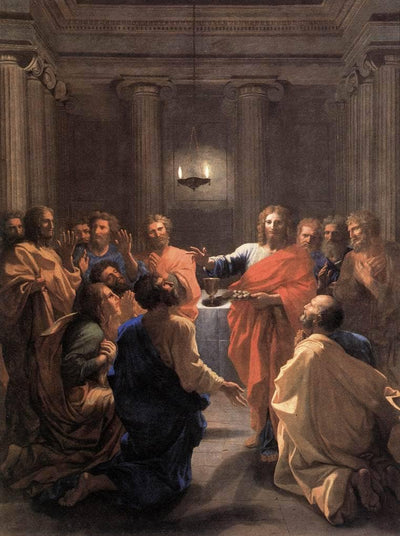
Poussin's composition in The Institution of the Eucharist is meticulously arranged. The figures are strategically placed to create a sense of balance and harmony. The triangular arrangement draws the viewer's eye toward the central act of communion, emphasizing its importance. This careful layout reflects Poussin's mastery of classical principles, inviting contemplation and reverence.
The color palette in this painting is rich and evocative. Warm tones of gold and deep reds symbolize divinity and sacrifice, while cooler blues and greens provide contrast, enhancing the emotional depth. Poussin's use of color not only captures the viewer's attention but also evokes a sense of spirituality, making the scene feel alive with divine presence.
The figures in The Institution of the Eucharist are depicted with great care. Each apostle's gesture conveys a range of emotions, from awe to contemplation. Christ, at the center, exudes authority and compassion, inviting viewers to reflect on the significance of the moment. Poussin's ability to capture these nuances adds to the painting's spiritual resonance.
In The Institution of the Eucharist, Christ is the focal point, surrounded by his apostles. Each figure represents a different aspect of faith and devotion. The apostles' expressions and postures reveal their inner thoughts, creating a dynamic interaction that draws the viewer into the narrative. This portrayal emphasizes the communal aspect of the Eucharist, highlighting the bond between Christ and his followers.
The bread and wine in the painting are not mere objects; they symbolize the body and blood of Christ, central to the Eucharistic celebration. This representation of sacrifice is profound, reminding viewers of the ultimate act of love and redemption. Poussin's careful attention to these elements reinforces their significance in the Christian faith.
Upon closer inspection, The Institution of the Eucharist reveals hidden details that enrich its meaning. For instance, the presence of a chalice and a loaf of bread signifies the continuity of the Eucharistic tradition. Additionally, subtle gestures among the apostles hint at their future roles in spreading Christ's message. These lesser-known elements invite deeper exploration and interpretation.
Poussin's brushwork is characterized by precision and clarity. He employs smooth, controlled strokes to create a sense of texture and depth. This technique enhances the realism of the figures and the overall composition. The meticulous attention to detail showcases Poussin's dedication to his craft and his desire to convey a powerful narrative.
Light and shadow play a crucial role in Poussin's work. He skillfully uses chiaroscuro to create depth and focus, guiding the viewer's eye to the central action. The interplay of light highlights the divine nature of the scene, while shadows add a sense of mystery and contemplation. This technique enhances the emotional impact of the painting.
When compared to other Baroque artists, Poussin's style stands out for its intellectual rigor and classical influence. While artists like Caravaggio focused on dramatic realism, Poussin emphasized clarity and order. His approach to religious themes, particularly in The Institution of the Eucharist, reflects a unique blend of emotion and reason, setting a standard for future generations.
The Institution of the Eucharist has left a lasting legacy in the art world. Poussin's innovative techniques and thematic depth influenced countless artists, inspiring them to explore religious subjects with similar intensity. His work paved the way for a more thoughtful approach to spiritual art, encouraging artists to engage with their faith through their craft.
Since its creation, The Institution of the Eucharist has garnered both admiration and critique. Art historians praise Poussin's ability to convey complex theological ideas through visual means. However, some critics argue that his style can feel overly rigid. Despite differing opinions, the painting remains a cornerstone of Baroque art, celebrated for its beauty and depth.
The original painting is housed in the prestigious Louvre Museum in Paris, France. It is carefully preserved to maintain its vibrant colors and intricate details. The museum's commitment to conservation ensures that future generations can appreciate Poussin's masterpiece in all its glory.
When visiting the Louvre, expect to be captivated by the grandeur of The Institution of the Eucharist. The painting's size and detail draw viewers in, inviting them to explore its rich narrative. The museum provides context through informative plaques, enhancing your understanding of Poussin's work and its significance in art history.
Standing before The Institution of the Eucharist, many viewers experience a profound emotional response. The painting's spiritual themes resonate deeply, prompting reflection on faith, sacrifice, and community. Poussin's ability to capture these emotions creates a powerful connection between the viewer and the artwork.
Poussin's influence extends beyond his time, inspiring modern artists to explore similar themes. His emphasis on clarity, composition, and emotional depth continues to resonate in contemporary art. Many artists draw from Poussin's techniques, seeking to convey their own interpretations of spirituality and human experience.
The Institution of the Eucharist depicts the moment Jesus established the sacrament of Holy Communion during the Last Supper. This pivotal event highlights themes of sacrifice and community, central to Christian belief.
Poussin's work embodies Baroque themes through its emotional depth, dramatic composition, and religious significance. His focus on clarity and order contrasts with the more chaotic styles of his contemporaries, showcasing a unique interpretation of Baroque ideals.
The Institution of the Eucharist is significant for its theological depth, masterful composition, and emotional resonance. Poussin's ability to convey complex ideas through visual storytelling sets this painting apart as a masterpiece of religious art.
Over the years, interpretations of The Institution of the Eucharist have evolved. Initially celebrated for its religious significance, it has also been analyzed for its artistic techniques and historical context, revealing layers of meaning that continue to engage scholars and art lovers alike.
Poussin employed techniques such as careful composition, expressive gestures, and a rich color palette to convey emotion. His use of light and shadow further enhances the emotional impact, inviting viewers to connect with the spiritual themes of the work.
To appreciate the details in The Institution of the Eucharist, take your time observing the figures, gestures, and color choices. Consider the symbolism of the bread and wine, and reflect on the emotional expressions of the apostles. Engaging with these elements will deepen your understanding and appreciation of Poussin's artistry.
Reproductions of The Institution of the Eucharist offer a unique opportunity to bring Poussin's masterpiece into your home. Unlike prints, which can lack depth and texture, high-quality painting reproductions capture the essence of the original artwork. They allow you to experience the beauty and detail of Poussin's work in a way that enhances your living space and inspires daily reflection.

Discover some of our latest oil paintings, each one carefully hand-painted on canvas.
At Art & See, we're committed to delivering the highest quality art reproductions. Our team of expert artists and state-of-the-art processes ensure that each piece is a masterpiece in its own right.

Experience your masterpiece's creation through daily photos from our expert artists, each with 15+ years of experience.

Your artwork travels first class via UPS, FedEx, or DHL, protected by museum-grade packaging for safe delivery.

Review unedited photos of your finished painting and request unlimited free revisions before it ships. We only ship when you say it's perfect.

Every piece is crafted with archival materials, UV-resistant finishes, and premium British paints to last generations.
Yes, 100% hand-painted with oil on canvas by artists with 15+ years of experience. No prints, no digital shortcuts. You'll see and feel real brushstrokes, just like the original Nicolas Poussin masterpiece.
Your Institution of the Eucharist reproduction takes 2–5 weeks to hand-paint depending on size and detail. Once approved, shipping takes 5–8 days via FedEx, UPS, or DHL with full tracking. Free worldwide shipping included.
Absolutely. Once your Institution of the Eucharist is complete, we send you unedited photos, a full view and close-up details. Request unlimited free revisions until you're 100% satisfied. We don't ship until you say "yes."
Every painting goes through our Preview & Approve process: you receive unedited photos of your finished Nicolas Poussin reproduction and can request unlimited free revisions before it ships. We only ship when you say it's perfect. If after delivery you have any concerns, contact us at [email protected] and our team will work with you on the best path forward.
Professional-grade oil paints (Windsor & Newton) on premium linen canvas with UV-resistant protective coating. Museum-grade materials built to last generations, the same quality used in galleries worldwide.
Our artists specialize in Nicolas Poussin's technique: color accuracy, brushwork, and composition are matched to the original. Every reproduction goes through quality review before your approval photos are taken.
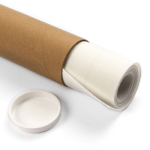
Every painting is insured and delivered door-to-door. Unframed paintings ship in protective hard tubes. Framed paintings are bubble-wrapped in sturdy boxes. If anything arrives damaged, we repair or replace it free.
Dive into the vibrant world of Historic Art. Discover your next painting today.