Exploring the Artistic Genius of Kazimir Malevich in "Portrait of V.A. Pavlov"
Understanding the Historical Context of Malevich's Work
The Influence of Russian Avant-Garde Movement
Kazimir Malevich emerged as a pivotal figure in the
Russian Avant-Garde movement, which sought to break free from traditional artistic constraints. This movement flourished in the early 20th century, driven by a desire for innovation and expression. Artists like Malevich embraced radical ideas, leading to the birth of new styles that challenged the status quo. His work, including "
Portrait of V.A. Pavlov," reflects the spirit of experimentation that defined this transformative period in art history.
Malevich's Role in the Development of Suprematism
Malevich is best known for founding Suprematism, an art movement focused on basic
geometric forms and a limited color palette. "Portrait of V.A. Pavlov" exemplifies this approach, showcasing how Malevich used abstraction to convey deeper meanings. His emphasis on shapes and colors was revolutionary, influencing countless artists and movements that followed. This painting stands as a testament to his innovative spirit and commitment to exploring the essence of art.
Impact of Early 20th Century Politics on Art
The political landscape of early 20th century Russia significantly influenced Malevich's work. The Russian Revolution of 1917 brought about dramatic changes, fostering an environment ripe for artistic exploration. Malevich's art often reflected the tumultuous times, as he sought to express the complexities of human experience through his unique visual language. "Portrait of V.A. Pavlov" captures this intersection of art and politics, making it a vital piece of historical commentary.
Unpacking the Visual Elements of "Portrait of V.A. Pavlov"
Color Palette: The Significance of Black and White
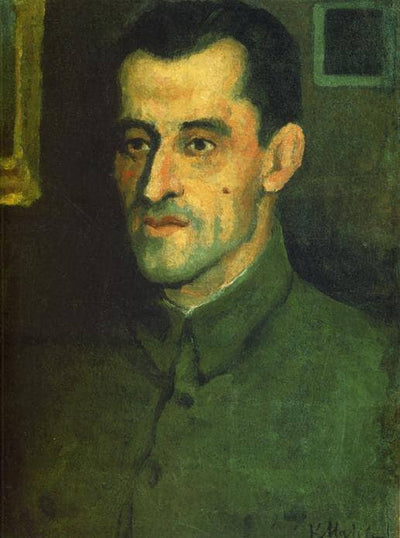
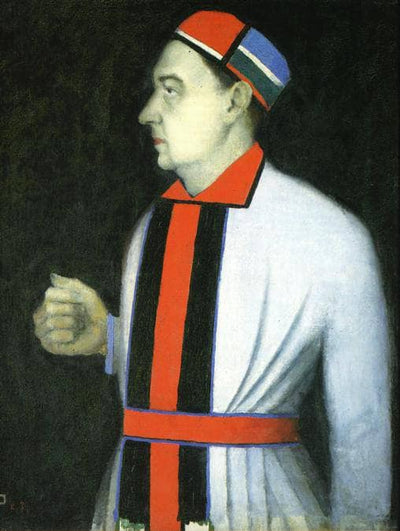
The color palette of "Portrait of V.A. Pavlov" is striking, dominated by bold blacks and whites. This choice emphasizes contrast and depth, drawing the viewer's attention to the subject's features. The use of monochrome not only highlights the emotional intensity of the portrait but also aligns with Malevich's Suprematist ideals. The stark colors invite viewers to contemplate the psychological dimensions of the subject.
Geometric Shapes and Their Symbolic Meanings
Malevich's use of geometric shapes in "Portrait of V.A. Pavlov" serves a symbolic purpose. The angular forms represent the complexity of human thought and emotion. By incorporating these shapes, Malevich transcends mere representation, inviting viewers to engage with the deeper meanings behind the visual elements. This approach reflects his belief in the power of abstraction to convey profound ideas.
Composition Techniques: Balance and Asymmetry
The composition of "Portrait of V.A. Pavlov" showcases Malevich's mastery of balance and asymmetry. The arrangement of elements creates a dynamic tension that captivates the viewer. This technique not only enhances the visual appeal but also reflects the inner turmoil of the subject. Malevich's ability to manipulate space and form adds layers of meaning to the portrait, making it a compelling work of art.
Decoding the Subject: V.A. Pavlov's Influence on Psychology and Art
Who Was V.A. Pavlov? A Brief Biography
V.A. Pavlov, a renowned Russian physiologist, is best known for his groundbreaking work in behavioral psychology. Born in 1849, he conducted experiments that led to the discovery of classical conditioning. His research on the digestive system and its connection to behavior laid the foundation for modern psychology. Malevich's choice to portray Pavlov highlights the intersection of science and art, celebrating the intellectual contributions of this influential figure.
Pavlov's Contributions to Behavioral Psychology
Pavlov's experiments with
dogs revealed how stimuli could trigger conditioned responses. This concept revolutionized psychology, influencing
fields such as education and therapy. His work emphasized the importance of observable behavior, shaping the way we understand human actions. Malevich's portrait captures the essence of Pavlov's intellectual legacy, inviting viewers to reflect on the relationship between art and science.
The Connection Between Pavlov's Theories and Malevich's Artistic Vision
The connection between Pavlov's theories and Malevich's artistic vision is profound. Both sought to explore the underlying mechanisms of human experience. While Pavlov focused on behavior, Malevich delved into the emotional and psychological aspects of existence. "Portrait of V.A. Pavlov" serves as a visual dialogue between these two realms, illustrating how art can interpret and reflect scientific ideas.
The Emotional Resonance of "Portrait of V.A. Pavlov"
Interpreting the Expression: What Does It Convey?
The expression captured in "Portrait of V.A. Pavlov" is both contemplative and intense. Malevich's portrayal invites viewers to ponder the complexities of the human psyche. The subject's gaze seems to reflect a deep understanding of the world, evoking feelings of curiosity and introspection. This emotional resonance is a hallmark of Malevich's portrait style, making the painting a powerful exploration of human
nature.
The Role of Portraiture in Capturing Human Essence
Portraiture has long been a means of capturing the essence of individuals. In "Portrait of V.A. Pavlov," Malevich transcends traditional portraiture by infusing the work with
abstract elements. This approach allows for a deeper exploration of identity and emotion. The painting serves as a reminder of the power of art to convey the complexities of the human experience.
Viewer Reactions: How the Painting Evokes Feelings
Viewers often find themselves drawn to the emotional depth of "Portrait of V.A. Pavlov." The combination of color, form, and expression creates a visceral reaction. Many report feeling a sense of connection to the subject, as if they are engaging in a silent dialogue. This ability to evoke feelings is a testament to Malevich's skill as an artist and his understanding of human emotion.
Malevich's Technique: A Closer Look at His Brushwork
Oil Painting Techniques: Layering and Texture
Malevich's technique in "Portrait of V.A. Pavlov" showcases his mastery of oil painting. He employed layering to create depth and texture, enhancing the visual impact of the work. This method allows for a rich interplay of light and shadow, drawing the viewer's eye across the canvas. The tactile quality of the paint adds to the overall experience, inviting closer examination.
Innovative Approaches to Light and Shadow
Light and shadow play a crucial role in Malevich's portrait. His innovative approach creates a sense of volume and dimensionality. By manipulating light, he highlights specific features of Pavlov, guiding the viewer's focus. This technique not only enhances the
realism of the portrait but also contributes to its emotional depth.
Comparative Analysis with Other Portraits by Malevich
When compared to other portraits by Malevich, "Portrait of V.A. Pavlov" stands out for its unique blend of abstraction and realism. While some of his works lean heavily into geometric forms, this portrait maintains a connection to the subject's humanity. This balance showcases Malevich's versatility as an artist and his ability to convey complex ideas through diverse styles.
The Legacy of "Portrait of V.A. Pavlov" in Contemporary Art
Influence on Modern Artists and Movements
"Portrait of V.A. Pavlov" continues to influence modern artists and movements. Its innovative use of abstraction has inspired contemporary creators to explore new ways of representing the human experience. The painting's legacy is evident in the works of artists who seek to blend science and art, reflecting the ongoing dialogue between these fields.
How This Painting is Referenced in Popular Culture
The impact of "Portrait of V.A. Pavlov" extends beyond the art world. It has been referenced in various forms of popular culture, including literature and film. This recognition highlights the painting's relevance and the enduring fascination with Malevich's work. Its themes resonate with audiences, making it a significant cultural artifact.
Exhibitions and Collections Featuring Malevich's Work
"Portrait of V.A. Pavlov" is featured in prestigious exhibitions and collections worldwide. Art institutions recognize its importance in the context of Russian art and the Avant-Garde movement. These exhibitions provide opportunities for audiences to engage with Malevich's legacy, fostering a deeper appreciation for his contributions to art history.
Frequently Asked Questions About "Portrait of V.A. Pavlov"
What is the significance of the colors used in the painting?
The black and white color scheme in "Portrait of V.A. Pavlov" emphasizes contrast and depth, reflecting the emotional intensity of the subject. This choice aligns with Malevich's Suprematist ideals, inviting viewers to explore the psychological dimensions of the portrait.
How does Malevich's style differ from other artists of his time?
Malevich's style is characterized by its focus on abstraction and geometric forms, setting him apart from contemporaries who adhered to more traditional techniques. His innovative approach to composition and color has had a lasting impact on
modern art.
What themes are prevalent in "Portrait of V.A. Pavlov"?
Themes of identity, emotion, and the intersection of science and art are prevalent in "Portrait of V.A. Pavlov." The painting invites viewers to reflect on the complexities of human experience and the intellectual contributions of its subject.
How does this painting reflect the psychological theories of Pavlov?
The painting reflects Pavlov's psychological theories by exploring the emotional and behavioral aspects of the human experience. Malevich's abstract representation invites viewers to engage with the underlying concepts of conditioning and response.
What are the most notable features of Malevich's portrait style?
Notable features of Malevich's portrait style include his use of geometric shapes, a limited color palette, and innovative composition techniques. These elements combine to create a unique visual language that captures the essence of the subject.
Common Queries About Painting Reproductions
What should I consider when purchasing a reproduction of this painting?
When purchasing a reproduction of "Portrait of V.A. Pavlov," consider the quality of materials used, the level of detail, and the artist's technique. A high-quality painting reproduction will capture the essence of Malevich's original work more effectively than a simple print.
How can I ensure the quality of a painting reproduction?
To ensure the quality of a painting reproduction, look for reputable sellers who specialize in art reproductions. Check for reviews and ask about the materials and techniques used in the reproduction process. A well-crafted reproduction will reflect the vibrancy and texture of the original painting.
Are there different styles of reproductions available for "Portrait of V.A. Pavlov"?
Yes, there are various styles of reproductions available for "Portrait of V.A. Pavlov." You can find options ranging from traditional oil painting reproductions to modern interpretations. Each style offers a unique way to appreciate Malevich's work, allowing you to choose one that resonates with your personal taste.
 4.7/5
4.7/5