Discovering the Historical Significance of Ferdinand-Philippe-Louis, Duke of Chartres
The Life and Legacy of Ferdinand-Philippe-Louis
Early Life and Noble Heritage
Ferdinand-Philippe-Louis, Duke of Chartres, was born into the illustrious House of Orléans in 1810. His lineage traced back to the French royal family, making him a prominent figure in the aristocracy. Growing up in a world of privilege, he was surrounded by the opulence of the French court, which shaped his character and future endeavors.
Role in the French Monarchy
As a member of the Orléans family, Ferdinand-Philippe-Louis played a significant role during the July Monarchy of 1830. He was a key supporter of constitutional monarchy and worked to modernize France. His political aspirations and noble duties positioned him as a
bridge between the old regime and the new, influencing the course of French history.
Influence on French Society and Culture
Ferdinand-Philippe-Louis was not just a noble; he was a patron of the arts and education. His commitment to cultural development helped foster a vibrant artistic community in France. He championed educational reforms, emphasizing the importance of learning for the youth of the nation, which resonated with the ideals of the Enlightenment.
Artistic Context: Horace Vernet and His Mastery
Horace Vernet: A Pioneer of Romanticism
Horace Vernet, a celebrated French painter, was known for his dynamic compositions and vivid storytelling. His work often captured the spirit of
Romanticism, emphasizing emotion and individualism. Vernet's ability to blend historical themes with contemporary subjects made him a standout figure in 19th-century art.
Vernet's Artistic Style and Techniques
Vernet employed a unique combination of
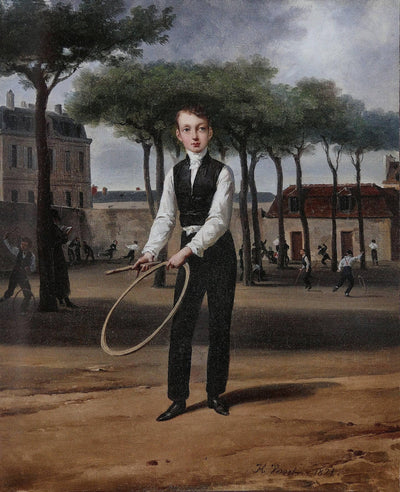
realism and romantic flair in his paintings. His use of light and shadow created depth, while his attention to detail brought scenes to life. This painting of Ferdinand-Philippe-Louis showcases his mastery of oil techniques, allowing for rich textures and vibrant colors.
Influences and Inspirations Behind His Work
Vernet drew inspiration from various sources, including classical art and the natural world. His travels across Europe exposed him to different artistic styles, which he skillfully integrated into his own work. The depiction of childhood innocence in this painting reflects his fascination with the themes of youth and nobility.
The Courtyard Setting: A Symbol of Education and Nobility
The courtyard of the Henri IV High School serves as a powerful backdrop in this painting. It symbolizes the intersection of education and aristocracy, highlighting the importance of learning in noble life. The
architectural elegance of the school reflects the grandeur of French heritage.
Architectural Features of Henri IV High School
Henri IV High School, established in the 14th century, boasts stunning Gothic and
Renaissance architecture. Its intricate facades and spacious courtyards create an inspiring environment for young scholars. This setting enhances the painting's narrative, emphasizing the value of education in shaping future leaders.
Significance of Courtyards in 19th Century France
Courtyards were central to social life in 19th-century France. They served as gathering places for students and aristocrats alike, fostering community and interaction. In Vernet's painting, the courtyard becomes a stage for childhood play, symbolizing the carefree
nature of youth amidst the responsibilities of nobility.
Analyzing the Composition of the Painting
Color Palette and Brushwork Techniques
Vernet's choice of colors in this painting evokes a sense of warmth and vitality. The bright hues of the children's clothing contrast beautifully with the muted tones of the courtyard. This color palette enhances the emotional impact, inviting viewers to connect with the joy of childhood.
Emotional Impact of Color Choices
The vibrant colors not only capture attention but also convey a sense of happiness and freedom. The playful atmosphere is palpable, allowing viewers to feel the innocence and joy of Ferdinand-Philippe-Louis as he engages in play. This emotional resonance is a hallmark of Vernet's artistic genius.
Vernet's Signature Brushwork Style
Vernet's brushwork is characterized by fluidity and precision. He skillfully layered paint to create depth and texture, bringing the scene to life. The dynamic movement of the figures reflects the energy of childhood, making the painting a lively depiction of aristocratic leisure.
Figures and Their Symbolism
The figures in the painting, particularly Ferdinand-Philippe-Louis, are rich in
symbolism. Each character represents different aspects of childhood and nobility, contributing to the overall narrative. Their interactions tell a story of innocence, friendship, and the weight of future responsibilities.
Depiction of Ferdinand-Philippe-Louis: A Study in Character
Ferdinand-Philippe-Louis is portrayed as a lively and curious child, embodying the spirit of youth. His expression reflects joy and wonder, inviting viewers to share in his playful exploration. This portrayal serves as a reminder of the carefree days of childhood, even for those destined for greatness.
Interactions Among Figures: A Narrative in Motion
The interactions among the figures create a dynamic scene filled with movement. The children's laughter and playfulness contrast with the solemnity often associated with nobility. This narrative in motion captures the essence of childhood, highlighting the importance of play in personal development.
Thematic Exploration: Childhood and Nobility
Childhood in the Context of French Aristocracy
Childhood for the French aristocracy was a unique experience, marked by privilege and expectation. Young nobles like Ferdinand-Philippe-Louis enjoyed a life of leisure, yet they were also groomed for future responsibilities. This duality is a central theme in Vernet's painting.
Education and Upbringing of Young Nobles
The education of young nobles was rigorous, combining academic studies with social etiquette. Ferdinand-Philippe-Louis's upbringing included lessons in leadership and governance, preparing him for his role in society. This painting captures a moment of respite from those serious duties, emphasizing the importance of balance.
Play and Leisure: A Glimpse into Aristocratic Life
Play was an essential part of aristocratic life, providing a necessary escape from the pressures of nobility. The painting illustrates this aspect beautifully, showcasing the joy and freedom that childhood brings. It serves as a reminder that even those destined for greatness need moments of joy.
Symbolism of Play in the Painting
Play in this painting symbolizes the innocence of childhood, contrasting sharply with the responsibilities that come with nobility. It highlights the fleeting nature of youth and the inevitable transition into adulthood. This theme resonates deeply, reminding viewers of the importance of cherishing childhood moments.
Contrasting Innocence with the Weight of Nobility
The carefree play of Ferdinand-Philippe-Louis stands in stark contrast to the heavy expectations of his noble lineage. This juxtaposition invites reflection on the pressures faced by young aristocrats. Vernet masterfully captures this tension, making the painting a poignant commentary on the nature of privilege.
Play as a Reflection of Future Responsibilities
While the painting celebrates childhood, it also hints at the future responsibilities that await Ferdinand-Philippe-Louis. The joy of play serves as a temporary reprieve from the weight of his noble duties. This duality adds depth to the artwork, encouraging viewers to consider the complexities of aristocratic life.
Impact and Reception of the Painting
Critical Reception in the 19th Century
Upon its unveiling, Vernet's painting received widespread acclaim. Critics praised its emotional depth and technical skill, recognizing it as a significant contribution to 19th-century art. The portrayal of a young noble in a moment of joy resonated with audiences, making it a beloved piece.
Public and Critical Acclaim
The painting quickly became a favorite among art enthusiasts and the general public. Its relatable theme of childhood innocence struck a chord, leading to numerous exhibitions. Vernet's ability to capture the essence of youth in a noble context was celebrated, solidifying his reputation as a master artist.
Influence on Contemporary Artists
Vernet's work inspired many contemporary artists, who admired his ability to blend realism with emotional storytelling. His techniques influenced a generation of painters, encouraging them to explore themes of childhood and nobility. This painting remains a touchstone for artists seeking to capture the complexities of youth.
Modern Interpretations and Relevance
Today, the painting continues to resonate with audiences, offering insights into the lives of young nobles. Its themes of innocence and responsibility are timeless, making it relevant in contemporary discussions about childhood. The artwork invites viewers to reflect on the balance between play and duty.
How the Painting Resonates Today
In a world where childhood is often overshadowed by adult responsibilities, this painting serves as a reminder of the importance of play. It encourages a dialogue about the value of preserving childhood innocence amidst societal pressures. The emotional depth of the piece remains impactful, transcending time and context.
Exhibitions and Collections Featuring the Work
Ferdinand-Philippe-Louis, Duke of Chartres, playing in the courtyard of the Henri IV high school is featured in various prestigious collections. It has been exhibited in renowned galleries, allowing art lovers to appreciate its beauty and significance. Each exhibition brings new interpretations, keeping the painting alive in the cultural conversation.
FAQs About Ferdinand-Philippe-Louis, Duke of Chartres Painting
What is the historical context of the painting?
The painting captures a moment in the life of Ferdinand-Philippe-Louis during the 19th century, reflecting the values of the French aristocracy and the importance of education.
Who was Horace Vernet and what is his significance in art history?
Horace Vernet was a prominent French painter known for his romantic style and historical themes. His work significantly influenced 19th-century art, particularly in capturing emotion and narrative.
What themes are explored in the painting?
The painting explores themes of childhood innocence, the responsibilities of nobility, and the importance of education and play in shaping future leaders.
How does the painting reflect the life of Ferdinand-Philippe-Louis?
It reflects his life as a young noble, balancing the joys of childhood with the expectations of his aristocratic heritage, showcasing a moment of carefree play.
What techniques did Horace Vernet use in this artwork?
Vernet used oil painting techniques, employing a vibrant color palette and dynamic brushwork to create depth and emotional resonance in the scene.
Are there any notable exhibitions featuring this painting?
Yes, the painting has been featured in various prestigious exhibitions, allowing audiences to engage with its historical and artistic significance.
What should I know about reproductions of this artwork?
Art reproductions of this painting are superior to prints, capturing the rich textures and colors of the original. They offer a more authentic experience, allowing art lovers to appreciate the details and craftsmanship.
How can I appreciate the details in the painting reproduction?
To appreciate the details, take time to observe the color choices, brushwork, and the interactions among figures. Consider the emotional narrative and historical context, enhancing your connection to the artwork.
 4.9/5
4.9/5