4.9/5
4.9/5





SAMPLES OF QUALITY
Recent Hand-Painted Reproductions
Discover some of our latest oil paintings, each one carefully hand-painted on canvas.

AS SEEN IN





Handmade Oil Painting on Canvas Art Reproduction, Museum-quality

The six dominant colors measured from the painting, with the share of canvas each one covers. Click a swatch to copy its hex code.
Processing & Shipping Time
Your delivery time includes two parts:
Shipping Methods
We ship with trusted couriers like FedEx, UPS, and DHL. Every shipment includes a tracking code.
Our goal is to deliver your order safely and quickly.
Shipment Safety Measures
We handle your products with care so they arrive in perfect condition:
Every product is insured and delivered right to your door, so you can feel confident buying from us.
Every Art & See painting is created by artists with 15+ years of experience using professional-grade oil paints and premium linen canvas with UV-resistant protective coating, the same museum-grade materials used in galleries worldwide. Each piece goes through quality review before your approval photos are taken. If after delivery you have any concerns about your painting, contact us at [email protected] and our team will work with you on the best path forward.
Full Warranty
Every painting is protected against physical damage during shipping. If your painting arrives damaged, we repair or replace it, free of charge.
Coverage Details
Transit damage (crushed, torn, water damage): we repair or replace at no cost. Please note that damages resulting from accidents or inappropriate use are not covered under this warranty.
Repair or Replace
Depending on the extent of damage, the affected painting will either be repaired or replaced at no additional cost to you.
Free Service
All warranty services are provided absolutely free of charge.
We want you to absolutely love your handmade artwork. Here's how it works:
In the rare case you approve the photos and the artwork has been shipped and delivered to you, and you still want additional modification requests, we can handle it as a courtesy at our discretion. If accepted, you cover the return shipping cost.
| Type | Hand-Painted Oil Painting Reproduction |
| Original Artist | Federico Faruffini |
| Price Range | $350 to $1,150 |
| Shipping | Free Worldwide |
| Quality | Preview & Approve Before Shipping |
| Medium | Oil on Canvas |
| Canvas | Museum-Grade Linen Canvas |
| Technique | Hand-painted brushstroke-by-brushstroke |
| Art Style | Romanticism |
| Period | 19th Century |
| Artist Nationality | Italian |
| Orientation | Horizontal |
| Subject | Cultural heritage religious, Portraits female |
| Available Sizes | 7 (21'' W × 15'' H to 69'' W × 49'' H, including the original size), plus custom sizes |
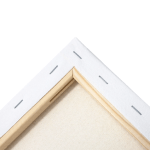
| Framing Options | Unframed, Stretched Canvas, Classic & Modern Frames |
| Delivery | 14–28 business days |
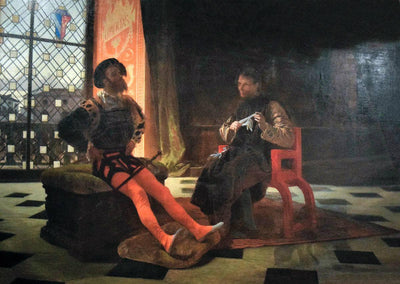
Renaissance Italy was a vibrant tapestry of city-states, each vying for power and influence. The political landscape was marked by intrigue, shifting alliances, and the rise of influential figures. This period saw the emergence of powerful families like the Medici in Florence and the Borgia in Rome, who played pivotal roles in shaping Italy's destiny. The struggle for dominance often led to dramatic confrontations and strategic partnerships, making it a fascinating era for historians and art enthusiasts alike.
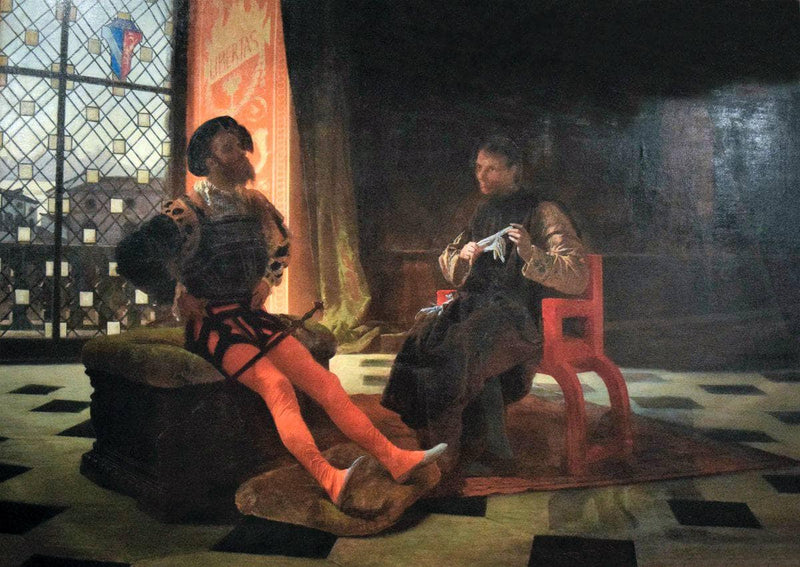
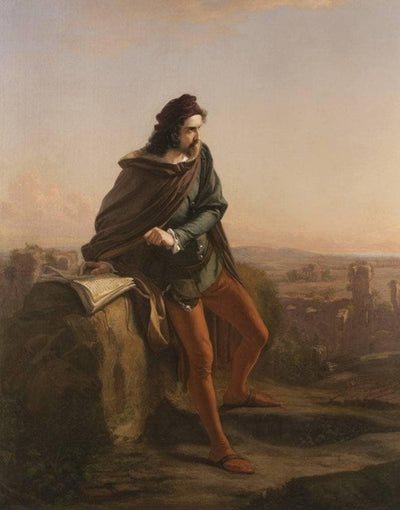
Niccolò Machiavelli served as a secretary to the Florentine Republic, where he gained invaluable insights into the machinations of power. His experiences informed his writings, particularly "The Prince," which remains a cornerstone of political philosophy. Machiavelli's role was not just administrative; he was a keen observer of human behavior and political strategy, which he skillfully articulated in his works. His encounter with Cesare Borgia was a significant moment that highlighted the complexities of political alliances and the nature of power.
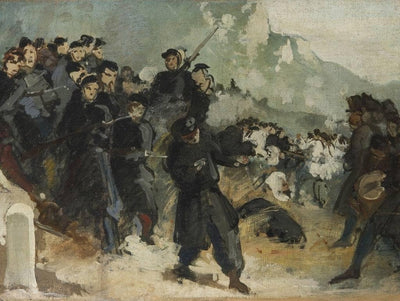
Cesare Borgia, known as the Duke of Valentino, was a formidable figure in Renaissance politics. He was the son of Pope Alexander VI and sought to carve out a powerful state in central Italy. Borgia's ambition was matched only by his ruthlessness, as he employed cunning strategies to eliminate rivals and consolidate power. His relationship with Machiavelli was complex, as Machiavelli admired Borgia's political acumen while also recognizing the darker aspects of his methods. This duality is reflected in Faruffini's painting, capturing the tension between ambition and morality.
Federico Faruffini was a prominent Italian painter known for his ability to blend realism with romantic elements. His works often featured historical themes, showcasing his deep understanding of the subjects he portrayed. Faruffini's technique involved meticulous attention to detail, vibrant colors, and dynamic compositions, which brought his subjects to life. His painting of Machiavelli and Borgia exemplifies his skill in capturing the essence of historical figures and their interactions.
Faruffini's art was influenced by both Romanticism and Realism, two movements that shaped 19th-century art. Romanticism emphasized emotion and individualism, while Realism focused on depicting everyday life and social issues. This blend allowed Faruffini to create works that were not only visually stunning but also rich in narrative and emotional depth. His portrayal of Machiavelli and Borgia reflects this duality, inviting viewers to explore the psychological and political dimensions of their encounter.
Faruffini's contributions to the art world extend beyond his individual works. He played a significant role in the revival of historical painting in Italy, inspiring future generations of artists. His ability to convey complex themes through visual storytelling has left a lasting impact on the genre. Today, art historians and enthusiasts continue to study his techniques and themes, recognizing his importance in the evolution of 19th-century art.
The color palette of Faruffini's painting is rich and evocative, using deep reds, earthy browns, and soft golds to create a sense of drama and tension. The warm tones symbolize power and ambition, while cooler shades suggest the underlying moral complexities of the characters. This careful selection of colors enhances the emotional impact of the scene, drawing viewers into the moment of confrontation between Machiavelli and Borgia.
Faruffini employed masterful composition techniques to guide the viewer's eye. The arrangement of figures creates a dynamic balance, with Machiavelli positioned slightly forward, emphasizing his role as the observer and commentator. Borgia's imposing presence looms in the background, reinforcing his status as a powerful figure. This careful balance of elements invites viewers to engage with the narrative and consider the power dynamics at play.
The facial expressions and body language of Machiavelli and Borgia are pivotal in conveying their personalities. Machiavelli's contemplative gaze reflects his analytical nature, while Borgia's confident posture exudes authority and ambition. These subtle cues provide insight into their characters, allowing viewers to interpret the tension and complexity of their relationship. Faruffini's attention to these details enhances the storytelling aspect of the painting.
This painting serves as a visual exploration of Machiavelli's political philosophy. It encapsulates his belief that the ends often justify the means, a theme prevalent in "The Prince." The encounter between Machiavelli and Borgia symbolizes the intersection of ethics and politics, prompting viewers to reflect on the moral implications of power. Faruffini's work invites a deeper understanding of Machiavelli's ideas and their relevance in contemporary society.
The power dynamics between Machiavelli and Borgia are palpable in this artwork. Borgia's commanding presence contrasts with Machiavelli's more reserved demeanor, highlighting the tension between ambition and caution. This visual representation of their relationship encourages viewers to consider the complexities of political maneuvering and the often-blurred lines between right and wrong in the pursuit of power.
Faruffini's painting delves into the intricate relationship between human nature and politics. It raises questions about morality, ethics, and the motivations behind political actions. The characters embody the struggle between personal ambition and the greater good, reflecting the timeless nature of Machiavelli's insights. This exploration of human nature resonates with audiences, making the painting a thought-provoking piece of art.
Faruffini's brushwork is a testament to his mastery of oil painting. He skillfully layered paint to create texture and depth, giving the figures a lifelike quality. The meticulous detailing of fabrics and skin tones adds realism, drawing viewers into the scene. This technique not only enhances the visual appeal but also reinforces the emotional weight of the encounter.
The use of lighting and shadow in this painting is striking. Faruffini employs chiaroscuro to create a dramatic effect, highlighting the tension between the characters. The interplay of light and dark not only adds depth but also symbolizes the moral ambiguities present in their interaction. This technique elevates the painting, making it a compelling visual narrative.
While oil painting flourished during the Renaissance, Faruffini's 19th-century approach incorporated advancements in technique and materials. The use of brighter pigments and innovative brushwork allowed for greater expression and realism. Faruffini's work bridges the gap between these two eras, showcasing the evolution of oil painting while honoring its rich history.
Upon its unveiling, Faruffini's painting received critical acclaim for its historical accuracy and emotional depth. Art critics praised the way it captured the essence of Machiavelli and Borgia, recognizing its significance in the context of 19th-century art. The painting sparked discussions about the themes of power and morality, solidifying its place in art history.
Faruffini's work has influenced contemporary artists who explore similar themes of power and human nature. His ability to blend historical narrative with emotional resonance continues to inspire modern painters. The painting serves as a reference point for artists seeking to engage with the complexities of political and ethical dilemmas in their work.
Today, Machiavelli's legacy is interpreted through various artistic lenses. Faruffini's painting remains a powerful representation of his ideas, prompting new discussions about the relevance of Machiavelli's philosophy in contemporary politics. Artists and scholars alike continue to explore the intersection of art and political thought, ensuring that Machiavelli's insights endure in modern discourse.
The meeting between Machiavelli and Borgia is significant as it represents the intersection of political theory and practice. It highlights Machiavelli's observations of power dynamics and Borgia's ambitious strategies, which influenced Machiavelli's writings.
This painting reflects Machiavelli's political theories by visually representing the complexities of power, strategy, and human nature. It encapsulates the idea that political actions often involve moral ambiguities.
Faruffini used techniques such as chiaroscuro, detailed brushwork, and a rich color palette to create depth and emotional impact. His mastery of oil painting techniques enhances the realism of the figures.
The main themes depicted in the artwork include power dynamics, the intersection of morality and politics, and the complexities of human nature. These themes invite viewers to reflect on the nature of ambition and ethics.
The painting has been well-received by art critics, praised for its historical accuracy and emotional depth. It has sparked discussions about the themes of power and morality, solidifying its significance in art history.
Reproductions of this painting are crafted with care, capturing the intricate details and vibrant colors of the original. Unlike prints, these painting reproductions offer a superior quality that enhances the visual experience, making them a valuable addition to any art collection.
To care for your reproduction, keep it in a climate-controlled environment away from direct sunlight. Regularly dust the surface with a soft, dry cloth to maintain its vibrancy. Avoid using harsh chemicals, as they can damage the paint.

Discover some of our latest oil paintings, each one carefully hand-painted on canvas.
At Art & See, we're committed to delivering the highest quality art reproductions. Our team of expert artists and state-of-the-art processes ensure that each piece is a masterpiece in its own right.

Experience your masterpiece's creation through daily photos from our expert artists, each with 15+ years of experience.

Your artwork travels first class via UPS, FedEx, or DHL, protected by museum-grade packaging for safe delivery.

Review unedited photos of your finished painting and request unlimited free revisions before it ships. We only ship when you say it's perfect.

Every piece is crafted with archival materials, UV-resistant finishes, and premium British paints to last generations.
Yes, 100% hand-painted with oil on canvas by artists with 15+ years of experience. No prints, no digital shortcuts. You'll see and feel real brushstrokes, just like the original Federico Faruffini masterpiece.
Your Legation of Niccolò Machiavelli, Florentine citizen and secretary, in Imola to meet Cesare Borgia, Duke of Valentino reproduction takes 2–5 weeks to hand-paint depending on size and detail. Once approved, shipping takes 5–8 days via FedEx, UPS, or DHL with full tracking. Free worldwide shipping included.
Absolutely. Once your Legation of Niccolò Machiavelli, Florentine citizen and secretary, in Imola to meet Cesare Borgia, Duke of Valentino is complete, we send you unedited photos, a full view and close-up details. Request unlimited free revisions until you're 100% satisfied. We don't ship until you say "yes."
Every painting goes through our Preview & Approve process: you receive unedited photos of your finished Federico Faruffini reproduction and can request unlimited free revisions before it ships. We only ship when you say it's perfect. If after delivery you have any concerns, contact us at [email protected] and our team will work with you on the best path forward.
Professional-grade oil paints (Windsor & Newton) on premium linen canvas with UV-resistant protective coating. Museum-grade materials built to last generations, the same quality used in galleries worldwide.
Our artists specialize in Federico Faruffini's technique: color accuracy, brushwork, and composition are matched to the original. Every reproduction goes through quality review before your approval photos are taken.
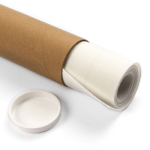
Every painting is insured and delivered door-to-door. Unframed paintings ship in protective hard tubes. Framed paintings are bubble-wrapped in sturdy boxes. If anything arrives damaged, we repair or replace it free.
Dive into the vibrant world of Historic Art. Discover your next painting today.