4.9/5
4.9/5


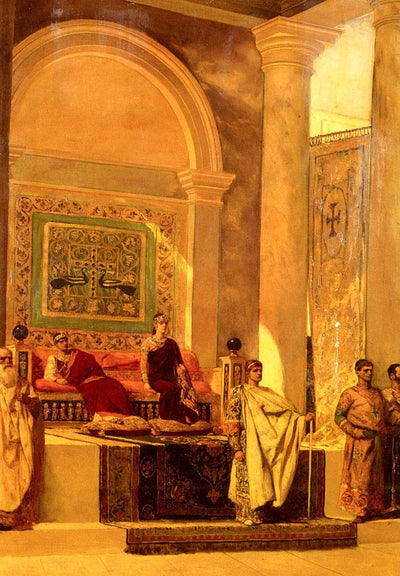






SAMPLES OF QUALITY
Recent Hand-Painted Reproductions
Discover some of our latest oil paintings, each one carefully hand-painted on canvas.

AS SEEN IN





Handmade Oil Painting on Canvas Art Reproduction, Museum-quality

The six dominant colors measured from the painting, with the share of canvas each one covers. Click a swatch to copy its hex code.
Processing & Shipping Time
Your delivery time includes two parts:
Shipping Methods
We ship with trusted couriers like FedEx, UPS, and DHL. Every shipment includes a tracking code.
Our goal is to deliver your order safely and quickly.
Shipment Safety Measures
We handle your products with care so they arrive in perfect condition:
Every product is insured and delivered right to your door, so you can feel confident buying from us.
Every Art & See painting is created by artists with 15+ years of experience using professional-grade oil paints and premium linen canvas with UV-resistant protective coating, the same museum-grade materials used in galleries worldwide. Each piece goes through quality review before your approval photos are taken. If after delivery you have any concerns about your painting, contact us at [email protected] and our team will work with you on the best path forward.
Full Warranty
Every painting is protected against physical damage during shipping. If your painting arrives damaged, we repair or replace it, free of charge.
Coverage Details
Transit damage (crushed, torn, water damage): we repair or replace at no cost. Please note that damages resulting from accidents or inappropriate use are not covered under this warranty.
Repair or Replace
Depending on the extent of damage, the affected painting will either be repaired or replaced at no additional cost to you.
Free Service
All warranty services are provided absolutely free of charge.
We want you to absolutely love your handmade artwork. Here's how it works:
In the rare case you approve the photos and the artwork has been shipped and delivered to you, and you still want additional modification requests, we can handle it as a courtesy at our discretion. If accepted, you cover the return shipping cost.
| Type | Hand-Painted Oil Painting Reproduction |
| Original Artist | Benjamin Constant |
| Price Range | $350 to $1,150 |
| Shipping | Free Worldwide |
| Quality | Preview & Approve Before Shipping |
| Medium | Oil on Canvas |
| Canvas | Museum-Grade Linen Canvas |
| Technique | Hand-painted brushstroke-by-brushstroke |
| Art Style | Romanticism |
| Artist Nationality | French |
| Orientation | Vertical |
| Subject | Architectural, Cultural heritage religious |
| Available Sizes | 7 (19'' W × 26'' H to 50'' W × 69'' H, including the original size), plus custom sizes |
| Framing Options | Unframed, Stretched Canvas, Classic & Modern Frames |
| Delivery | 14–28 business days |
| Size | 29 × 39.9 cm (11.5 × 15.5 in) |
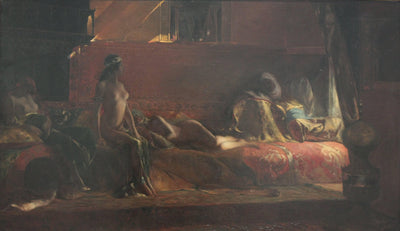
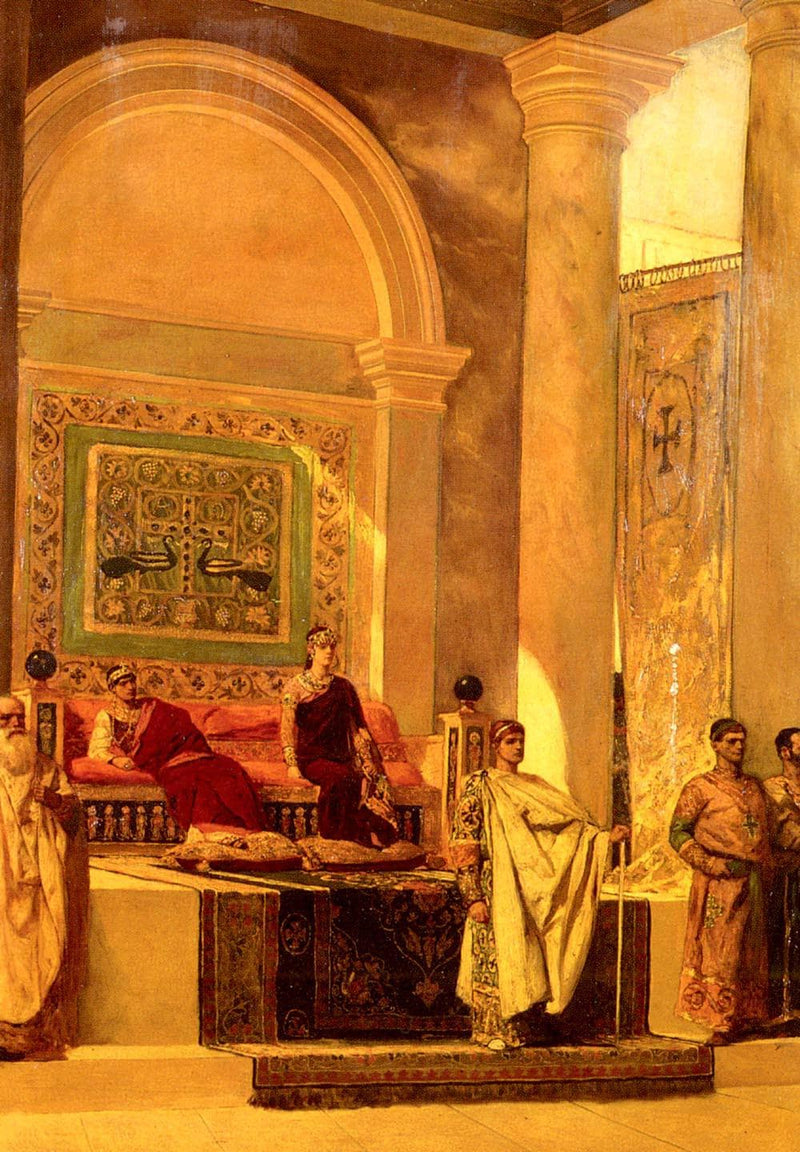
The Byzantine Empire, known for its rich tapestry of culture and politics, thrived from the 4th to the 15th century. This empire was a continuation of the Roman Empire in the East, with its capital in Constantinople, now Istanbul. The Byzantine era was marked by a fusion of Greek, Roman, and Christian influences, creating a unique cultural identity. The opulence of the Byzantine court was reflected in its art, architecture, and ceremonial practices, showcasing the power and authority of its emperors.
Benjamin Constant, a prominent French painter born in 1845, is celebrated for his historical and genre paintings. His works often depict grand scenes filled with rich detail and vibrant colors. Constant's fascination with the Byzantine Empire led him to create "The Throne Room in Byzantium," a painting that captures the essence of imperial power and the grandeur of Byzantine architecture. His ability to blend historical accuracy with artistic flair makes his work stand out in the realm of 19th-century art.
Constant's painting was influenced by the Romantic movement, which emphasized emotion and individualism. Additionally, the academic style of the time, with its focus on realism and historical accuracy, played a significant role in shaping his artistic approach. The interplay of these movements allowed Constant to create a work that is both visually stunning and historically significant.
The color palette of "The Throne Room in Byzantium" is rich and vibrant, featuring deep reds, golds, and blues. These colors symbolize wealth, power, and divinity, evoking the grandeur of the Byzantine court. The use of gold, in particular, reflects the opulence of the imperial setting and the divine right of the emperor.
Constant's composition skillfully arranges figures and architectural elements to draw the viewer's eye. The throne, central to the painting, commands attention, surrounded by courtiers and dignitaries. The architectural features, such as the grand arches and intricate mosaics, enhance the sense of space and grandeur, immersing the viewer in the imperial atmosphere.
Constant expertly employs light and shadow to create depth and realism in the painting. The interplay of light highlights the figures and architectural details, while shadows add a sense of drama. This technique not only enhances the three-dimensionality of the scene but also evokes the solemnity of the imperial setting.
The painting is rich in regal symbols, including crowns, scepters, and other imperial insignia. These elements signify the authority and divine right of the emperor. The presence of such symbols reinforces the idea of the emperor as a representative of God on Earth, a central tenet of Byzantine ideology.
Byzantine architecture is characterized by its grand domes, intricate mosaics, and lavish decorations. In "The Throne Room in Byzantium," these features are prominent, reflecting the architectural innovations of the time. The use of gold mosaics and elaborate columns not only serves an aesthetic purpose but also symbolizes the glory of the empire.
The figures in the painting represent various roles within the Byzantine court, from the emperor to high-ranking officials. Each figure is carefully crafted to convey their status and importance. The diversity of attire and expressions adds depth to the narrative, showcasing the complexity of court life in Byzantium.
The emperor was the central figure in Byzantine society, embodying both political and religious authority. This dual role is evident in the painting, where the emperor's presence commands respect and reverence. The depiction of the throne room serves as a reminder of the emperor's power and the intricate hierarchy of the Byzantine court.
The painting subtly reflects the close relationship between the church and the state in Byzantine culture. The emperor was often seen as God's representative, and this divine connection is illustrated through the use of religious symbols and the grandeur of the setting. This intersection of power and faith is a recurring theme in Byzantine art.
Women in Byzantine society held significant roles, often influencing political decisions behind the scenes. In "The Throne Room in Byzantium," the presence of female figures suggests their importance in the imperial court. This representation challenges traditional views of gender roles in history, highlighting the complexity of women's influence in Byzantine politics.
Constant's brushwork is meticulous, creating a rich texture that adds depth to the painting. The careful layering of paint enhances the realism of the figures and the opulence of the setting. This attention to detail invites viewers to explore the intricacies of the scene.
The use of perspective in "The Throne Room in Byzantium" guides the viewer's eye through the composition. Constant employs a linear perspective that draws attention to the throne, emphasizing its significance. This technique not only enhances the visual appeal but also reinforces the narrative of power and authority.
Constant's work echoes the classical art of Ancient Rome and Greece, evident in the architectural elements and the portrayal of figures. This influence reflects the Byzantine Empire's roots in classical civilization, bridging the past with the present. The reverence for classical forms adds a layer of depth to the painting, connecting it to a broader artistic tradition.
"The Throne Room in Byzantium" shares similarities with other Byzantine artworks, particularly in its use of symbolism and grandeur. Like many Byzantine pieces, it emphasizes the divine right of rulers and the opulence of the court. This connection to other works highlights the continuity of themes within Byzantine art.
In contrast to contemporary European paintings, Constant's work focuses on historical narrative and grandeur. While many European artists of the time explored individualism and emotion, Constant's painting remains rooted in the collective experience of Byzantine society. This distinction sets "The Throne Room in Byzantium" apart as a unique representation of imperial power.
The legacy of "The Throne Room in Byzantium" extends beyond its time, influencing future artists who sought to capture the essence of power and authority. Its detailed representation of imperial life and the use of color and composition have inspired countless works in the realm of historical painting. Constant's ability to blend history with artistry continues to resonate with artists today.
Art enthusiasts who visit the original painting often describe a profound sense of connection to history. Standing before the artwork, viewers can appreciate the intricate details and the emotions conveyed through Constant's brushwork. This experience allows for a deeper understanding of the Byzantine Empire's grandeur.
The emotional impact of "The Throne Room in Byzantium" is significant. Viewers often feel a sense of awe and reverence, drawn into the world of imperial power. The painting evokes feelings of nostalgia for a time when art and authority were intertwined, creating a lasting impression.
"The Throne Room in Byzantium" holds a vital place in modern culture, serving as a reminder of the complexities of power and authority. Its themes resonate with contemporary discussions about leadership and governance. The painting invites viewers to reflect on the past while considering its relevance in today's world.
The historical significance lies in its portrayal of Byzantine imperial power and the cultural richness of the era. It serves as a visual document of the grandeur and complexity of Byzantine society.
The key figures include the emperor, courtiers, and dignitaries, each representing different aspects of Byzantine court life and hierarchy.
Constant used techniques such as meticulous brushwork, a rich color palette, and perspective to create depth and realism in the painting.
The painting reflects Byzantine culture through its use of regal symbols, architectural grandeur, and the depiction of the emperor's divine authority.
The themes include power, authority, the divine right of kings, and the intersection of church and state, as well as gender dynamics in the imperial court.
To appreciate the details, take time to observe the intricate brushwork, the symbolism in the colors, and the arrangement of figures and architecture. Each element contributes to the overall narrative.
When reproducing "The Throne Room in Byzantium," consider that painting reproductions offer a superior quality compared to prints. They capture the texture, depth, and vibrancy of the original artwork, allowing for a more authentic experience.

Discover some of our latest oil paintings, each one carefully hand-painted on canvas.
At Art & See, we're committed to delivering the highest quality art reproductions. Our team of expert artists and state-of-the-art processes ensure that each piece is a masterpiece in its own right.

Experience your masterpiece's creation through daily photos from our expert artists, each with 15+ years of experience.

Your artwork travels first class via UPS, FedEx, or DHL, protected by museum-grade packaging for safe delivery.

Review unedited photos of your finished painting and request unlimited free revisions before it ships. We only ship when you say it's perfect.

Every piece is crafted with archival materials, UV-resistant finishes, and premium British paints to last generations.
Yes, 100% hand-painted with oil on canvas by artists with 15+ years of experience. No prints, no digital shortcuts. You'll see and feel real brushstrokes, just like the original Benjamin Constant masterpiece.
Your The Throne Room in Byzantium reproduction takes 2–5 weeks to hand-paint depending on size and detail. Once approved, shipping takes 5–8 days via FedEx, UPS, or DHL with full tracking. Free worldwide shipping included.
Absolutely. Once your The Throne Room in Byzantium is complete, we send you unedited photos, a full view and close-up details. Request unlimited free revisions until you're 100% satisfied. We don't ship until you say "yes."
Every painting goes through our Preview & Approve process: you receive unedited photos of your finished Benjamin Constant reproduction and can request unlimited free revisions before it ships. We only ship when you say it's perfect. If after delivery you have any concerns, contact us at [email protected] and our team will work with you on the best path forward.
Professional-grade oil paints (Windsor & Newton) on premium linen canvas with UV-resistant protective coating. Museum-grade materials built to last generations, the same quality used in galleries worldwide.
Our artists specialize in Benjamin Constant's technique: color accuracy, brushwork, and composition are matched to the original. Every reproduction goes through quality review before your approval photos are taken.
Every painting is insured and delivered door-to-door. Unframed paintings ship in protective hard tubes. Framed paintings are bubble-wrapped in sturdy boxes. If anything arrives damaged, we repair or replace it free.
Dive into the vibrant world of Historic Art. Discover your next painting today.