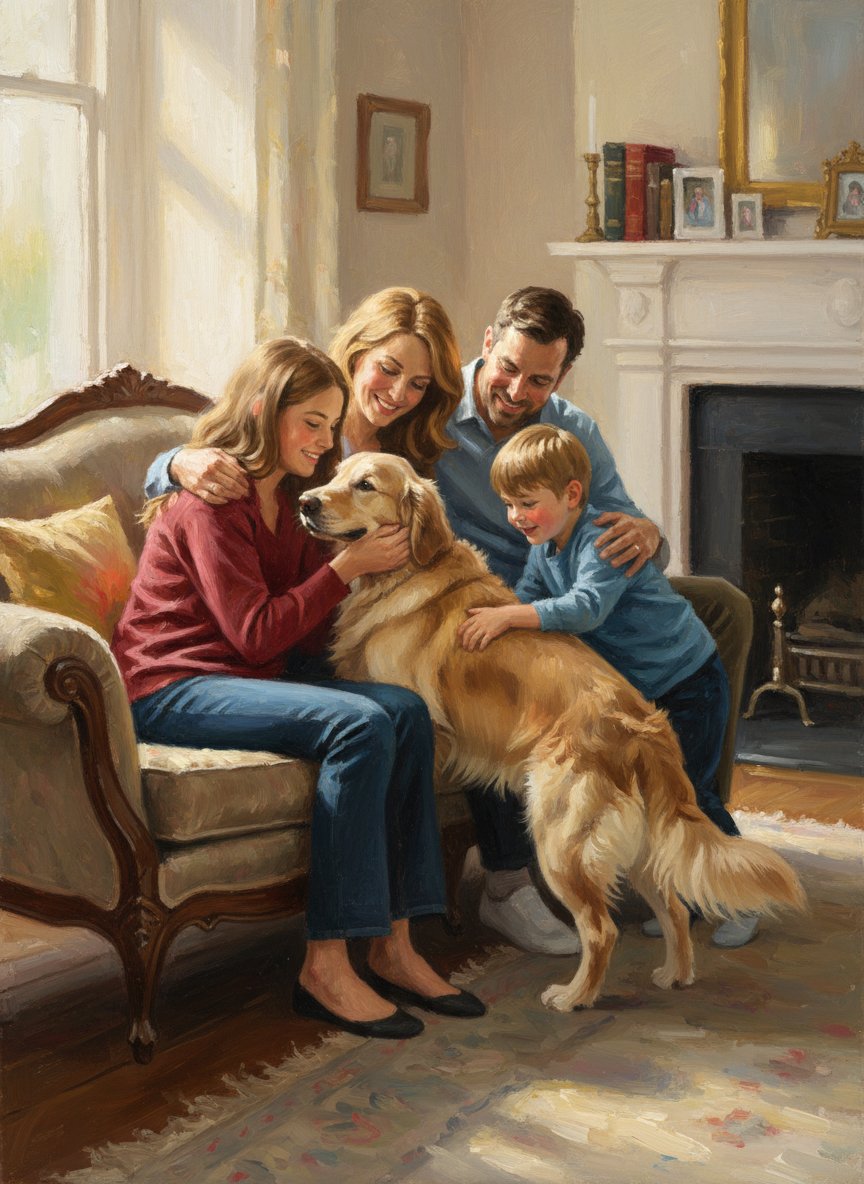
Dogs do not pose for photographs. They sniff the camera, look the wrong way, close their eyes at the exact moment you press the button, or sprint out of frame. Getting a perfect photo of your family with the dog is one of the most reliably frustrating experiences in photography.
Which is precisely why a painted portrait works so well. An artist takes the best available photos — one good shot of the dog, one good shot of the family — and combines them into a single scene where everyone looks their best and nobody's eyes are closed.
This guide covers how to photograph your dog and family for a portrait, which mediums handle fur best, composition ideas, and how the process works from start to finish.
TL;DR: You do not need one perfect photo of everyone together. An artist can composite from separate shots. This guide covers photo tips for dogs (and humans), the best painting mediums for fur, five composition ideas, and ordering advice.
The Photo Does Not Have to Be Perfect
This is the single most important thing to understand: the photo is reference material, not the final product. The artist interprets and improves it. A slightly blurry background, an imperfect crop, or a photobombing neighbor will not appear in the painting.
What the artist needs:
- One clear shot of the dog's face. Eyes, nose, and ears visible. Natural light. Even a phone photo works.
- One clear shot of the family. Faces visible, no harsh shadows.
- They do not need to be from the same day, location, or even year. The artist combines them.
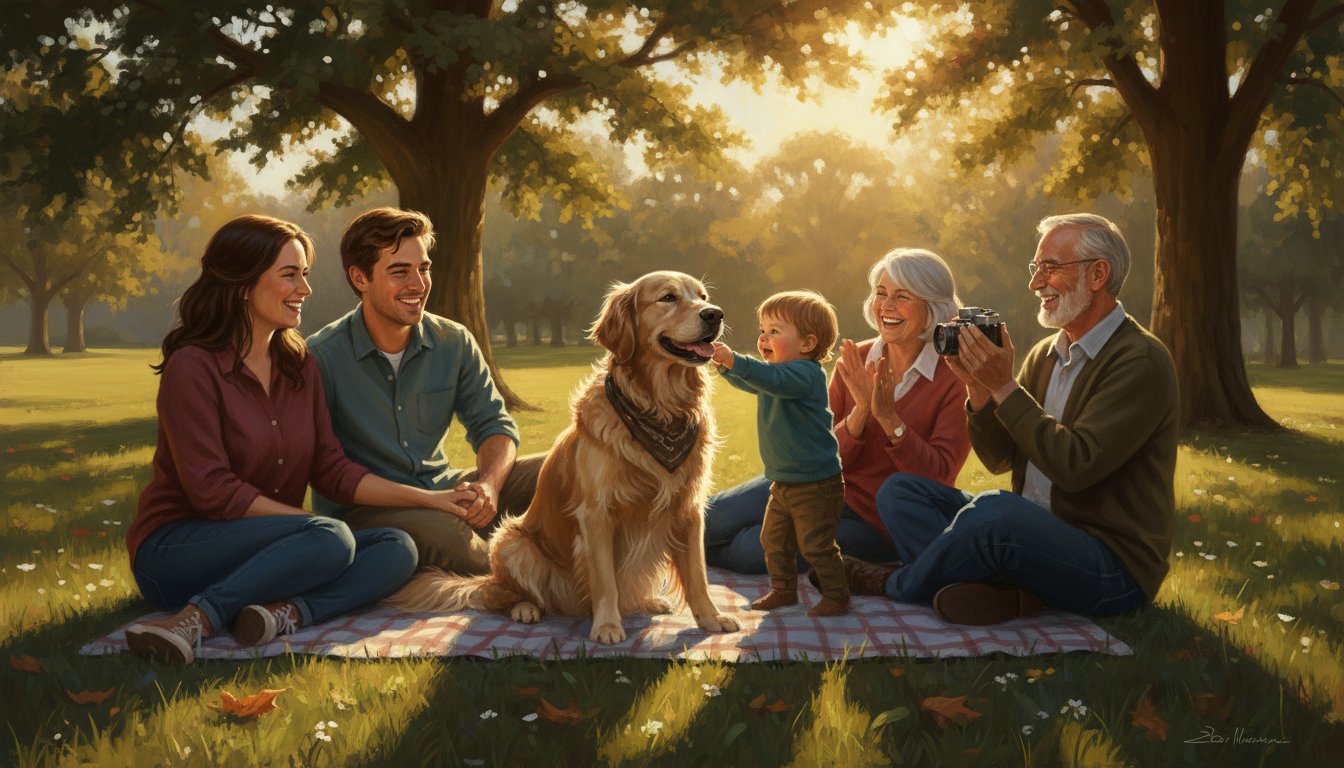
Photo Tips for Dogs
Getting a usable reference photo from a dog requires strategy:
- Shoot after exercise. A tired dog is a calmer dog. Take them for a long walk first, then photograph them when they sit down.
- Use treats at camera height. Hold a treat next to the lens. The dog looks at the treat; the camera captures a direct gaze.
- Outdoor natural light. Avoid flash — it washes out fur color and creates harsh shadows. A shaded porch or an overcast day produces the best lighting for fur texture.
- Burst mode. Take fifty shots in rapid succession. You need one good one. The odds improve dramatically with volume.
- Get low. Shoot from the dog's eye level, not standing above them. This produces a more engaging composition and avoids the "looking down" distortion.
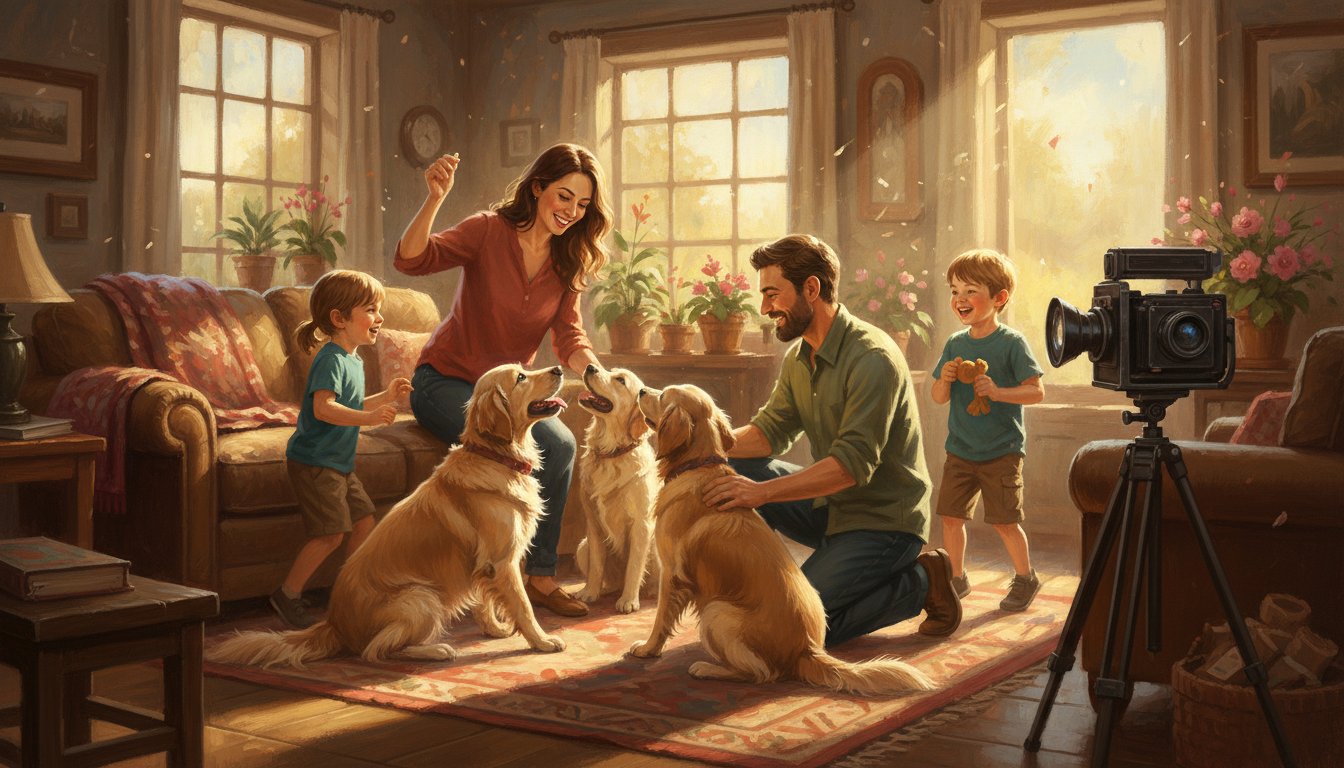
Photo Tips for the Family (With the Dog Spot Open)
Since the artist will composite the dog into the family photo, leave physical space in the composition for the dog to be painted in:
- Leave a gap at knee level or between two people where the dog will sit or stand.
- Natural poses only. A dog will not look natural next to a family standing in a rigid line. Choose a relaxed composition — sitting on the porch, gathered on a couch, standing loosely in the yard.
- Match the lighting conditions. If the dog photo was taken outdoors in shade, the family photo should be in similar light. The artist can adjust, but matched lighting produces the most natural result.
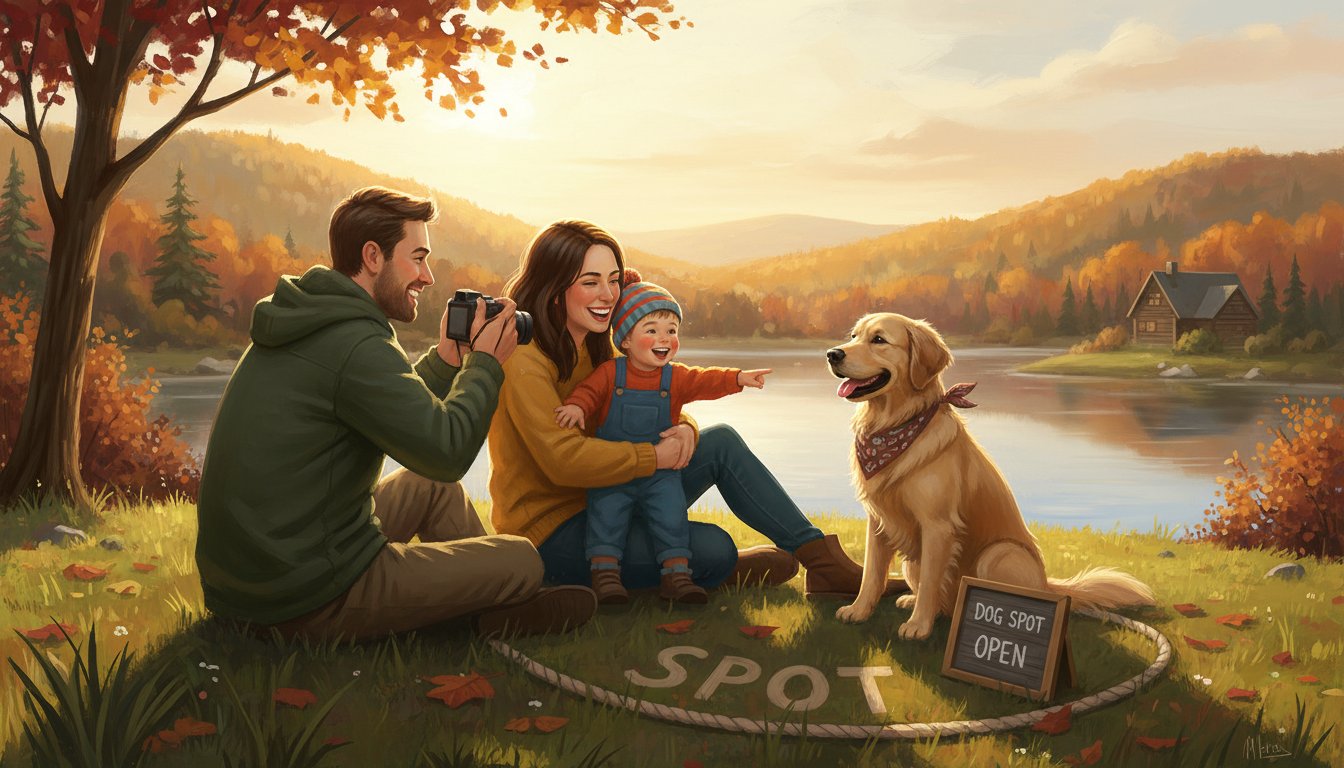
Which Medium Works Best for Family-With-Dog Portraits?
| Medium | Fur Quality | Family Detail | Best For |
|---|---|---|---|
| Oil | Excellent — layered, textured, rich | Excellent | The most natural and detailed result overall |
| Acrylic | Very good — vibrant, clean | Very good | Modern homes, bright colors |
| Watercolor | Soft, impressionistic | Good for small groups | Intimate portraits of 2-3 subjects |
| Charcoal | Dramatic — black and white only | Strong contrast | Artistic households, moody compositions |
| Pencil | Delicate — individual hairs | Fine detail | Small, intimate pieces |
| Pastel | Warm, soft | Warm tones | Cozy rooms with warm decor |
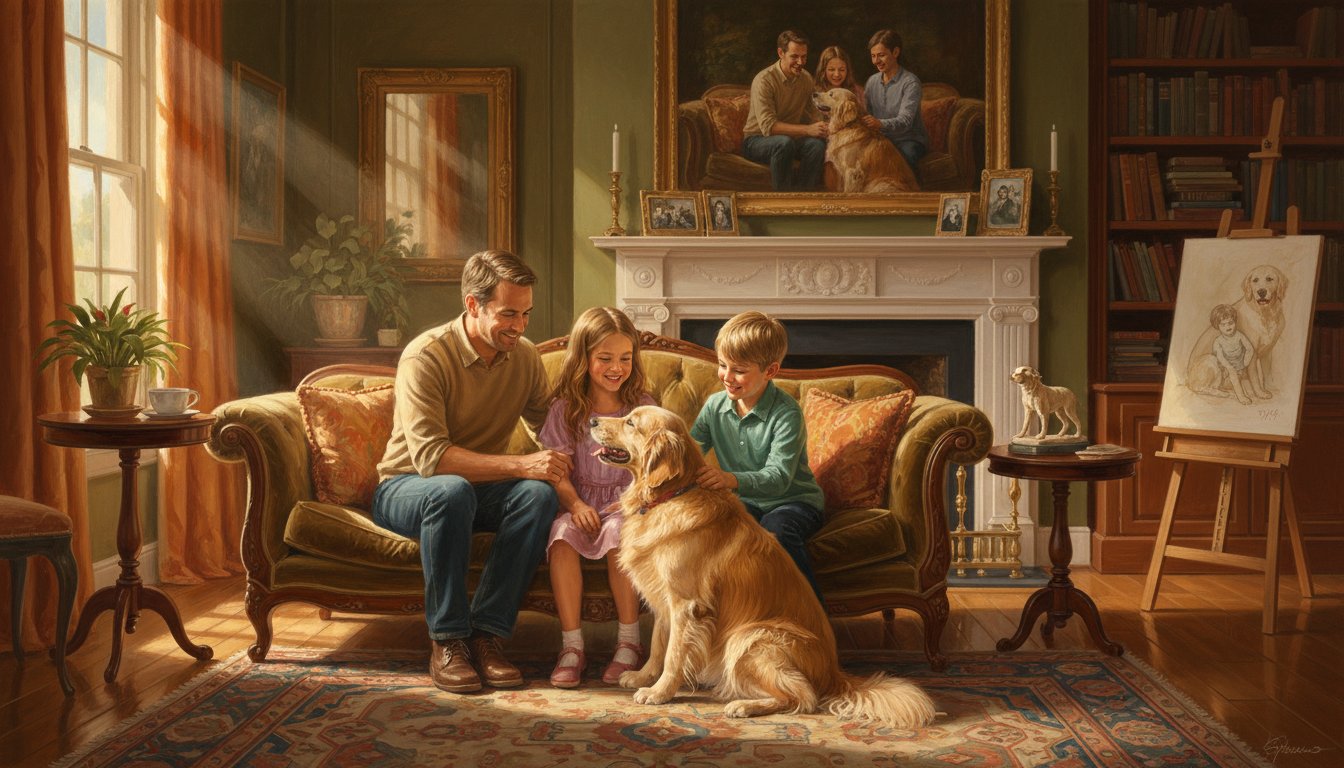
Oil handles fur best because the medium allows layered brushstrokes that replicate the depth and variation of a coat. Dark dogs, light dogs, curly coats, smooth coats — oil captures it all with the most realism.
Five Composition Ideas
- The Couch Scene. Family seated on the couch; dog sprawled across laps or lying at their feet. Natural, relaxed, lived-in.
- The Front Porch. Family on the steps or standing on the porch; dog sitting beside the youngest child. Classic Americana.
- The Walking Shot. Family walking in a field, park, or down a sidewalk; dog on a leash or bounding ahead. Movement and energy.
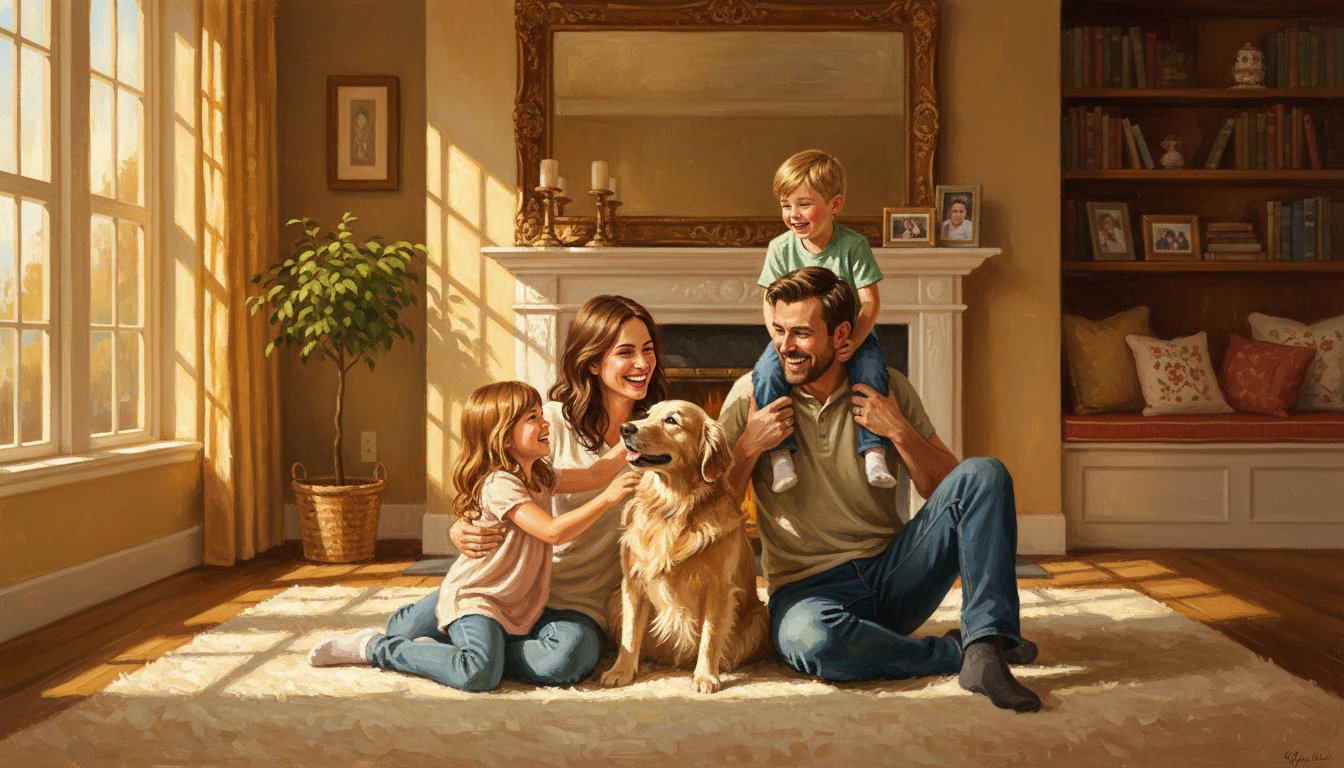
- The Floor Huddle. Everyone sitting on the floor — blankets, pillows, the dog in the center. Works especially well for families with young children.
- The Golden Hour Moment. Shot in the last hour of sunlight, everyone lit in warm tones. The dog in profile or gazing at the family. Pastel or oil captures this light beautifully.
How to Order
The process is the same as any custom portrait, with one extra consideration: the dog.
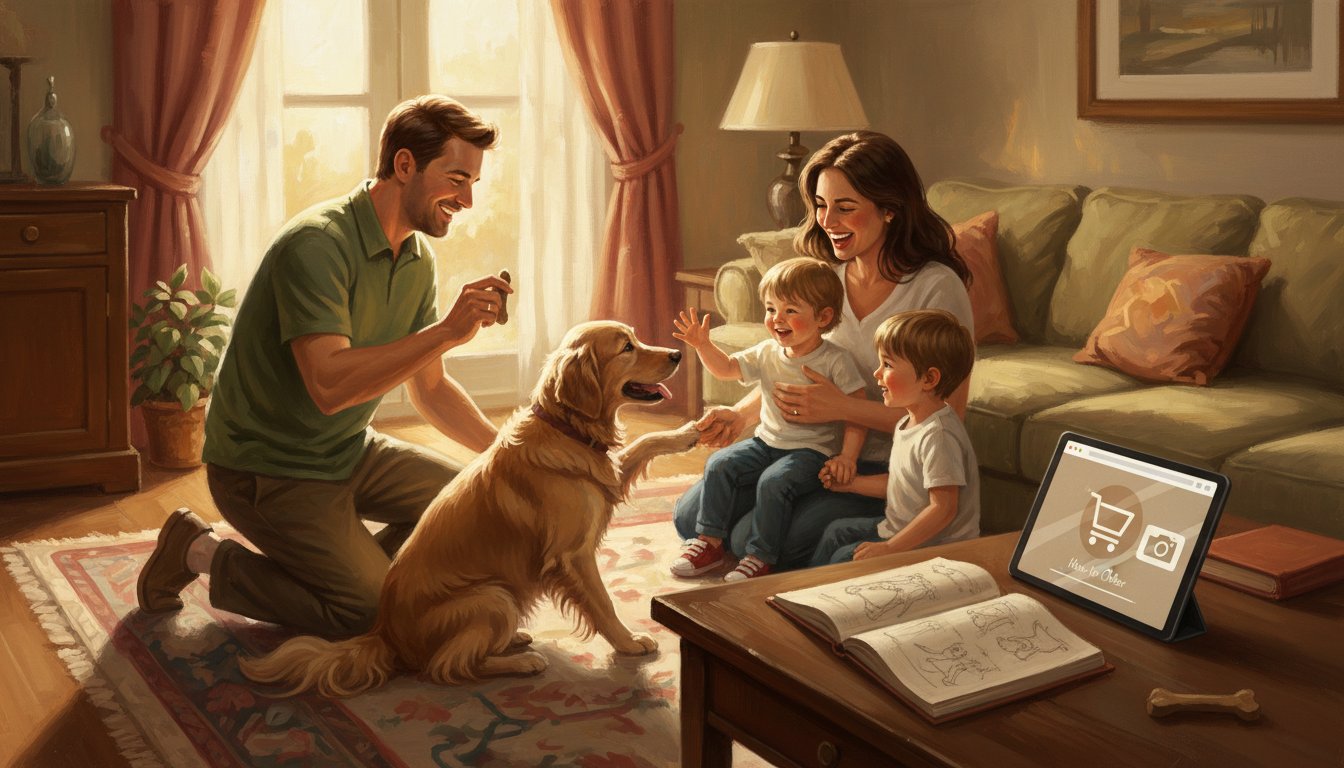
- Gather your photos. At least one clear shot of the dog's face and one of the family. They do not need to be from the same session.
- Describe the composition. Tell the artist where the dog should be positioned relative to the family. Front and center? Beside a specific person? Lying at their feet?
- Choose a medium based on the table above.
- Review the preview. Pay special attention to the dog's likeness — fur color, ear shape, eye expression. Request changes if needed.
- Approve and receive. Most studios deliver within one to two weeks after approval.
Art & See handles composite portraits from separate reference photos. You can browse pet portrait examples or explore family portrait ideas.
For related reading, see dog birthday gift ideas or sibling portrait ideas.
Getting Your Dog to Cooperate for the Photo
The hardest part of a family-with-dog portrait is getting a usable reference photo. Dogs do not pose on command — not reliably, anyway.
Tire them out first. Take the dog for a long walk or play session before the photo shoot. A tired dog is a calm dog. You do not need them asleep — just past the zoomies stage.
Use treats strategically. Have someone stand behind the photographer holding a treat at nose height. This gets the ears-up, eyes-forward look that translates beautifully to a portrait. Time the treat reveal for the exact moment the shutter clicks.
Accept imperfection. The dog looking slightly away, tongue out, ears back — these quirks make the portrait feel real. Artists can adjust minor positioning issues, so do not exhaust yourself chasing perfection in the reference photo.
Consider a composite. If you cannot get the whole family plus the dog in one frame, provide separate photos. Experienced artists combine them into a single composition regularly. This is especially helpful for families with pets who become anxious around groups.
Including Pets Who Have Passed
One of the most meaningful applications of family portraiture is including a pet who is no longer here. You provide reference photos of the pet alongside current family photos, and the artist paints everyone together — the family as it was meant to be.
This works particularly well as a surprise gift for the family member who was closest to the pet. The emotional impact of seeing the whole family, pet included, in a single painting is difficult to overstate.
Choosing the Right Setting
The setting of a family-with-dog portrait matters more than most people realize:
At home. The most authentic option. Your living room, backyard, or front porch gives the portrait context — this is where life happens. Dogs are most comfortable at home, which means more natural expressions and body language.
At the park. Good natural light and green backgrounds create an evergreen aesthetic. The challenge is that dogs are often overstimulated in parks — too many smells, too many squirrels. A quiet corner of a familiar park works better than the main lawn.
At the beach. Gorgeous if the dog loves water. Stressful if they do not. Sand and surf create beautiful textures in paintings. Time it for golden hour (the hour before sunset) for the best light.
In the studio. Controlled lighting and clean backgrounds produce consistently good reference photos. Many pet photographers have treats, toys, and patience to get good expressions. The downside: studio portraits can feel less personal than location shoots.
For commissioned paintings, the background can be changed or simplified by the artist regardless of the original photo location. So prioritize getting natural expressions from both the family and the dog — the artist can handle the rest.
Frame and Display Tips
A family-with-dog portrait deserves prominent placement. The most common location is above a sofa or fireplace — these walls naturally draw the eye and provide enough space for larger formats. For smaller portraits, a hallway gallery wall or bedroom display works well. Match the frame to your home's existing style: ornate gold for traditional interiors, simple black or natural wood for modern spaces.
The best family-with-dog portraits capture a simple truth: the dog is not an accessory in the photo — they are a member of the family. When the portrait reflects that reality, it becomes something the whole family connects with for years. That connection — between the image on the wall and the living, breathing household it represents — is exactly the point. It is not decoration. It is documentation of a family as it actually is, four-legged members included.
The American Kennel Club's photo tips for dogs include breed-specific advice on getting cooperation during photo sessions. For families who want to include a pet who has passed, the Association for Pet Loss and Bereavement provides resources on memorial options.
Frequently Asked Questions
Can an artist paint a good portrait if my dog would not sit still for the photo?
Yes. Artists work from photographs, not live sittings. A single clear photo of your dog's face — even if the body is blurry or the background is messy — is enough. The artist handles composition, posture, and cleanup.
What if the dog's photo and the family's photo are from different times or locations?
Artists composite from multiple source photos regularly. You provide one photo of the family and one of the dog; the painter combines them into a single natural scene, matching scale, lighting, and positioning.
Which painting medium captures fur texture best?
Oil is the best for fur detail — it allows layered brushstrokes that replicate the depth and texture of a coat. Acrylic is a close second. Watercolor softens fur into a more impressionistic look, which some families prefer.