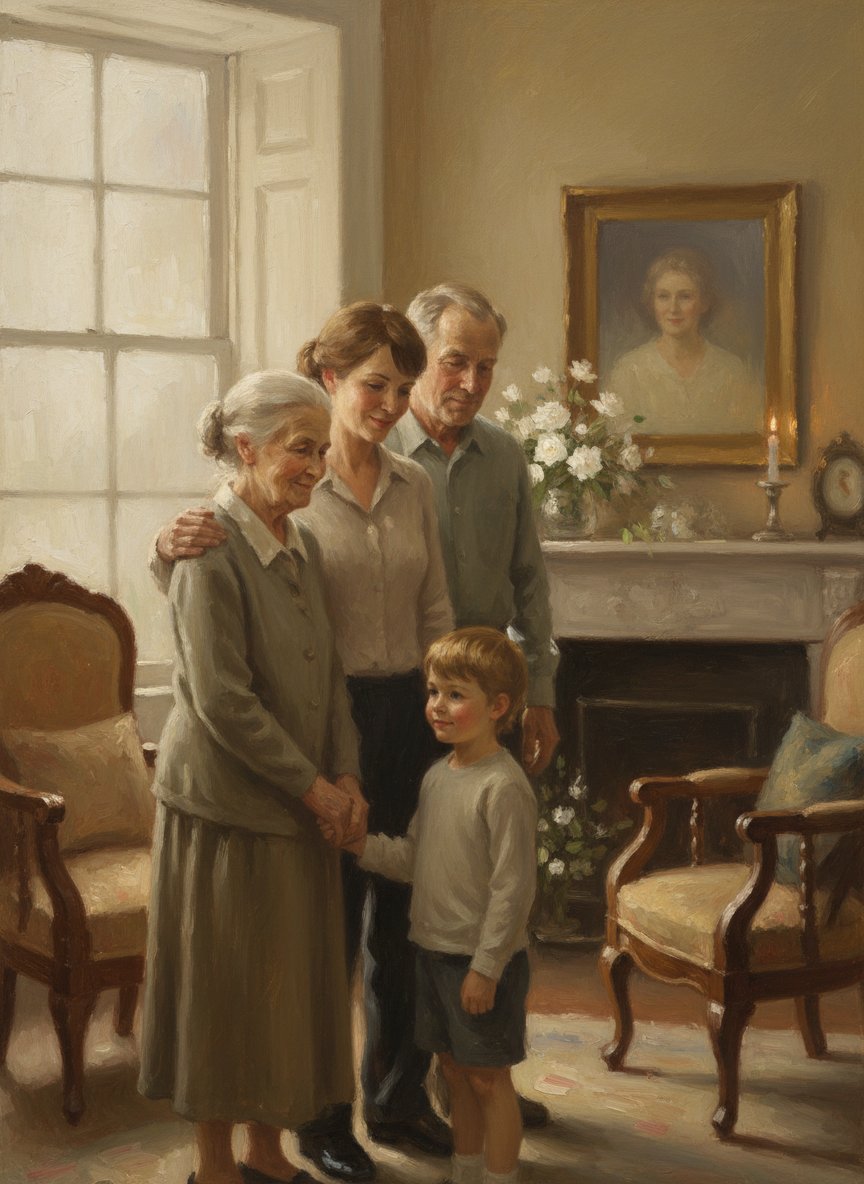
There is a gap in the family photo on the mantle. Everyone can see it. Nobody mentions it, but the absence is louder than anything in the room.
When a family member dies, the photographs freeze. New milestones happen — graduations, weddings, holidays — and the person who should be there is missing from every frame. For many families, that absence compounds the grief: not only is the person gone, but the visual record of the family moves on without them.
Incorporating a lost loved one into a family portrait is one way to close that gap. It does not erase the loss. It acknowledges it — and says, quietly, you are still part of this family.
TL;DR: Artists can add a deceased family member to a portrait by combining multiple photographs into a single painted scene. This guide explains how the process works, which mediums produce the best results, real examples of how families have used this service, and what to expect emotionally when the portrait arrives.
Why Families Choose This
The request is more common than most people realize. Portrait studios report that composite family paintings — where one or more subjects are painted from a different photograph than the rest of the group — account for a significant share of their memorial commissions.
The reasons vary:
- A grandparent died before a grandchild was born. The family wants a portrait that includes both, even though they never met in person.
- A parent passed before a wedding. The couple wants their parent present in their wedding portrait.
- A sibling died young. The remaining siblings, now adults, want a portrait of all of them together at their current ages — including the one who is no longer here.
- A pet and a person. A family wants their late parent pictured with the dog they loved.
Shotkit's memorial picture guide and US Urns Online's photo memorial ideas offer additional approaches, but a hand-painted composite is the option most families describe as feeling authentic rather than artificial.
How the Process Works
The mechanics are simpler than most people expect:
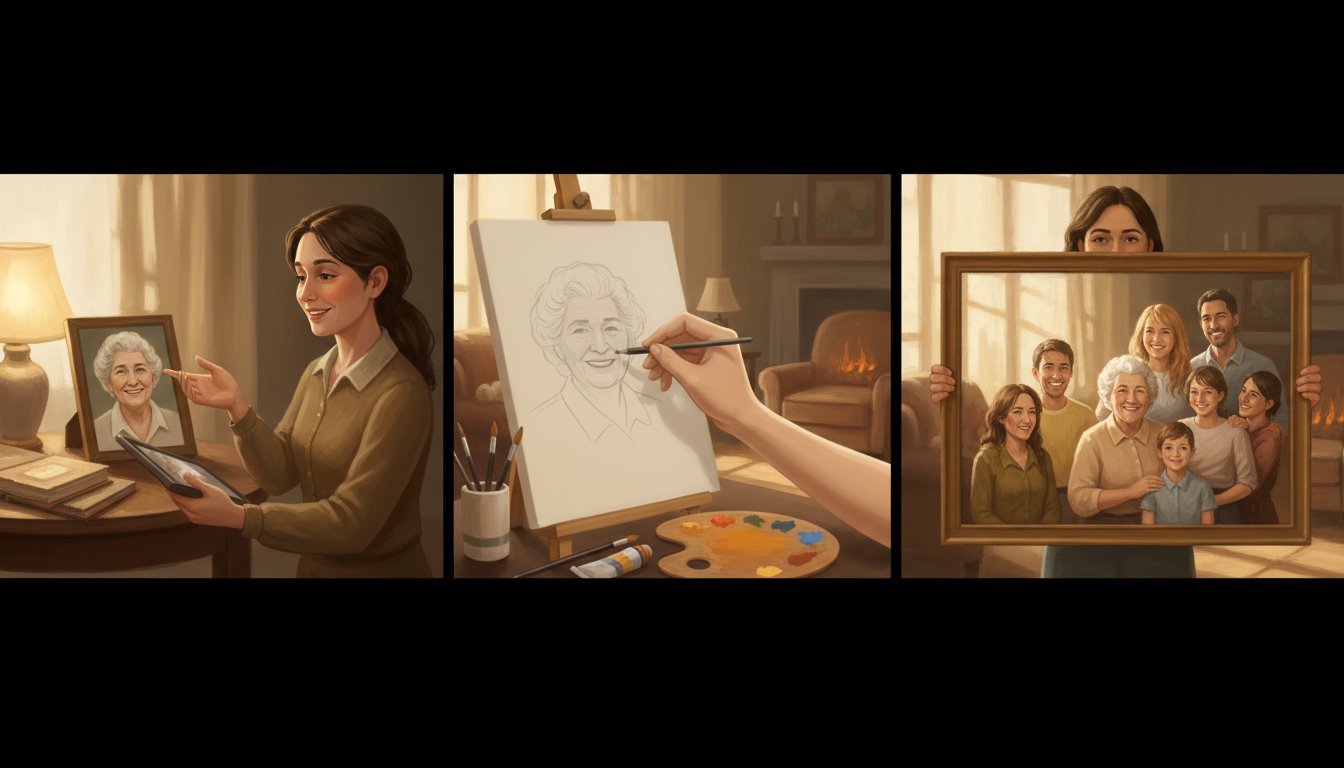
Step 1: Gather Your Reference Photos
You need at least one clear photo of each person who will appear in the portrait. The photos do not need to be from the same year, the same location, or even the same decade. A skilled painter reconciles differences in lighting, clothing style, and age.
For the lost loved one, use the photo that best captures their face and expression. Candid shots often produce more moving results than posed studio photos.
Step 2: Describe the Scene You Envision
Tell the artist where each person should be positioned. Should the lost loved one stand in the center or to the side? Should they appear at their current age or the age in the reference photo? Should the setting be a specific place — a family home, a garden, a holiday table — or a neutral background?
The more detail you provide, the better the result.
Step 3: Choose a Medium
Not every medium handles composite work equally well:
| Medium | Composite Suitability | Why |
|---|---|---|
| Oil painting | Excellent | Full control over blending, lighting, and skin tone matching. The gold standard for composites. |
| Acrylic | Very good | Bold colors, quick drying, strong for vibrant family scenes. |
| Watercolor | Good for smaller groups | Softer, dreamlike quality. Works best with 2-3 subjects. |
| Charcoal | Good for formal tributes | Dramatic black-and-white elegance. Simplifies lighting differences. |
| Pencil sketch | Adequate for intimate pieces | Detailed but limited in color. Best for couples or parent-child composites. |
| Pastel | Good for warm tones | Gentle, comforting feel. Works well for generational portraits. |
Step 4: Review the Preview
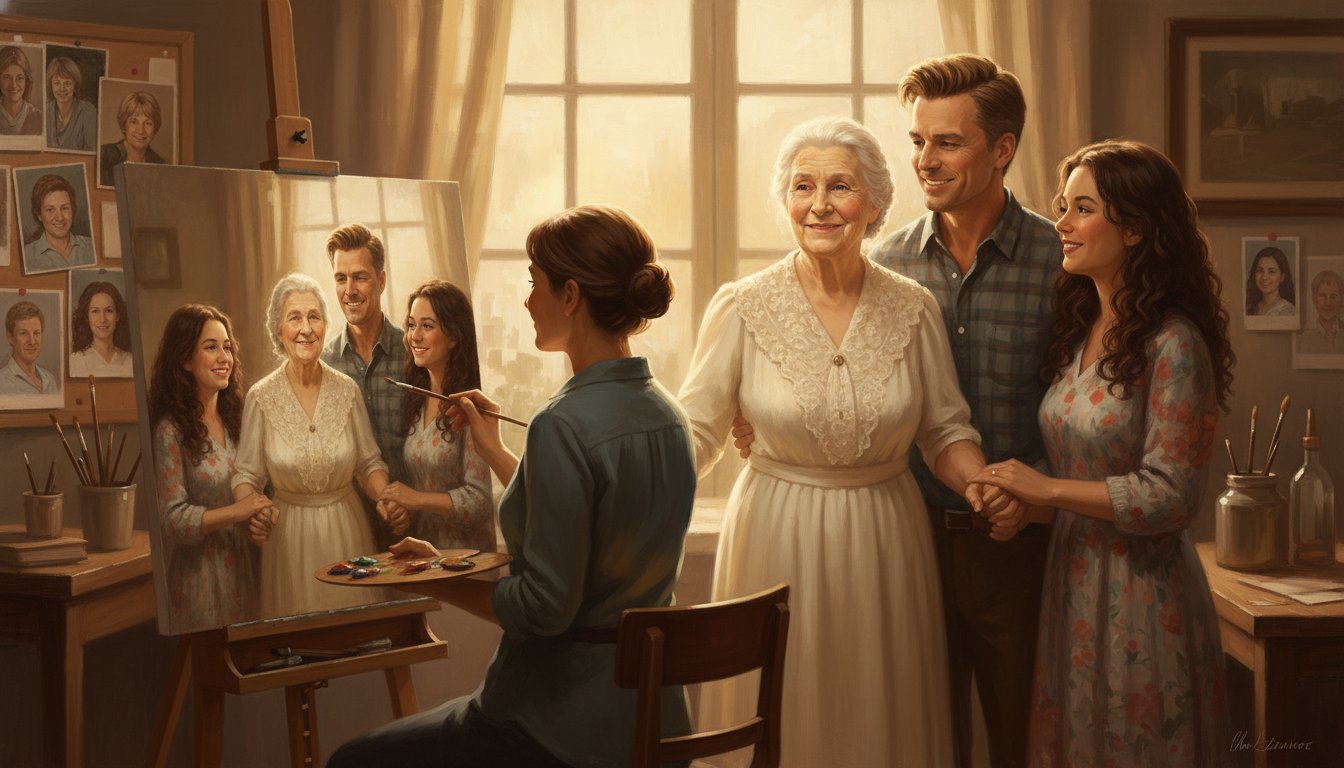
Before the painting is finalized, the studio sends a work-in-progress preview. This is your chance to check that the scale, positioning, and likeness feel right. Request adjustments if anything looks off. You should not pay the full balance until the preview meets your expectations.
Step 5: Receive and Display
Once approved, the finished portrait ships to your door. Most families hang it in a central location — the living room, the hallway, above the dining table — so the person's presence is felt daily rather than kept in a private room.
Real Examples: How Families Have Used Composite Portraits
These are drawn from common scenarios portrait studios encounter:
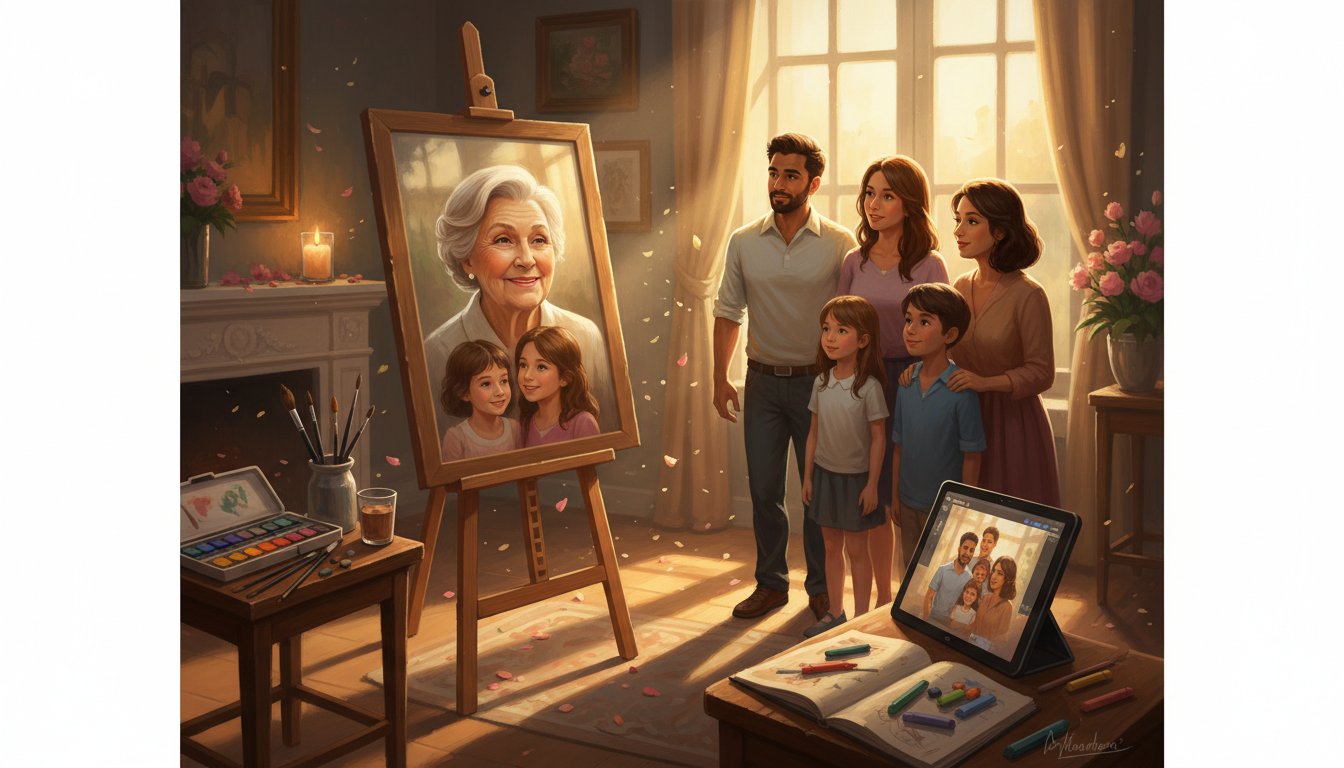
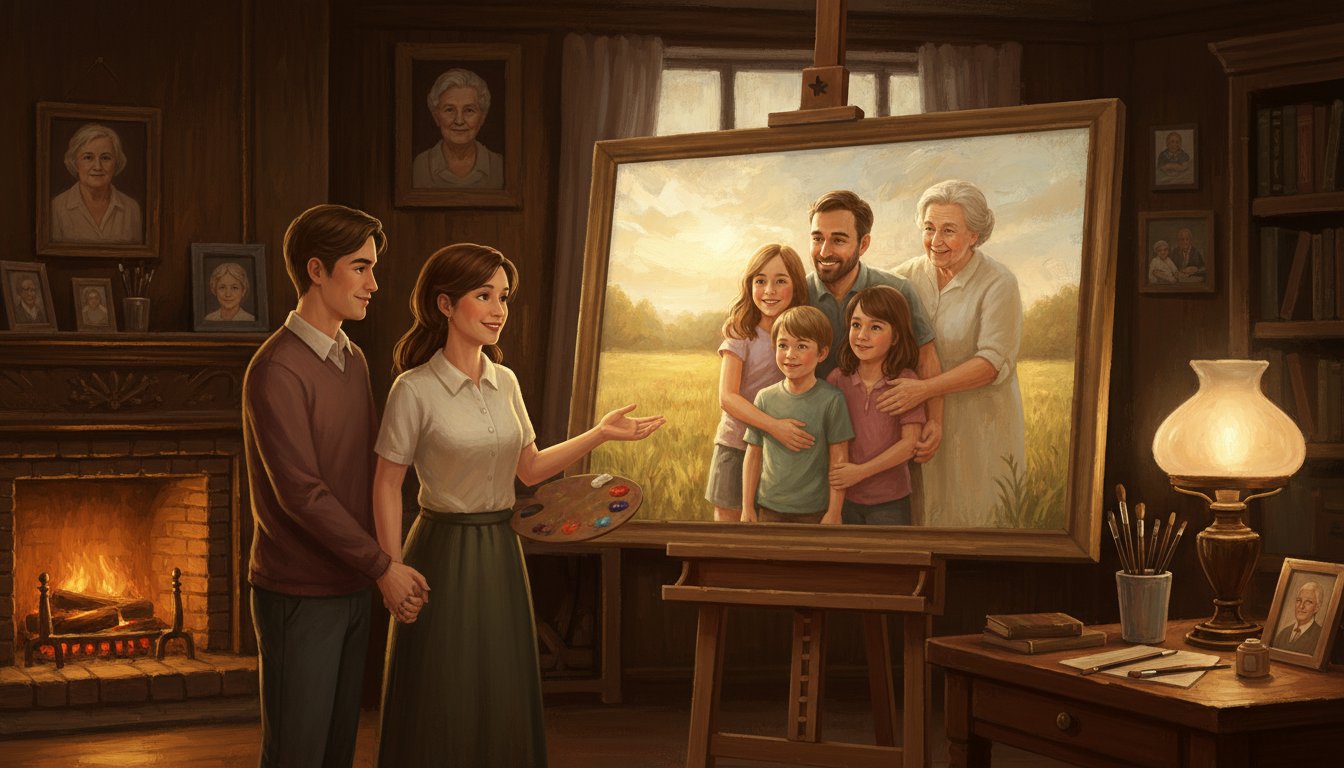
The missing grandmother. A family of twelve gathered for a reunion photo. The grandmother had passed two years prior. Using a photo from her eightieth birthday, the artist painted her seated in the center of the group. The family had the portrait framed at 24x36 inches and hung it in the grandmother's former living room, which one of the grandchildren now occupies.
The father at the wedding. A bride's father died eight months before the ceremony. Her mother commissioned a portrait from the official wedding photo, with the father painted in from a separate image taken at a family dinner. He stands beside the bride, in a suit from his own closet. The bride reported that the portrait made it feel less like he missed the day.
Siblings across decades. Three adult siblings wanted a portrait together, but their youngest brother had died at age nineteen. The artist used a photo from his final year and painted him at that age alongside his siblings at their current ages. The family chose not to "age" him — they wanted to remember him as he was.
What to Expect Emotionally
This is not a neutral transaction. Families consistently describe the preview stage as the most emotional part of the process. Seeing the person "back" in the group — even in a painting — triggers a complex mix of grief, relief, and gratitude.
Some families cry when they first see the preview. Others feel a quiet sense of rightness, as if the portrait corrects something that was broken. A few have reported that hanging the portrait changed the atmosphere of the room: guests notice it, ask about it, and the conversation that follows gives the family space to share stories they might otherwise keep private.
If you are considering this path, Art & See handles composite commissions through their standard process — you submit reference photos, discuss the composition, and review a preview before the painting is completed. For related approaches, see memorial gift options or coping with the loss of a parent. You can also explore family portrait styles.
Working with an Artist on a Composite Portrait
Combining photographs from different times, places, and cameras into a single coherent painting requires specific communication with your artist:
Provide multiple reference photos. Do not send just one image. Give the artist three to five photos of the person from different angles and expressions. This helps them understand the person's face beyond a single frozen moment.
Specify the relationship. Tell the artist who is in the portrait and how they relate to each other. This context helps with posing, proximity, and emotional tone. A grandmother holding a grandchild she never met requires different composition than siblings standing together.
Discuss lighting and era. If the reference photos span decades — a parent from the 1980s combined with grandchildren from 2024 — the artist needs to harmonize clothing, lighting, and photographic quality into a single visual language.
Set expectations for the background. A neutral background simplifies the composition. A specific setting (a family living room, a beach, a garden) adds meaning but increases complexity. Be clear about what matters most: the people or the place.
The result is never a photocopy of reality. It is an interpretation — and for families who cannot gather everyone in one frame, that interpretation often carries more emotional weight than any photograph could.
Alternative Approaches to Including Someone Who Has Passed
Not everyone is comfortable with a composite painting, and that is fine. Here are other ways to include a lost loved one in family imagery:
The empty chair portrait. A family portrait with an intentionally empty chair — their chair — and perhaps their favorite item placed on it. A hat, a book, a pair of glasses. The absence becomes the presence.
The photograph within the photograph. Hold a framed photo of the person during the family portrait session. This is honest about the loss while still including them visually. It works especially well for casual, candid-style family photos.
The heirloom inclusion. Wear or hold something that belonged to them — a piece of jewelry, a watch, a scarf. This approach is subtle but powerful for those who know the significance.
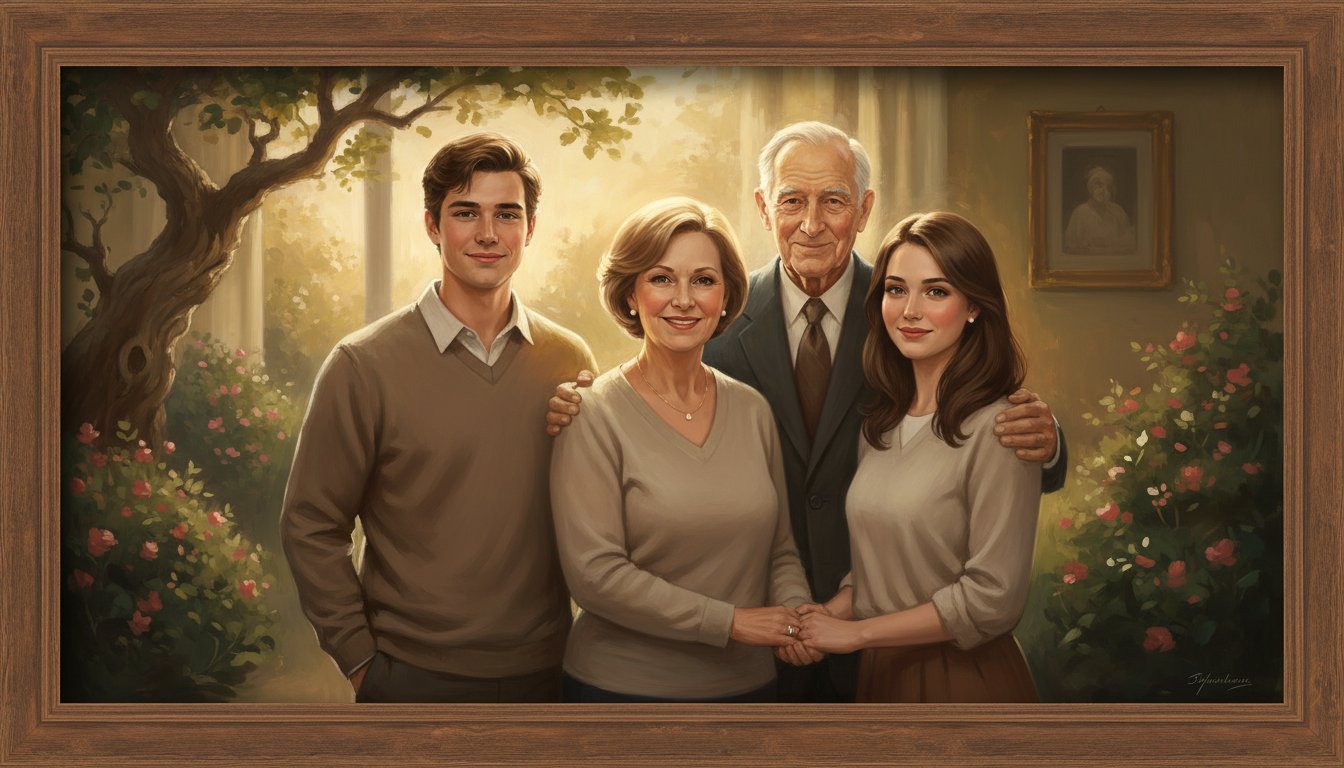
The generational portrait. Commission a painting that spans generations — grandparents, parents, children — using reference photos from different eras. The artist harmonizes the styles and creates a single family portrait that time and mortality denied in reality.
Each approach has a different emotional register. The composite painting is the most direct. The empty chair is the most symbolic. The photograph-within-photograph is the most honest. The right choice depends on what feels true to the family.
Psychology Today's grief research supports the concept of "continuing bonds" — maintaining a connection with someone who has passed rather than trying to "move on" entirely. A composite family portrait is one form of this continuing bond, and therapists increasingly recognize its value. The Association for Death Education and Counseling provides additional resources for families navigating these decisions.
Frequently Asked Questions
Can an artist really combine two separate photos into one portrait that looks natural?
Yes. Skilled painters handle lighting, scale, skin tone, and composition by hand — which is precisely why a painted composite often looks more natural than a digitally spliced photograph. The artist interprets rather than pastes, so the final piece reads as a unified scene rather than a collage.
What if the only photo of my loved one is old, faded, or low resolution?
Artists work with what you have. Older photos, prints from the 1960s, even slightly blurry snapshots can serve as reference. The clearer the face, the better, but experienced painters know how to extrapolate detail from limited source material.
How do I decide whether to commission a composite family portrait or a standalone memorial portrait?
A composite works best when the family wants the person to feel present in a group setting — holidays, reunions, generational photos. A standalone portrait works when the tribute is personal: a son honoring his mother, a wife remembering her husband. Both are valid; the choice depends on where the portrait will hang and who it is for.