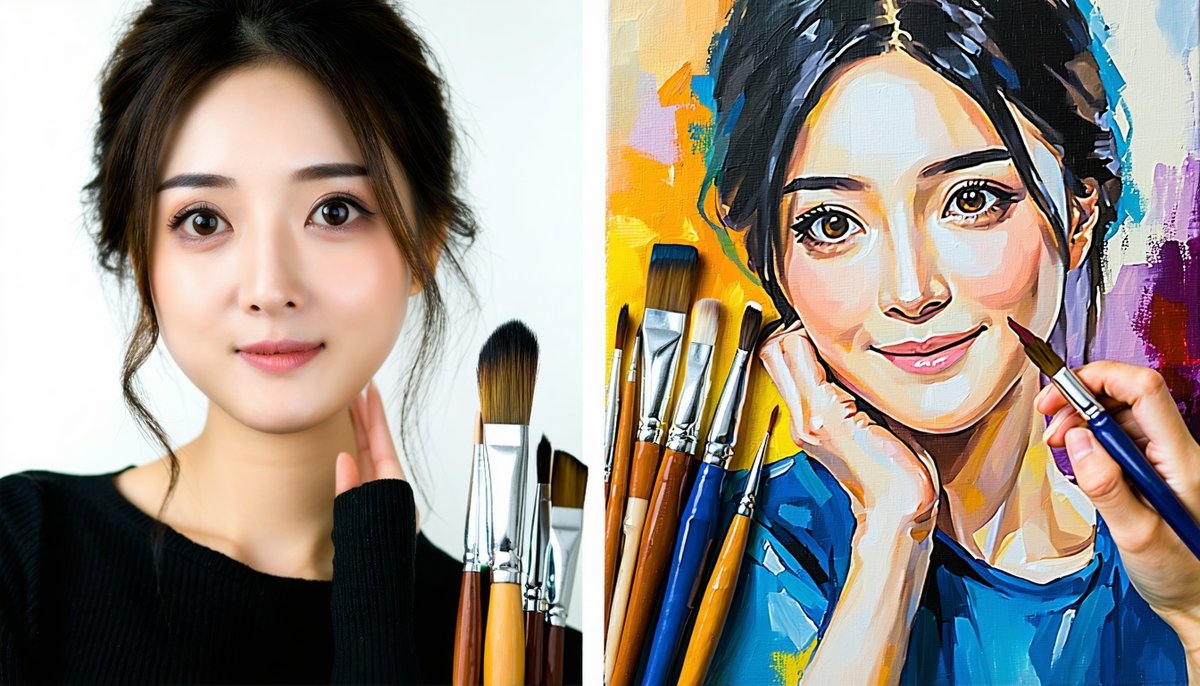
If you’re searching for a genuine hand-painted portrait from photo, you’ve probably already spotted a few suspicious deals floating around. How do you know what’s authentic and what’s just a sneaky print? Here are ten warning signs to watch out for so you can confidently pick a real masterpiece that truly honors your family memories, pet tributes, or décor goals.
Look for unnatural uniformity
Real brushstrokes come in varied sizes and directions. If everything looks exactly the same, the piece may just be a digitized print or a mass-produced copy. A genuine painting usually reveals subtle differences, especially around the edges of the subject’s face or clothing.
Inspect the texture closely
A hand-painted portrait typically shows layered paint dabs or slight ridges where the artist built up the canvas. Run your finger gently over the surface. If it’s oddly smooth or feels like glossy paper, that’s a big clue it might not be the real deal.
Check color transitions
Professional artists blend colors gradually, especially around facial features or fur lines in pet portraits. If you notice harsh transitions from one color to another without gradual shading, you might be looking at a low-quality reproduction. Blending is an art form in itself, so spot choppy lines as a possible red flag.
Art historians at the National Gallery of Art note that masterful color blending techniques have been fundamental to portrait painting since the Renaissance, distinguishing authentic hand-painted works from mechanical reproductions.
Notice repetitive patterns
Artificial prints or digital reproductions might show repeating patterns, like a brushstroke that weirdly appears multiple times in a row. Take an extra minute to scan the background and see if certain shapes repeat in a mechanical fashion.
Confirm layering and underdrawings
Many painters begin by sketching or lightly underpainting. Even though they’ll cover it later, faint traces might remain in a true hand-painted piece. If you never see slight pencil lines or layering anywhere, double-check whether it’s just a flattened print.
Ask about progress updates
A legitimate artist is usually happy to share progress shots, whether it’s the early sketch stage or mid-layering. If a seller avoids letting you see any work-in-progress photos, pause and ask yourself why they wouldn’t want to prove their artistry.
Verify the artist’s niche work
Different niches require different skill sets. For example, if you’re commissioning a pet piece but you don’t see any examples of animals in the artist’s portfolio, that’s concerning. It’s also useful to see how they capture subtle pet expressions. Wondering what a good portfolio looks like? Check out our own pet portrait artist, who specializes in all kinds of furry (and sometimes scaly) friends.
Examine the signature’s consistency
Many authentic hand-painted pieces have a consistent signature style. It might be in the bottom corner, or discreetly placed within the composition. If the signature looks stamped, pixelated, or mismatched, you could be dealing with a second-rate copy.
Inquire about custom edits
A real artist is typically open to small changes or reworks, like adjusting facial features or altering background colors. If a seller claims they can’t do any alterations because it’s “already finished” mere hours after receiving your photo, it’s worth questioning.
Assess communication and reviews
Authentic studios or independent painters have traceable feedback, testimonials, or social media presence. Look at how they communicate: Do they guide you through finishing touches, ask for your input, or offer a genuine sense of craftsmanship? Sketchy communication can be a tip-off that you’re dealing with an assembly-line copy.
Key takeaway
Before you invest in a custom piece, make sure the painting lives up to your standards. Examine texture, color transitions, and any repeated patterns. Ask for progress snapshots and don’t be shy about verifying the artist’s credibility. A real, hand-painted portrait—whether it’s for a thoughtful gift, a treasured family memory, or a tribute to your beloved pet—should feel personal from start to finish.
It’s worth taking the time to spot these fakes and make sure you end up with an heirloom you’ll love. Have questions? Ask away. After all, this is about preserving memories, and you deserve the real thing.