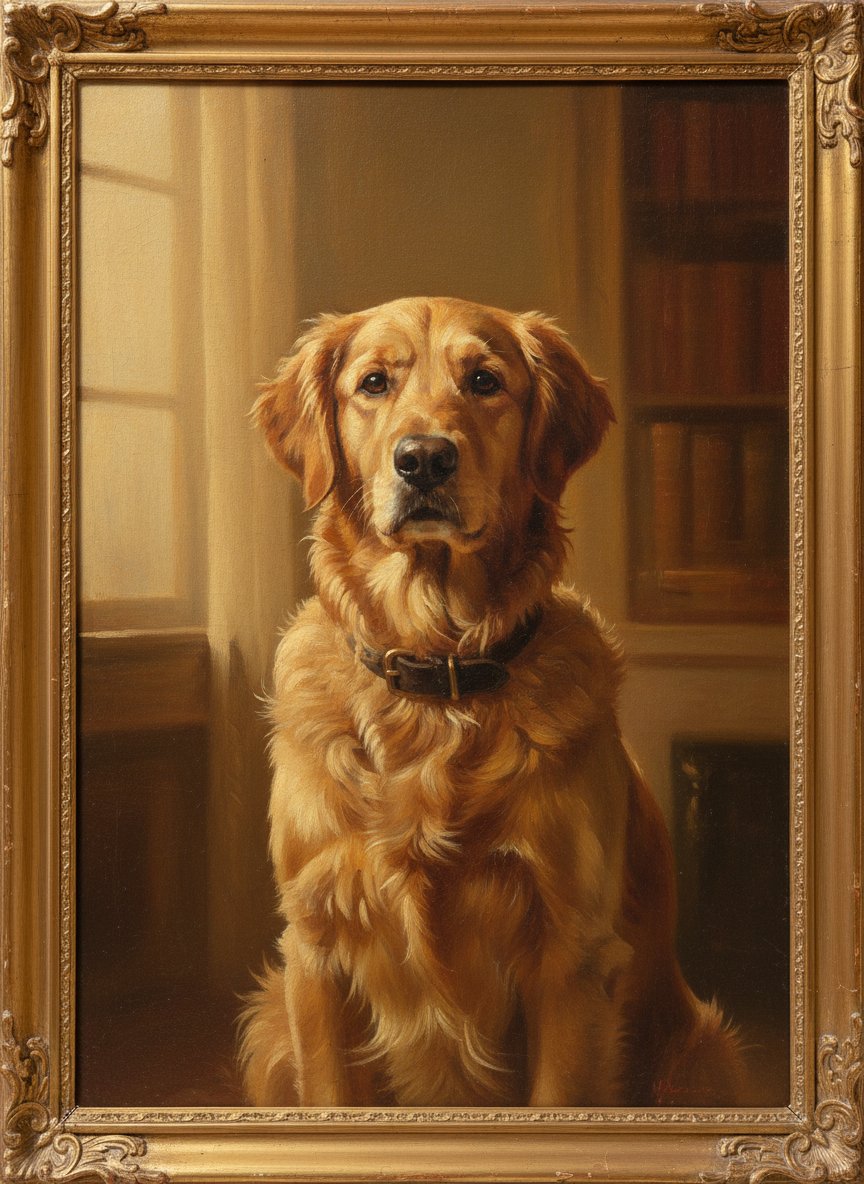
The house is quieter than it should be. No nails on the floor. No weight at the end of the bed. No one waiting by the door when you come home.
If you are reading this, you have probably lost a pet recently — or the wound is still open from a loss that happened longer ago than people think it should take to heal. Either way, you are in the right place. What follows is not a list of platitudes. It is an honest look at why losing a pet hurts as much as it does, what healthy grieving actually looks like, and how people find their way through it.
TL;DR: Losing a pet is a form of bereavement that society often underestimates. This guide explores why it hurts so deeply, what healthy grieving looks like, and ways to create a lasting tribute — including painted portraits, memorial rituals, and community support resources.
Why Losing a Pet Hurts More Than People Expect
The bond between a person and their pet is not sentimental decoration. It is daily routine, unconditional presence, and a relationship built on trust without language. According to the American Kennel Club, roughly 85 million American households include a pet, and for many of those families, losing that animal ranks among the most painful experiences of their lives.
Psychologists use the term "disenfranchised grief" to describe losses that receive limited social validation. Pet loss often falls into this category. Colleagues may offer a day of sympathy but rarely more. Friends may say "it was just a dog" without meaning harm. The disconnect between what you feel and what others acknowledge can make the grief heavier.
A 2019 study published in PLOS One found that 7.5 percent of pet owners develop symptoms consistent with prolonged grief disorder after their animal dies. That figure does not account for the many more who experience weeks or months of acute sadness without reaching a clinical threshold. If this resonates with you, know that what you are feeling is proportional to what you lost.
What Healthy Grieving Actually Looks Like
Grief after pet loss does not follow a script. You may cycle between sadness, guilt, anger, and numbness — sometimes within the same hour. Some people feel relief if their pet was suffering and then feel guilty about the relief. All of it is normal.
HelpGuide.org's guide on coping with pet loss recommends allowing yourself the full range of emotions without judgment. Suppressing grief does not accelerate healing; it delays it.
A few things that tend to help:
- Talk about them. Say their name out loud. Tell the stories. Grief shared is grief lightened, even when you think nobody wants to hear it again.
- Keep small rituals alive. If you walked together every morning, keep walking. The route matters even without them beside you. The rhythm of it carries comfort.
- Resist quick decisions. Getting a new pet, packing away their things, rearranging the room — these choices are better made once the sharpest pain has dulled. There is no rush.
- Seek support if you need it. The Association for Pet Loss and Bereavement maintains a directory of support groups and phone hotlines staffed by people who understand exactly what you are going through.
There is no correct timeline. Some people feel steady within weeks. Others carry a soft ache for years and learn to find beauty in it. Both are valid.
Creating a Tribute That Lasts
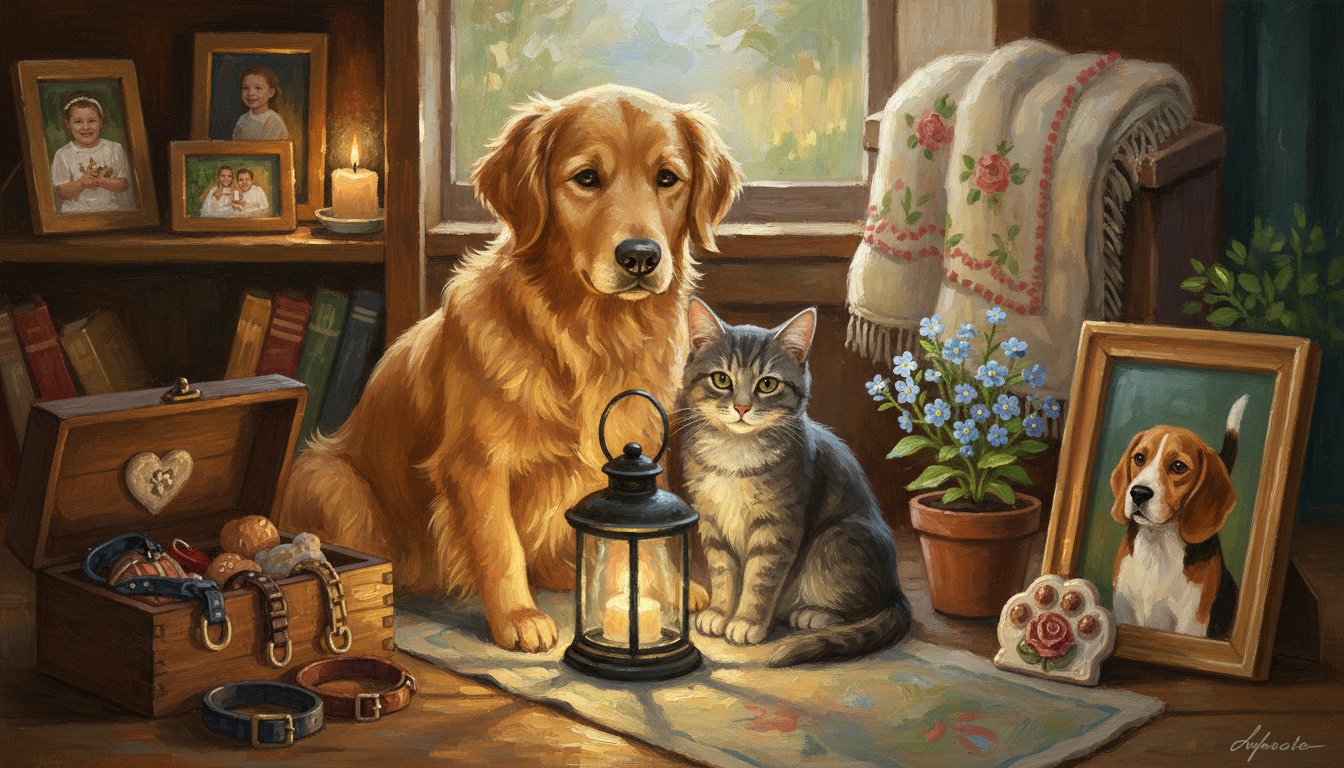
At some point, many pet owners look for something tangible — a way to keep their companion present in the home rather than only in memory. The options range from simple to elaborate, and the right choice depends entirely on what feels meaningful to you.
- A painted portrait from a favorite photo. An artist interprets the photograph by hand — capturing expression, warmth, and personality that a print cannot replicate. Available in oil, watercolor, acrylic, charcoal, pencil, or pastel. It hangs on a wall and becomes a daily presence.
- Memorial jewelry. A necklace or bracelet engraved with the pet's name or paw print. Some designs hold a small amount of ashes or fur. Wearable, personal, and tactile.
- A tree planted in their name. Through the Arbor Day Foundation or a local nursery. It grows, it lives, and visiting it becomes a quiet ritual.
- A shadow box with their collar and a photo. Simple, handmade, and deeply personal. Keeps their physical objects visible rather than boxed away.
- A donation to a rescue or shelter in their name. Gives the loss a purpose. Many organizations send a card to acknowledge the gift.
- An engraved garden stone. Placed where they used to play or rest. Visible every day without needing to be sought out.
Among these, a painted portrait tends to carry the most emotional weight because it transforms a flat photograph into something with texture, depth, and presence. A framed photo is a record. A painting is an interpretation of who your pet was — not just what they looked like, but the warmth in their eyes and the personality behind the fur.
If that path appeals to you, studios like Art & See work from the photograph you choose — you submit a deposit, review a preview, and the finished piece ships within about ten days. You can browse pet portrait styles or read about gifts for someone who lost a pet and how a painted portrait helps with coping.
It Gets Softer, Not Smaller
Grief after losing a pet does not disappear. It changes shape. The sharp edges round over time, and what once felt unbearable becomes bittersweet. You will remember them at unexpected moments — a particular time of day, a sound from the yard, a scent on a jacket you forgot to wash.
Eventually, those memories will bring warmth more often than pain. A tribute helps with that transition. Whether it is a tree you planted, a stone in the garden, or a painting on the wall, having something physical to anchor the memory makes the love feel present rather than past.
Whatever you choose to do with your grief — create something lasting, seek support, or simply sit with it — the fact that it hurts this much means the bond was worth every moment. They knew it too.
The First Week Without Them
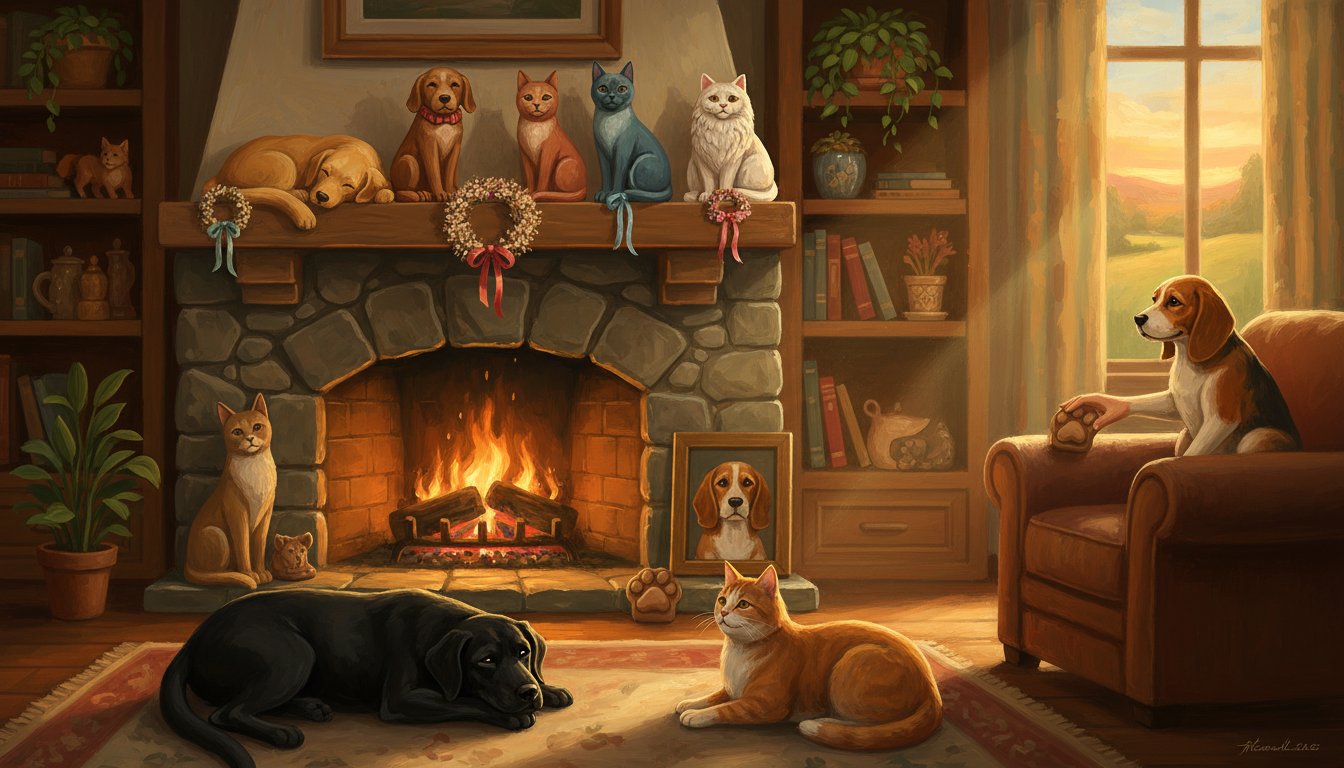
The house feels wrong. The silence where their nails used to click on the floor. The empty spot on the couch. The food bowl you haven't moved yet because moving it means acknowledging they are gone.
This phase is not weakness. It is the brain recalibrating to a reality it did not ask for. Psychologists call it "searching behavior" — the unconscious expectation that the deceased will reappear. You might catch yourself listening for them at the door or reaching to pet them before you remember.
Some practical things that help during this period:
- Leave their things where they are for now. There is no rush to clean up. Put the bed, toys, and bowls away when you are ready, not when someone else thinks you should be.
- Tell people what you need. If you want space, say so. If you want company, ask. People genuinely want to help but rarely know how.
- Write down memories while they are fresh. The specific way they greeted you. The sound they made when they were happy. The ridiculous thing they did with their food. These details fade faster than you expect, and recording them now gives you something to return to later.
- Consider a memorial ritual. Plant something. Light a candle. Commission a portrait from their favorite photo. The ritual itself does not matter — what matters is the deliberate act of honoring rather than avoiding.
Grief is not a problem to solve. It is a process to live through. The intensity will change, but the love that created it will not.
Frequently Asked Questions
How long after losing a pet should I wait before ordering a memorial portrait?
There is no set timeline. Some people find comfort in starting within weeks; others wait months or even years until they can look at photos and feel warmth instead of pain. The right time is whenever honoring them feels like a step forward rather than a reopening of the wound.
Can an artist work from an old or low-quality photo?
Yes. Experienced portrait artists regularly work from older prints, phone snapshots, and even slightly blurry images. They focus on capturing expression and personality rather than pixel count. If you have multiple photos, the artist can combine the best elements.
Is it normal to grieve a pet as deeply as a person?
Absolutely. Research consistently shows that the bond between humans and their pets activates the same attachment systems as human relationships. Your grief is proportional to the depth of the connection, not the species.