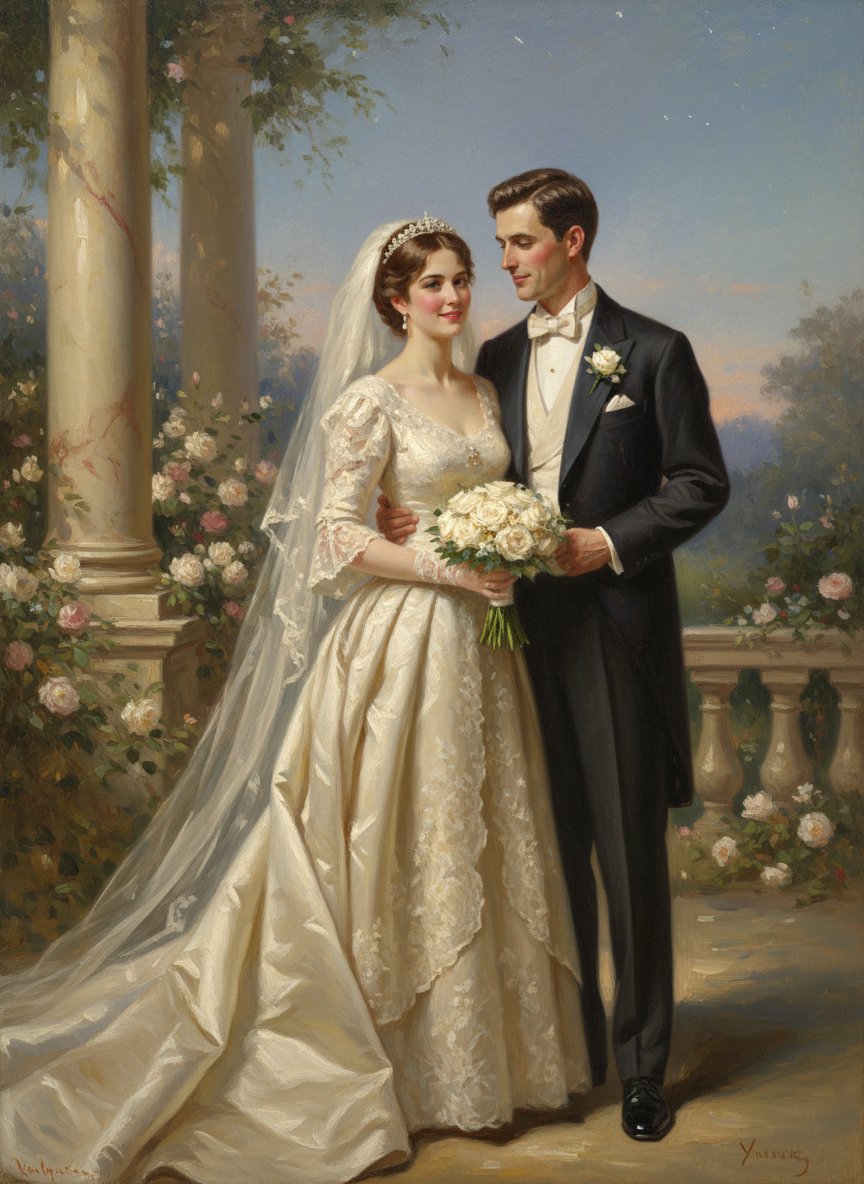
You will take hundreds of photos on your wedding day. Maybe thousands. They will live on your phone, on a hard drive, in a cloud folder you check less and less over the years.
A painted wedding portrait is different. It takes one of those moments — the first look, the walk down the aisle, the dance, the quiet moment nobody else noticed — and turns it into something that belongs on a wall permanently. Not a print you ordered from the photographer. Not a canvas stretched over a frame from an online service. A painting, made by a human being who interpreted the photograph and rendered it with texture, warmth, and depth.
This guide covers the most popular styles, which mediums suit which rooms, how to choose the right photo, and what size works where.
TL;DR: Nine wedding portrait styles and ideas, from classic oil paintings to intimate pencil sketches. Each medium creates a different mood. Oil is the most popular for its warmth and permanence. This guide includes a medium comparison table, photo selection tips, a size guide, and ordering advice.
9 Wedding Portrait Ideas Worth Hanging
1. Classic Oil — The First Dance
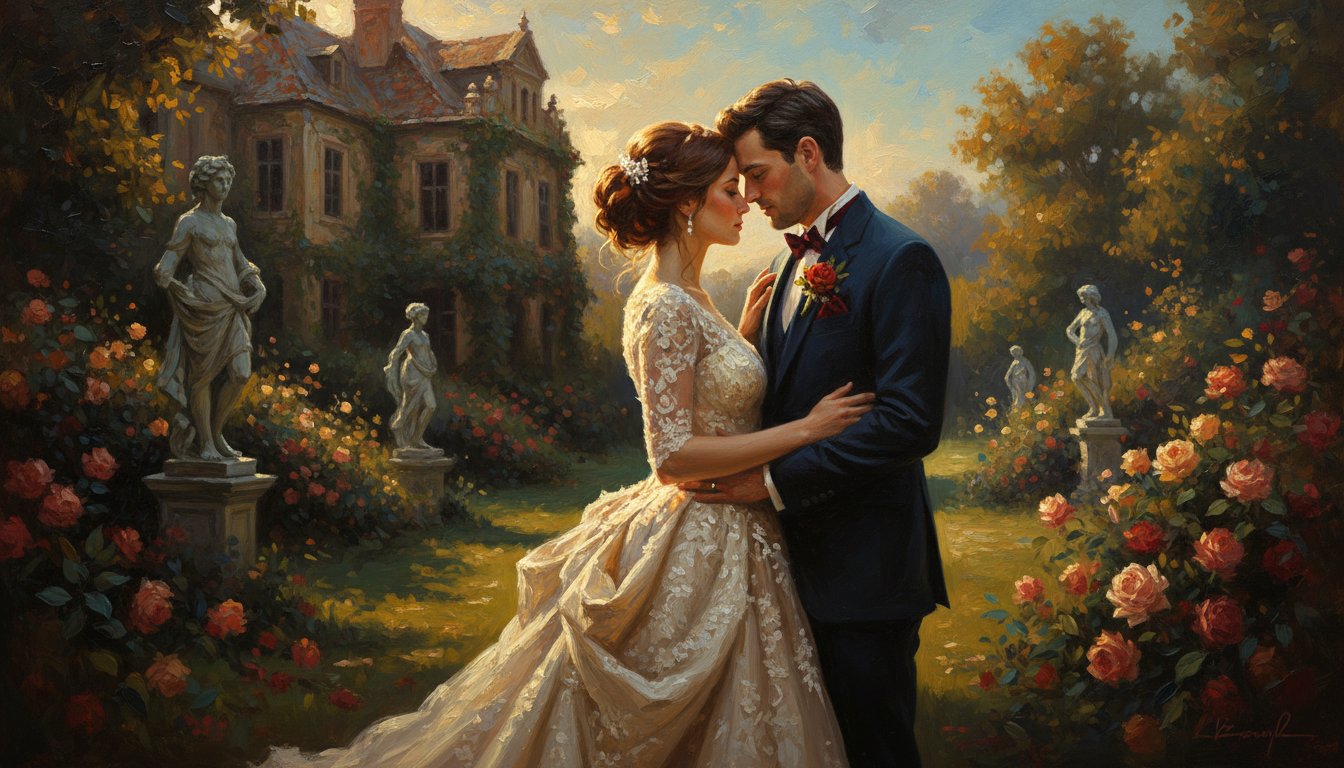
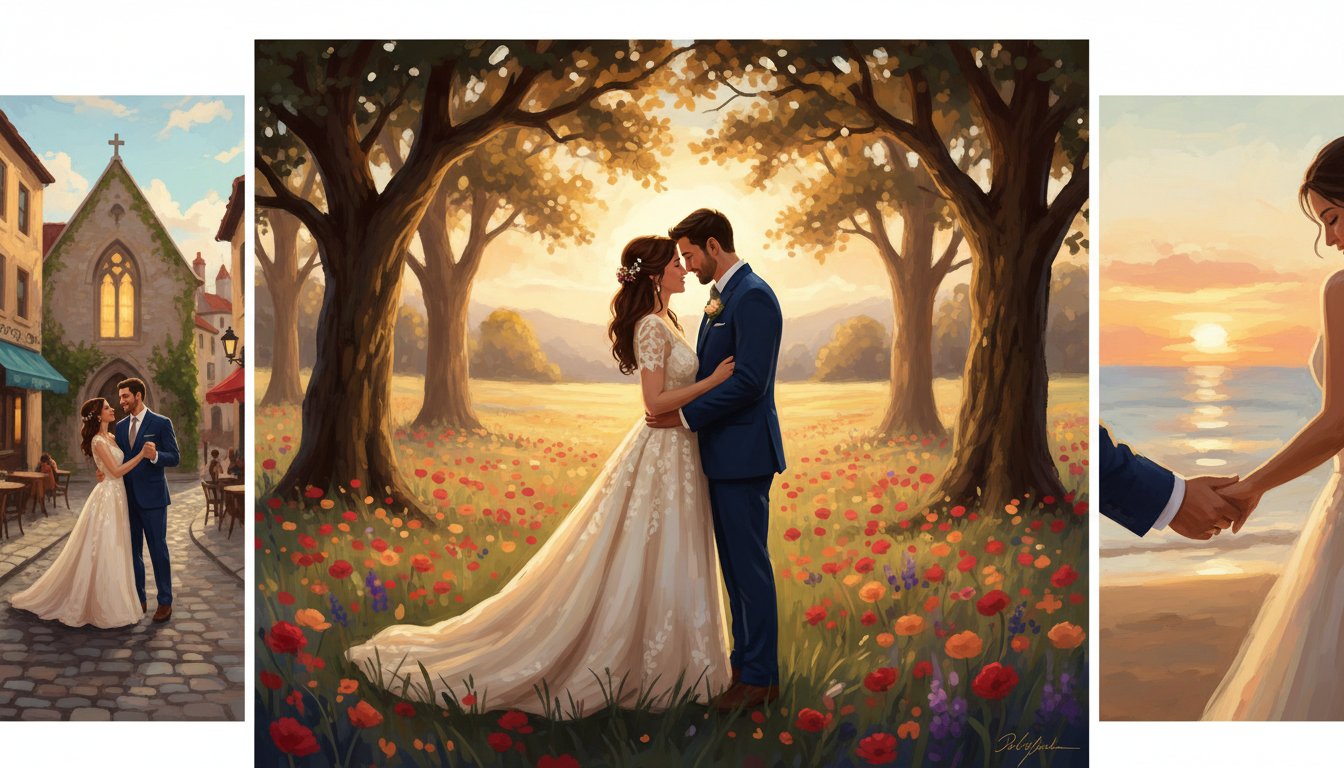
Oil painting is the gold standard for wedding portraits. The richness of the colors, the visible brushwork, and the depth of the finish give the piece a museum quality that elevates any room. The most popular subject: the first dance, painted from a moment where both faces are visible and the emotion is genuine.
Oil works especially well in living rooms, dining rooms, and above fireplaces where warm tones complement the space.
2. Watercolor — The Ceremony Moment
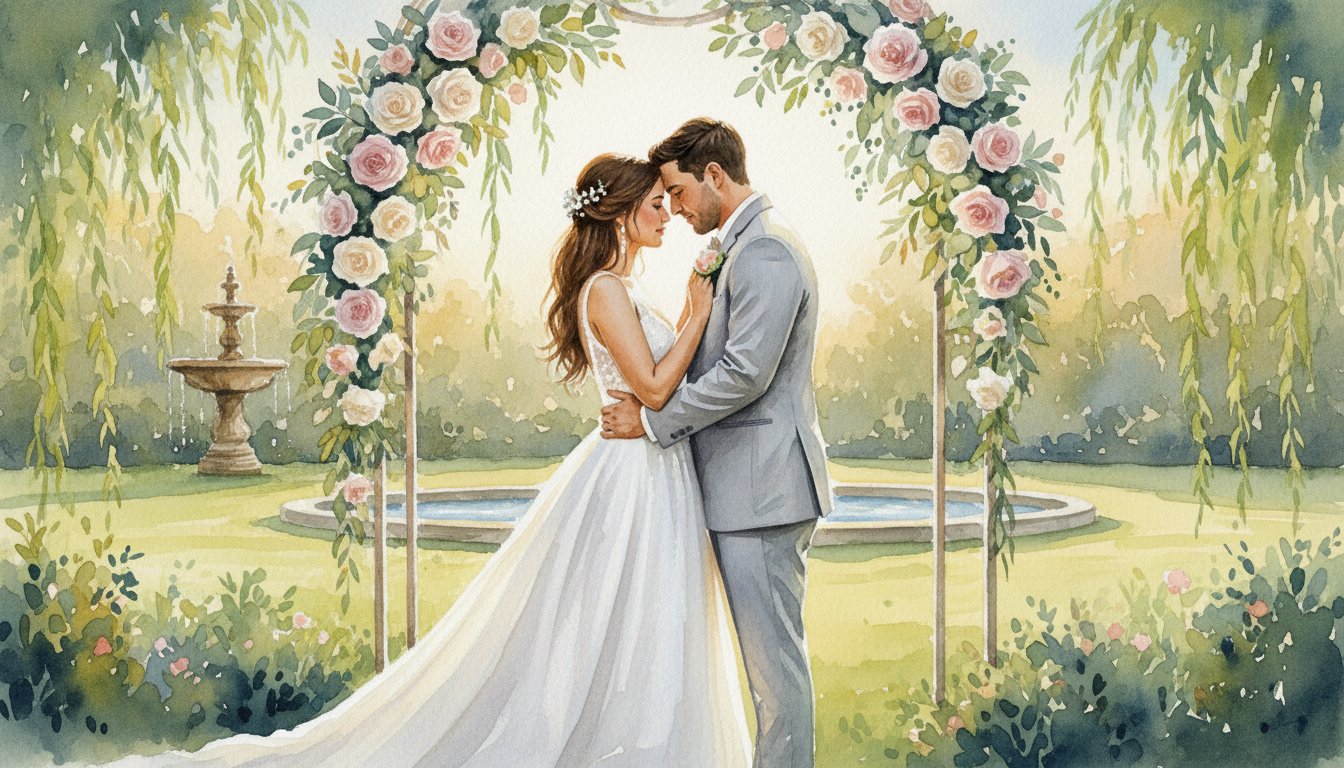
Watercolor produces a lighter, more romantic feel. The colors bleed gently into each other, creating an ethereal quality that suits ceremony moments — the vow exchange, the ring, the walk back up the aisle. It works beautifully in bedrooms, reading nooks, and lighter spaces.
Because watercolor is less dense than oil, it pairs well with white or cream walls and minimalist decor.
3. Acrylic — The Candid Laugh
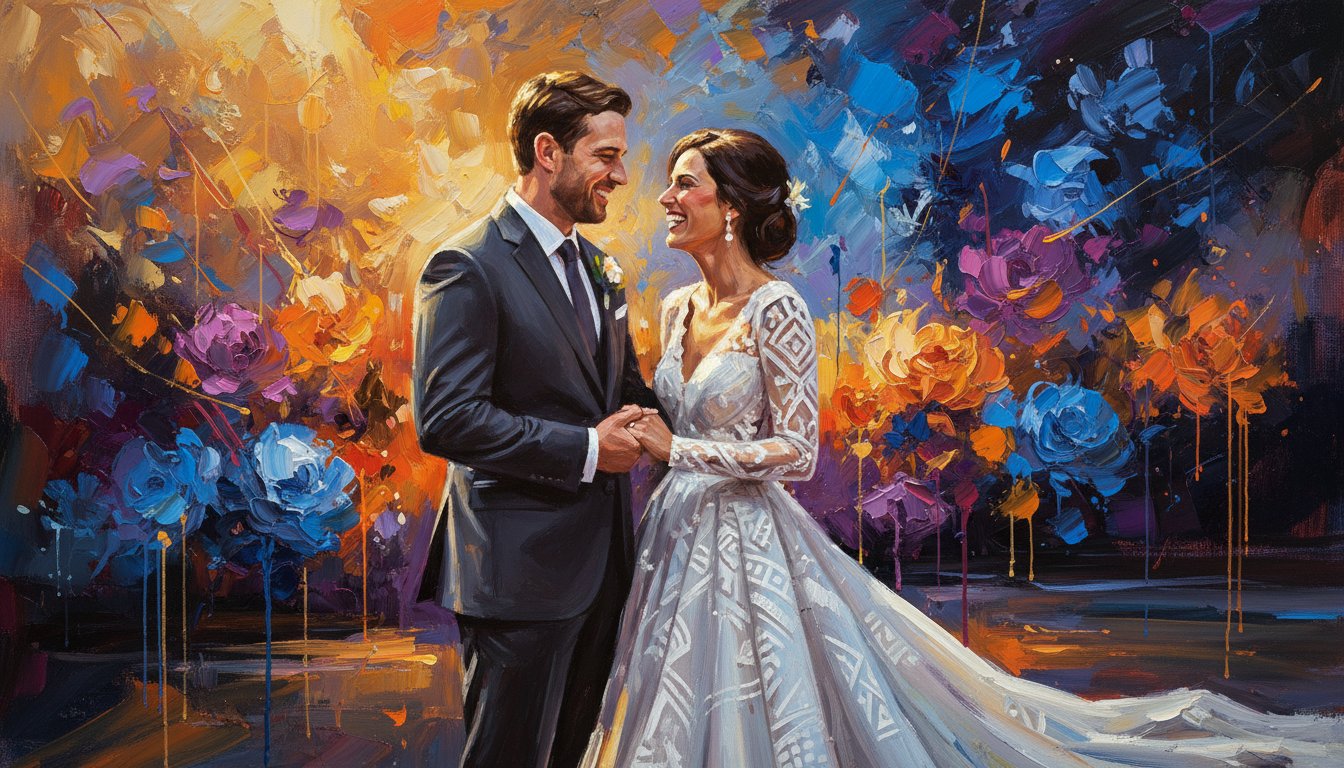
Acrylic is bold and vibrant. It dries with a clean, modern finish and handles bright colors well. Ideal for candid shots where the couple is laughing, celebrating, or caught mid-motion. The energy of acrylic matches the energy of the moment.
This medium suits modern homes, open-plan living spaces, and couples who prefer contemporary over traditional.
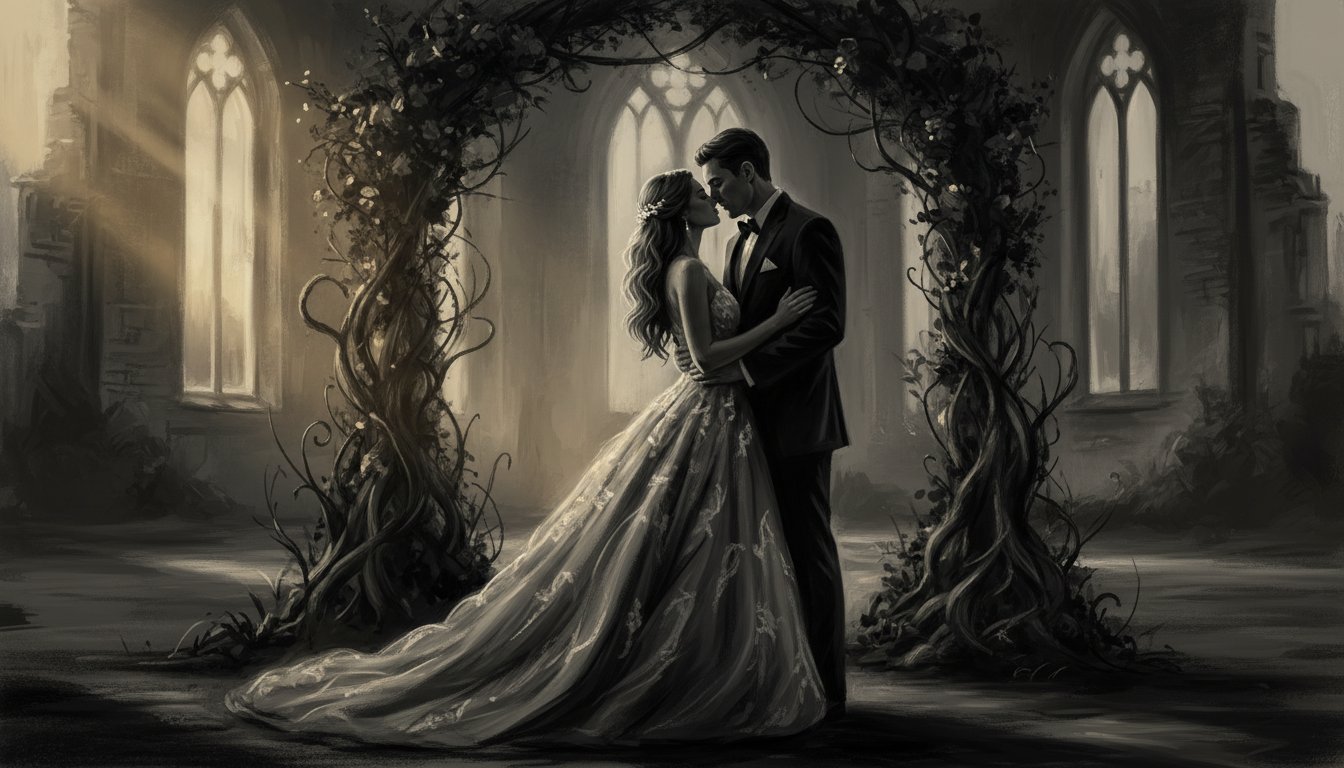
4. Charcoal — The Black-and-White Close-Up
Charcoal strips away color and leaves only form, contrast, and emotion. A close-up of the couple's faces in charcoal is striking and timeless. It works in hallways, offices, and spaces where you want a single dramatic focal point.
This medium ages extraordinarily well. A charcoal portrait from the wedding will look as powerful in thirty years as it does today.
5. Pencil Sketch — The Private Moment
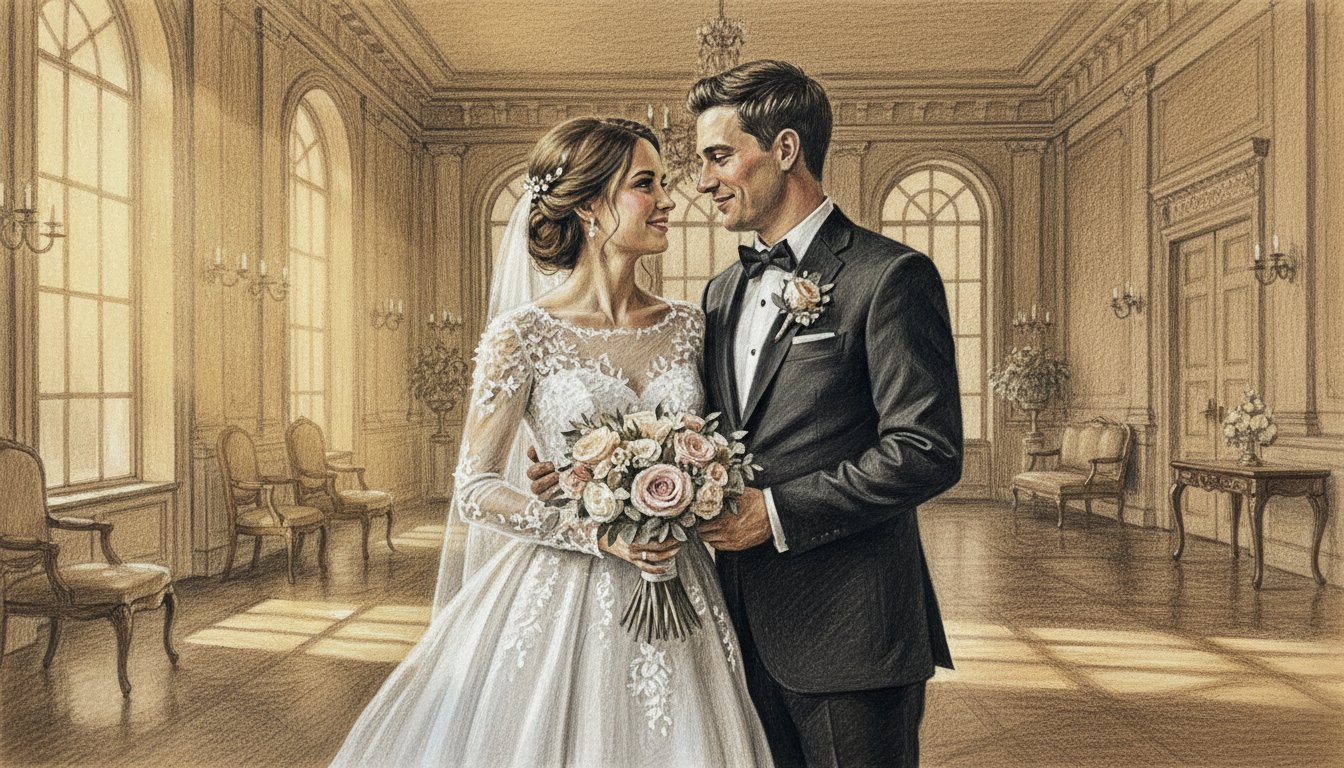
Pencil is the most intimate medium. Fine lines, delicate shading, and a quiet warmth that suits private, personal moments — the couple alone before the ceremony, a quiet look exchanged during the reception, hands clasped during the vows.
Best in bedrooms, personal offices, or anywhere the portrait is for the couple rather than for guests.
6. Pastel — The Sunset Portrait
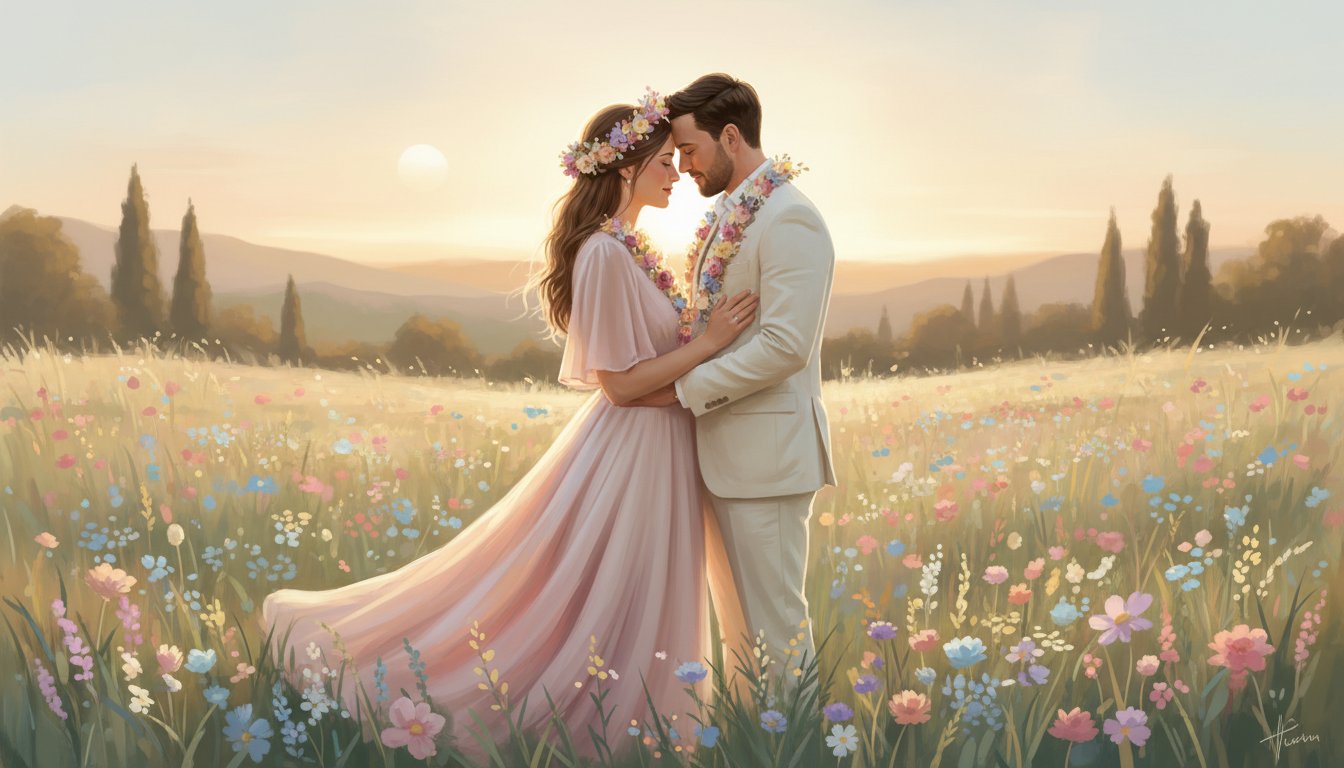
Pastel excels at warm, glowing tones. Golden hour photos — the couple lit by late afternoon sun — translate beautifully into pastel. The medium produces a softness that feels less formal than oil but more substantial than watercolor.
Ideal for couples who married outdoors and want the portrait to capture the light as much as the people.
7. The Venue Painting
Instead of — or in addition to — the couple, some families commission a painting of the venue itself. The church, the barn, the garden, the beach. This works especially well when the location has family significance or is no longer accessible.
8. The Detail Shot
A close-up of the rings on clasped hands. The bouquet on a table. The shoes by the door. These intimate detail paintings work as small pieces (8x10 or 11x14) grouped together in a gallery wall alongside larger portraits.
9. The Group Portrait
The wedding party, the family, or the couple with their parents. Painted from a group photo, this becomes a multi-generational piece that gains emotional weight over the years as family members age or pass.
Medium Comparison
| Medium | Mood | Best Photo Subject | Best Room | Price Range |
|---|---|---|---|---|
| Oil | Warm, classic, rich | First dance, formal poses | Living room, above fireplace | $149 – $400 |
| Watercolor | Romantic, ethereal | Ceremony, soft light | Bedroom, reading nook | $99 – $300 |
| Acrylic | Bold, modern, vibrant | Candid laughter, movement | Open-plan spaces, modern homes | $129 – $350 |
| Charcoal | Dramatic, timeless | Close-ups, black-and-white | Hallway, office, gallery wall | $89 – $250 |
| Pencil | Intimate, delicate | Private moments, hands | Bedroom, personal office | $79 – $200 |
| Pastel | Warm, glowing | Golden hour, outdoor weddings | Warm-toned rooms, entryways | $99 – $275 |
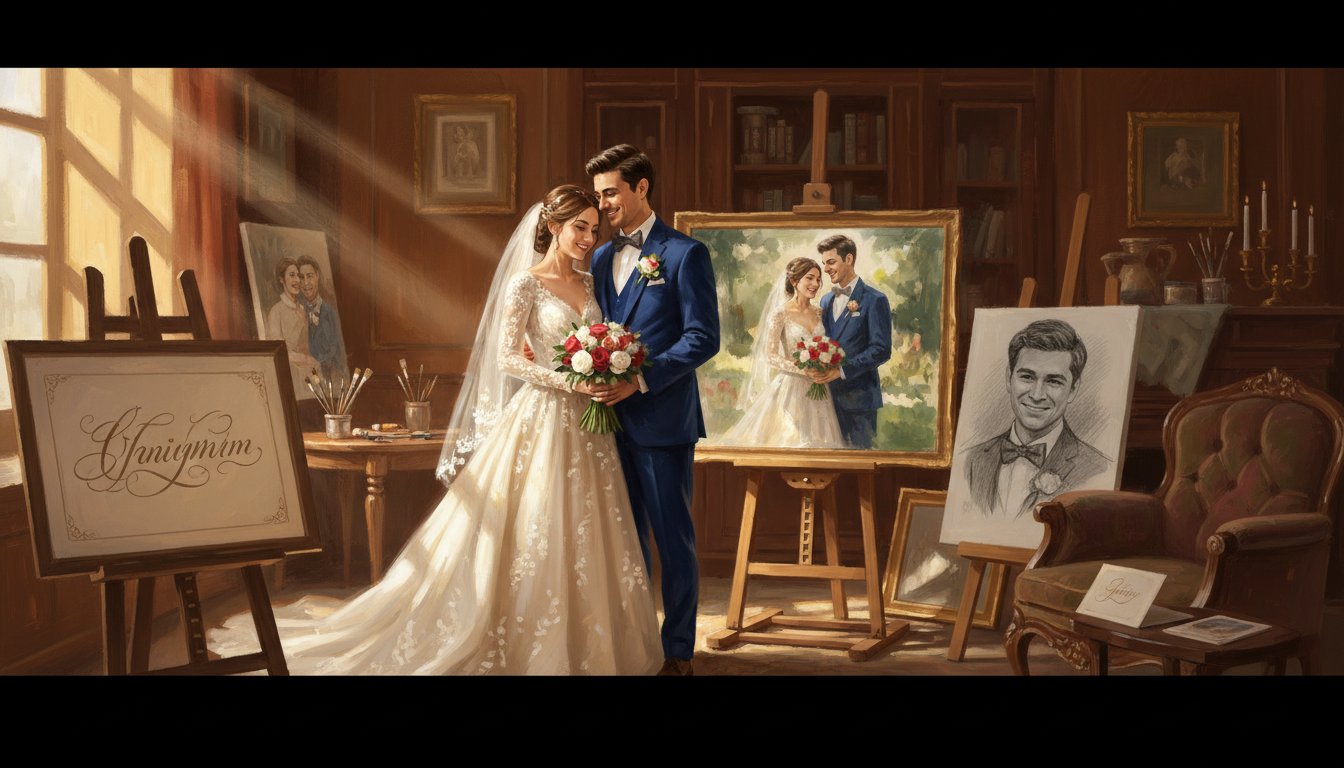
Choosing the Right Photo for Your Wedding Portrait
The photo you choose shapes the entire portrait. Here is what works best:
- Faces visible and in focus. The artist needs to see both faces clearly. Profile shots work but full or three-quarter views produce stronger likenesses.
- Genuine emotion over perfect posing. The candid shot where you are both laughing often makes a better portrait than the staged photographer's shot.
- Good lighting. Natural light, golden hour, and well-lit reception halls produce the best source material. Flash photography can flatten features.
- One clear subject. A portrait of the couple works better than a portrait of the couple plus twelve people in the background. Crop or ask the artist to simplify.
Size Guide: What Fits Where
| Size | Works Best In | Visual Impact | Price Tier |
|---|---|---|---|
| 8x10 or 11x14 | Gallery wall, shelf, desk | Intimate, personal | Entry-level |
| 16x20 | Above a console, bedroom wall, hallway | Noticeable, elegant | Mid-range |
| 20x24 | Living room, dining room | Strong presence | Mid-to-upper |
| 24x36 or larger | Above fireplace, large wall | Statement piece, centerpiece | Premium |
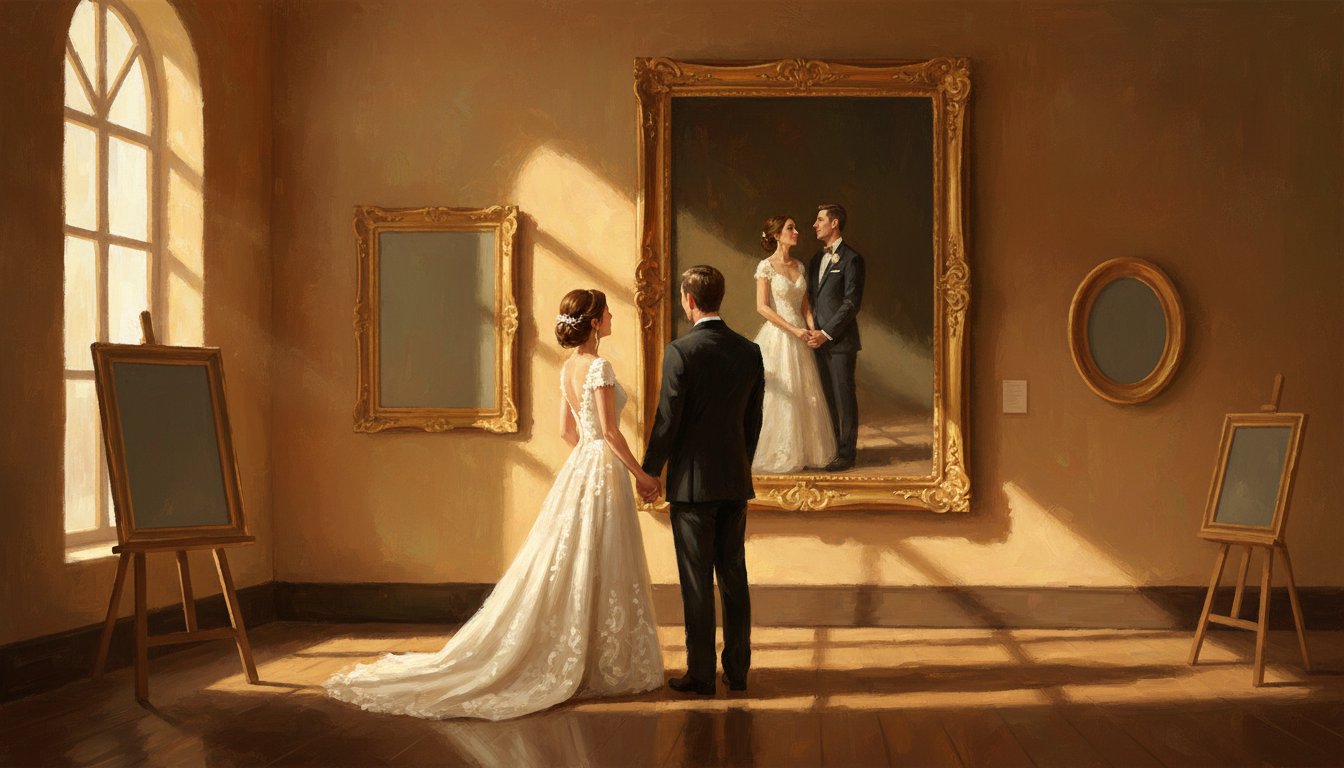
Measure the wall space before ordering. Leave at least six inches of clearance on each side so the portrait does not feel cramped.
How to Get Started
The process is straightforward:
- Select your favorite wedding or engagement photo. If you cannot decide, most studios accept two to three options and recommend the best one for painting.
- Choose a medium based on the mood you want and the room where it will hang.
- Order through a portrait studio. Most use a deposit model — you pay a fraction upfront and the remainder after approving a preview. Art & See and similar services handle the entire process online.
- Review the preview, request any adjustments, and approve the final painting.
- Hang it. Consider professional framing if the studio does not include it.
For more wedding-related ideas, explore wedding gift ideas, engagement gift ideas, or family portrait ideas.
Working with Your Photographer and Artist
If you are planning to commission a painting from a wedding photograph, here are a few practical considerations that will improve the result:
Tell your photographer about the portrait plan. Ask them to capture a few specific moments with painting potential in mind — longer holds, fewer candids-in-motion, and attention to clean backgrounds. A great wedding photo and a great painting reference photo are not always the same image.
Choose the moment carefully. The first dance works for oil painting because the movement and fabric create natural drama. The ceremony moment works for watercolor because the emotion is concentrated. Candid laughs work for charcoal because the spontaneity translates well to loose, expressive strokes.
Consider the final size and location. Where will this painting hang? Above a fireplace demands a different composition and size than a bedroom wall or an entryway console table. Match the painting scale to the space.
Factor in drying time. If you want the portrait as a first-anniversary gift — a traditional choice — order four to six weeks ahead. Oil paintings in particular need adequate drying time before varnishing and shipping.
The best wedding portraits are not necessarily from the "best" wedding photos. They come from the moments that capture who the couple is — the quiet look, the genuine laugh, the unguarded embrace. Let the artist help you choose.
Timing Your Commission
Wedding portrait timing depends on the purpose:
As a first anniversary gift (most common). The traditional first-anniversary gift is paper. A hand-painted portrait expands on that tradition beautifully. Order six weeks before the anniversary — four weeks for the painting, two weeks for potential shipping delays or revisions.
As a day-of surprise. Some couples commission a portrait before the wedding and display it at the reception. This requires ordering eight to twelve weeks ahead and providing a photograph from the engagement session.
After the wedding, from the event photos. Wait until the professional photos are delivered (typically four to eight weeks post-wedding), choose the perfect moment, and then commission the painting. This approach gives you the best possible source material.
From an old photo, years later. A portrait of a wedding moment commissioned on a milestone anniversary — five, ten, twenty-five years — carries a different kind of weight. It says the moment still matters, years later.
Each timing creates a different emotional context. The surprise gift is dramatic. The anniversary gift is romantic. The decades-later gift is profound. There is no wrong answer — only different right ones.
For inspiration on how other couples have incorporated painted portraits into their weddings, Style Me Pretty features real wedding galleries with art-forward decor. Brides.com's portrait guide covers how to coordinate with your photographer to get the best painting-ready reference photos.
Frequently Asked Questions
Which painting medium is best for a wedding portrait?
Oil is the most popular because of its warmth and richness — it photographs beautifully and ages gracefully. Watercolor suits couples who prefer a softer, more romantic feel. Charcoal works for couples who want dramatic, timeless elegance. There is no wrong answer; it depends on your home and the mood you want.
Can a wedding portrait be painted from a phone photo?
Yes. A clear, well-lit phone photo where both faces are visible and in focus is all an artist needs. Professional shots tend to produce more polished results, but candid phone photos often capture more genuine emotion.
What size should a wedding portrait be?
It depends on where you plan to hang it. A 16x20 inch portrait works well above a console table or in a bedroom. A 24x36 inch piece makes a statement in a living room or above a fireplace. Measure the wall space first and choose a size that fits without overwhelming the room.