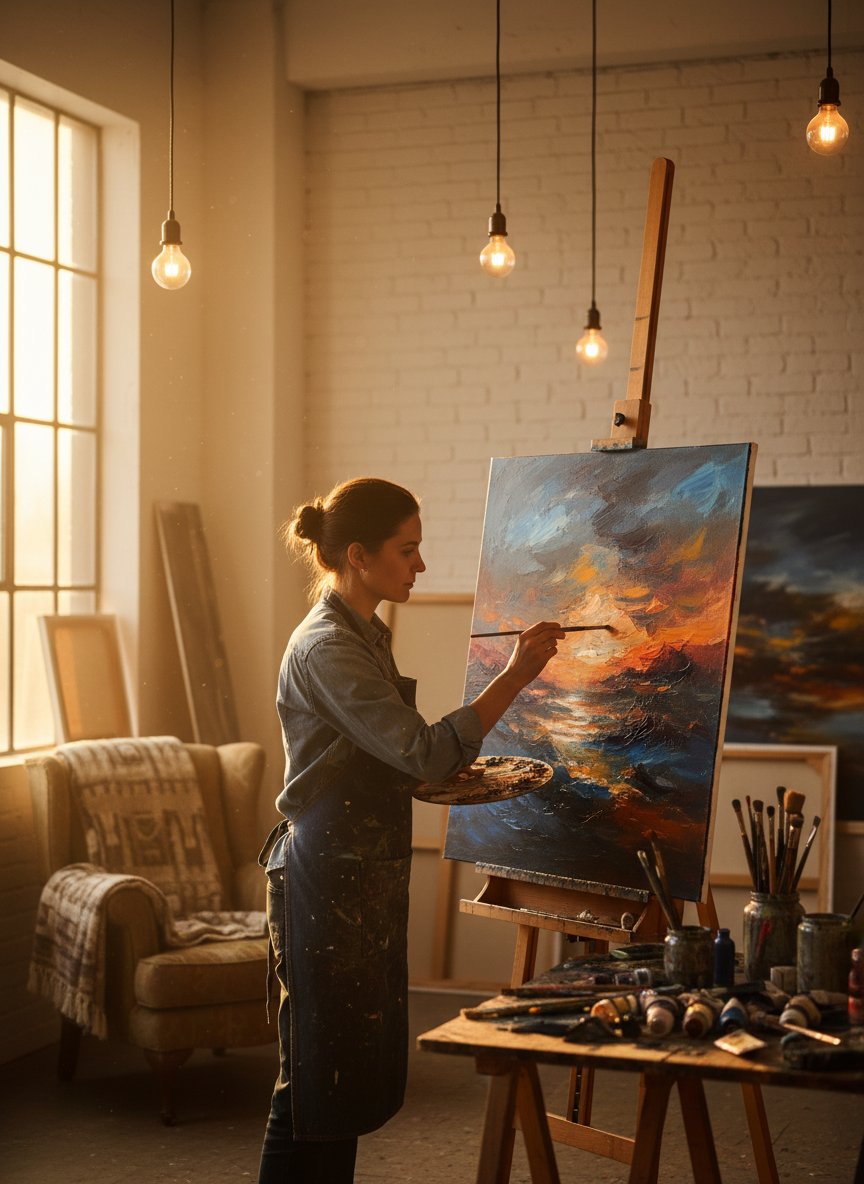
Commissioning a painting sounds more complicated than it is. You are not hiring Michelangelo to paint a ceiling. You are sending a photograph to a skilled artist and getting back a hand-painted interpretation of that photograph.
But there are real decisions to make — what kind of painting, which artist or studio, how to communicate what you want, and how to protect yourself from a bad experience. This guide walks through the process from start to finish.
TL;DR: Five steps to commission a painting: decide what you want, find the right artist, send your photo and discuss details, review the preview, approve and receive. This guide covers each step in depth, plus a list of red flags to avoid and honest recommendations for studios.
Step 1: Decide What You Want
Before you start looking for an artist, clarify three things:
The subject. What will be painted? A person, a pet, a family group, a couple, a building, a landscape? Portraits of people require the most skill; landscapes and pet portraits are slightly more forgiving.
The medium. Each produces a different mood:
- Oil — Rich, warm, classic. Best for formal portraits, living rooms, and heirlooms.
- Watercolor — Soft, romantic, ethereal. Best for lighter spaces and intimate subjects.
- Acrylic — Bold, vibrant, modern. Best for contemporary homes and energetic photos.
- Charcoal — Dramatic black and white. Best for close-ups and artistic households.
- Pencil — Intimate, delicate. Best for small pieces and personal tributes.
- Pastel — Warm, gentle. Best for golden-hour photos and soft lighting.
The size. Measure the wall where it will hang. A 16x20 works for most rooms. A 24x36 is a statement piece. Anything under 11x14 can get lost on a large wall.
Step 2: Find the Right Artist or Studio
You have three main routes:
Online Portrait Studios
Companies like Art & See, Paintru, and Paint Your Life employ teams of artists and handle the entire process — from photo submission to shipping. They offer standardized pricing, preview systems, and customer support.
Pros: Predictable process, revision guarantees, customer protection.
Cons: Less direct artist contact than working with an independent painter.
Etsy and Independent Artists
Etsy has thousands of portrait artists. The quality ranges from extraordinary to poor. The advantage is direct communication with the person who will paint your portrait. You can see their portfolio, read reviews, and discuss the commission in detail.
Pros: Direct artist relationship, wide variety of styles, sometimes lower prices.
Cons: No centralized quality control. You are vetting the artist yourself.
Local Artists
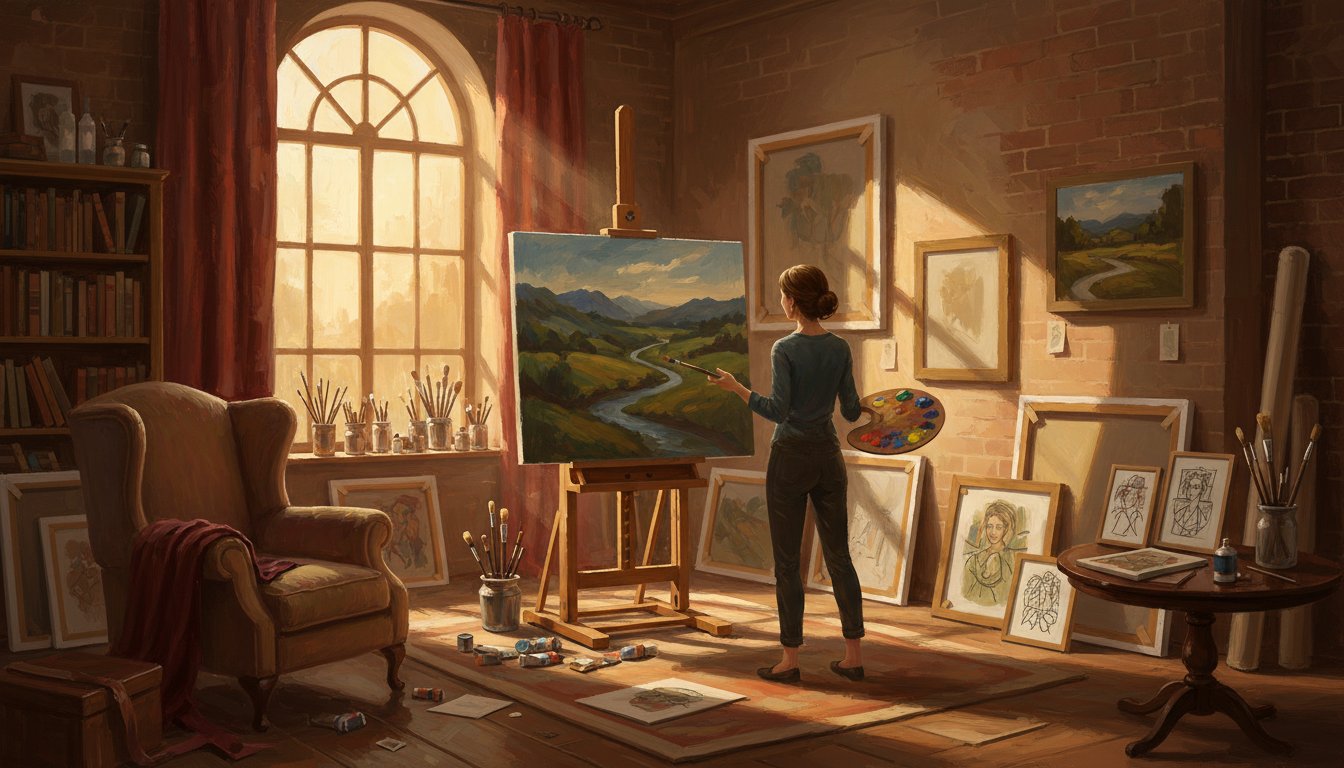
Visit galleries, attend art walks, or search for portrait painters in your area. A local artist may let you visit the studio, see works in progress, and discuss the painting in person.
Pros: In-person communication, supporting local art, ability to see work in person.
Cons: Limited selection. May be more expensive. Fewer formal protections.
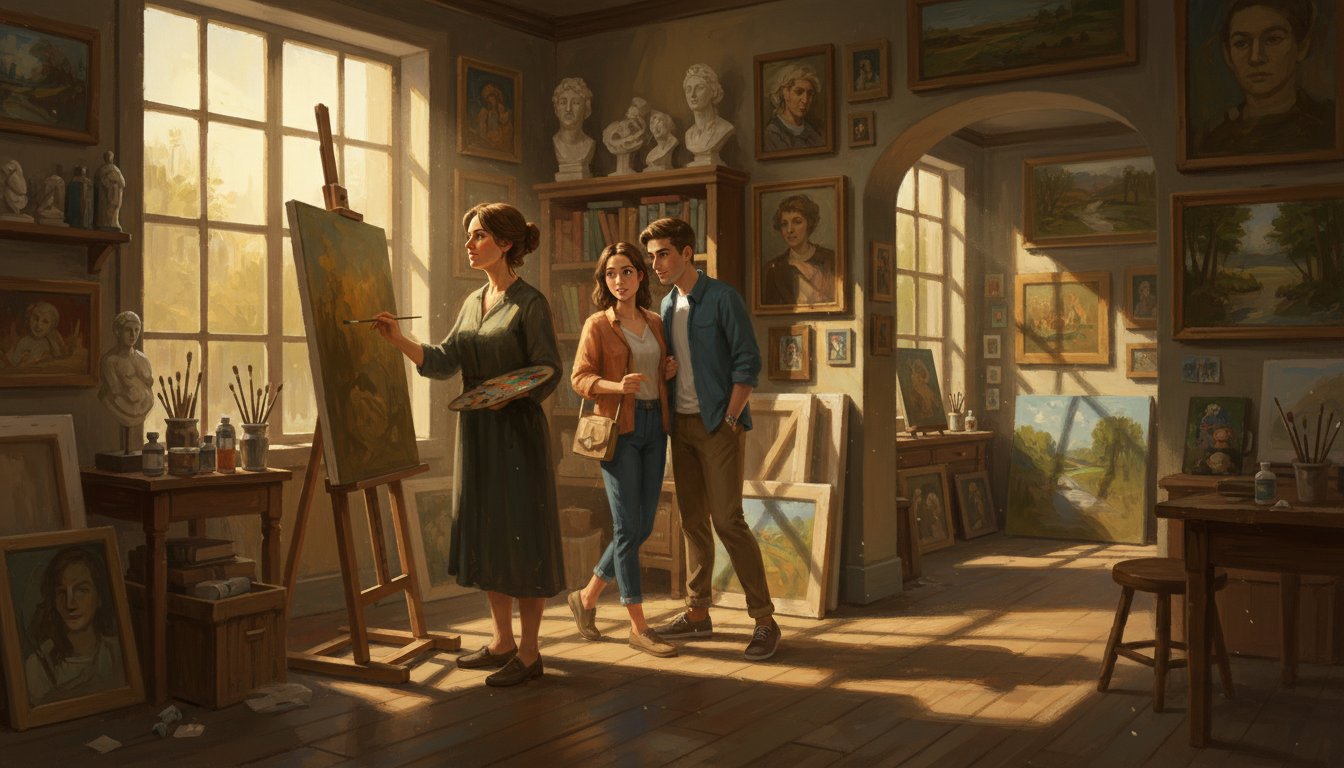
What to Check Before Ordering
| Criteria | What to Look For |
|---|---|
| Portfolio | Do you like their existing work? Does it match the style you want? |
| Reviews | Real reviews with photos of received paintings (not just star ratings) |
| Preview policy | Do they show you the painting before it is finished? |
| Revision policy | Can you request changes? How many rounds? |
| Mediums offered | Do they offer the specific medium you want? |
| Pricing | Is it transparent? Are there hidden fees for framing, shipping, or revisions? |
| Turnaround | How long from order to delivery? Is rush available? |
| Refund policy | What happens if you are not satisfied even after revisions? |
Step 3: Send Your Photo and Discuss Details
Once you have chosen an artist or studio:
- Send the best photo you have. Clear, well-lit, faces visible. Phone photos work. If you have multiple options, send two or three and ask the artist which one will produce the best painting.
- Describe what you want. Background (keep it, simplify it, change it). Cropping (full body, half body, headshot). Any modifications (add a person from a different photo, remove an object, change clothing).
- Ask questions. How long will it take? What is the payment schedule? Will you see a preview? How many revisions are included?
- Confirm the price in writing before the artist begins.
Step 4: Review the Preview
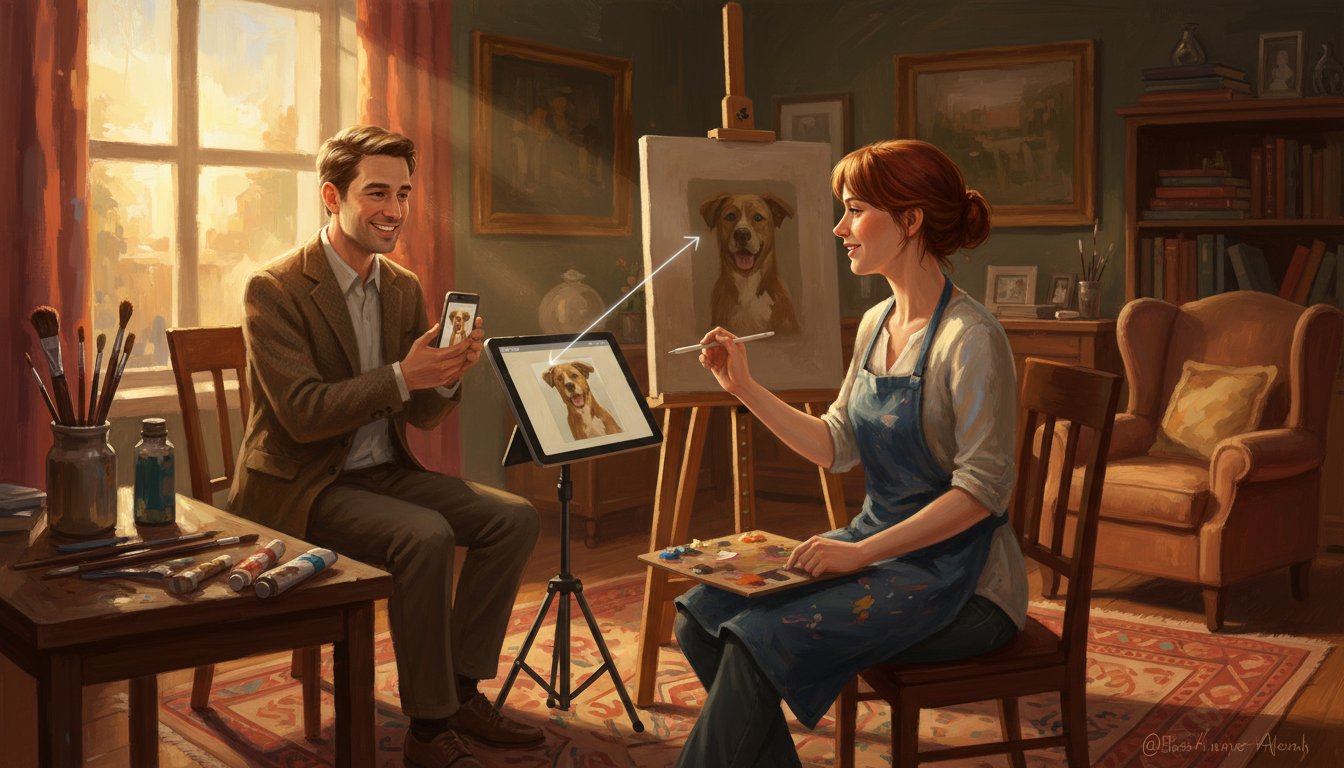
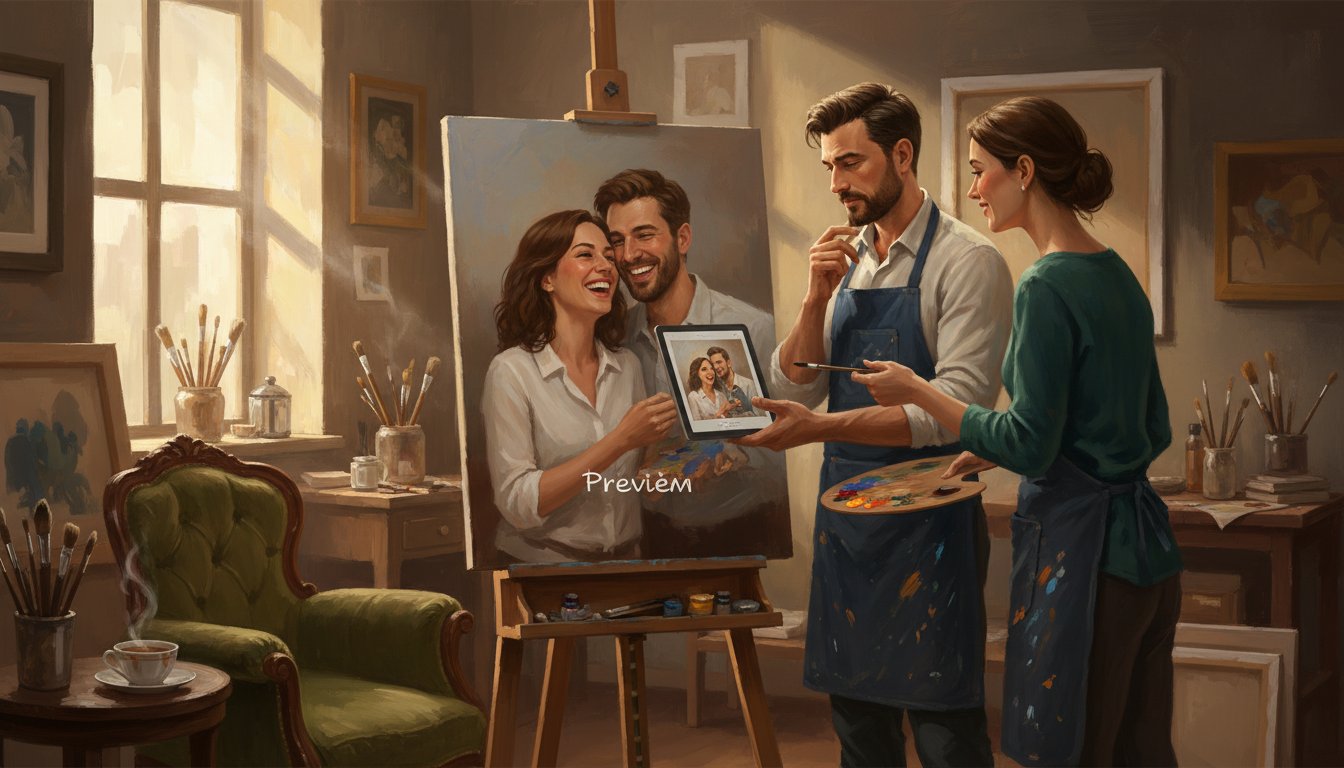
This is the most important step. Before the painting is finalized, the artist or studio sends a work-in-progress photo. Look for:
- Likeness. Does the subject look like the person in the photo? Pay special attention to the eyes, the shape of the face, and the expression.
- Color accuracy. Skin tones, hair color, clothing — does it match the reference photo or is it significantly off?
- Composition. Is the subject centered the way you wanted? Is the background what you described?
- Scale and proportion. Do the proportions look natural? Are hands, eyes, and facial features in the correct relationship to each other?
If something is off, be specific in your feedback. "The eyes are too dark" or "the skin tone needs to be warmer" is actionable. "It does not look right" is not.
Step 5: Approve and Receive
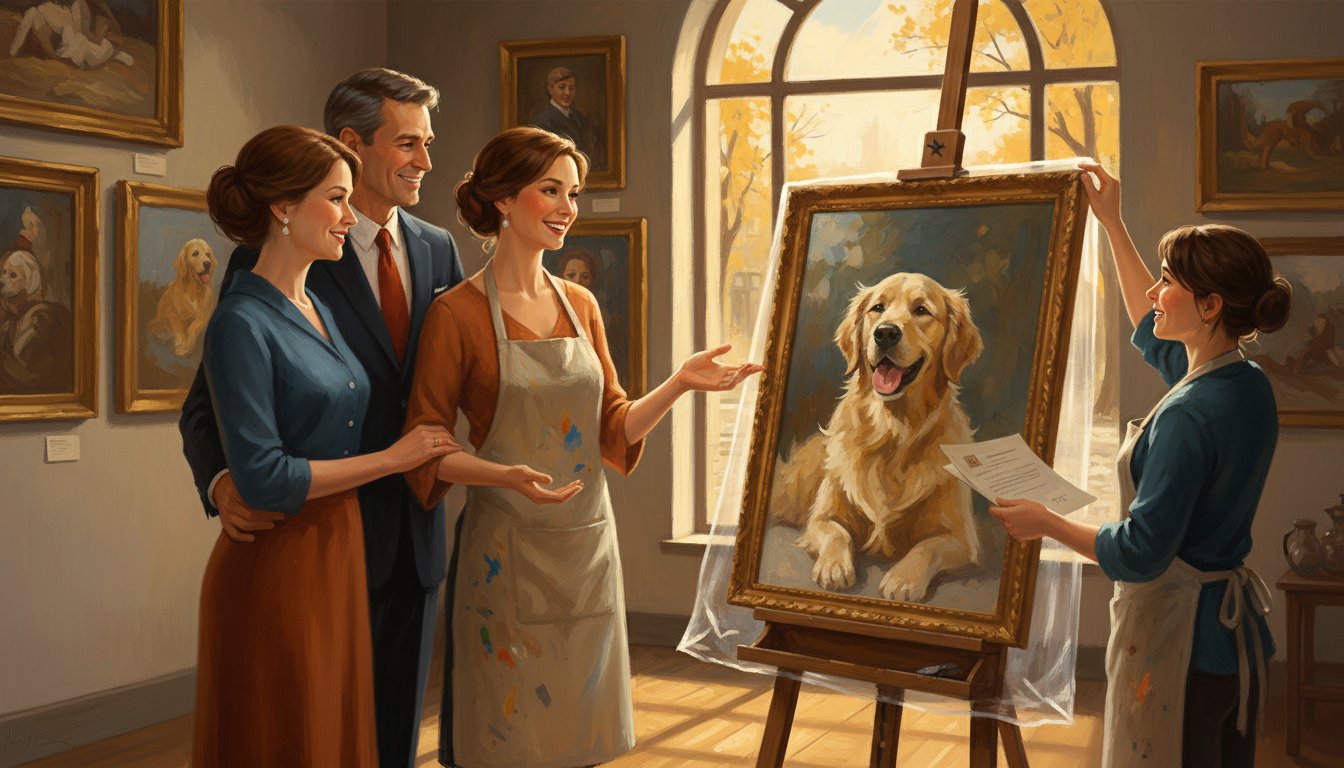
Once the preview meets your expectations:
- Approve the painting and authorize the final payment (if on a deposit system).
- Ask about framing. Some studios include framing; others do not. If you need a frame, ask for recommendations that match the medium.
- Confirm shipping details. Paintings should be shipped flat, protected, and insured. Most studios handle this, but verify.
- Hang it. Choose a location with moderate light — direct sunlight can damage any artwork over time. Use proper hanging hardware rated for the weight of the piece.
What to Avoid
Red flags that signal a bad commission experience:
- No preview offered. If you cannot see the painting before it ships, you have no quality control. Walk away.
- Full payment upfront. Legitimate studios take a deposit (30-50%) and collect the balance after approval. Full payment upfront removes your leverage.
- Delivery in under three days. Real paintings take time. Ultra-fast delivery means AI, digital filters, or pre-made templates.
- No portfolio or vague examples. If the studio cannot show you examples of completed work in the specific medium you want, they may not have artists capable of it.
- Prices under $50 for a "hand-painted" portrait. This is not economically viable for a real artist. At this price, the painting is either AI-generated, produced in a factory with minimal quality control, or digitally printed to look like a painting.
For a comparison of the top studios, see best places to buy a custom painting. For help choosing between a print and a painting, read print vs. painting. To browse portrait examples by category, visit the Art & See gallery.
Questions to Ask Before You Commission
The initial conversation with an artist reveals everything you need to know:
"Can I see your five most recent commissions?" Not your five best — your five most recent. This shows their current skill level and consistency, not a curated highlight reel from years ago.
"What is your process from order to delivery?" A clear, detailed answer signals professionalism. Vague responses like "I just paint it and send it" suggest a lack of process that often leads to miscommunication.
"How do you handle revisions?" The best artists welcome revisions as part of the collaboration. Artists who bristle at the question may deliver a take-it-or-leave-it product.
"What medium do you recommend for my photo?" An artist who asks about the photo's lighting, the subject's personality, and where the painting will hang before recommending a medium is an artist who thinks about the final result, not just the technique.
"What happens if I am not satisfied?" Satisfaction guarantees vary. Some offer a full repaint. Some offer partial refunds. Some offer nothing. Know the policy before you pay.
Red Flags That Signal a Bad Commission Experience
Years of online reviews and forum discussions have surfaced consistent warning signs:
- No preview step. If you do not see the painting before it ships, you have no opportunity to catch issues. Reputable artists always offer a proof stage.
- Aggressive upselling. An artist who pushes you toward a larger, more expensive version before seeing your photo is prioritizing revenue over fit.
- Copied style. Some artists produce identical compositions regardless of the subject. If every portrait in their portfolio has the same background, lighting, and composition, your result will be generic.
- Unresponsive communication. If they take days to respond to pre-sale inquiries, expect the same pace during your commission.
Setting the Right Budget
Budget determines not just who you can work with, but what kind of result you can expect:
Under $100. At this price point, you are likely getting either a very small painting (8x10 or smaller), a digital artwork, or mass-produced work marketed as hand-painted. Some talented emerging artists work in this range, but they are the exception.
$100 to $250. The sweet spot for quality hand-painted portraits from established online studios. This gets you a 12x16 or 16x20 painting in most mediums with a preview step and revision option.
$250 to $500. Premium territory. Larger sizes, more experienced artists, finer detail work, and often faster turnaround. At this level, the artist typically has significant portfolio depth and a track record of consistent quality.
$500 and above. Gallery-quality commissions from established artists. At this level, you are paying for a name, a distinctive style, and exceptional craftsmanship. The result is not just a portrait — it is a piece of fine art.
The most common mistake: choosing an artist based solely on price. A $150 portrait from an artist whose style matches your vision will bring more satisfaction than a $400 portrait from an artist whose style does not resonate with you. Budget matters, but style alignment matters more.
Frequently Asked Questions
How much does it cost to commission a painting from a photograph?
Prices range from $79 to $400+ depending on the medium, size, and studio. Oil is typically the most expensive. Charcoal and pencil are the most affordable. Most studios offer multiple size tiers. A standard 16x20 oil portrait costs roughly $149 to $250 at most online services.
How long does it take to receive a commissioned painting?
Expect seven to twenty-one days from order to delivery. The painting itself takes five to fifteen hours of work spread across several days (drying time between layers). Add shipping time. Rush orders are sometimes available at a premium.
What if the painting does not look like the person in the photo?
This is what the preview step is for. Before the painting is finalized, you should see a work-in-progress image and have the opportunity to request changes — eyes, skin tone, expression, composition. If the studio does not offer a preview, choose a different studio.